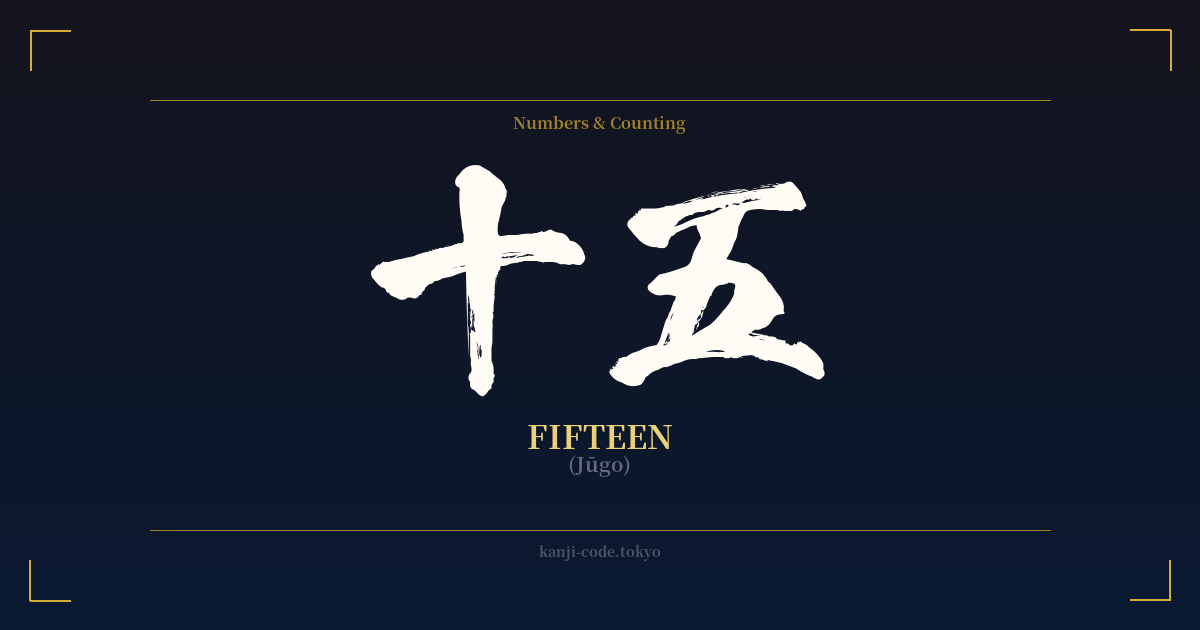
✍️ 十五 (Jūgo) — Cultural Context
The Japanese word for fifteen, 十五 (Jūgo), is a straightforward compound, combining the characters for ten (十) and five (五). While its construction is simple, the number 15 holds specific and noteworthy cultural weight in Japan, tying into traditions of age, astronomy, and history.
Perhaps its most significant historical role is connected to the traditional coming-of-age ceremony for boys, known as Genpuku (元服). Practiced primarily among the samurai and court nobility from the Nara to the Edo period, this ceremony marked a boy's transition into adulthood. It was typically held when he was between the ages of 11 and 17, with 15 being a very common age. During the Genpuku, the boy would receive his adult name and ceremonial cap, signifying his new responsibilities and status in society. Though Genpuku is no longer practiced, its association with age 15 firmly roots the number in the concept of a pivotal life milestone.
Another major cultural touchstone is Jūgoya (十五夜), which literally means "fifteenth night." This refers to the 15th day of the 8th month of the traditional Japanese lunar calendar, the date on which the harvest moon is celebrated. On this night, families gather for moon-viewing parties called Tsukimi (月見), setting up decorations of pampas grass and offering rice dumplings (tsukimi dango) to the full moon to pray for a bountiful harvest. This celestial connection gives the number 15 a poetic, seasonal, and slightly festive nuance.
While the modern coming-of-age ceremony, Seijin no Hi (成人の日), is now held at age 20 (or 18, following a 2022 law change), the historical echo of 15 as a year of transition remains. Furthermore, the number five (五) itself is significant in East Asian thought, often linked to the five elements (五行, Gogyō), adding a subtle layer of philosophical balance to the number.
On a more somber note, the term Jūgonen Sensō (十五年戦争), or the "Fifteen-Year War," is a historical phrase used by some historians in Japan to refer to the period of armed conflict beginning with the Manchurian Incident in 1931 and ending with Japan's surrender in 1945. This usage casts the number in a much more serious, historical light, demonstrating its versatility in different contexts. From ancient ceremonies to modern history, Jūgo is more than just a number; it's a marker of time, tradition, and transformation.
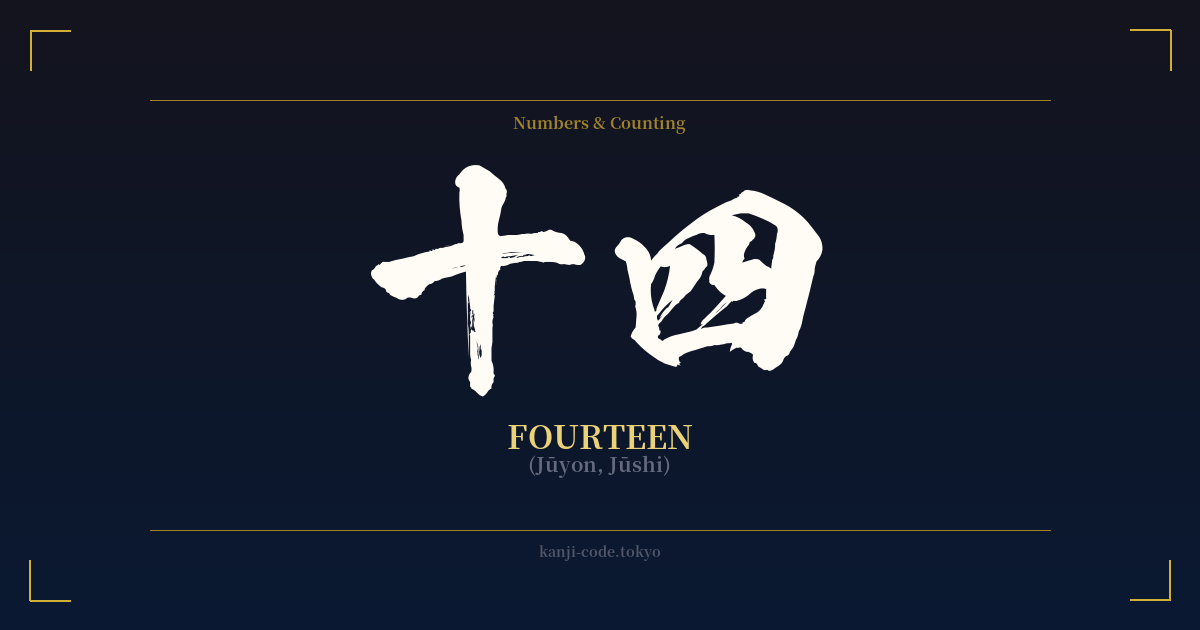
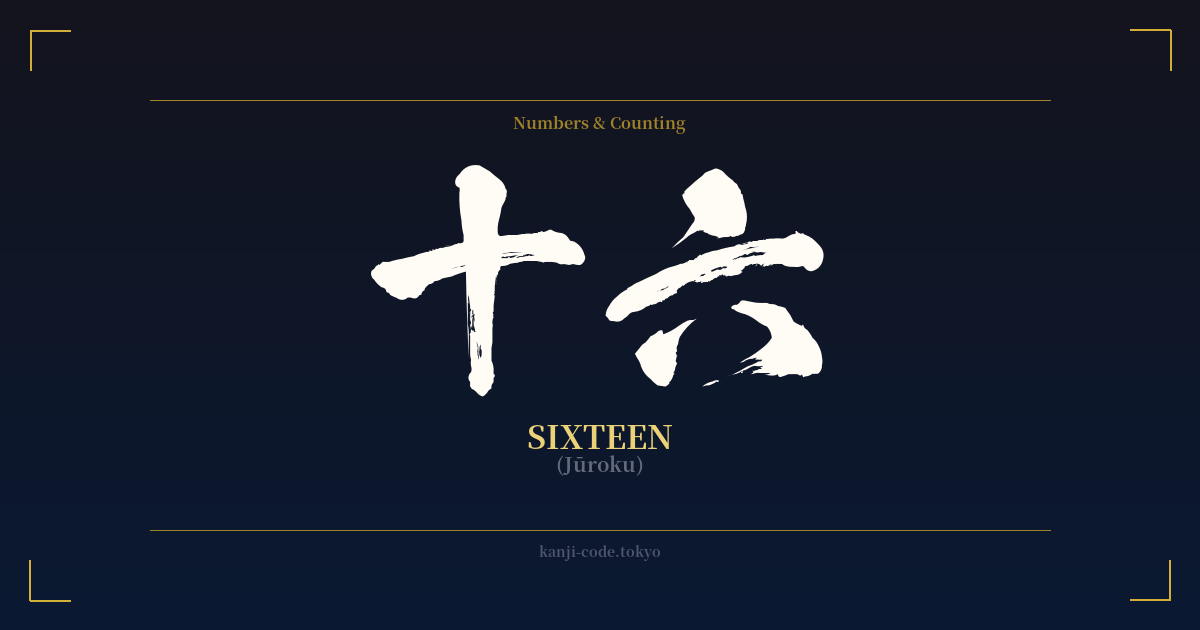
🖌️ Font Styles for 十五
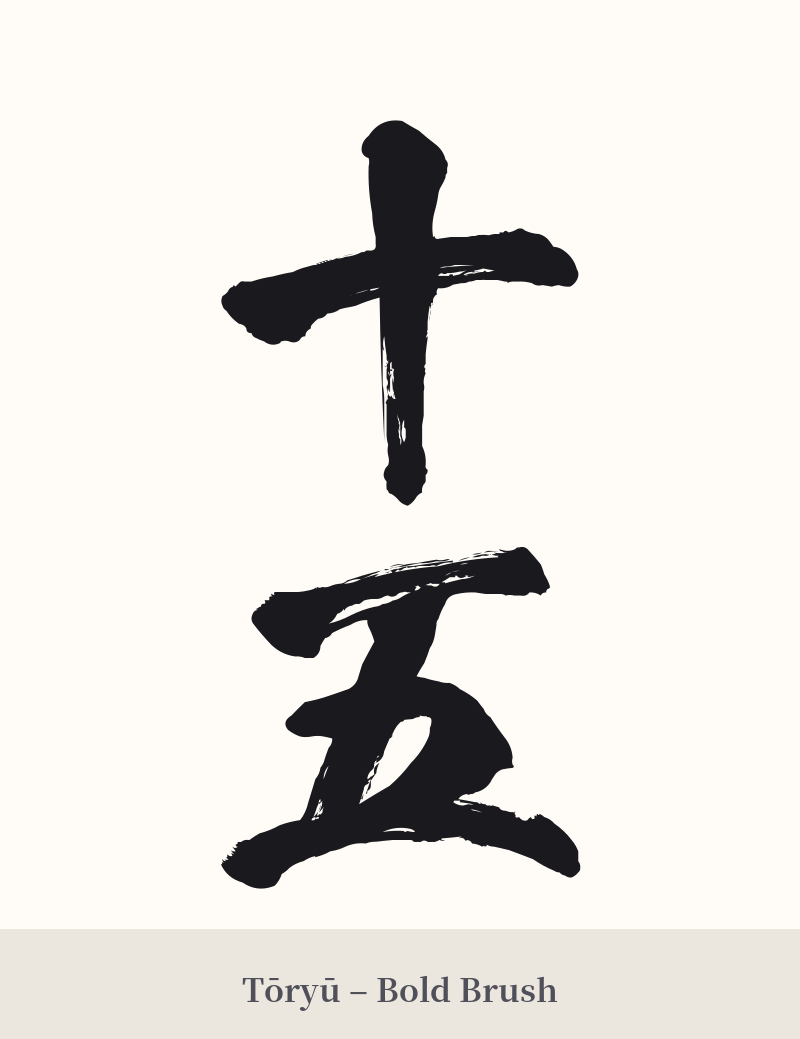
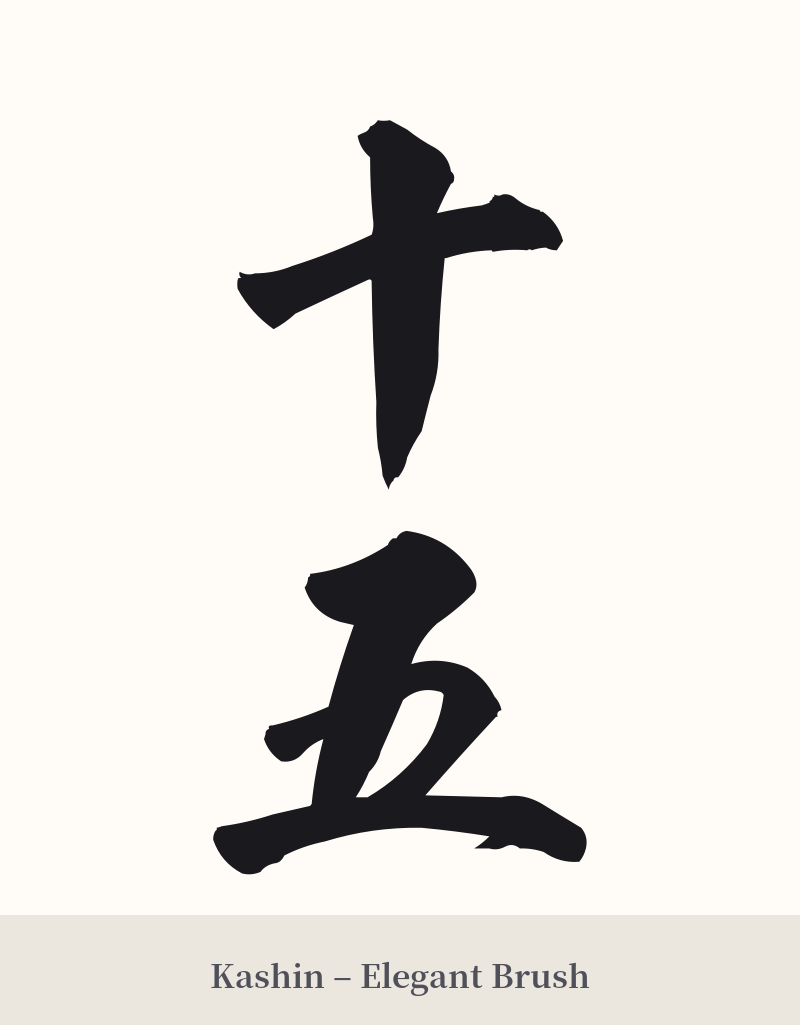
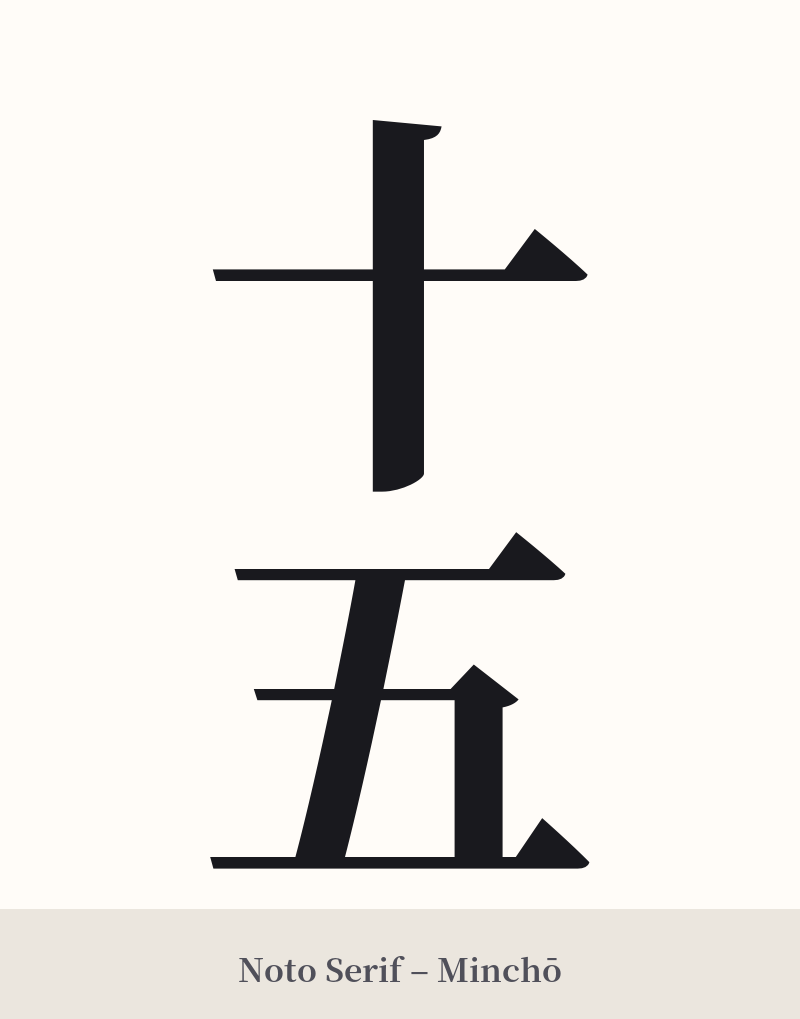
The same kanji can look dramatically different depending on the calligraphy style. Choose a font that matches the mood you want for your tattoo or design.
🎨 Tattoo Suitability
📐 Tattoo Design Guide
Because the kanji 十五 are so simple, the design's impact relies heavily on styling and context. These characters have very low stroke counts, making them clean and legible but also potentially plain if not handled with intention.
– Font Style: A standard block font (Mincho or Gothic) will look very basic. Consider a more artistic script, like a semi-cursive Gyōsho or a highly expressive Sōsho style, to give the characters life and movement. A thick, powerful brushstroke can also add weight and presence.
– Placement: Due to its simplicity, Jūgo works well in smaller, more discreet locations like the wrist, ankle, behind the ear, or on the fingers. For a larger piece, it's best to integrate it into a bigger design that provides context.
– Complementary Imagery: This is where the design can truly shine. Pair 十五 with an image that explains its significance to you. For a Jūgoya theme, combine it with a full moon and pampas grass. If it represents a personal milestone, you could embed it within a larger, more symbolic image like a cherry blossom branch or a koi fish.
Comments