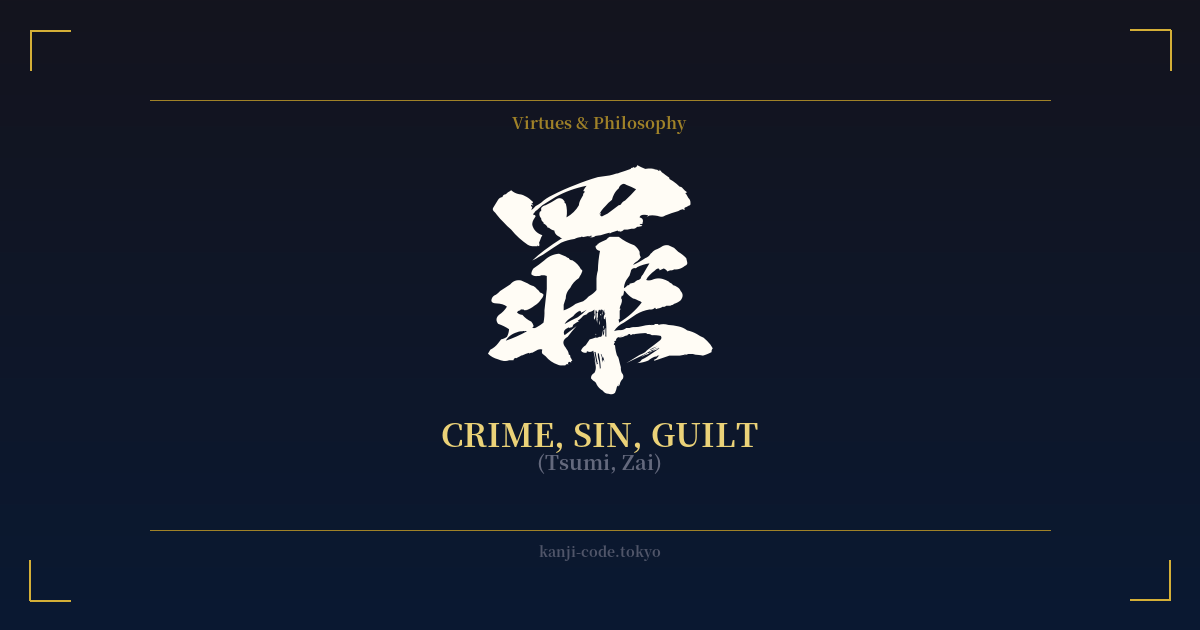
✍️ 罪 (Tsumi, Zai) — Cultural Context
The kanji 罪 (tsumi) carries a profound weight in Japanese culture, encapsulating concepts of crime, sin, and guilt. Its etymology offers a stark visual metaphor: the character is composed of the radical 罒 (a stylized form of 网, meaning 'net') over 非 ('not,' 'wrong,' or 'mistake'). Together, they depict the act of 'catching wrongdoing' in a net, a powerful image of inescapable consequence.
In the Japanese language, the reading of this kanji subtly shifts its meaning. When read as 'tsumi,' its native Japanese pronunciation, it often leans towards a moral or religious transgression. This is the 'sin' that violates a spiritual or ethical code, a concept deeply rooted in both Shinto and Buddhist thought. In Shinto, 'tsumi' can also refer to impurity or defilement that disrupts harmony and requires purification rituals (harai) to cleanse.
When read as 'zai,' its Sino-Japanese pronunciation, the character takes on a more legalistic and formal tone. This is the 'crime' found in legal terminology. For example, 犯罪 (hanzai) means 'crime' in a criminal justice context, and 有罪 (yūzai) means 'guilty' as in a court verdict. This distinction highlights the dual nature of the concept: the internal, moral failing (tsumi) and the external, societal transgression (zai).
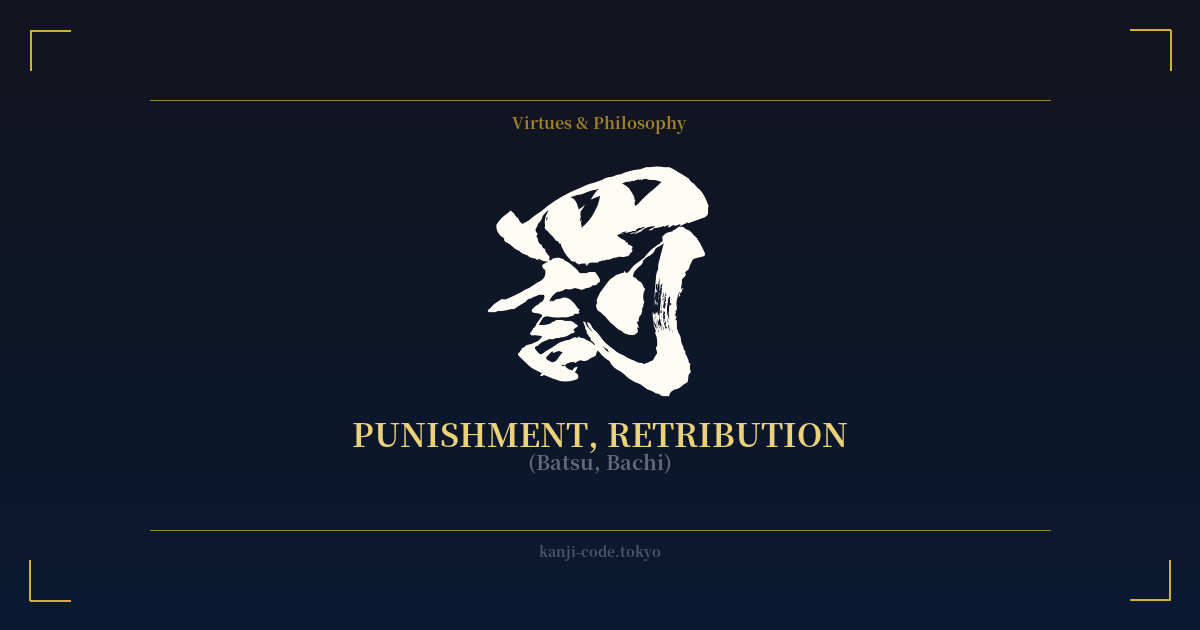
This character is a cornerstone of Japanese philosophical and literary exploration. The Japanese title for Dostoevsky's classic novel 'Crime and Punishment' is 罪と罰 (Tsumi to Batsu), perfectly capturing this duality. It is used to explore themes of justice, redemption, and the psychological burden of guilt (罪悪感, zaiakukan).
Beyond the legal and religious, 'tsumi' permeates everyday language to describe a guilty pleasure or a minor fault, often with a hint of irony. Calling a delicious, high-calorie dessert 'sinful' uses the same root concept. This demonstrates the versatility of 罪, ranging from a verdict that could cost someone their freedom to a lighthearted comment on indulgence. It is a character that speaks to the universal human experience of making mistakes and facing the consequences, whether from a judge, a higher power, or one's own conscience.
🖌️ Font Styles for 罪
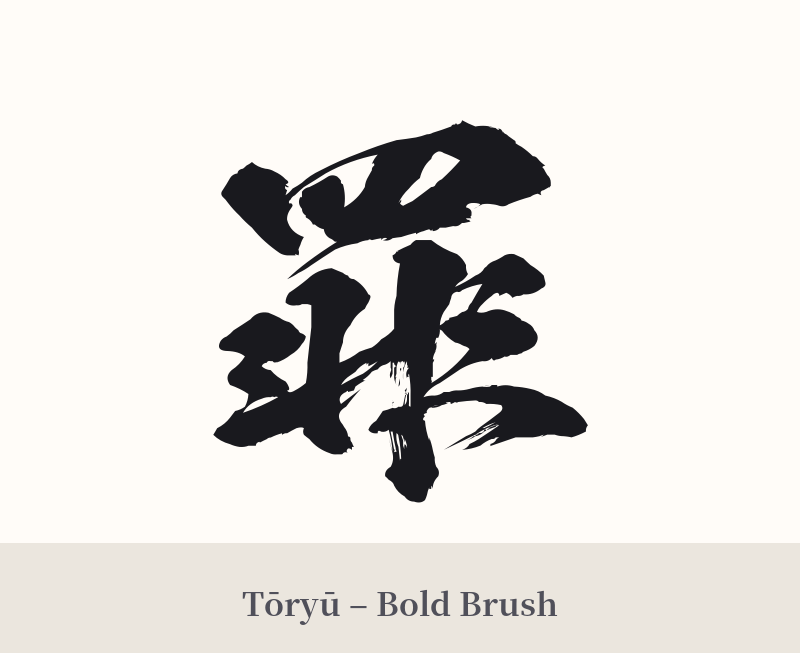
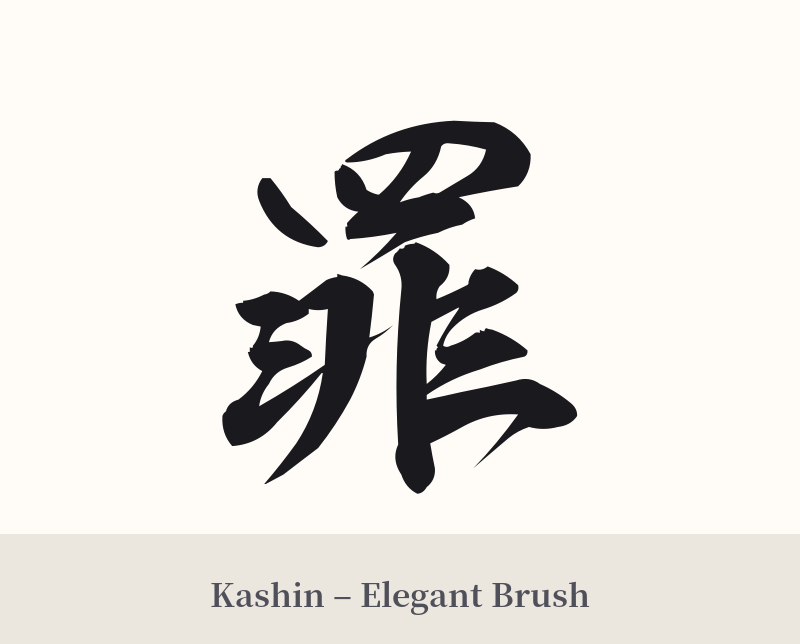
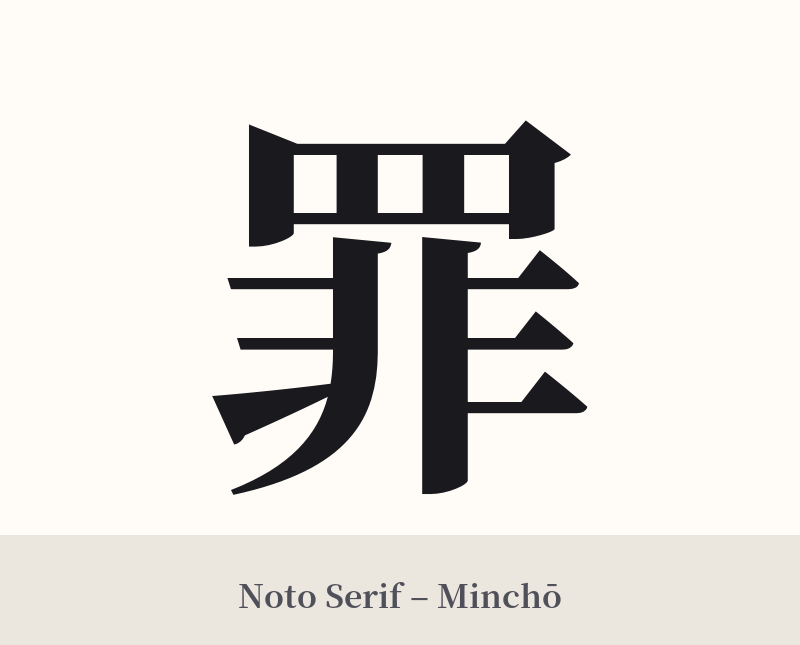
The same kanji can look dramatically different depending on the calligraphy style. Choose a font that matches the mood you want for your tattoo or design.
🎨 Tattoo Suitability
📐 Tattoo Design Guide
The heavy and serious nature of 罪 (tsumi) calls for a thoughtful design approach. It is not a light or casual symbol, and its design should reflect its weight.
– Placement: Consider a placement that reflects your personal connection to the word. A more private spot like the ribs or inner bicep can suggest an internal struggle or a personal reminder. A bolder placement, like the back or forearm, makes a very strong and confrontational public statement.
– Font Style: A strong, classic Kaisho (block) script emphasizes its formal, consequential nature. For a more expressive feel, a Gyosho (semi-cursive) or Sosho (cursive) style can convey turmoil or a sense of raw emotion. Avoid overly decorative or whimsical fonts, as they would clash with the character's meaning.
– Visual Tips: Because 罪 represents a heavy burden, you could pair it with imagery of redemption or release. Consider incorporating elements like a broken chain, a lotus flower (a symbol of purity growing from mud), or a single enso circle to represent acceptance or the path to enlightenment. Using red ink for the character itself, or as a highlight, can powerfully evoke themes of blood, passion, or warning.
Comments