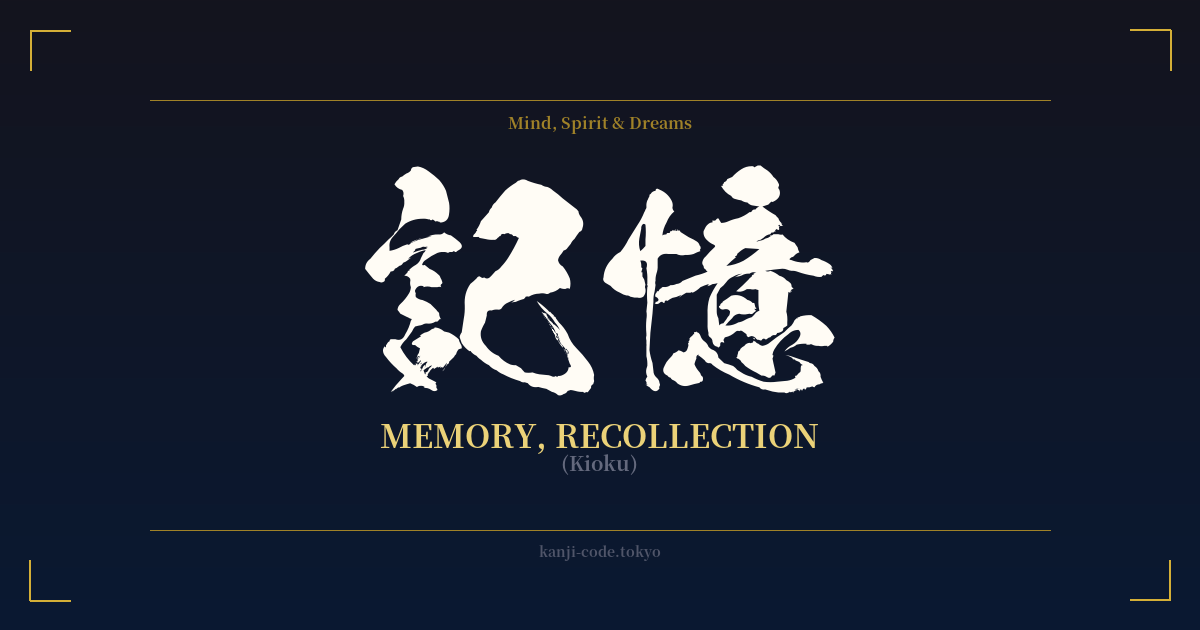
✍️ 記憶 (Kioku) — Cultural Context
記憶 (Kioku) is the Japanese word for 'memory,' encompassing both the mind's ability to store information and the specific recollections it holds. It's a term that is both clinical and deeply philosophical, a cornerstone of how we construct our sense of self and perceive the flow of time. Unlike its more nostalgic cousin, 思い出 (omoide), which refers to cherished memories, 記憶 is a broader, more neutral concept. It is the raw data of our lives—the sights, sounds, and feelings recorded in our consciousness.
The kanji themselves tell a story. The first character, 記 (ki), means 'to scribe' or 'to record.' It suggests an active, deliberate process of documentation, as if one's experiences are being written into a personal history. The second character, 憶 (oku), means 'to recollect' or 'to remember,' and importantly, it contains the radical for 'heart' or 'mind' (心). This combination beautifully illustrates the Japanese understanding of memory: it is not merely a rote recording but an act of holding information within one's heart and mind.
In Japanese culture, the concept of memory is deeply intertwined with aesthetics like mono no aware (物の哀れ), the gentle sadness and awareness of the transience of things. The fleeting beauty of cherry blossoms, for instance, is so potent because the experience is immediately consigned to memory. The joy of the moment is amplified by the knowledge that it will soon live on only as 記憶. This reverence for the past and for lived moments shapes much of Japanese art, literature, and film.
Authors like Haruki Murakami frequently explore the theme of memory, often depicting it as a labyrinthine, unreliable, yet defining aspect of his characters' identities. Similarly, Studio Ghibli films such as 'Only Yesterday' (おもひでぽろぽろ) delve into how childhood memories shape adult life, showing the powerful pull of 記憶 on the present.
In a more traditional sense, 記憶 is also vital to the continuity of family and culture. Practices like visiting ancestral graves (お墓参り, ohakamairi) and maintaining a family altar (仏壇, butsudan) are physical rituals designed to keep the memory of one's ancestors alive. Memory, in this context, is a shared, communal responsibility that links generations. To choose 記憶 is to embrace a concept that is at once a personal archive and a fundamental pillar of cultural identity.
🖌️ Font Styles for 記憶
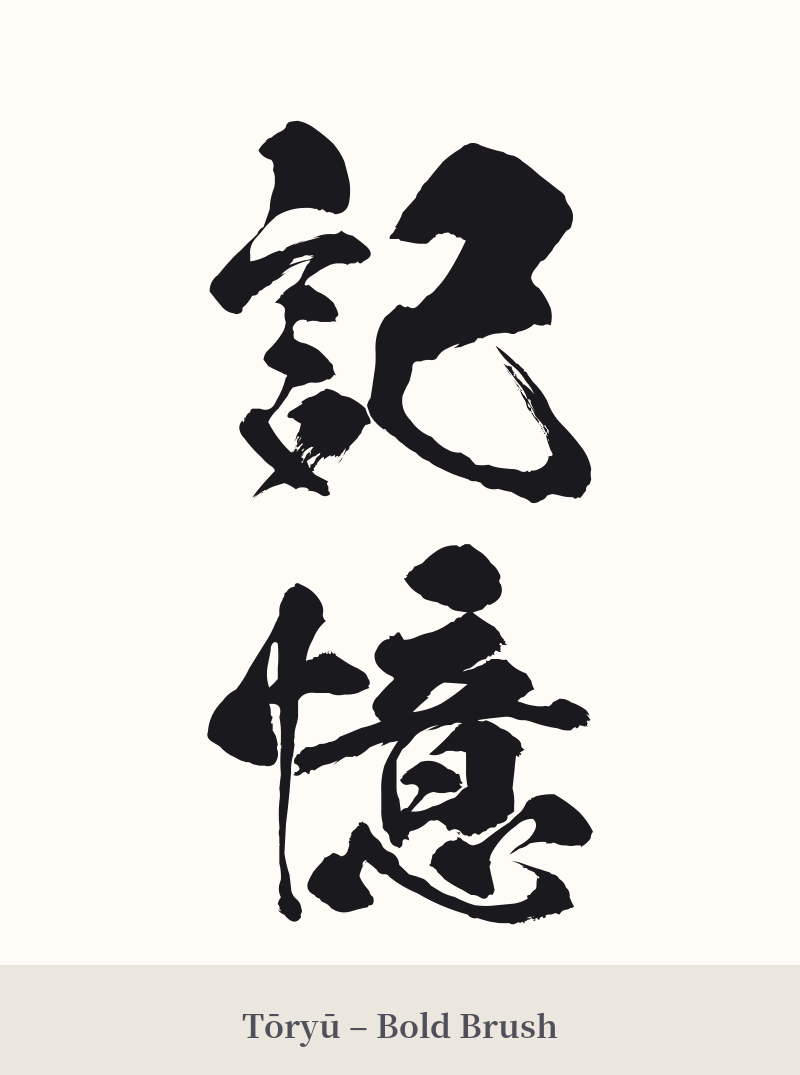
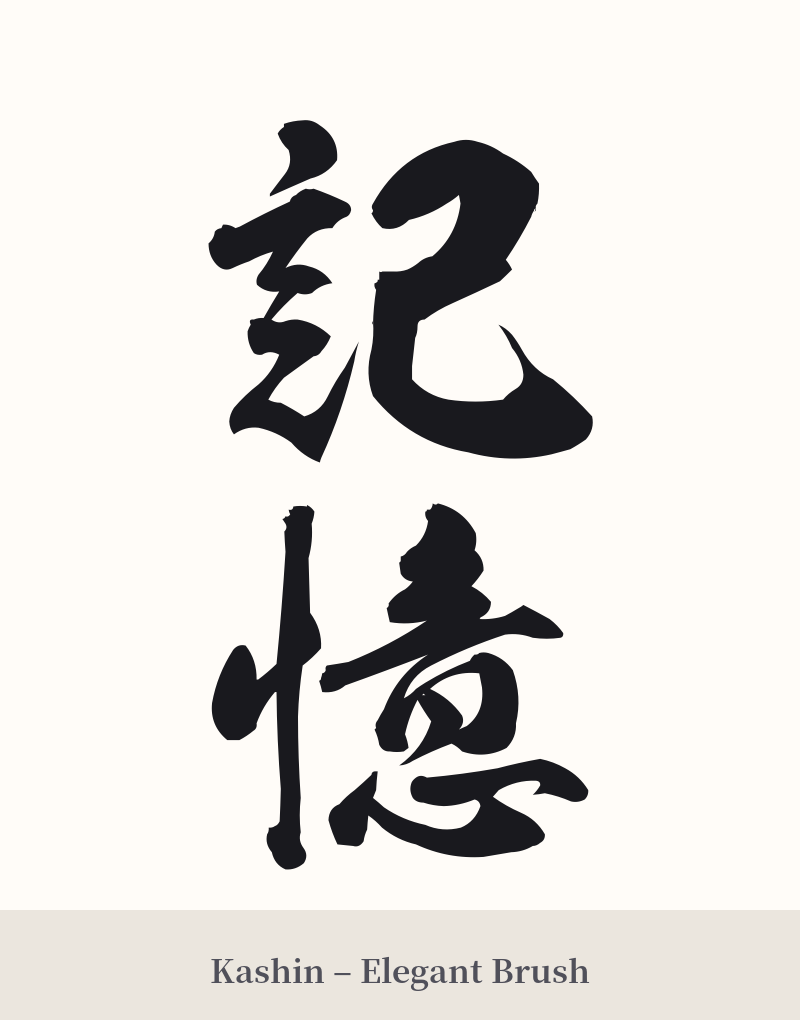
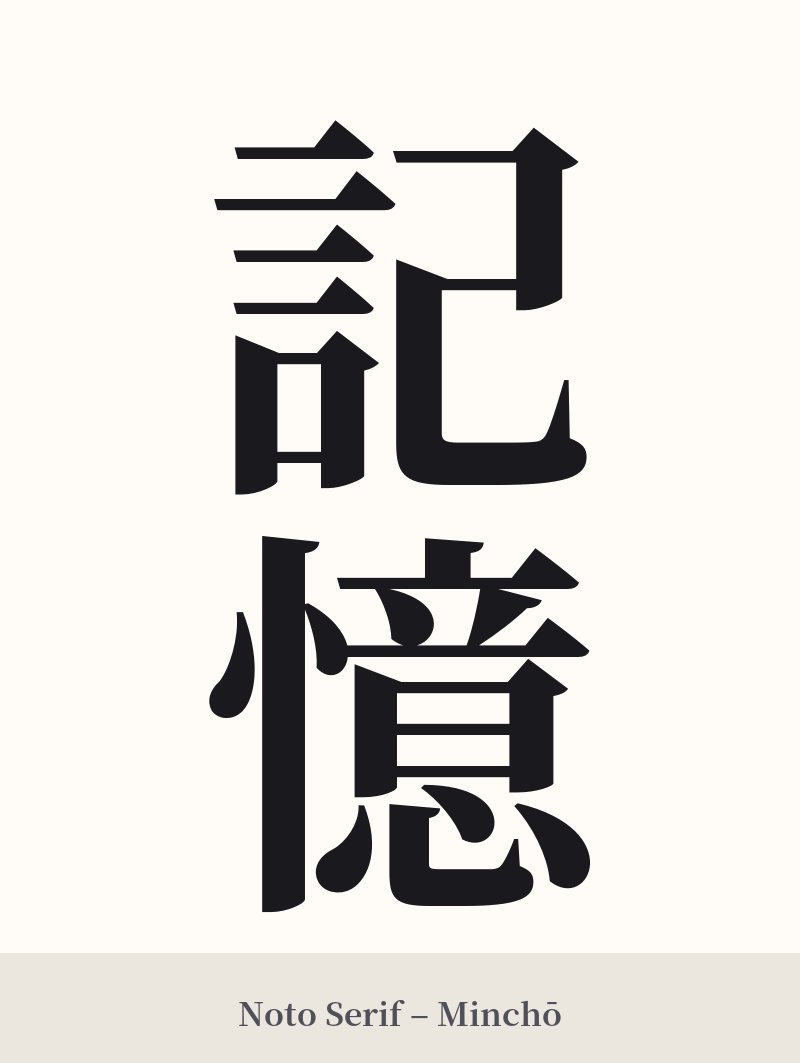
The same kanji can look dramatically different depending on the calligraphy style. Choose a font that matches the mood you want for your tattoo or design.
🎨 Tattoo Suitability
📐 Tattoo Design Guide
For a 記憶 tattoo, the design should honor both its profound meaning and its visual complexity.
– Placement: A vertical orientation is traditional and elegant, working well on the forearm, calf, or along the spine. A horizontal layout is also strong, suitable for the chest, back, or across the collarbone.
– Font Style: Consider a dynamic calligraphy style (shodō) to express the active, flowing nature of memory. For a more modern or philosophical feel, a clean and sharp Mincho or Gothic font can emphasize the 'data' aspect of recollection. A softer, more fluid script can represent the gentle, sometimes hazy nature of personal memories.
– Visual Tips: To personalize the design, consider integrating a small, meaningful symbol that represents a specific memory you wish to honor. Another powerful artistic choice is to have the strokes at the bottom appear to fade or dissolve, symbolizing the fragility of memory or the act of forgetting. A subtle watercolor background in a color that evokes a particular emotion—blue for melancholy, yellow for joy—can add a layer of personal significance without overpowering the kanji.
Comments