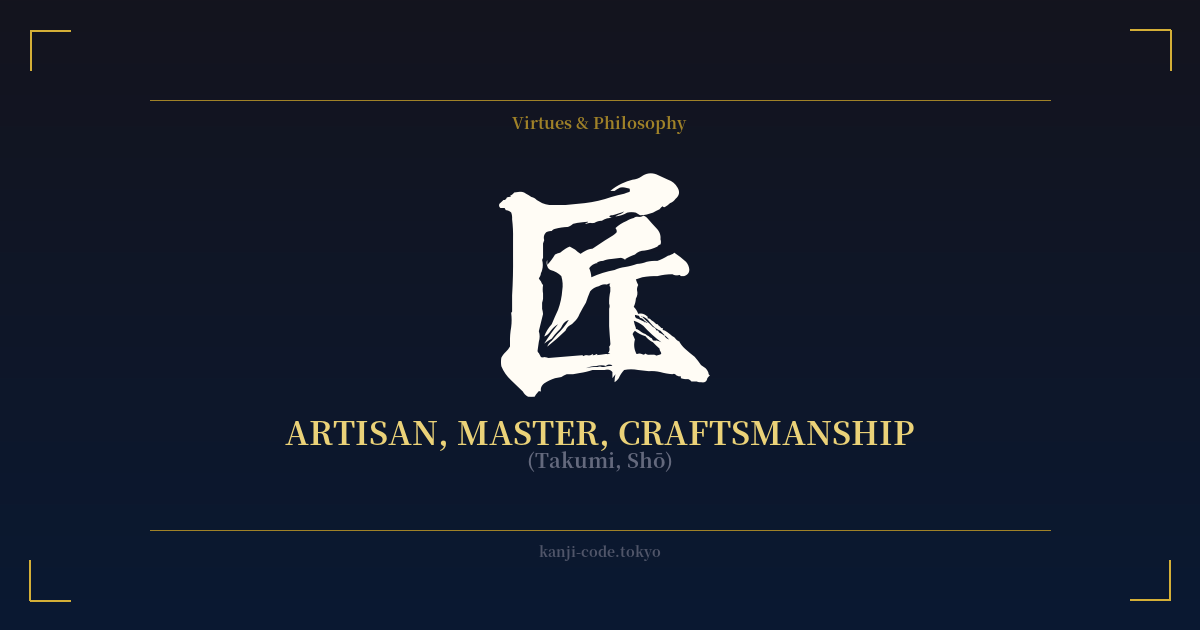
✍️ 匠 (Takumi, Shō) — Cultural Context
The kanji 匠, read as 'Takumi', is a symbol that resonates deeply within the Japanese cultural psyche. It represents far more than just skill or craftsmanship; it embodies a lifetime of dedication, a relentless pursuit of perfection, and a spiritual connection to one's work. This character is the heart of the 'shokunin' (職人) or artisan spirit, a philosophy that has shaped Japan's most revered traditions.
The character itself offers a glimpse into its origins. It is a pictographic compound of 匚, representing a box or container (specifically a toolbox), and 斤, representing an axe. Together, they form the image of a carpenter's tools, the original archetype of the master craftsman. From this humble origin, 'Takumi' has evolved to signify the highest level of mastery in any field, from swordsmiths and potters to sushi chefs and even modern engineers.
To be a 'Takumi' is to live by the principle of 'kodawari' (こだわり), an uncompromising and obsessive attention to detail. It is a state of being where the work is not a means to an end, but an end in itself. A 'Takumi' does not simply create an object; they pour their soul ('tamashii') into it. This is why Japanese crafts, whether a hand-forged kitchen knife or a perfectly lacquered bowl, are considered to hold a piece of their creator's spirit. The process is as important as the product, involving years of repetitive, disciplined practice to achieve a state of effortless perfection, a concept known in martial arts as 'mushin' (無心) or 'no mind'.
This reverence for mastery is visible everywhere in Japan. The title of 'Living National Treasure' is bestowed upon individuals who have attained the highest mastery of traditional arts. Documentaries like 'Jiro Dreams of Sushi' introduced a global audience to this mindset, showing an elderly sushi chef whose entire life is a testament to the 'Takumi' ideal. He isn't just making food; he is curating an experience, perfecting a lifelong art, and fulfilling a sacred duty to his craft.
Unlike the Western term 'artisan', which can feel like a lifestyle brand, 'Takumi' is a title of immense weight and respect, earned over decades. One would never call themselves a 'Takumi'; it is a recognition bestowed by others. It signifies not just technical proficiency, but a profound wisdom and a responsibility to preserve and elevate a craft for the next generation.
🖌️ Font Styles for 匠
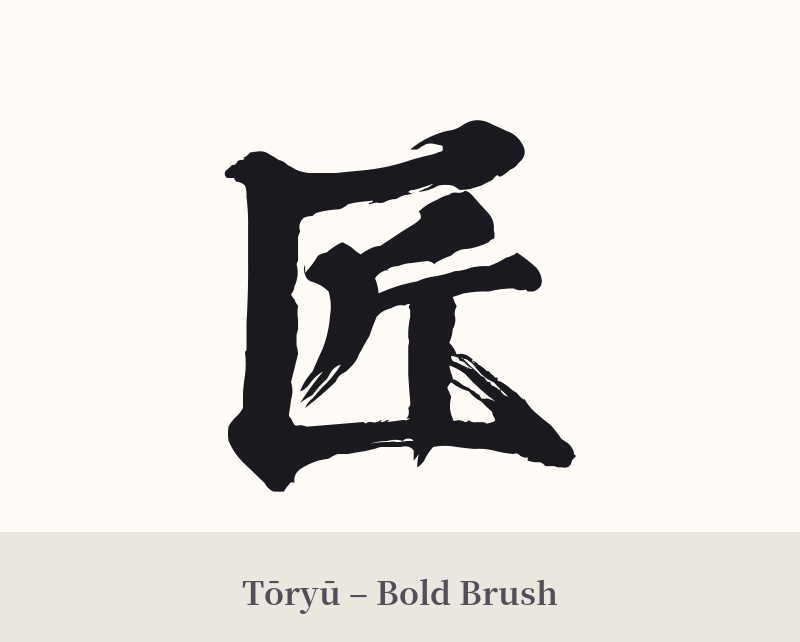
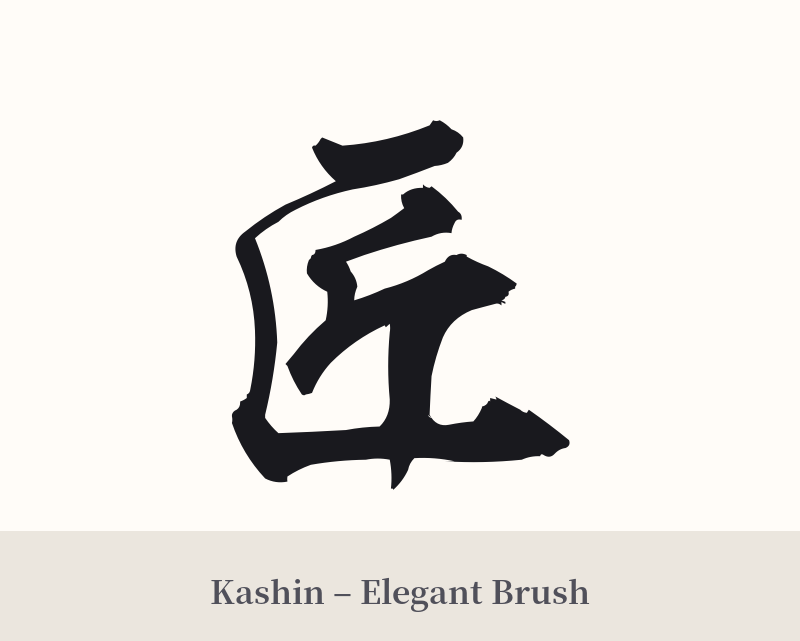
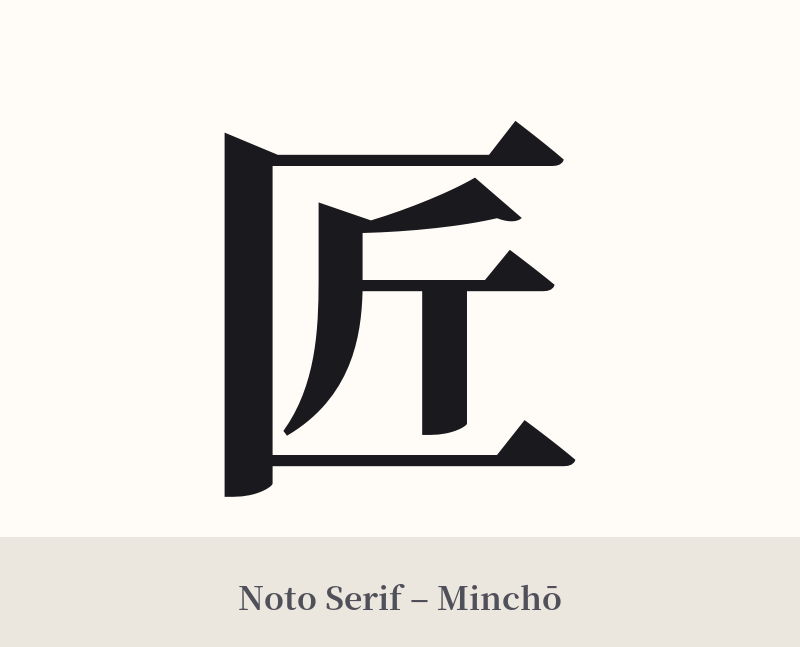
The same kanji can look dramatically different depending on the calligraphy style. Choose a font that matches the mood you want for your tattoo or design.
🎨 Tattoo Suitability
📐 Tattoo Design Guide
For a tattoo of 匠 (Takumi), the design should reflect the balance of power and precision inherent in its meaning.
– Placement: The forearm is an excellent choice, symbolizing the hands that perform the craft. The back of the shoulder or the calf are also strong locations that provide a solid canvas. For a more subtle placement, the inner bicep works well.
– Style: A dynamic, semi-cursive calligraphy style (gyōsho) can capture the energy and flow of a master at work. For a design that emphasizes precision and structure, a crisp, architectural Mincho or Kaisho font is ideal.
– Visual Tips: Consider integrating a small, subtle element that represents your own craft. For example, a wood grain texture within the strokes for a carpenter, or a watercolor splash effect for a painter. Another powerful addition is a red artist's seal (hanko) placed near the kanji, adding authenticity and a pop of color.
Comments