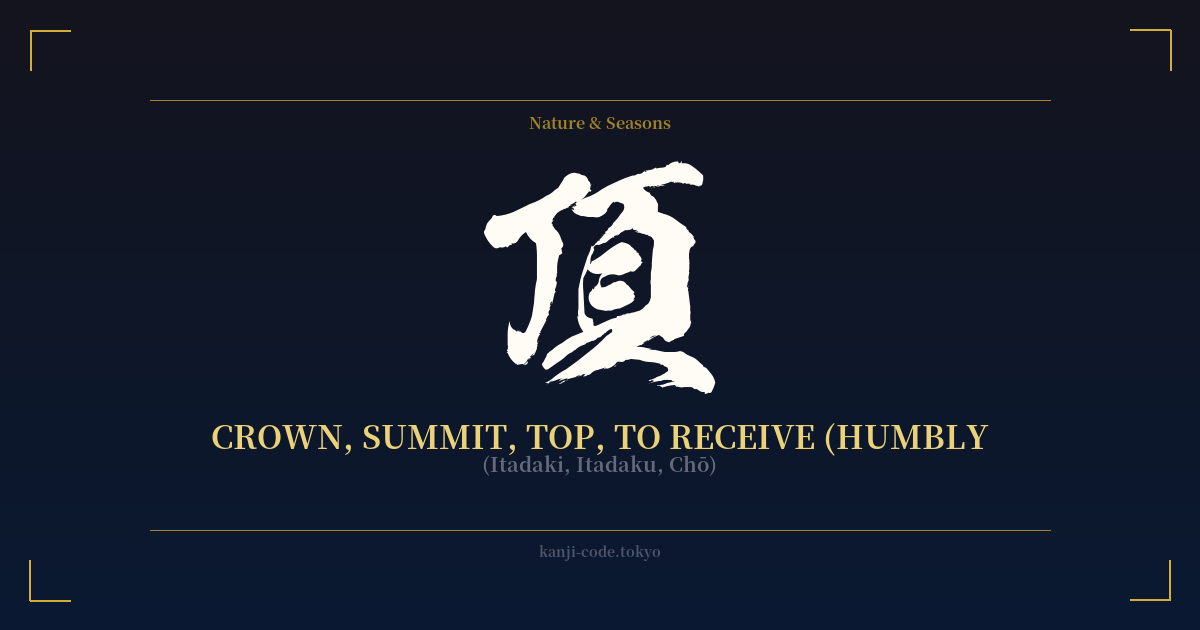
✍️ 頂 (Itadaki, Itadaku, Chō) — Cultural Context
The kanji 頂 (itadaki/chō) is a character rich with dual meaning, embodying both the highest physical point and a profound sense of humility. Its origins trace back to a visual representation of the 'crown of the head.' The character is composed of 丁 (chō), representing a nail or something placed on top, and 頁 (ketsu), a radical depicting a head. Together, they form the image of something placed upon the head, the very top of a person.
From this origin, the meaning logically extended to signify the highest point of any object, most notably a mountain. In Japan, a country defined by its mountainous terrain, the concept of the summit, or 山頂 (sanchō), holds special significance. Mountains have long been considered sacred spaces in Shintoism, dwellings of the gods (kami). To reach the 'itadaki' of a mountain is not just a physical feat but a spiritual pilgrimage, a journey to a place closer to the heavens. This imbues the character with a sense of achievement, perseverance, and aspiration.
However, the most nuanced and culturally vital meaning of 頂 is found in the verb 頂く (itadaku). This verb means 'to receive,' but it carries a strong connotation of humility. It is used when receiving something from a person of higher status, or when receiving a gift from a revered source. This concept is most famously encapsulated in the phrase 「いただきます」(itadakimasu), said before every meal in Japan.
Saying 'itadakimasu' is far more than the English 'bon appétit' or 'let's eat.' It is a moment of gratitude. By using the verb 'itadaku', the speaker is humbly receiving the 'life' of the plants and animals that make up the meal. It is an expression of thanks to the farmers, fishermen, cooks, and everyone involved in bringing the food to the table. It is a recognition that one is receiving a gift from nature and from the efforts of others, placing oneself in a position of humble reception. This single word connects the act of eating to a deep-seated cultural value of gratitude and respect for the interconnectedness of life. Therefore, 頂 is not just about being at the top; it's also about understanding the grace and humility required to receive.
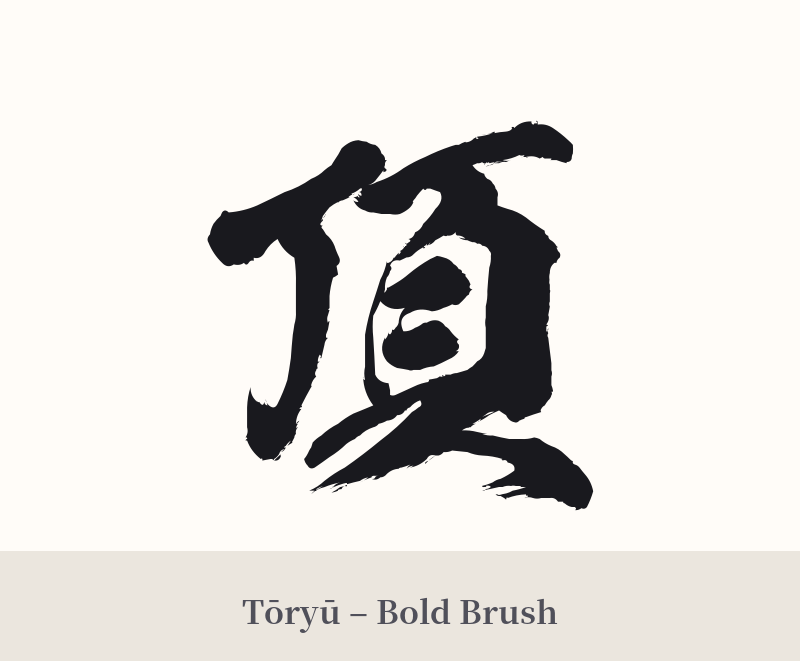
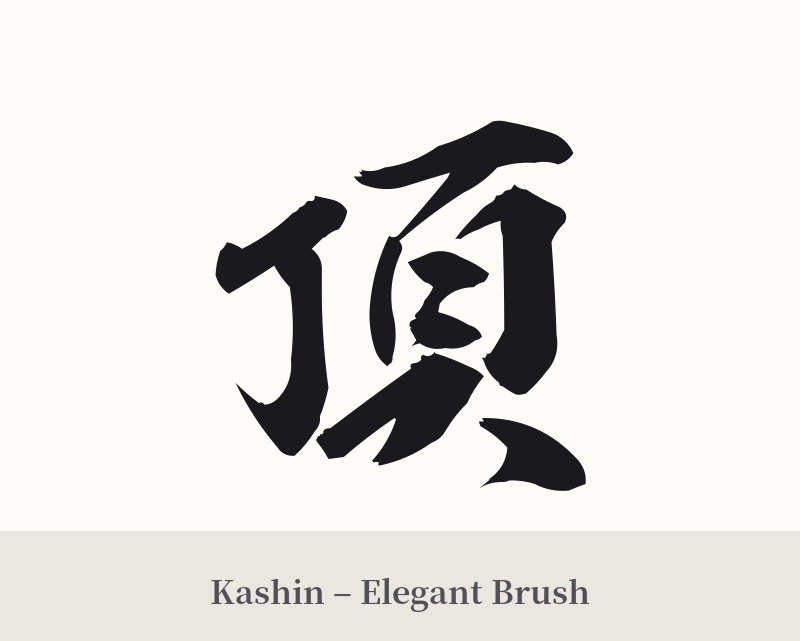
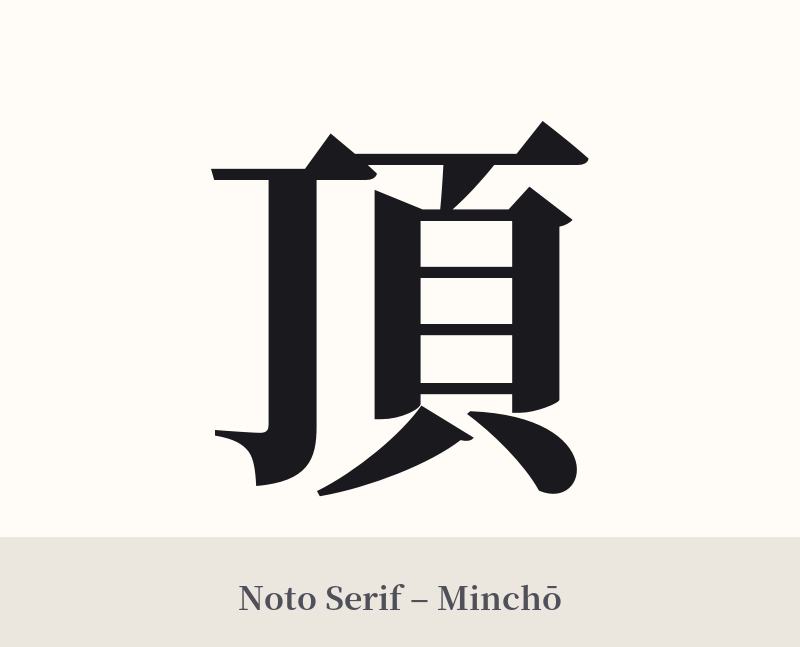
🖌️ Font Styles for 頂
The same kanji can look dramatically different depending on the calligraphy style. Choose a font that matches the mood you want for your tattoo or design.
🎨 Tattoo Suitability
📐 Tattoo Design Guide
The kanji 頂 has a strong, balanced form that works well for a tattoo. Its dual meaning of 'summit' and 'humble reception' allows for creative design choices.
– Placement: For its 'summit' meaning, consider places that suggest height or achievement, like the shoulder blade, the nape of the neck, or the upper back. For its 'humility' aspect, a placement on the inner forearm or over the chest could feel more personal and introspective.
– Style: A bold, angular script like Kaisho (block script) can emphasize the strength and stability of a mountain peak. A more fluid, connected script like Gyosho or Sosho can hint at the grace and humility inherent in the verb 'itadaku'.
– Visual Complements: This kanji pairs beautifully with natural imagery. Consider integrating it with a minimalist mountain range, a rising sun, or placing it within an Enso circle to represent the cycle of striving and gratitude. A simple, standalone design also carries significant weight due to the character's profound meaning.
Comments