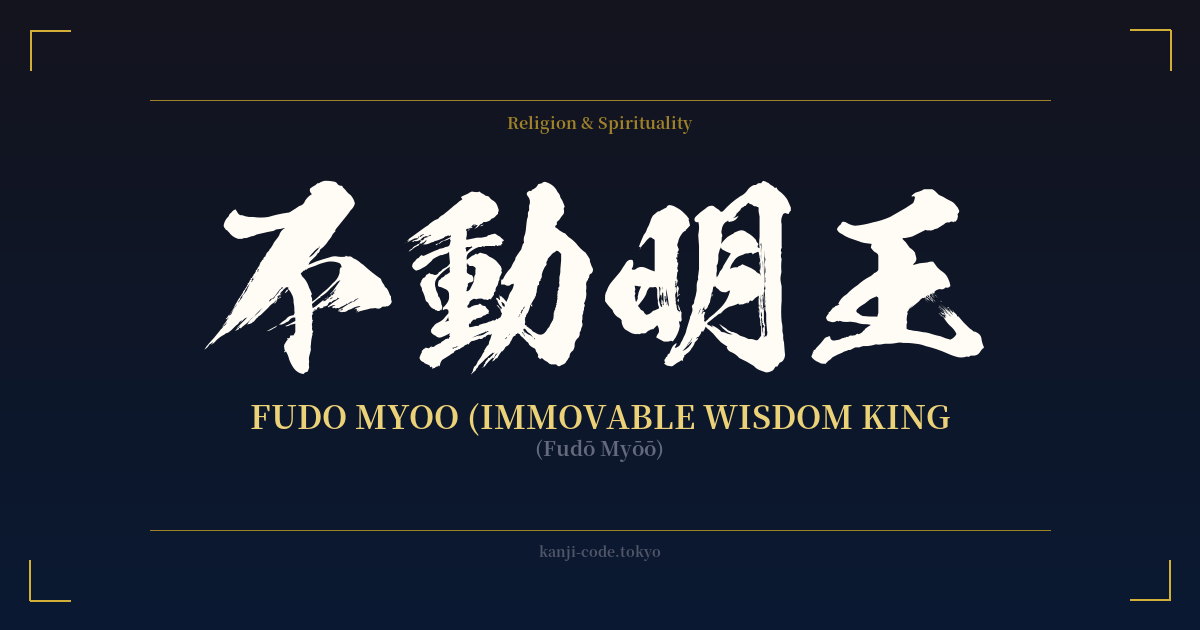
✍️ 不動明王 (Fudō Myōō) — Cultural Context
不動明王 (Fudō Myōō) is one of the most important and recognizable figures in Japanese Buddhism. His name translates to 'Immovable Wisdom King,' and he is the central deity among the Five Wisdom Kings (五大明王, Godai Myōō) in the esoteric traditions of Shingon and Tendai Buddhism. His Sanskrit name is Acala, meaning 'immovable,' which is directly translated in the first two kanji, 不動 (Fudō).
Despite his terrifying, wrathful appearance—often depicted with a fierce scowl, protruding fangs, and surrounded by a halo of flames—Fudō Myōō is not a demon. He is a compassionate protector and a manifestation of the Buddha Dainichi Nyorai. His fearsome form is a tool, a manifestation of 'compassionate anger' used to subjugate evil, destroy worldly desires that hinder enlightenment, and guide stubborn, lost souls back to the path of Buddhism. He is a savior, not a punisher.
His iconography is rich with symbolism. In his right hand, he wields the 'Kurikara,' a powerful sword that cuts through ignorance, delusion, and illusion. The sword is often shown with a dragon coiled around its blade. In his left hand, he holds a rope, or 'kensaku,' which he uses to bind negative forces and to pull sentient beings toward salvation. The flames that engulf his body represent the purification of the mind, burning away impurities and obstacles to spiritual awakening.
Historically, Fudō Myōō was a figure of great importance to the samurai. Warriors would pray to him for strength, courage, and victory in battle, seeing his 'immovable' nature as the ultimate ideal for a warrior's mindset—unshakeable resolve in the face of death. He was also a central figure for the Yamabushi, the mountain ascetic monks of Shugendō, who underwent rigorous training in the wild and called upon Fudō Myōō for protection and spiritual power.
Today, Fudō Myōō remains a widely venerated deity in Japan. You can find statues and images of him in temples across the country, where people pray for protection from danger, success in business, and the overcoming of personal challenges. His image is also deeply embedded in Japanese tattoo culture (Irezumi), where he is chosen as a powerful symbol of protection, strength, and unwavering faith.
🖌️ Font Styles for 不動明王
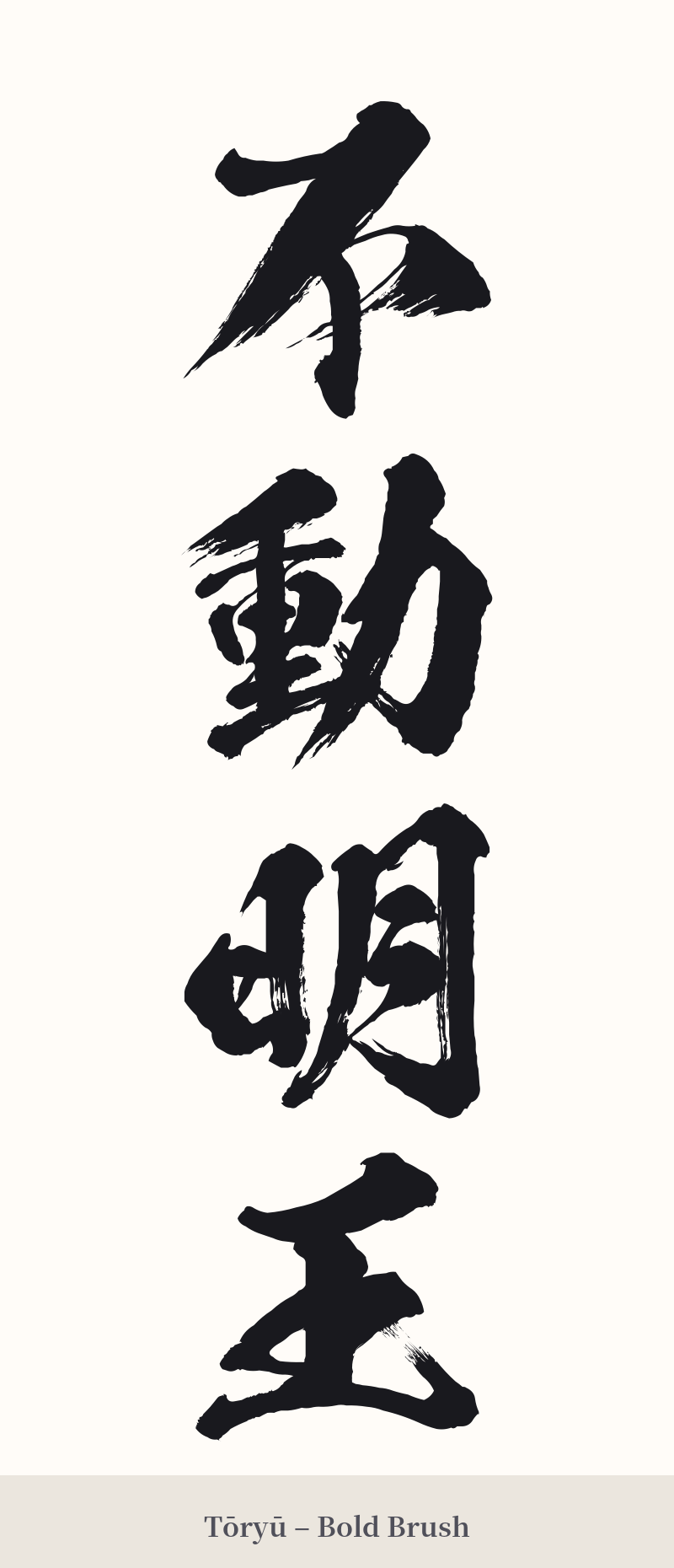
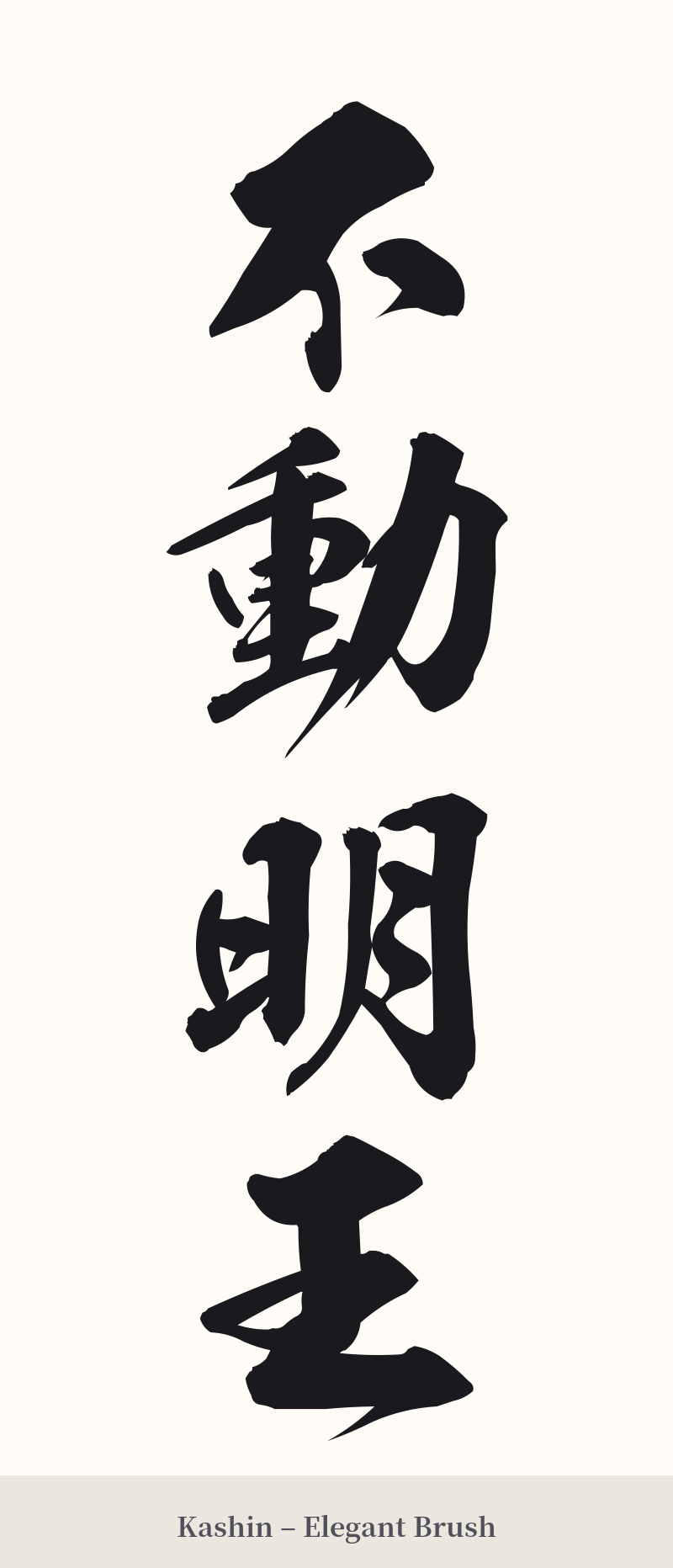
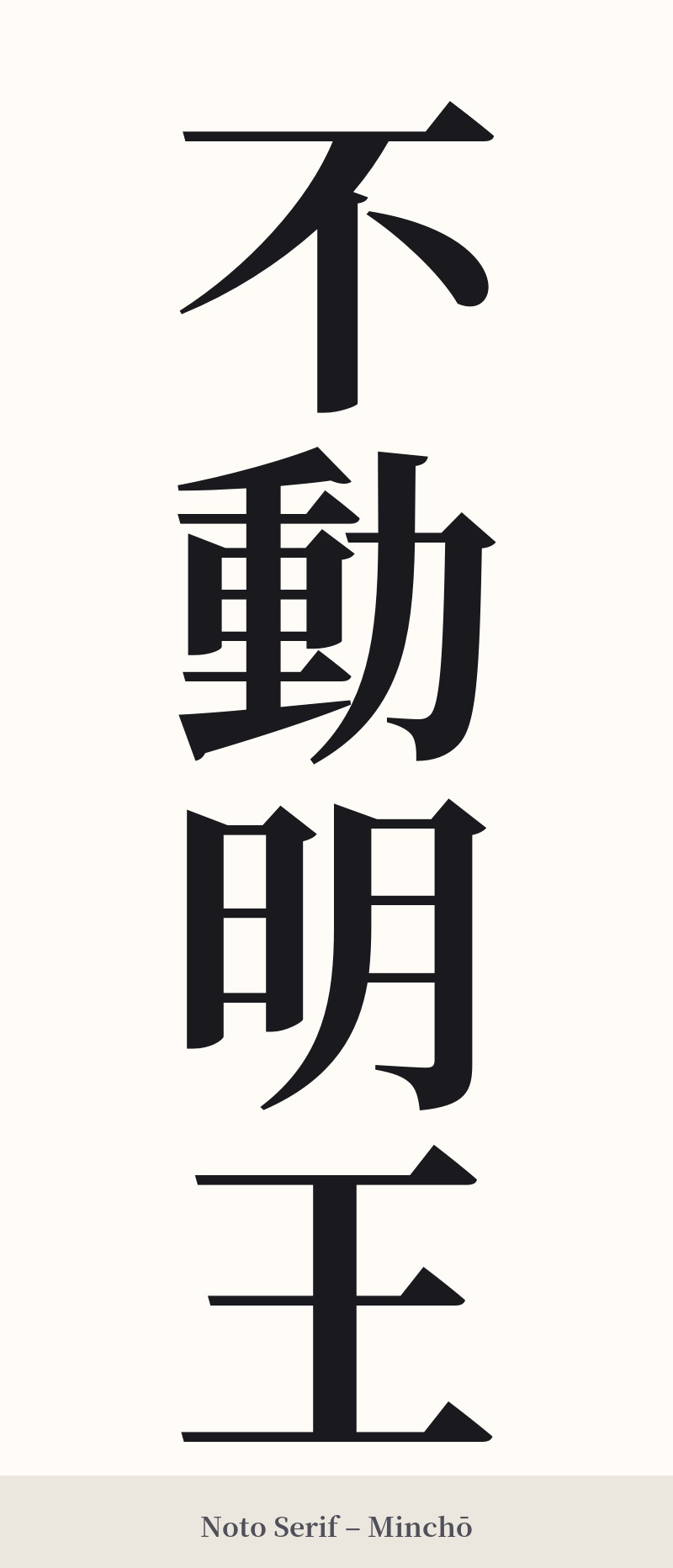
The same kanji can look dramatically different depending on the calligraphy style. Choose a font that matches the mood you want for your tattoo or design.
🎨 Tattoo Suitability
📐 Tattoo Design Guide
A Fudō Myōō tattoo is a serious and powerful statement. The kanji 不動明王 itself carries immense weight and visual authority.
– Placement: Due to its length and significance, this kanji is best suited for larger areas where it can be rendered clearly. The forearm, the calf, along the spine, or across the back are all excellent choices. A vertical orientation is the most traditional and visually appealing.
– Style: A bold, strong font is highly recommended to match the 'immovable' nature of the deity. A thick Kaisho (block script) or a dynamic, brush-like Gyosho (semi-cursive script) would be perfect. Avoid overly thin or delicate styles that would fail to convey the necessary power.
– Visuals: While the four kanji are powerful on their own, they are often incorporated into a larger piece depicting Fudō Myōō himself. The kanji can be placed alongside an image of the deity, his sword, or his signature halo of flames. This combination creates a comprehensive and deeply symbolic design.
Comments