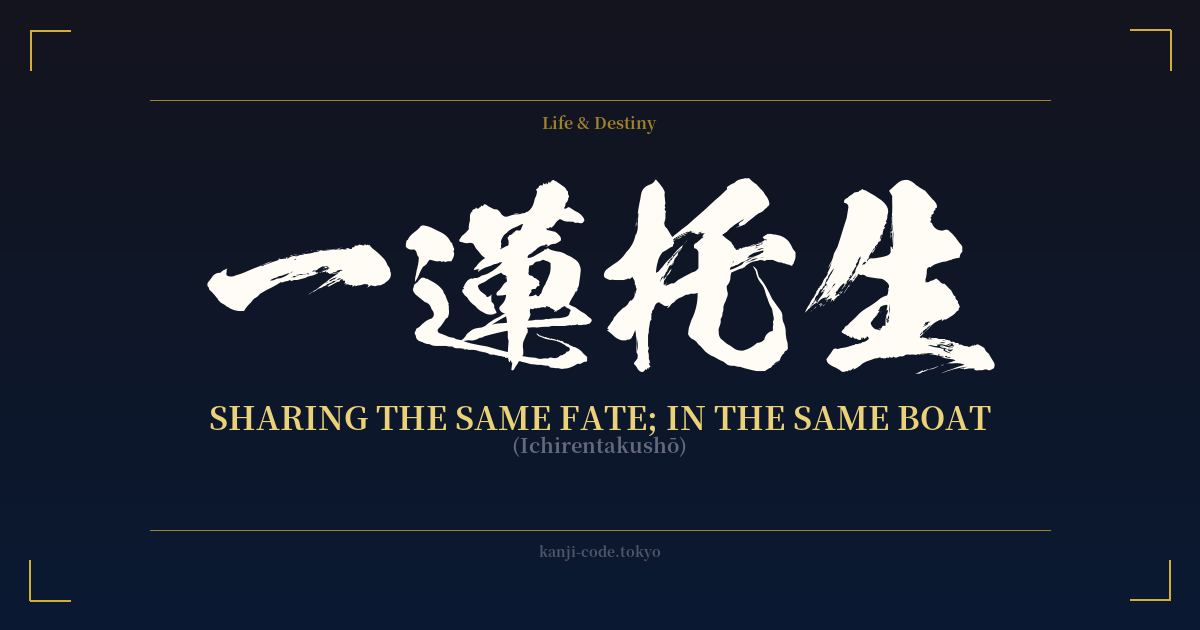
✍️ 一蓮托生 (Ichirentakushō) — Cultural Context
一蓮托生 (Ichirentakushō) is a four-character idiom, or yojijukugo, that beautifully captures the idea of an inseparable, shared destiny. While often translated as "in the same boat" or "sharing the same fate," its origins reveal a much deeper, spiritual significance rooted in Pure Land Buddhism.
Literally, the phrase breaks down to "one lotus, entrusting life." This imagery comes directly from Buddhist scriptures, particularly the teachings of the Jōdo (Pure Land) school. The core belief is that followers who faithfully chant the name of Amida Buddha will be reborn together in the Western Paradise, or Pure Land. According to this tradition, they will emerge from the same lotus flower (一蓮) upon their rebirth (托生). This isn't just about sharing a ride; it's about souls being so intertwined that they share the very vessel of their spiritual reawakening.
The lotus flower (蓮, ren) itself is a potent symbol in Buddhism. It grows from the murky mud at the bottom of a pond but blossoms into a pristine, beautiful flower above the water's surface. This journey symbolizes the path to enlightenment—rising above the muck of worldly desires and suffering to achieve purity and spiritual awakening. To share a single lotus, therefore, is to share this ultimate spiritual journey.
Over centuries, 一蓮托生 has expanded beyond its strictly religious context. It has become a powerful expression for any profound, unbreakable bond that ties people together through life's trials, for better or for worse. It’s the vow a married couple makes, signifying a bond that lasts until death and beyond. It’s the silent understanding between soldiers in a trench, whose survival is inextricably linked. It can even describe the bond between partners in crime, forever linked by their shared actions and consequences.
What makes 一蓮托生 so compelling is its acceptance of fate's totality. It doesn't just mean sharing the good times; it means being bound together through hardship, failure, and even death. It’s a declaration of ultimate loyalty and acceptance of a shared path, no matter where it leads. This makes it a far more profound statement than simply being friends or partners; it is a recognition of a karmic connection that transcends individual choice.
🖌️ Font Styles for 一蓮托生
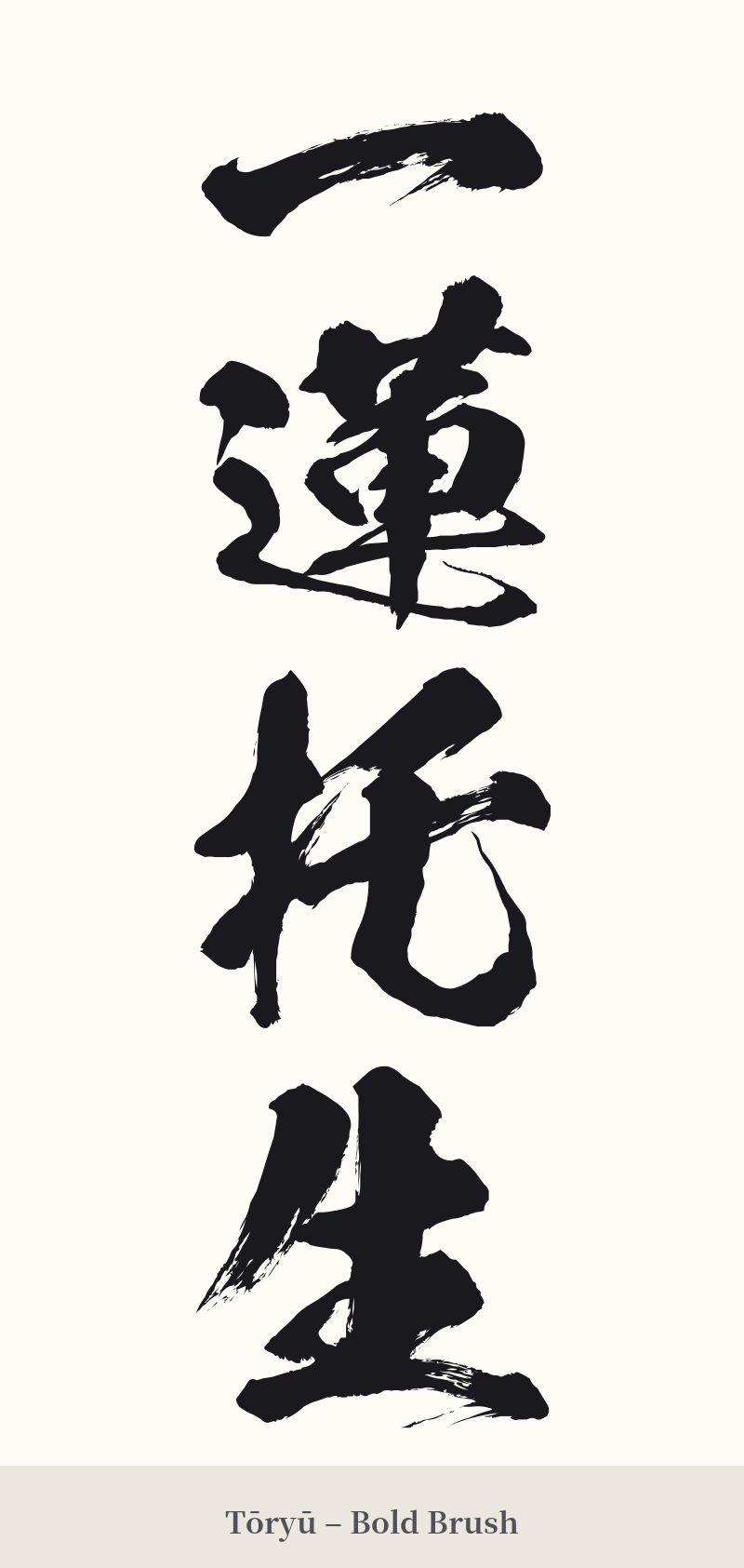
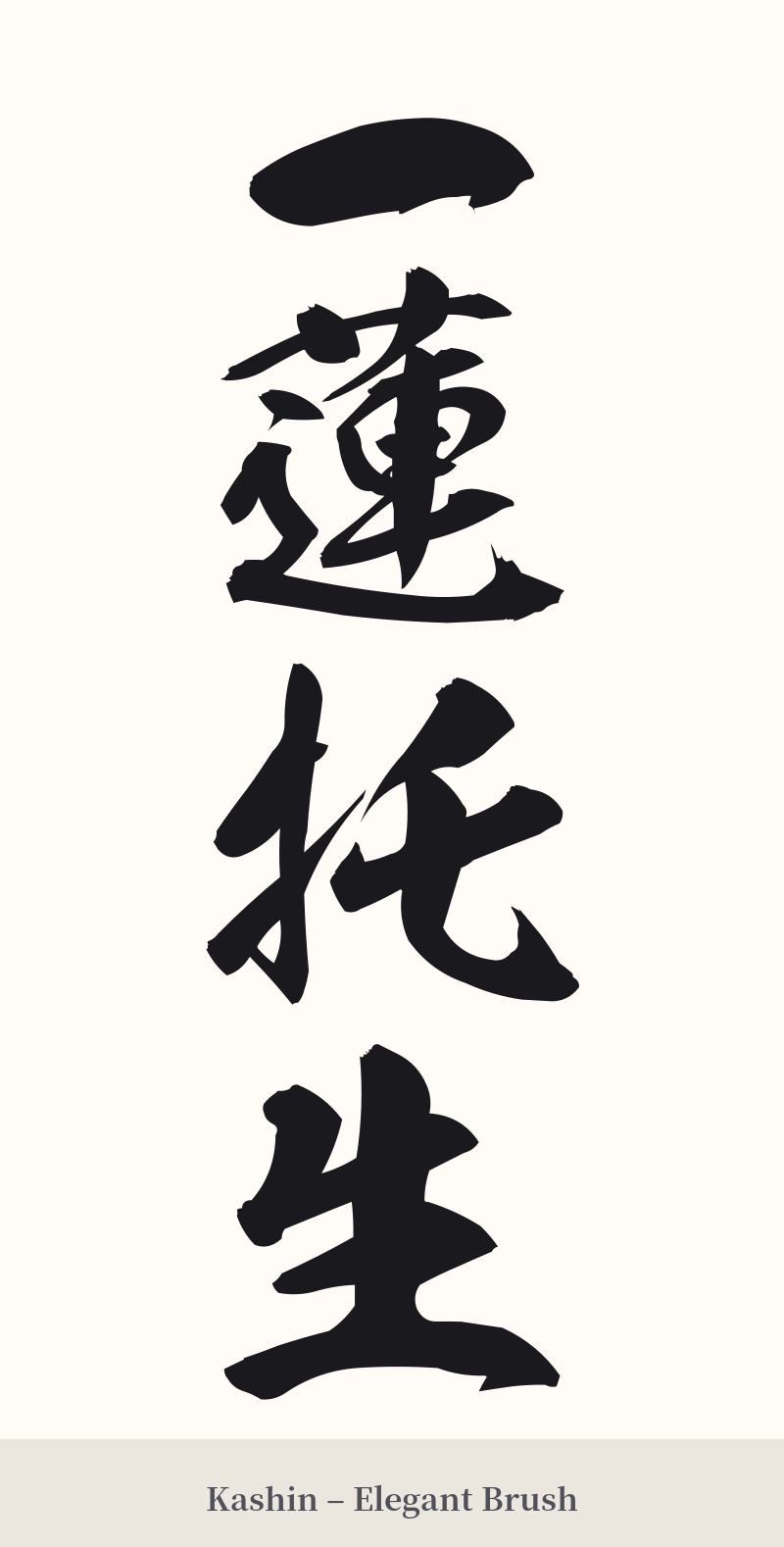
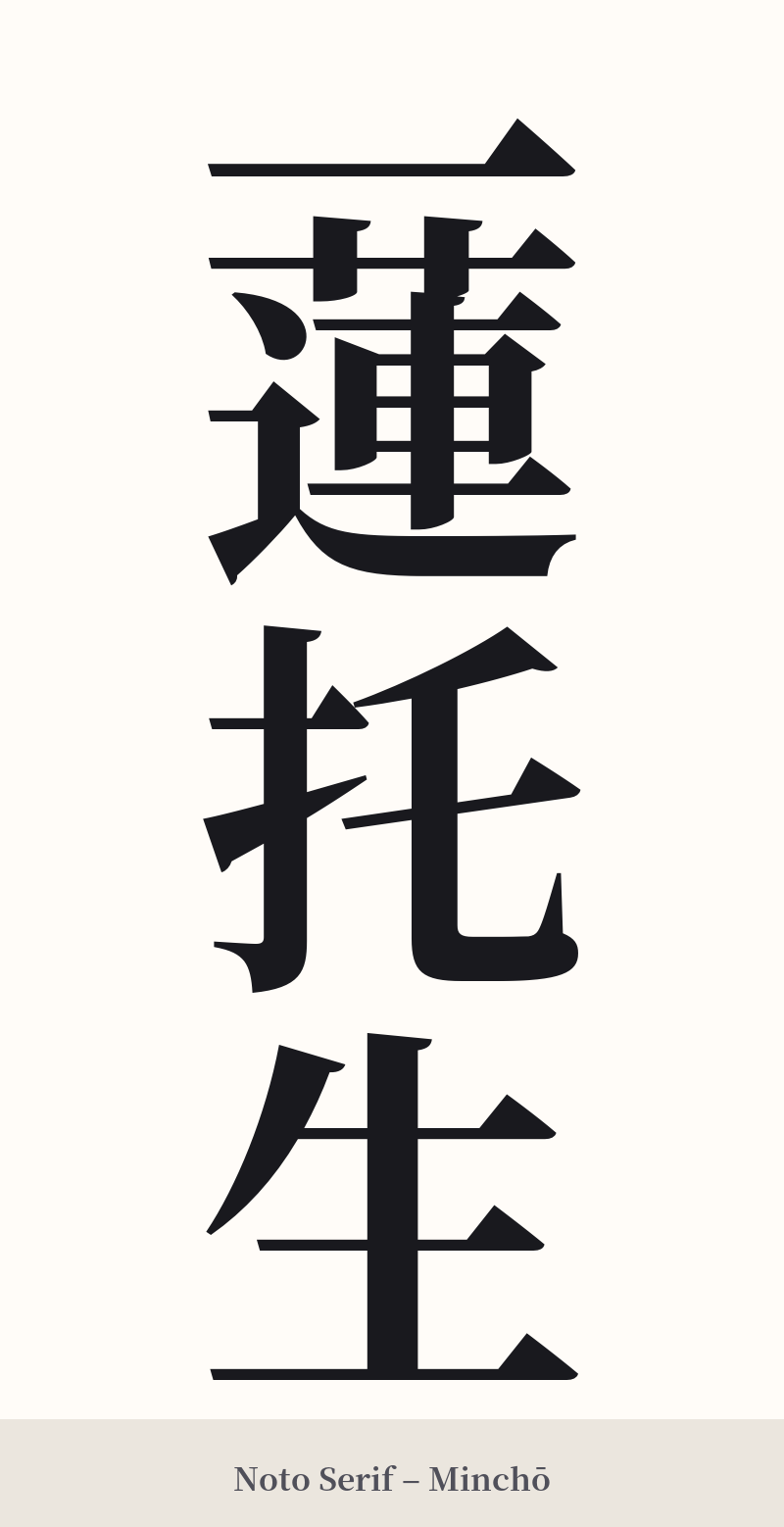
The same kanji can look dramatically different depending on the calligraphy style. Choose a font that matches the mood you want for your tattoo or design.
🎨 Tattoo Suitability
📐 Tattoo Design Guide
The four-character structure of 一蓮托生 makes it ideal for a vertical tattoo design. This traditional orientation is visually striking and works well in long, narrow spaces on the body.
– Placement: Consider placing it vertically along the spine, the forearm, or the calf. For a horizontal design, the chest or upper back would provide a suitable canvas.
– Font Style: Traditional calligraphy styles are highly recommended to honor the idiom's classical origins. A bold, blocky Kaisho (楷書) script emphasizes strength and stability, while a flowing, semi-cursive Gyōsho (行書) script can convey a more personal and emotional feeling.
– Visual Elements: To enhance the meaning, consider incorporating a subtle image of a lotus flower. The kanji could be placed over a faint, stylized lotus blossom, or a single lotus could be tattooed near the phrase. This visually connects the design back to its powerful origin story.
Comments