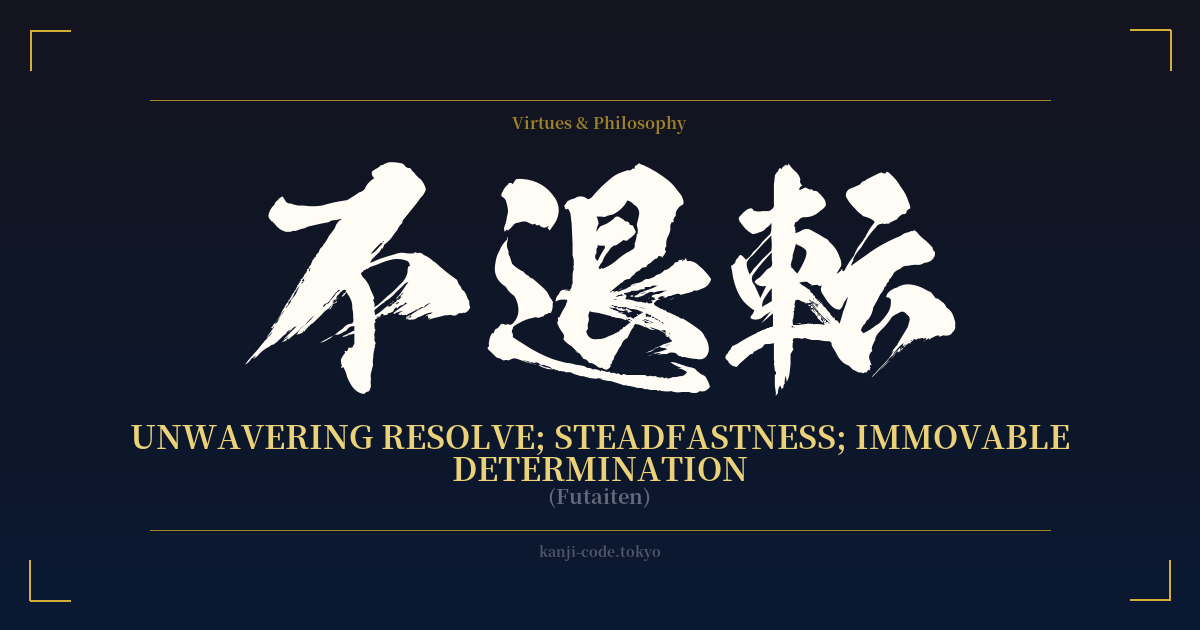
✍️ 不退転 (Futaiten) — Cultural Context
不退転 (Futaiten) is a word that resonates with the unshakeable core of the human spirit. It translates to unwavering resolve, steadfastness, or immovable determination. This is not mere stubbornness, but a profound state of commitment where one’s path is set, and there is no turning back, no regression, and no surrender to doubt or adversity.
The term has its origins in Mahayana Buddhism. It describes a pivotal stage on the path to enlightenment, known as avaivartika in Sanskrit. A Bodhisattva who reaches the state of Futaiten is one who will never again regress in their spiritual journey. They have achieved a point of no return, their progress towards becoming a Buddha is now irreversible. This concept signifies a complete and total dedication to a higher purpose, free from the wavering and backsliding that plagues ordinary consciousness.
From the monasteries, this powerful idea seeped into the warrior culture of Japan. The samurai class, heavily influenced by Zen Buddhism, adopted Futaiten as a martial and philosophical ideal. For a warrior, it meant entering a battle or undertaking a mission with a mind that had already accepted all possible outcomes, a mind that would not retreat or falter. This unwavering spirit, known as 不動心 (Fudōshin) or "immovable mind," was considered the mark of a true master of both the sword and the self.
In modern Japan, Futaiten remains a potent and respected term. While not used in casual, everyday conversation, it is invoked to describe individuals who display extraordinary willpower and dedication. You might hear it used to praise a determined athlete pushing for a championship, an entrepreneur who builds a company against all odds, or an artist who pursues their vision relentlessly. It speaks to a quality of character that is deeply admired in Japanese culture: the strength to set a course and follow it through to the end, no matter the obstacle. It is the quiet, internal engine of greatness.
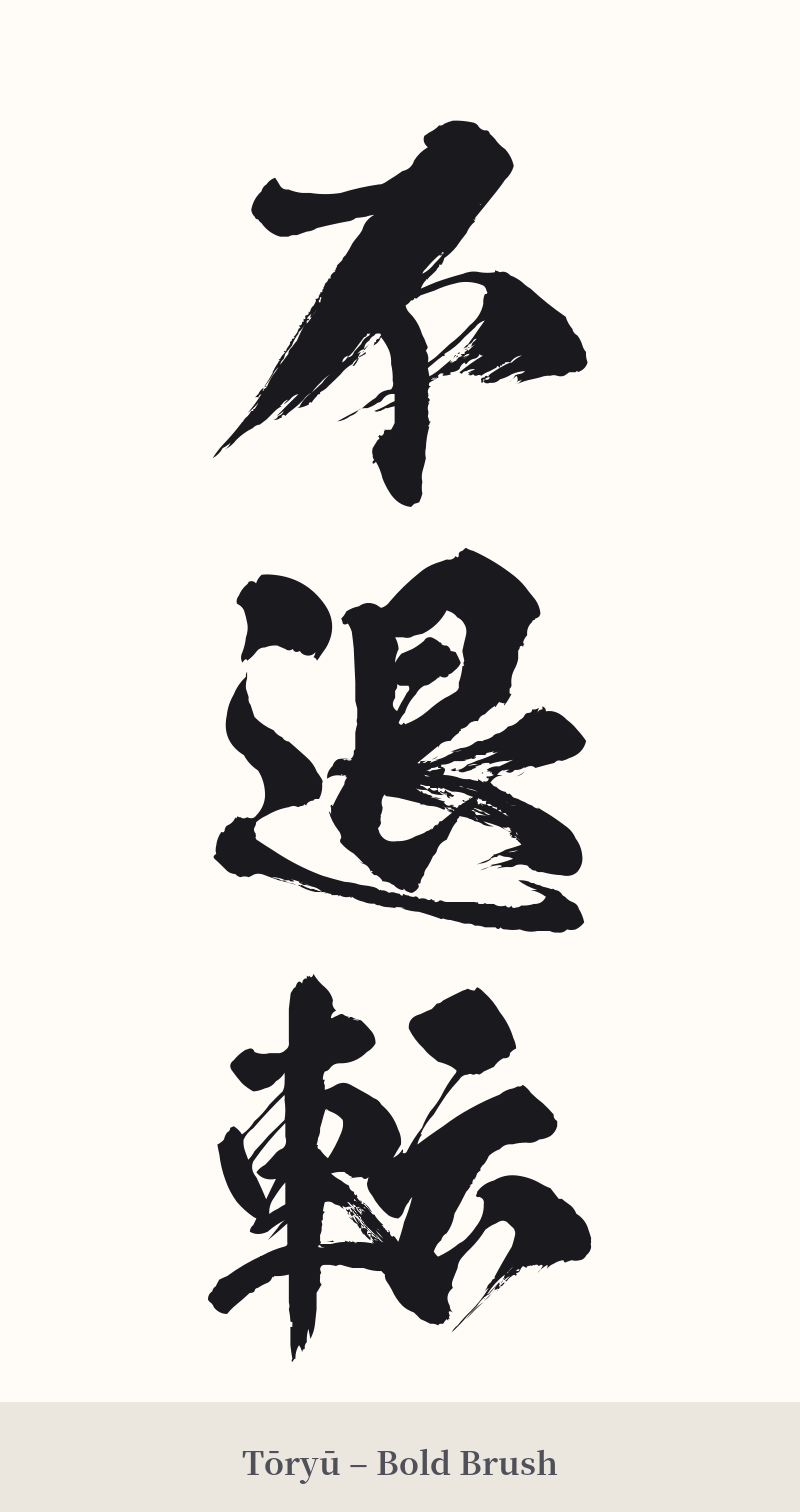
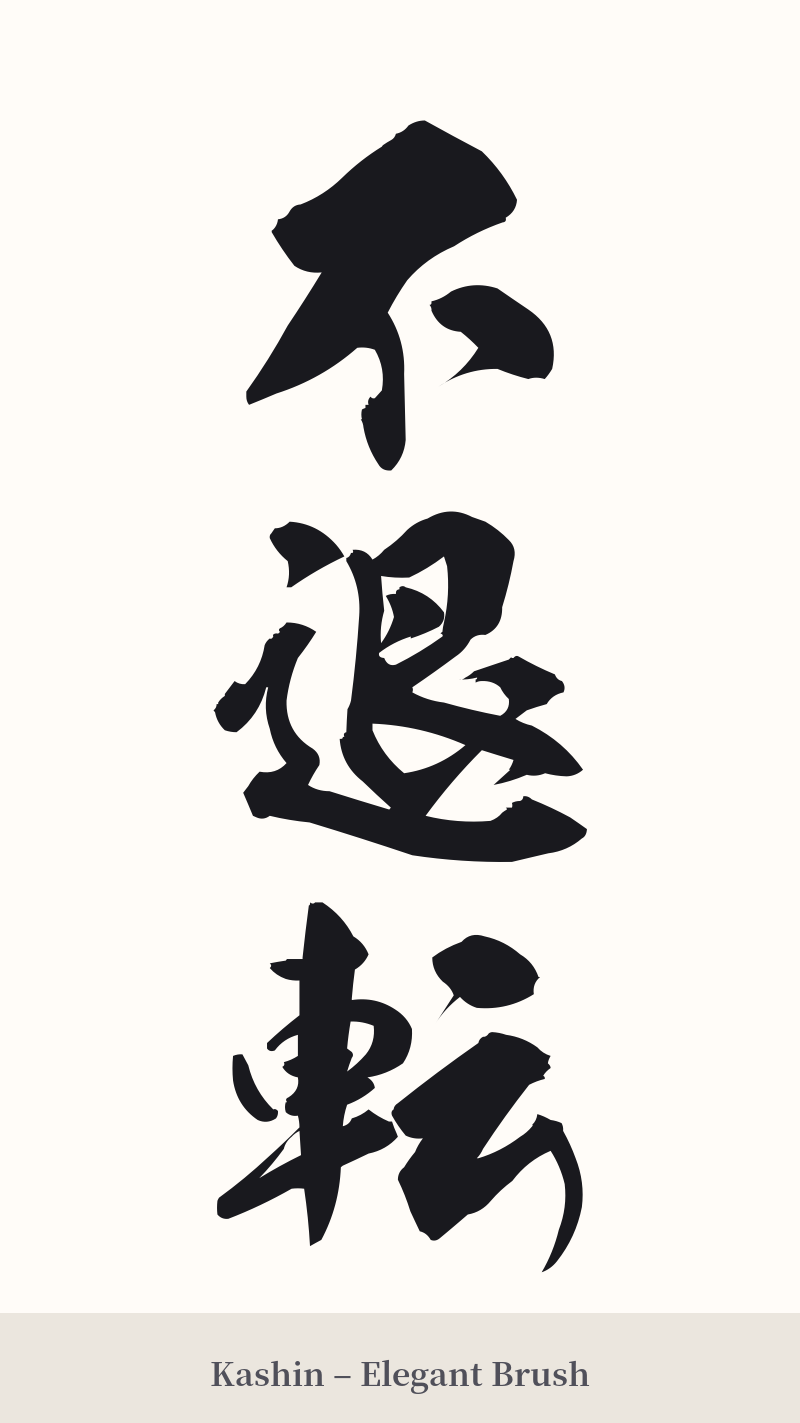
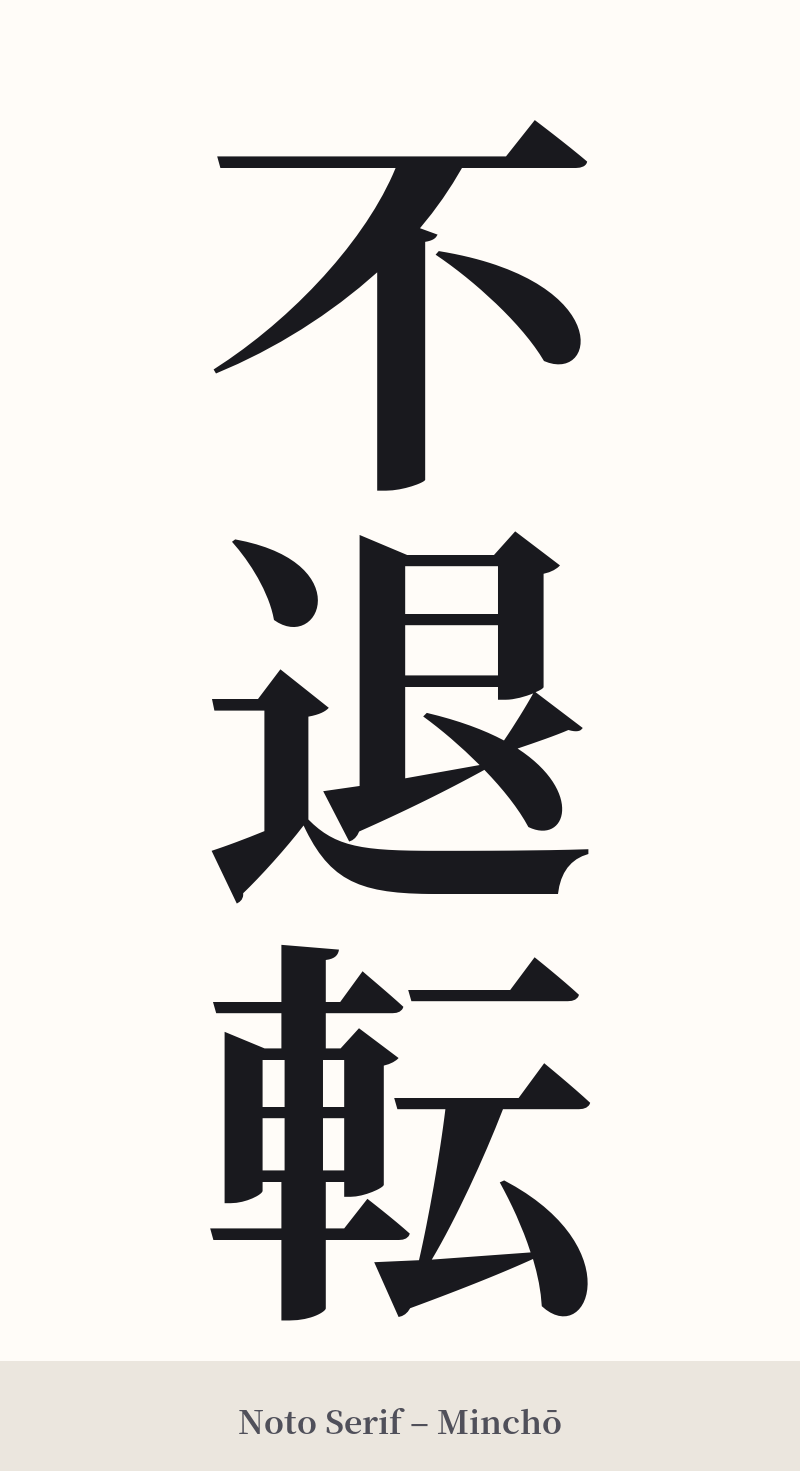
🖌️ Font Styles for 不退転
The same kanji can look dramatically different depending on the calligraphy style. Choose a font that matches the mood you want for your tattoo or design.
🎨 Tattoo Suitability
📐 Tattoo Design Guide
For a word as profound as 不退転, the design should reflect its strength and clarity.
– Placement: A vertical alignment is the most traditional and visually appealing for this three-character compound. The spine, inner forearm, or along the calf or ribs are excellent locations that complement this vertical flow.
– Font Style: The style can dramatically alter the feel. A strong, clear Kaisho (block script) style emphasizes the 'immovable' and 'steadfast' quality. For a more dynamic and fluid feel that speaks to relentless forward momentum, a Gyosho (semi-cursive script) is an excellent choice. A bold, expressive Shodo (calligraphy) style can capture the raw power and spirit behind the word.
– Visual Tips: Treat the three characters as a single, unified design element. The spacing and balance between 不, 退, and 転 are crucial. Ensure your tattoo artist understands they form one concept and should not be separated or awkwardly spaced. The simplicity of the word's meaning is its strength, so avoid adding extraneous design elements that might clutter or distract from the kanji itself.
Comments