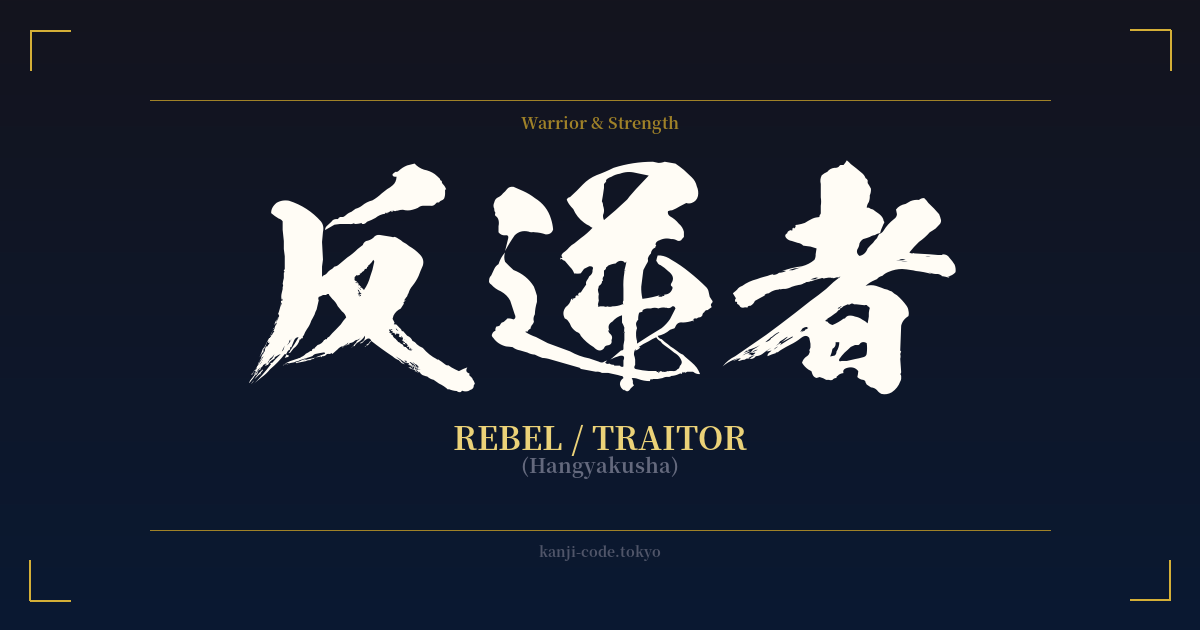
✍️ 反逆者 (Hangyakusha) — Cultural Context
The Japanese word 反逆者 (Hangyakusha) is a potent and heavy term, translating to both 'rebel' and 'traitor.' While Western culture often romanticizes the rebel as a hero fighting against an unjust system, the Japanese context for this word is far more severe, leaning heavily towards the dishonorable meaning of 'traitor.' Understanding this distinction is crucial to grasping the word's true weight.
The foundation of this negative connotation lies deep within Japan's feudal history, particularly the samurai ethos. The concept of 忠義 (chūgi), or unwavering loyalty to one's lord, was the highest virtue. To betray one's master was the ultimate sin, a stain on one's honor that could not be washed away. A hangyakusha was someone who committed this cardinal offense, and their name would live in infamy.
The most infamous hangyakusha in Japanese history is Akechi Mitsuhide. A trusted general of the powerful warlord Oda Nobunaga, Akechi turned against his master in 1582, forcing Nobunaga to commit seppuku in the Honnō-ji temple in Kyoto. While his motives are still debated by historians, his act of betrayal cemented his legacy as the archetypal traitor. When Japanese people hear the word 反逆者, figures like Akechi Mitsuhide immediately come to mind.
This concept of betraying a master is a recurring theme in Japanese storytelling, from classic samurai films to modern anime and manga. A character labeled a hangyakusha is often a complex, tragic, or villainous figure who has broken a sacred trust. They are rarely portrayed as straightforward heroes. The act of rebellion, 謀反 (muhon), is seen as a grave disruption of social and cosmic order.
In modern Japan, the word is not used lightly. While it can be applied metaphorically to someone who goes against corporate culture or family expectations, it still carries a strong sting of condemnation. It is a label one is given, not one that a person would proudly claim. Unlike the English word 'rebel,' which can be a badge of honor signifying independence and free-thinking, hangyakusha remains rooted in the shame of disloyalty.
Therefore, while the idea of a 'rebel' tattoo is appealing, choosing 反逆者 is fraught with cultural misunderstanding. It doesn't capture the spirit of a lone wolf or a freedom fighter; instead, it evokes images of treachery and dishonor. It is a word defined by the perspective of those who were betrayed, making it a powerful but profoundly negative statement.
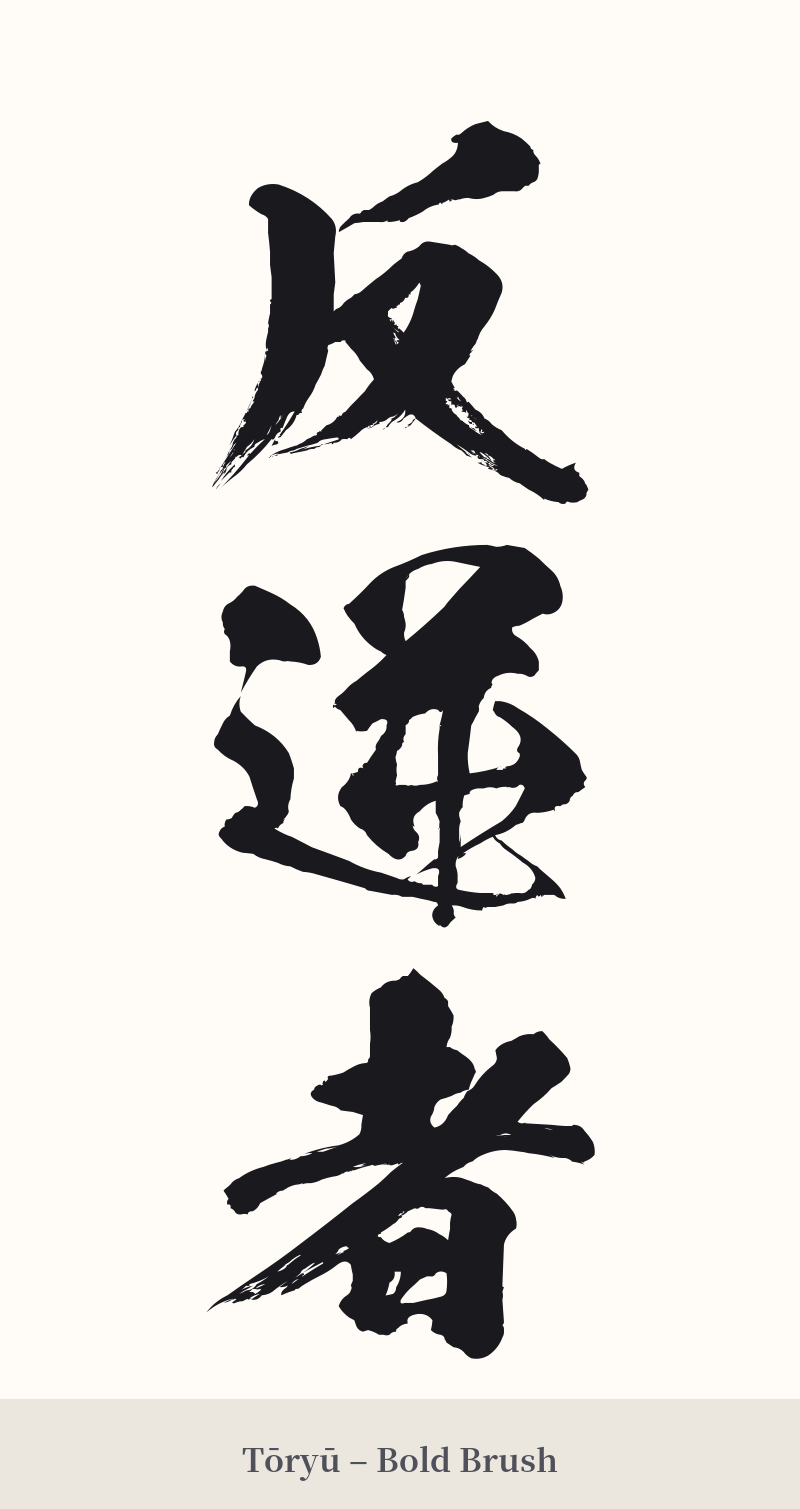
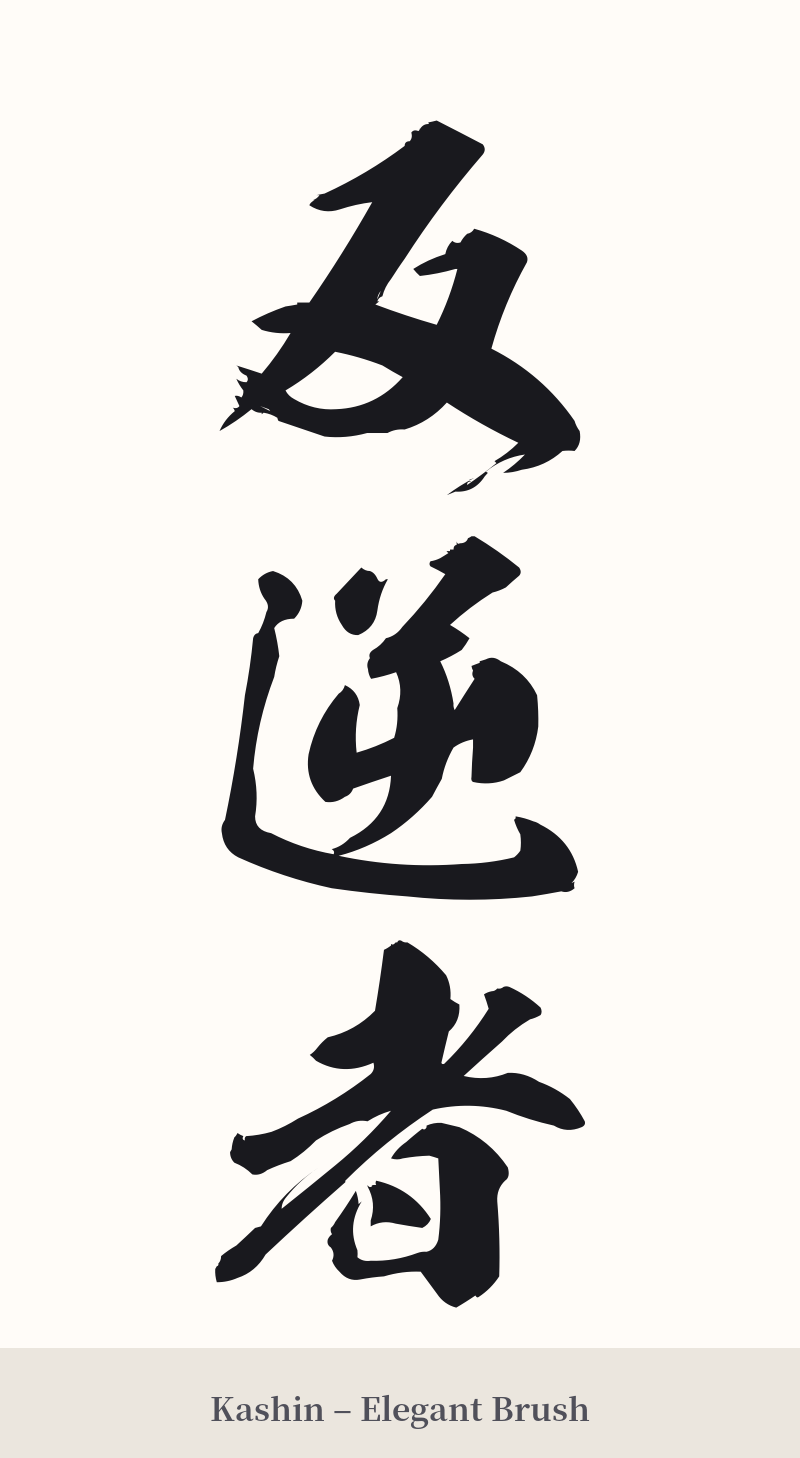
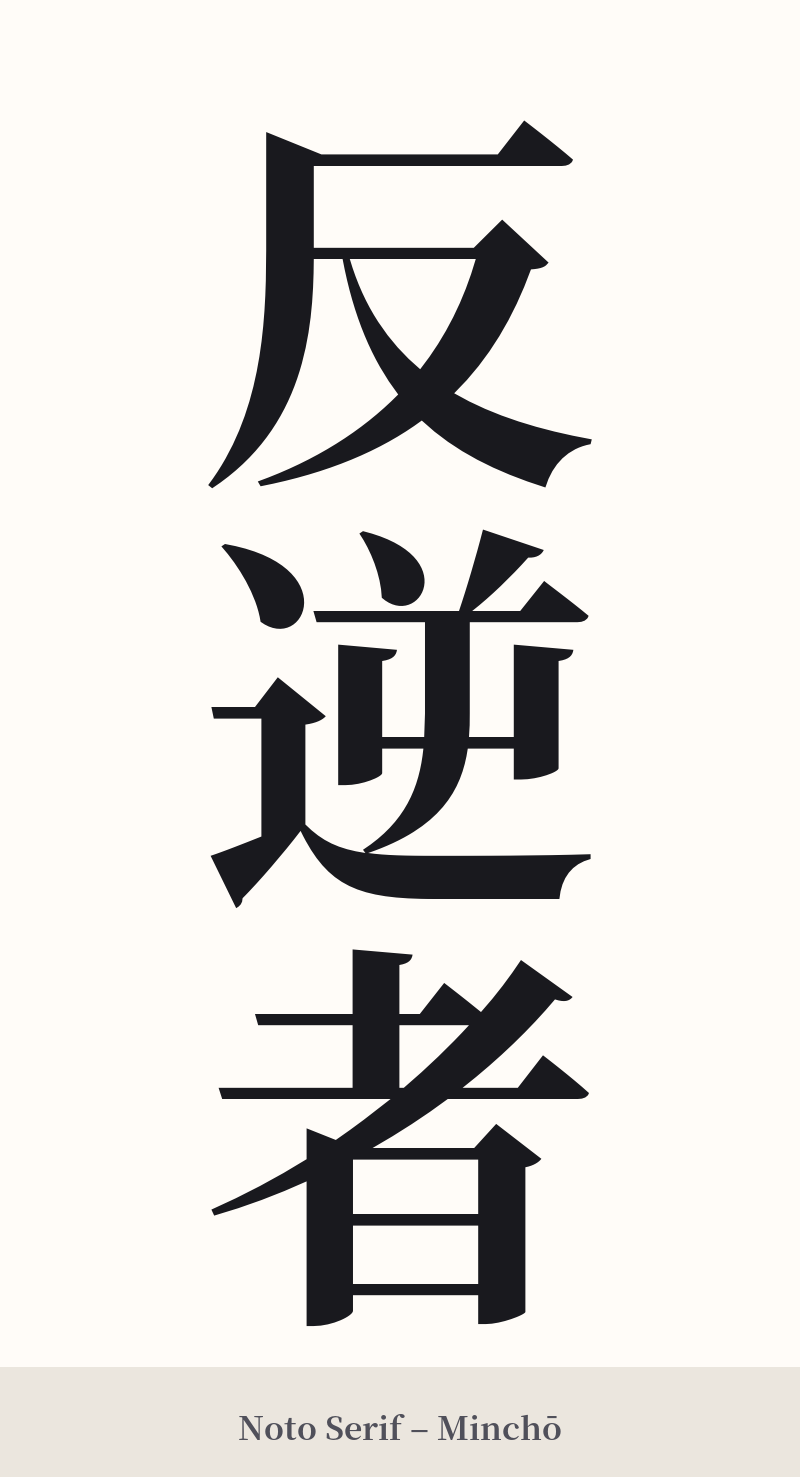
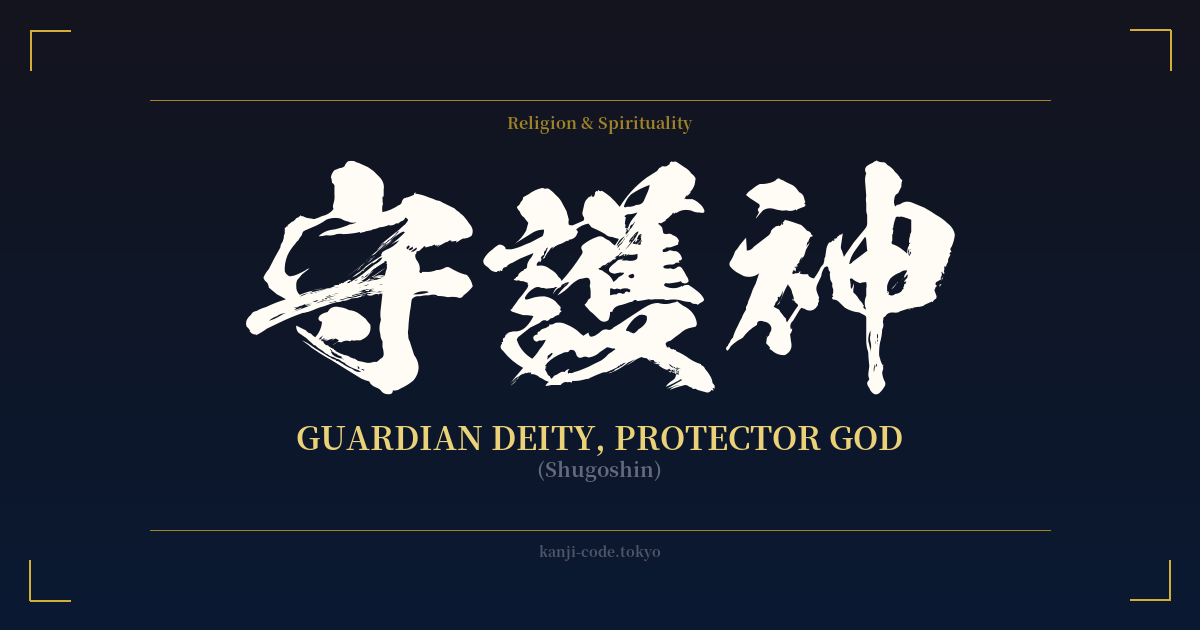
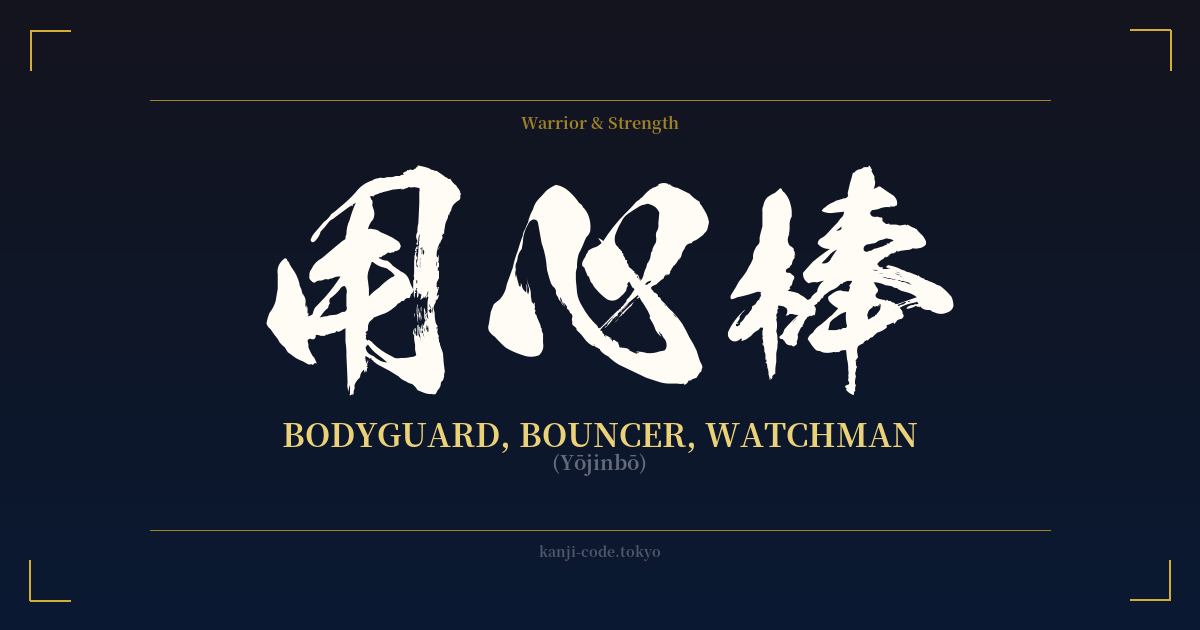
🖌️ Font Styles for 反逆者
The same kanji can look dramatically different depending on the calligraphy style. Choose a font that matches the mood you want for your tattoo or design.
🎨 Tattoo Suitability
📐 Tattoo Design Guide
If you choose to proceed with this design despite the cultural warnings, the visual execution is key to conveying a sense of defiance.
– Placement: A vertical orientation is highly recommended for multi-character kanji. This looks powerful along the spine, forearm, or calf. A horizontal placement across the chest or upper back can also work, creating a strong, stable presence.
– Font Style: The font should match the intensity of the word. A rough, aggressive calligraphy style like Gyosho (semi-cursive) or Sosho (cursive) can emphasize the chaotic energy of rebellion. Conversely, a bold, angular Kaisho (block script) can communicate rigid defiance and an unshakeable will.
– Visual Tips: Ensure the three characters are visually balanced. The simplicity of 反, the complexity of 逆, and the structure of 者 should flow together. Consider a design with ink splatters or rough brush strokes to enhance the 'rebellious' feel. Avoid overly delicate or ornate styles, as they would clash with the word's harsh meaning.
Comments