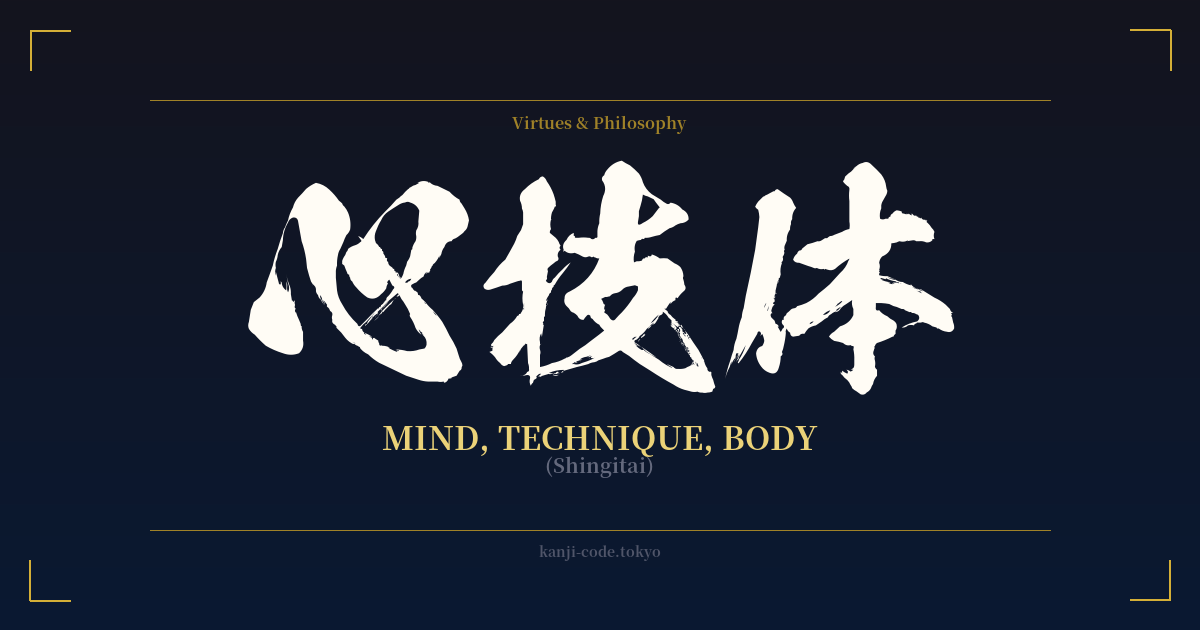
✍️ 心技体 (Shingitai) — Cultural Context
心技体 (Shingitai) is a foundational concept in Japanese culture, particularly within the world of martial arts (budō). It represents the three essential components that must be unified to achieve true mastery: Mind/Heart (心, shin), Technique/Skill (技, gi), and Body/Physique (体, tai).
This philosophy posits that these three elements are not merely a checklist of attributes but an interconnected, inseparable trinity. Excelling in one area while neglecting the others leads to an imbalanced and incomplete state. True strength, whether in judo, karate, sumo, or any other discipline, emerges only when the mind, technique, and body work in perfect harmony.
The concept is most famously associated with Japanese martial arts. While its exact origin is debated, it became a core tenet for martial artists aiming for a level of proficiency beyond mere physical prowess. It emphasizes that a warrior's true power comes from the integration of their mental state, their practiced skills, and their physical conditioning.
Let's break down each component:
心 (Shin) refers to the mind, heart, and spirit. It's about mental fortitude, emotional control, resilience, and unwavering focus. A practitioner with strong 'shin' remains calm under pressure, makes clear decisions, and possesses the indomitable spirit to persevere through adversity. It's the internal compass that guides all actions.
技 (Gi) represents the technique, art, or skill. This is the practical application of one's craft, honed through countless hours of dedicated practice. In martial arts, it's the specific forms, throws, and strikes. 'Gi' is about precision, efficiency, and the deep understanding of the mechanics behind every movement.
体 (Tai) is the physical body. This includes strength, stamina, speed, flexibility, and overall health. The body is the vessel that executes the techniques guided by the mind. A well-conditioned 'tai' provides the power and endurance needed to perform at the highest level.
The philosophy of Shingitai extends far beyond the dojo. It serves as a powerful model for personal and professional development in any field. An artist, a musician, a surgeon, or a business leader can apply this principle: cultivating the right mindset (shin), perfecting their craft (gi), and maintaining their physical and mental well-being (tai) to achieve excellence. It is a timeless Japanese blueprint for holistic self-mastery.
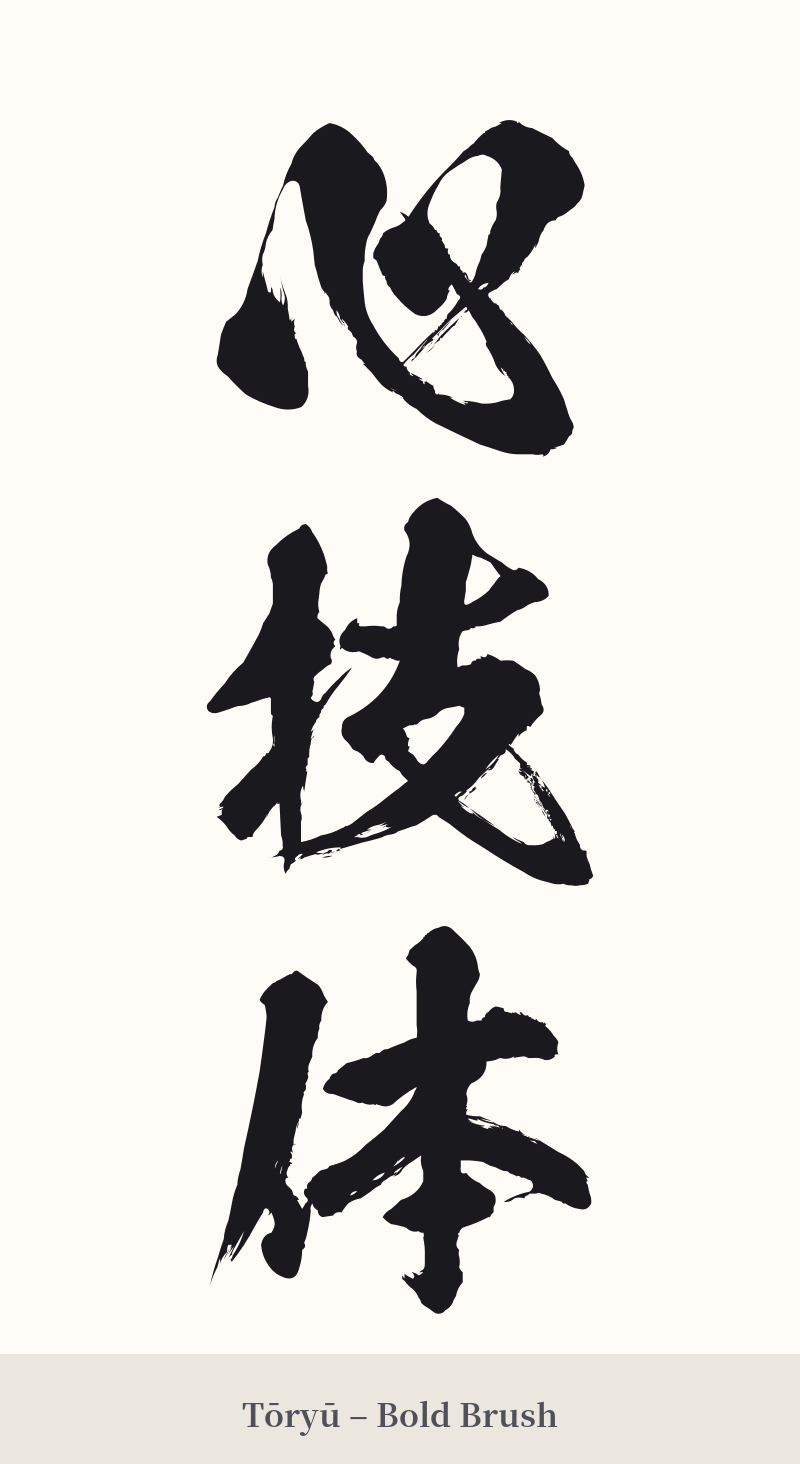
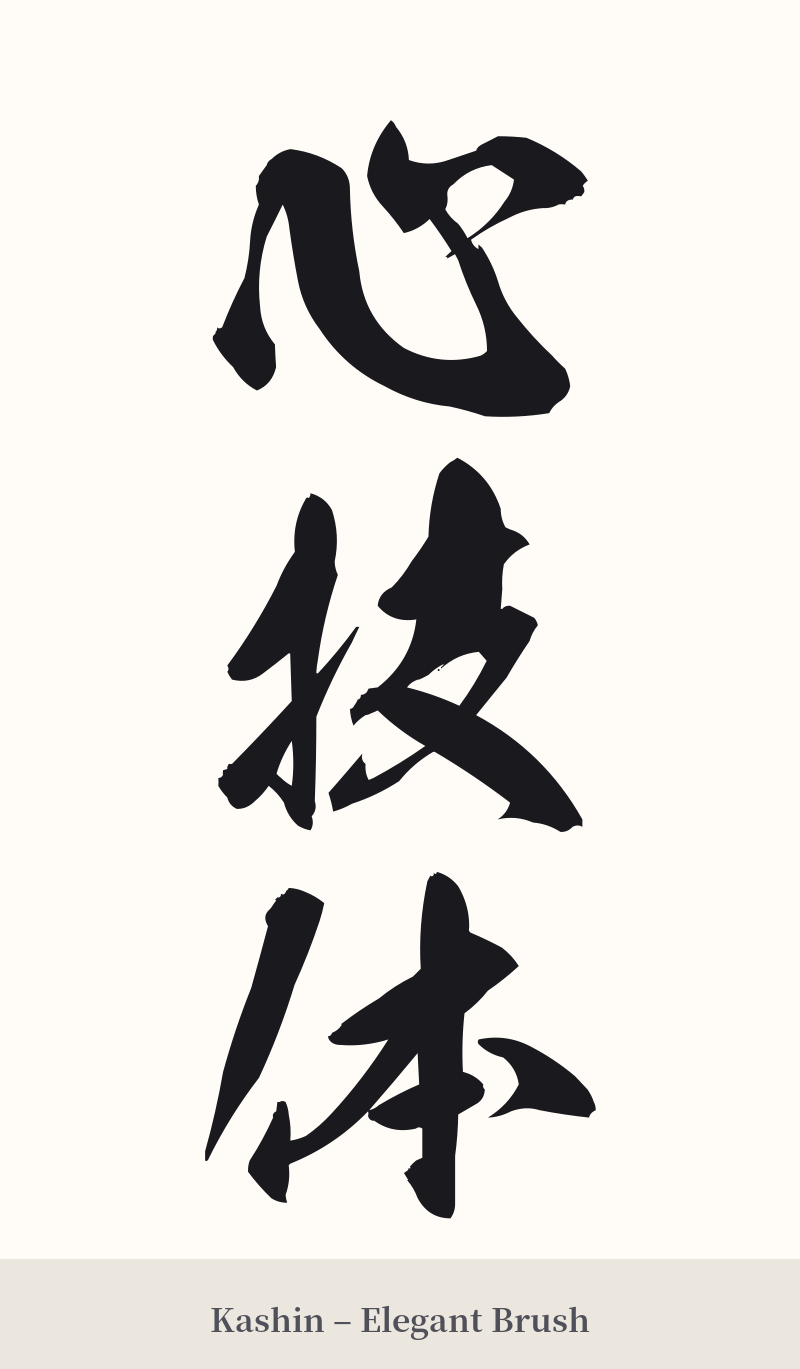
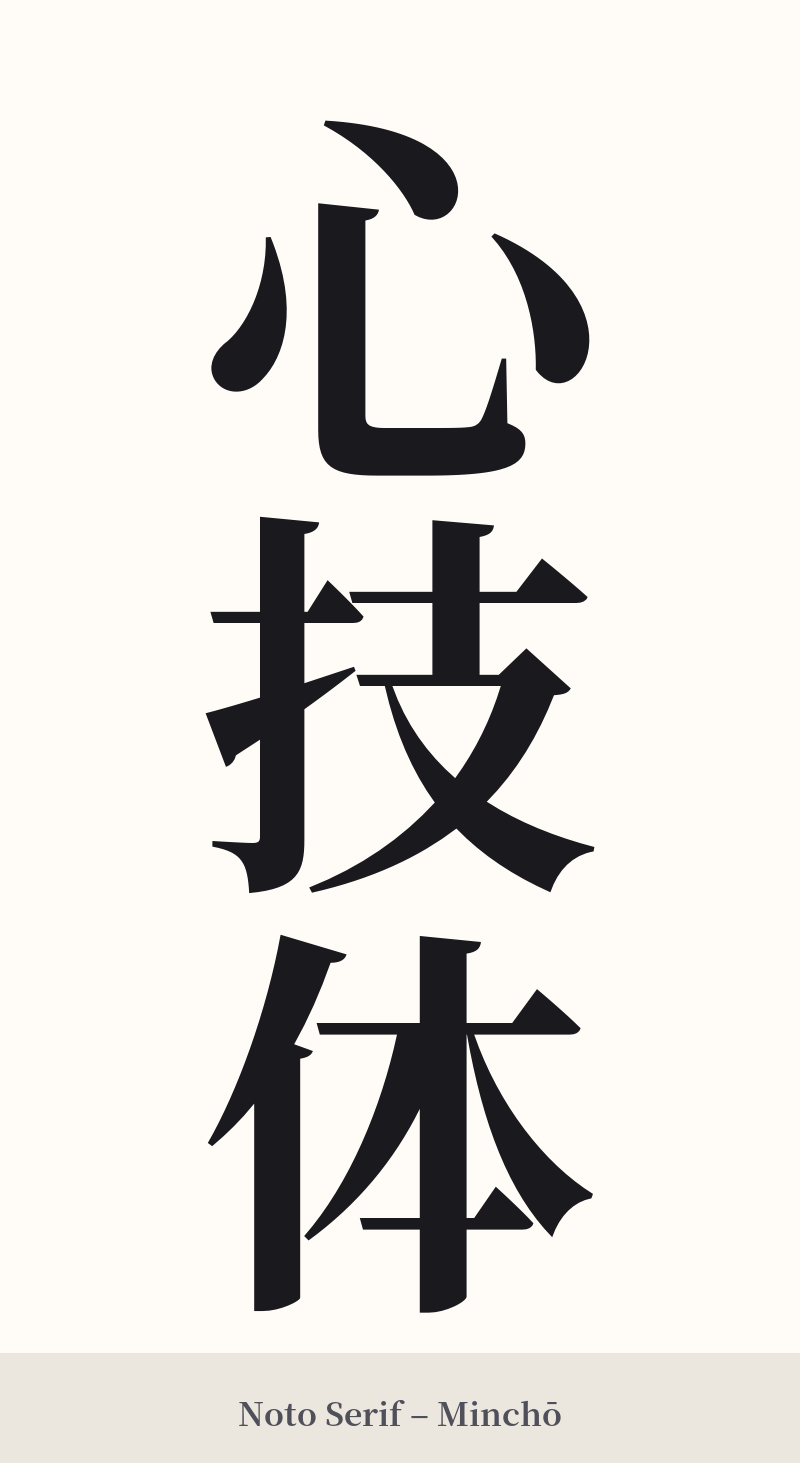
🖌️ Font Styles for 心技体
The same kanji can look dramatically different depending on the calligraphy style. Choose a font that matches the mood you want for your tattoo or design.
🎨 Tattoo Suitability
📐 Tattoo Design Guide
Shingitai offers a powerful and balanced aesthetic for a tattoo, with its three distinct characters.
– Placement: A vertical orientation is the most traditional and visually striking choice. It works exceptionally well along the spine, forearm, or the side of the calf or ribs. A horizontal placement can also be effective across the chest, upper back, or inner bicep.
– Font Style: The choice of script can dramatically alter the feel of the design. A Gyosho (semi-cursive) style can beautifully express the flow and connection between the three elements. For a design that emphasizes discipline and structure, a clean Kaisho (block) script is an excellent choice. A more dynamic Sosho (cursive) script can be used for an abstract, artistic feel, but legibility may be reduced.
– Visual Tips: Ensure the three characters are well-balanced in size and spacing to reflect their equal importance. Some designs incorporate an 'ensō' (Zen circle) behind the kanji to further symbolize unity, wholeness, and the cyclical nature of training.
Comments