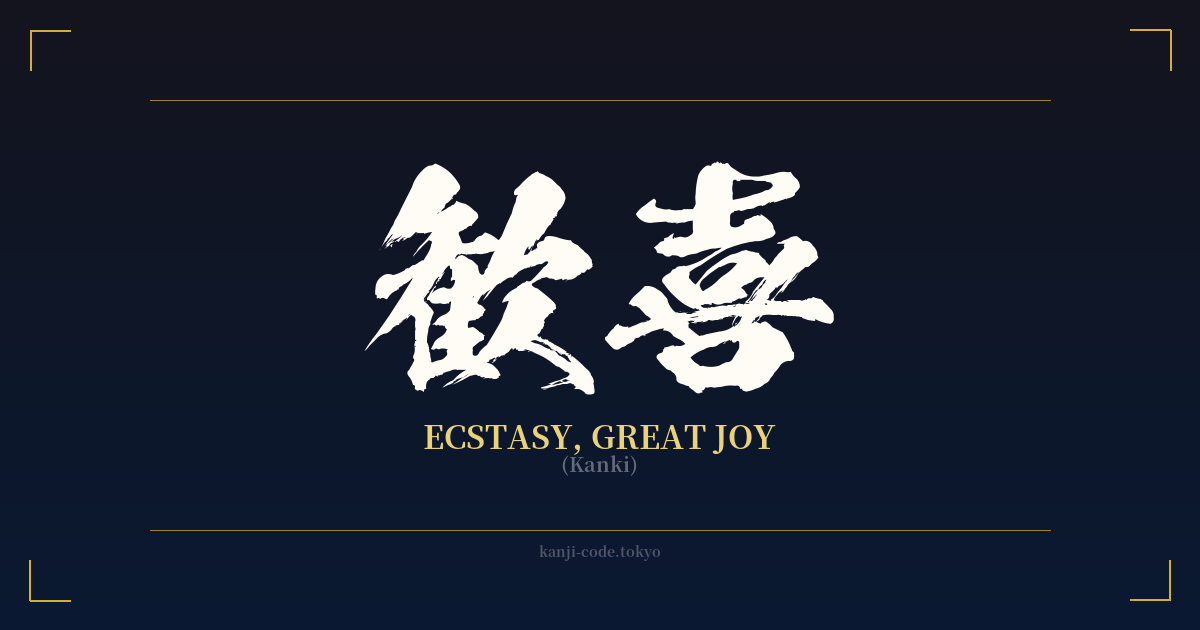
✍️ 歓喜 (Kanki) — Cultural Context
歓喜 (Kanki) is a Japanese word that transcends simple happiness. While words like 嬉しい (ureshii) describe a personal feeling of being happy, and 喜び (yorokobi) refers to a general state of joy, Kanki captures a moment of pure, unbridled, and often shared ecstasy. It's the kind of overwhelming joy that makes you want to shout from the rooftops, a triumphant explosion of positive emotion.
This is not an everyday feeling. Kanki is reserved for extraordinary moments. Imagine the collective roar of a stadium when the home team scores the winning goal in the final seconds—that is a moment of Kanki. It’s the feeling of a musician completing a flawless performance to a standing ovation, or the profound relief and joy of a family welcoming a soldier home. The word itself feels momentous, evoking a sense of climax and release.
The cultural roots of Kanki are deep and tied to both celebration and spirituality. The individual kanji hint at this. 歓 (kan) suggests a boisterous, open-mouthed delight, while 喜 (ki) originally depicted a drum and a mouth, symbolizing celebration with music and feasting. Together, they paint a picture of a full-bodied, expressive celebration.
In a spiritual context, particularly within Buddhism, Kanki can describe the profound joy that arises from spiritual insight or enlightenment. It’s the bliss experienced when one grasps a deep truth about the nature of existence, a serene yet powerful inner elation. This adds a layer of depth to the word, elevating it from mere worldly celebration to a state of spiritual fulfillment.
Because of its intensity, Kanki is not used lightly in daily conversation. You wouldn't say you feel 'Kanki' because you found a good parking spot. Its power lies in its rarity and its association with peak human experiences—victory, artistic transcendence, spiritual awakening, and profound connection. It embodies the pinnacle of positive emotion, a moment so joyful it becomes a defining memory.
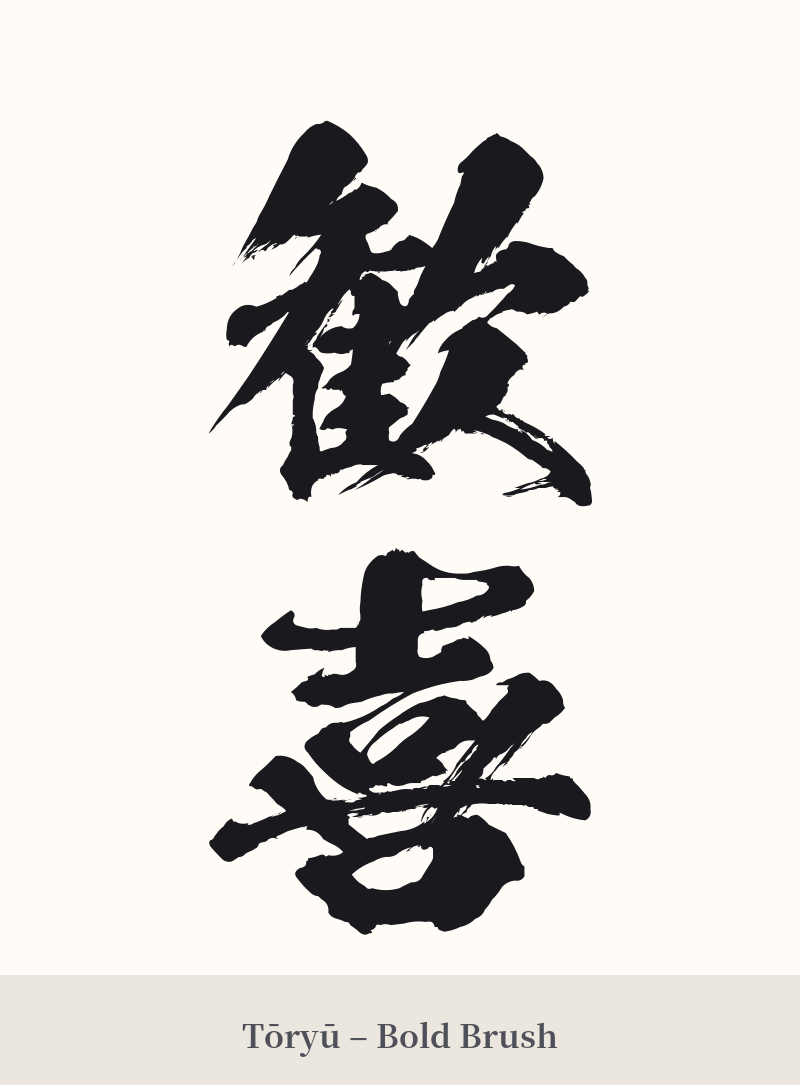
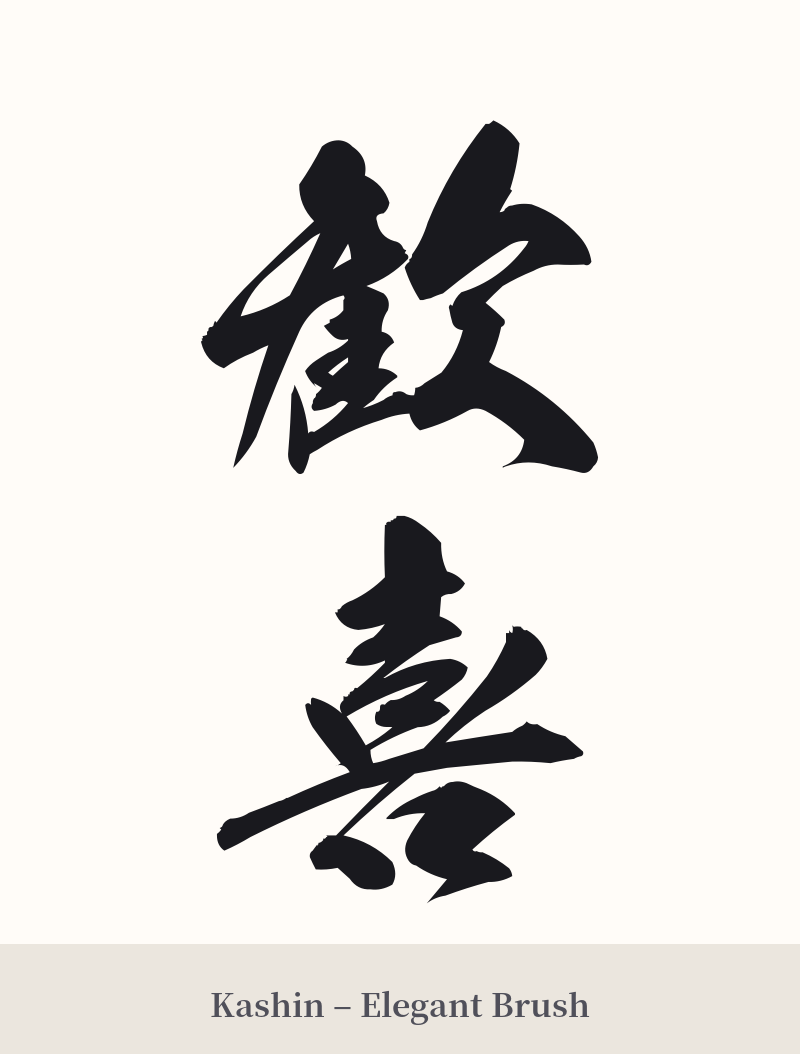
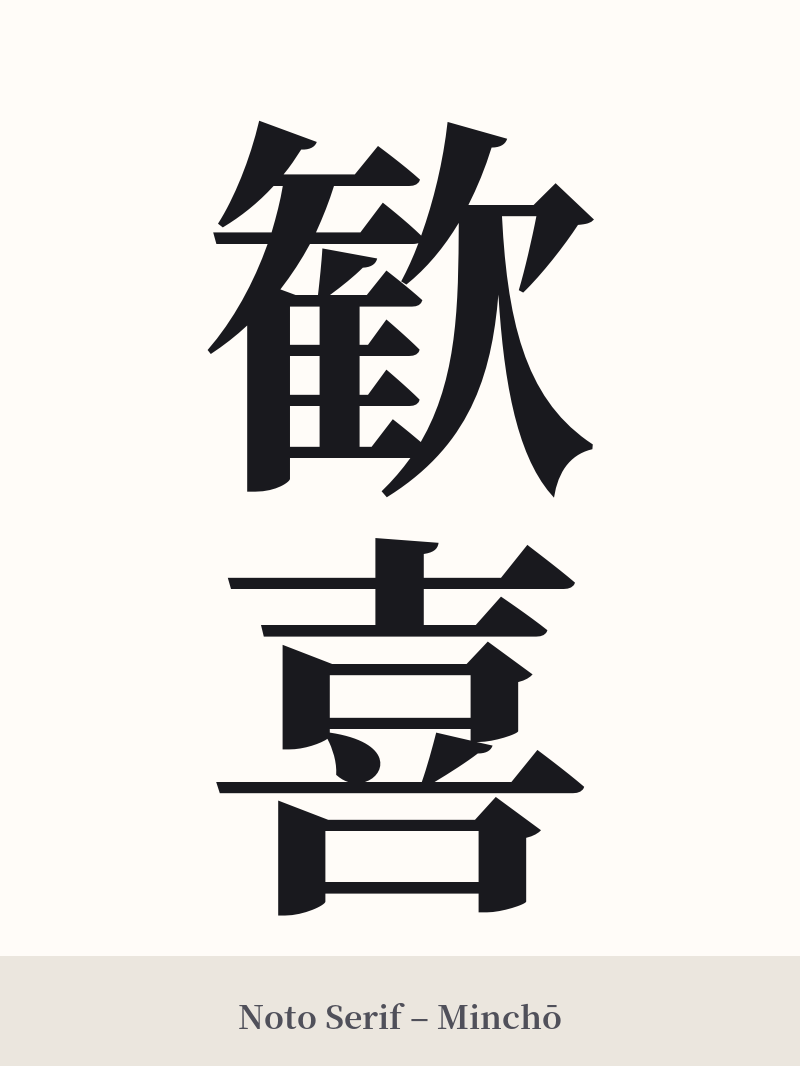
🖌️ Font Styles for 歓喜
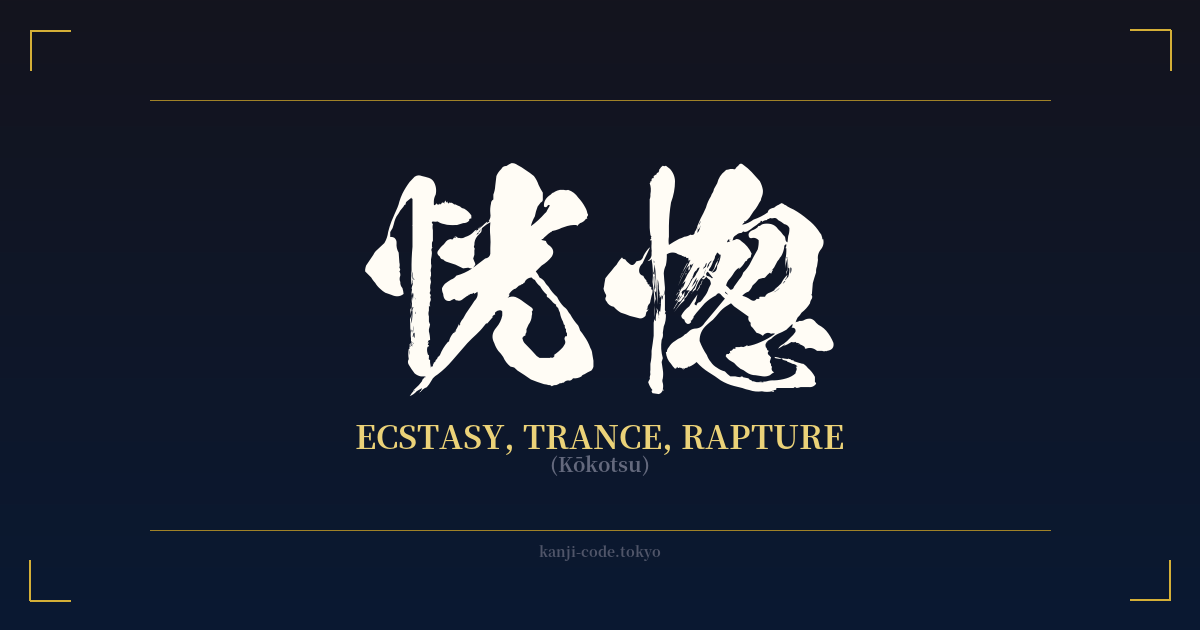
The same kanji can look dramatically different depending on the calligraphy style. Choose a font that matches the mood you want for your tattoo or design.
🎨 Tattoo Suitability
📐 Tattoo Design Guide
歓喜 is a visually impressive two-character word that works well for tattoos. Its complexity allows for artistic expression while its balance maintains a sense of harmony.
– Placement: For vertical arrangements, the forearm, calf, or along the spine are excellent choices. For a horizontal design, the chest, upper back, or inner bicep provide a strong canvas.
– Font Style: An expressive script like Gyosho (semi-cursive) or Sosho (cursive) can beautifully capture the flowing, emotional nature of 'ecstasy.' A bold, strong Kaisho (block script) can also work, giving the design a monumental, triumphant feel, as if carved in stone.
– Visual Elements: Consider complementing the kanji with imagery that reinforces its meaning. Abstract wisps of energy or flowing lines can represent the outburst of joy. For a spiritual interpretation, a blossoming lotus flower or a subtle enso (Zen circle) can be integrated into the design. A background of a rising sun could symbolize a triumphant new beginning.
Comments