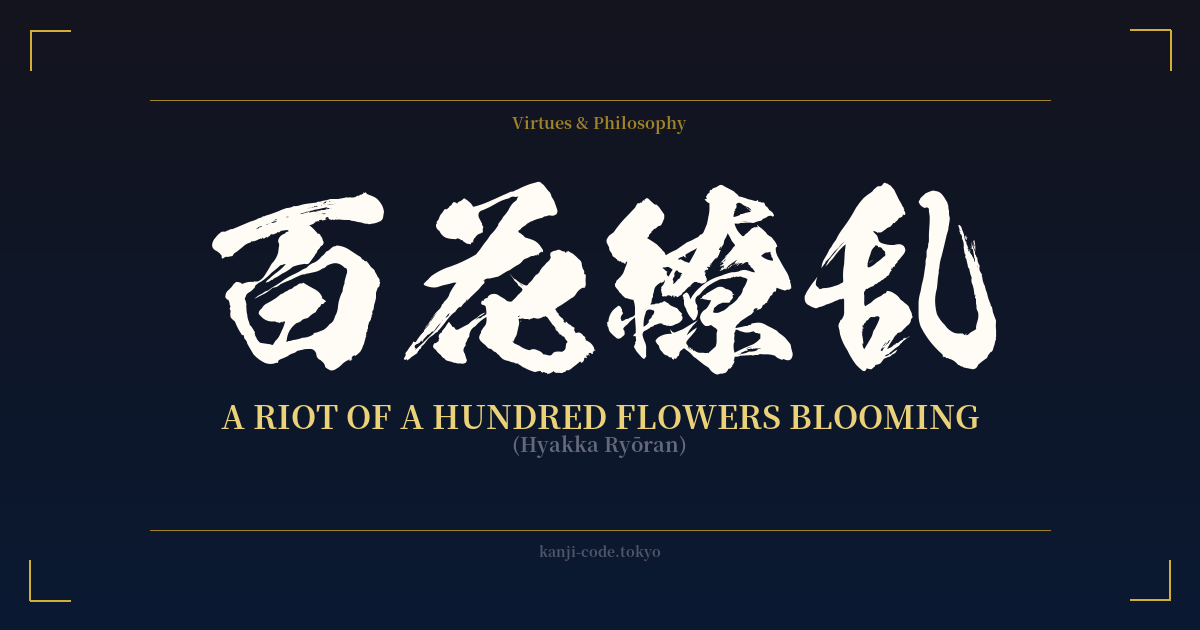
✍️ 百花繚乱 (Hyakka Ryōran) — Cultural Context
百花繚乱 (Hyakka Ryōran) is a magnificent four-character idiom that translates to "a riot of a hundred flowers blooming." It paints a vivid picture of countless flowers blossoming all at once in a beautiful, chaotic profusion. This phrase captures a core aesthetic in Japanese culture: the appreciation for ephemeral, overwhelming natural beauty, much like the famous cherry blossom season.
Literally, it evokes a scene of a field or mountainside so covered in flowers that it’s a dazzling, almost disorderly spectacle. The key is in the final character, 乱 (ran), which means 'riot' or 'disorder.' This isn't a neat, manicured garden; it's nature unleashed in its most vibrant and untamed form. It speaks to a beauty that is so abundant it defies order, creating a powerful sensory experience.
Beyond its literal meaning, Hyakka Ryōran has a powerful metaphorical application. It is often used to describe a period in time or a specific field where many talented and brilliant individuals emerge simultaneously. Imagine an era filled with great artists, writers, and thinkers, all competing and collaborating, creating a vibrant cultural scene. This flourishing of diverse talent is a perfect example of Hyakka Ryōran. It can describe the golden age of a particular art form, the sudden rise of a generation of star athletes, or even a bustling marketplace of new ideas and innovations.
In modern Japan, you might hear the term used to describe the competitive world of pop idols, where many groups debut at once, each with their own unique charm. It can also refer to a season of anime with an unusually high number of standout shows, or a new wave in fashion where countless styles and trends emerge on the streets of Tokyo. The phrase carries a sense of excitement, competition, and dazzling variety. It’s a celebration of abundance, whether in nature or in human achievement, acknowledging that true brilliance often emerges from a beautiful, creative chaos.
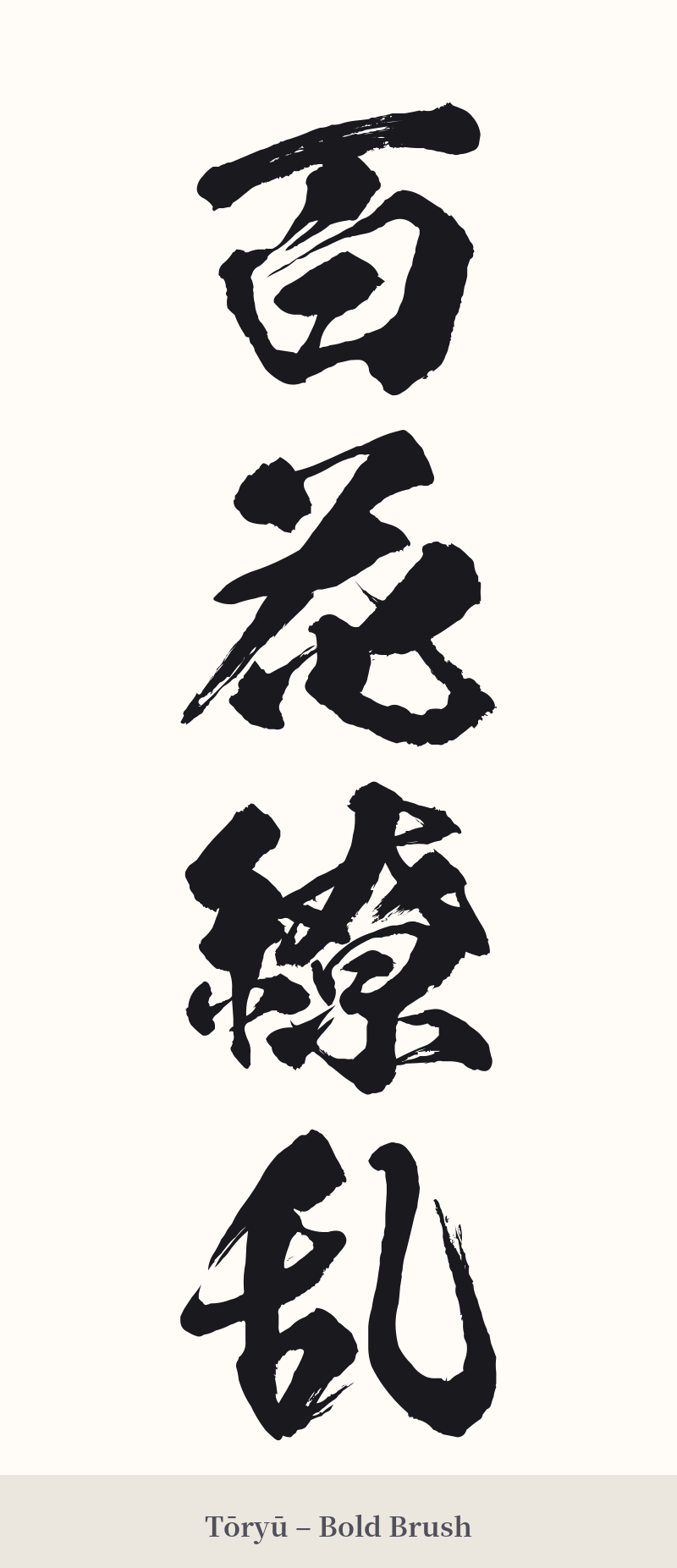
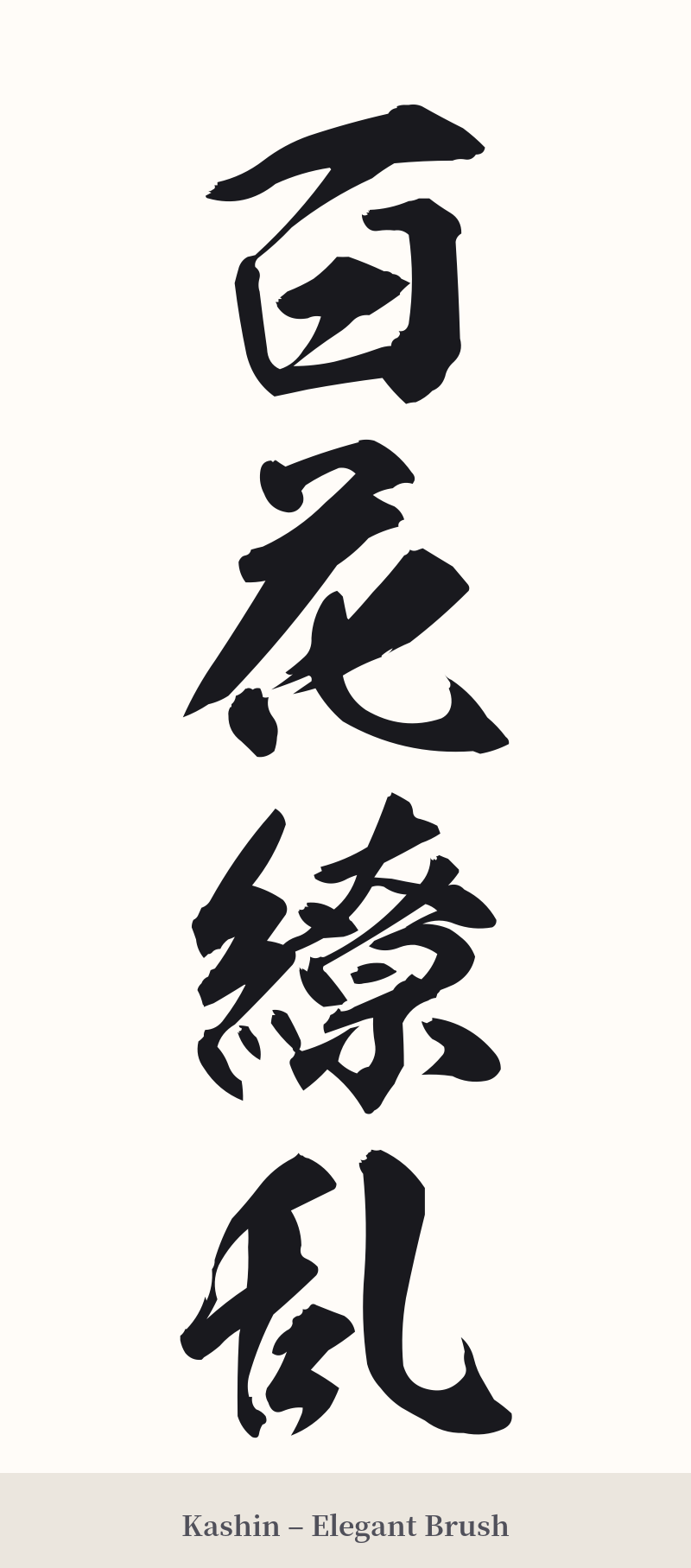
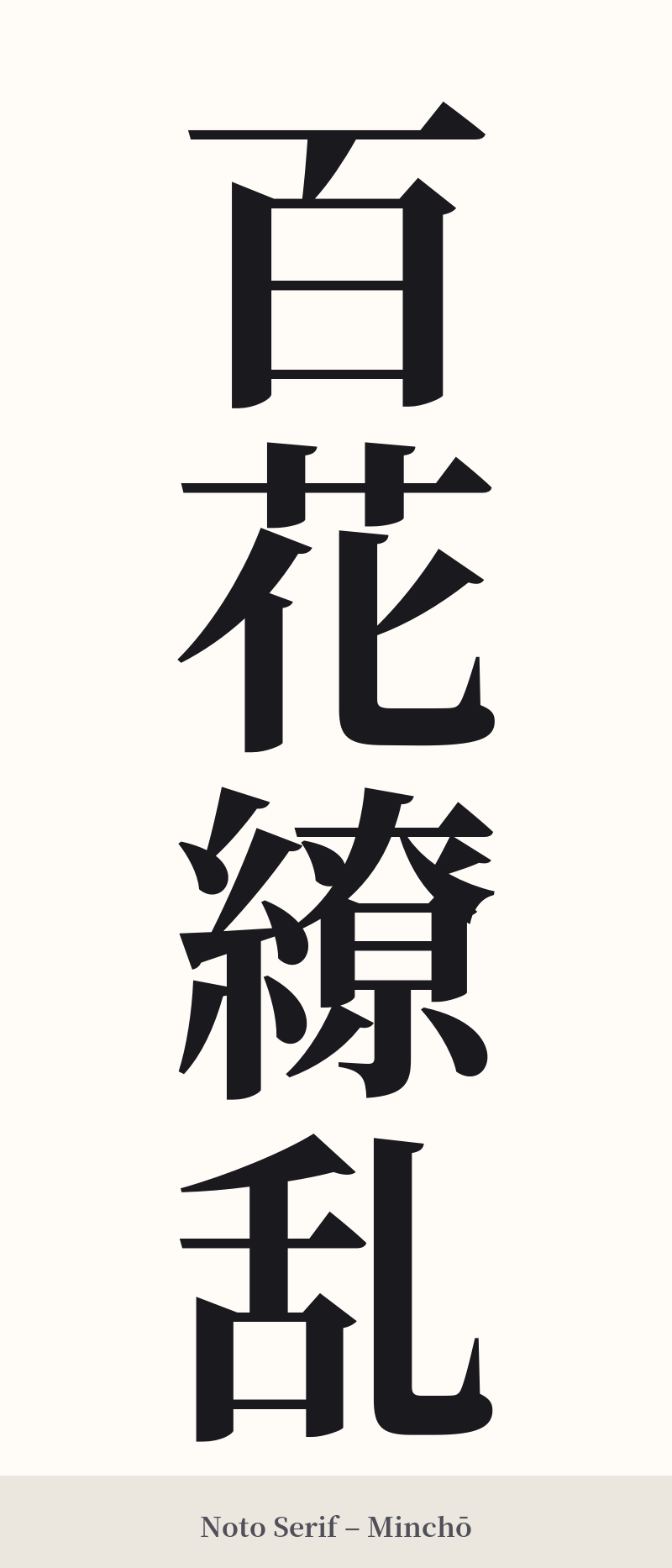
🖌️ Font Styles for 百花繚乱
The same kanji can look dramatically different depending on the calligraphy style. Choose a font that matches the mood you want for your tattoo or design.
🎨 Tattoo Suitability
📐 Tattoo Design Guide
For a 百花繚乱 tattoo, the four-character composition offers great versatility.
– Placement: A vertical orientation is classic and powerful, looking excellent along the spine, forearm, or calf. This arrangement allows the characters to flow downwards elegantly. For a bolder statement, a horizontal placement across the chest or upper back works well.
– Font Style: To capture the 'riotous' and 'blooming' energy, a semi-cursive (Gyosho) or fully cursive (Sosho) calligraphic style is ideal. These styles have fluid, connected strokes that can mimic the organic tangle of blooming flowers. Alternatively, a strong and clear block script (Kaisho) can provide a powerful contrast to the chaotic meaning, grounding the design.
– Visual Tips: Consider integrating imagery with the characters. Delicate flower petals or vines could be designed to weave around the kanji, especially the complex character 繚. This can visually tie the design directly to its meaning. Given the complexity of 繚, ensure the design is large enough for the details to be clear and not bleed over time.
Comments