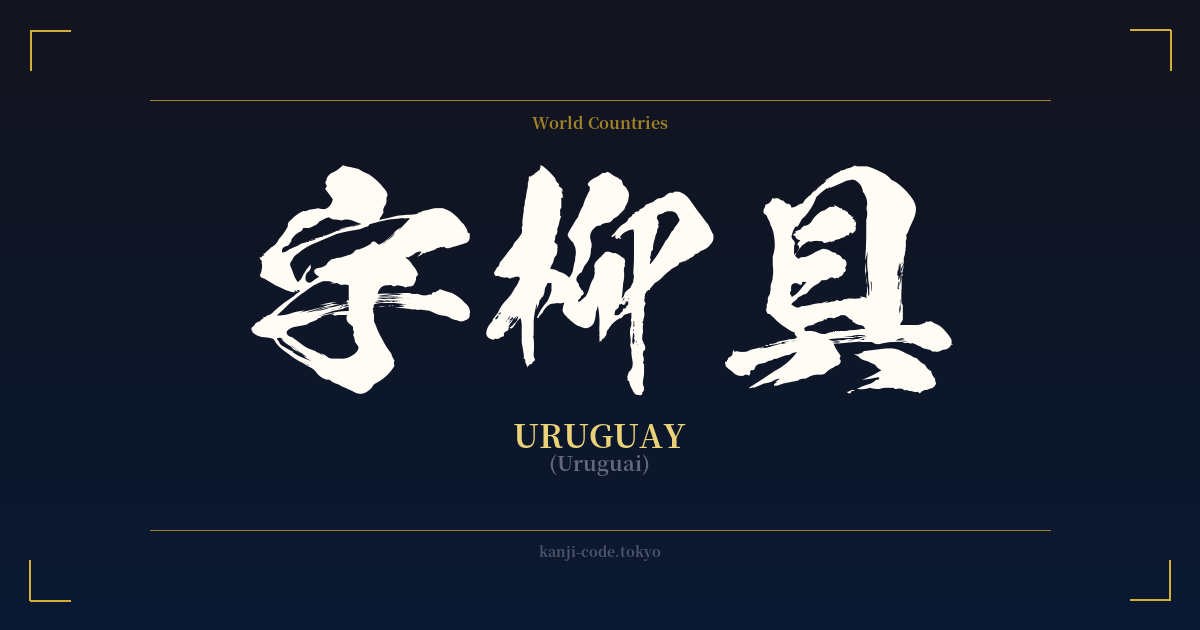
✍️ 宇柳具 (Uruguai) — Cultural Context
The term 宇柳具 is a fascinating window into a specific period of Japanese linguistic history. It represents an instance of 'ateji' (当て字), a practice where kanji characters are used for their phonetic values to transcribe foreign words, disregarding their original meanings. This was particularly common during the Meiji Restoration (late 19th century) when Japan opened its borders and scrambled to incorporate a flood of new words and concepts from the West.
In this case, the characters 宇 (u), 柳 (ru, from its Chinese reading), and 具 (gu) were selected to mimic the sound of 'Uruguay'. However, the literal meanings of these characters—'eaves/heaven', 'willow', and 'tool'—have absolutely no connection to the South American nation. When read literally, the combination is nonsensical, highlighting its purely phonetic purpose.
Today, the use of ateji for country names is almost entirely obsolete. Modern Japanese overwhelmingly favors the Katakana script for foreign loanwords, making 'ウルグアイ' (Uruguai) the standard and universally understood way to write the country's name. The kanji form 宇柳具 is now a historical curiosity, something one might find in old documents or dictionaries but never in contemporary use. It's a relic of a time before Katakana's role was fully standardized.
This distinction is crucial for anyone considering this for a tattoo. While some ateji, like 倶楽部 (kurabu, 'club'), acquired a life of their own, 宇柳具 never entered common parlance. Its existence is a testament to the flexibility of the Japanese writing system, but also to its potential for creating obscurity. It stands as a linguistic artifact, not a living word, representing a phonetic approximation rather than a meaningful symbol of the nation it names.
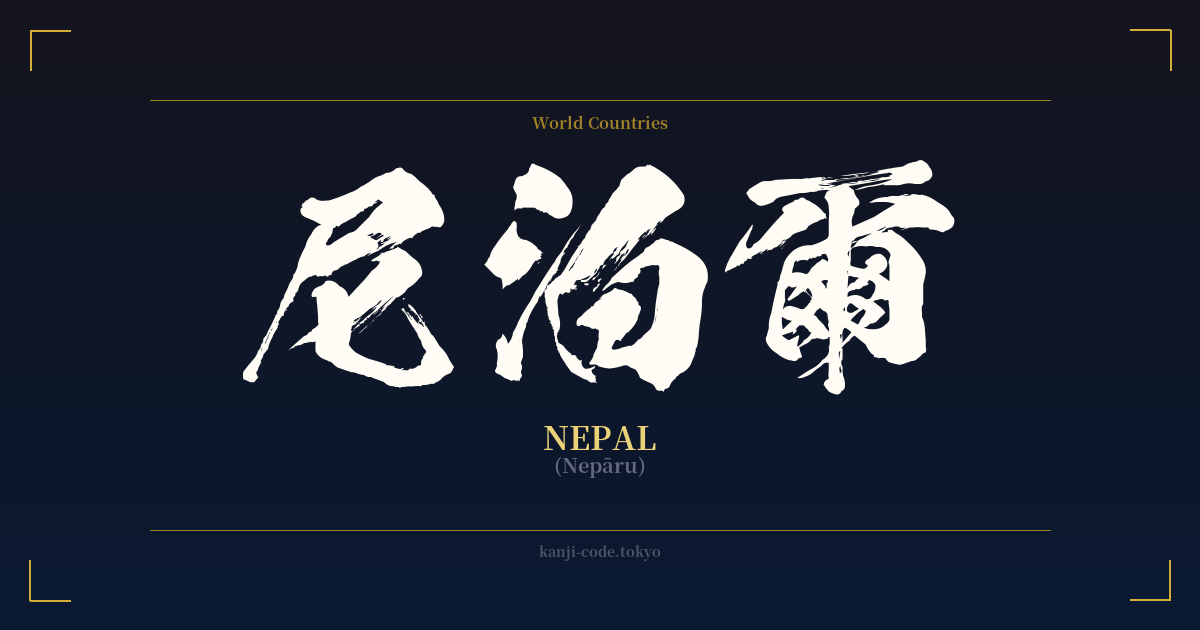
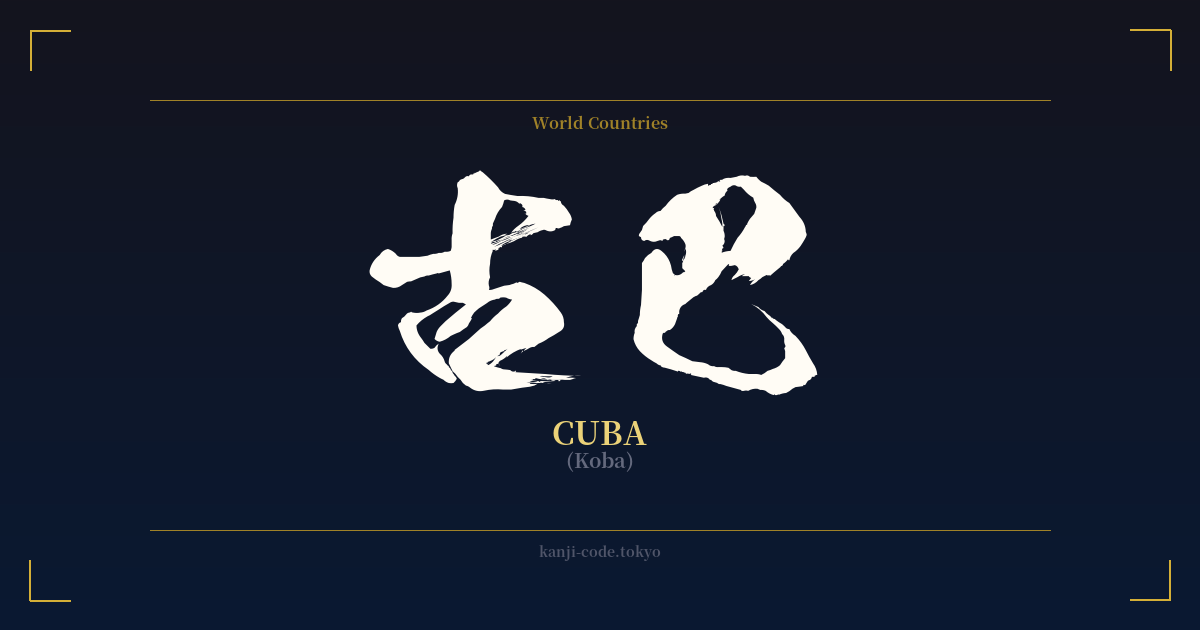
🖌️ Font Styles for 宇柳具
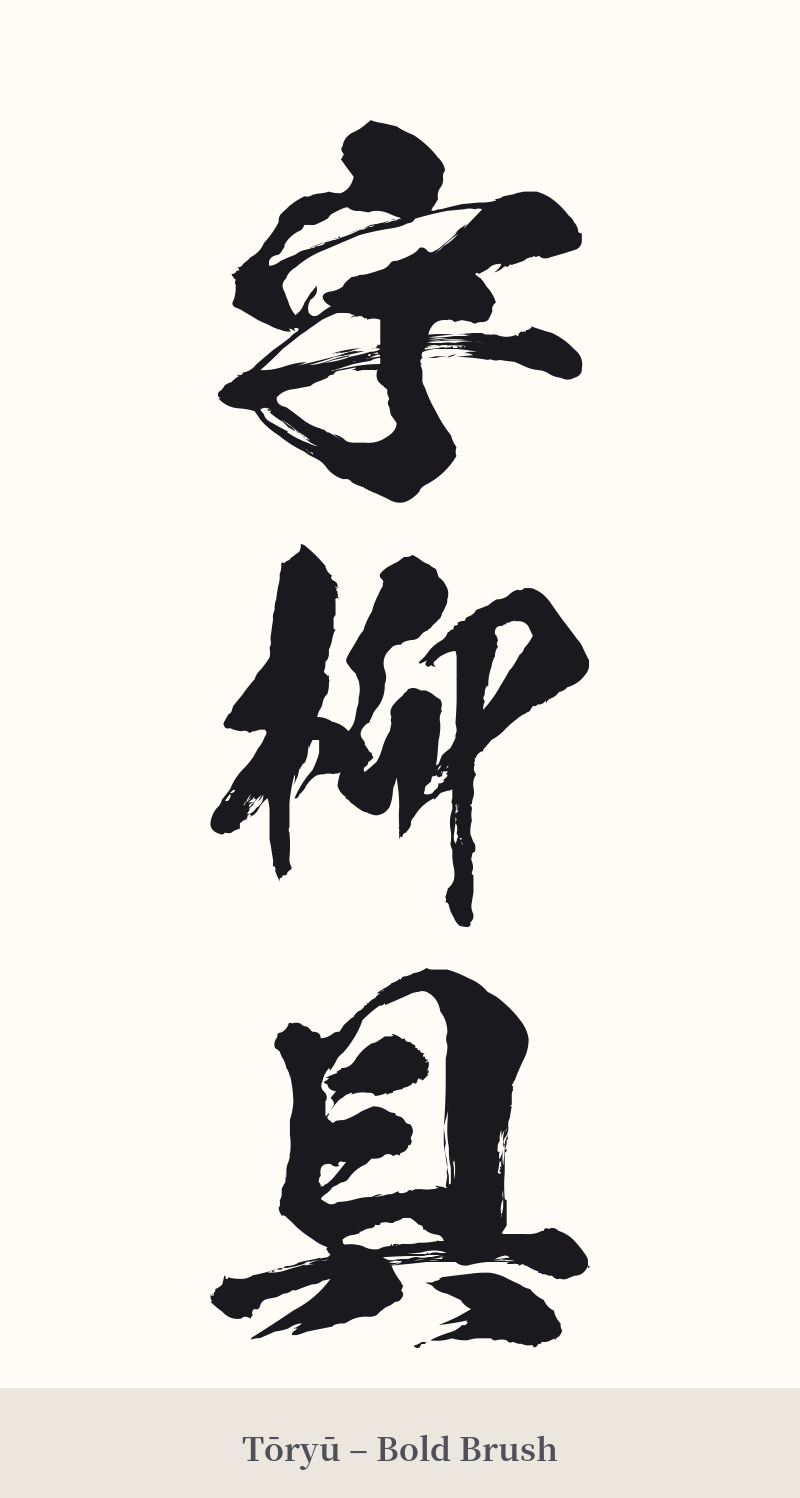
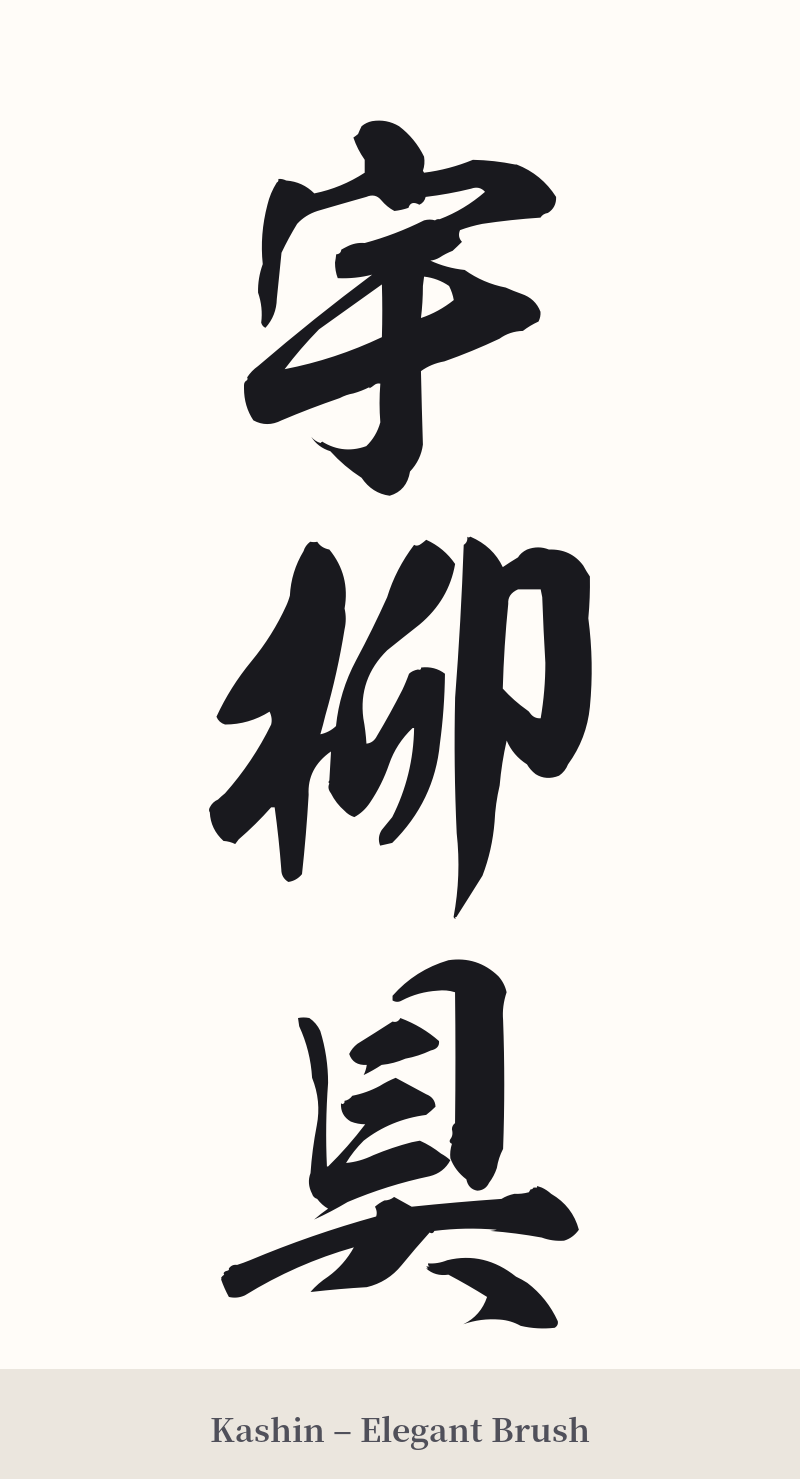
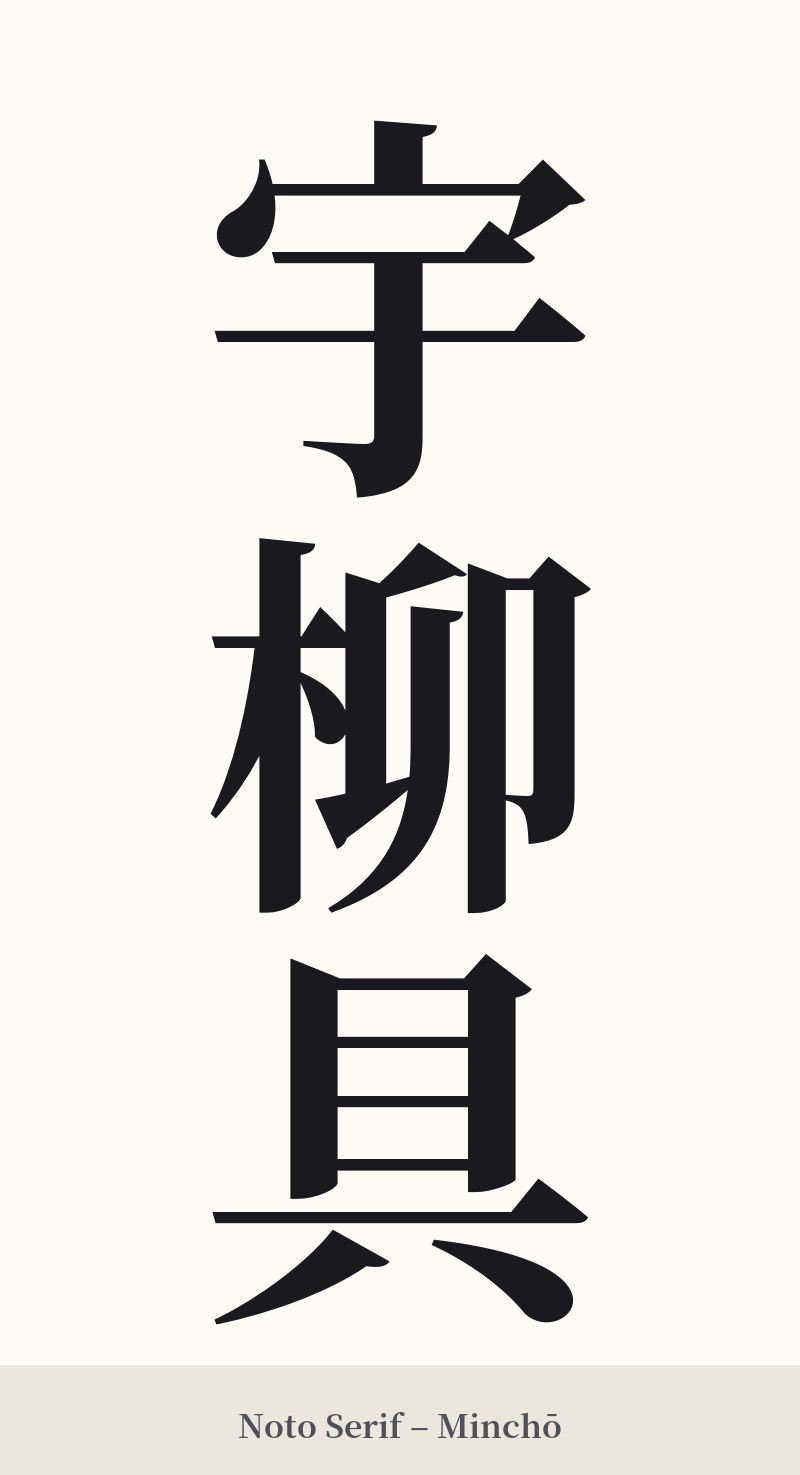
The same kanji can look dramatically different depending on the calligraphy style. Choose a font that matches the mood you want for your tattoo or design.
🎨 Tattoo Suitability
📐 Tattoo Design Guide
Given that this kanji is strongly not recommended for a tattoo, any design choice should be made with extreme caution. If you are still set on using it for personal reasons, here are some suggestions to mitigate the potential for confusion.
– Placement & Orientation: A vertical orientation is traditional for multi-kanji compounds and would be the most aesthetically pleasing arrangement for 宇柳具. Placing it on the forearm or the calf would be a standard choice.
– Font Style: A flowing, semi-cursive script like Gyosho (行書) could help blend the characters together into a more artistic piece. This can sometimes soften the awkwardness of a purely phonetic combination. Avoid rigid, blocky fonts like Kaisho (楷書), which might make the individual, unrelated meanings of the characters more pronounced.
– Add Contextual Elements: Because the kanji themselves fail to convey 'Uruguay', consider incorporating other imagery that does. Pairing the kanji with a design of the Sol de Mayo from the Uruguayan flag, a capybara, or the ceibo flower could provide the necessary context that the characters lack on their own.
Comments