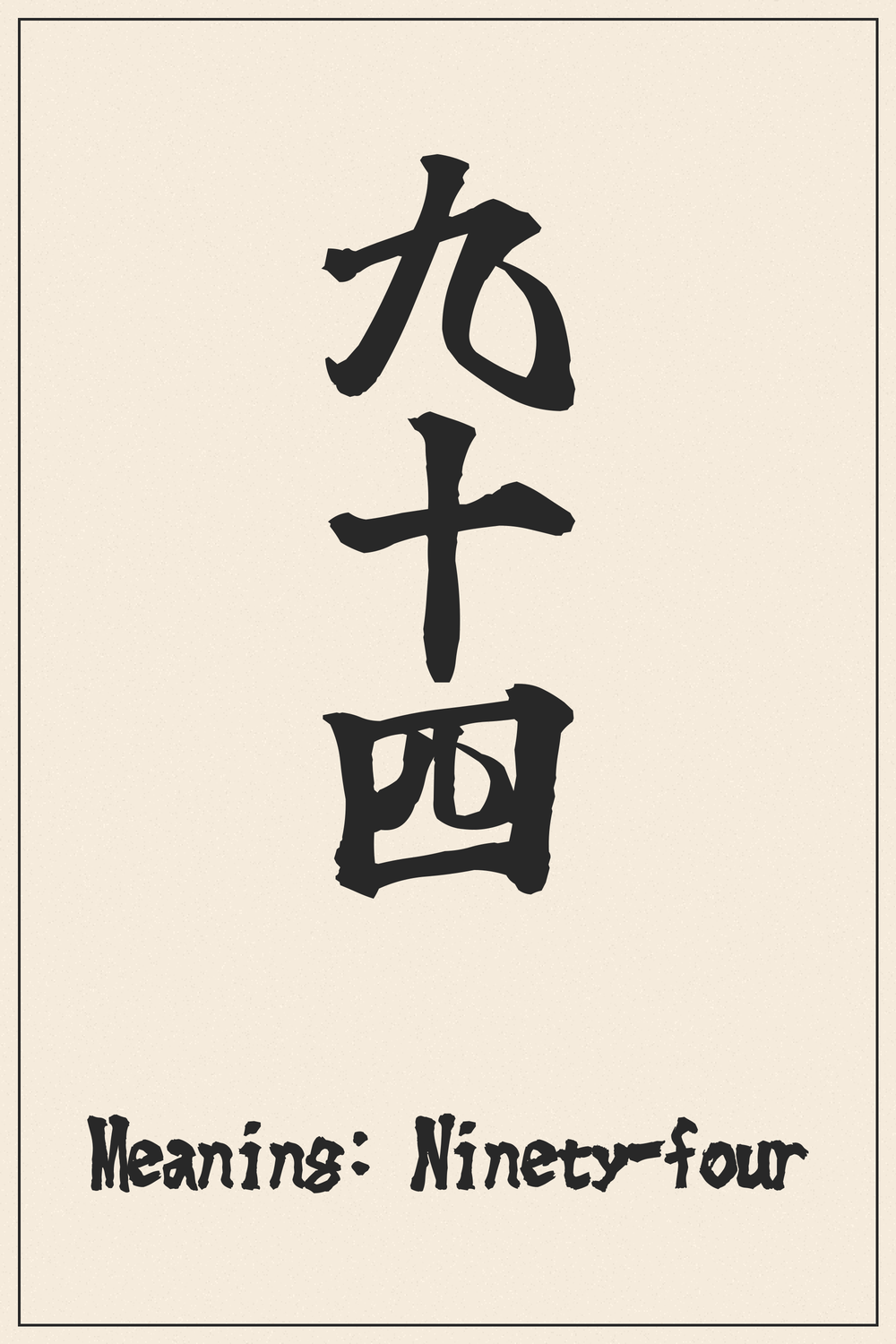
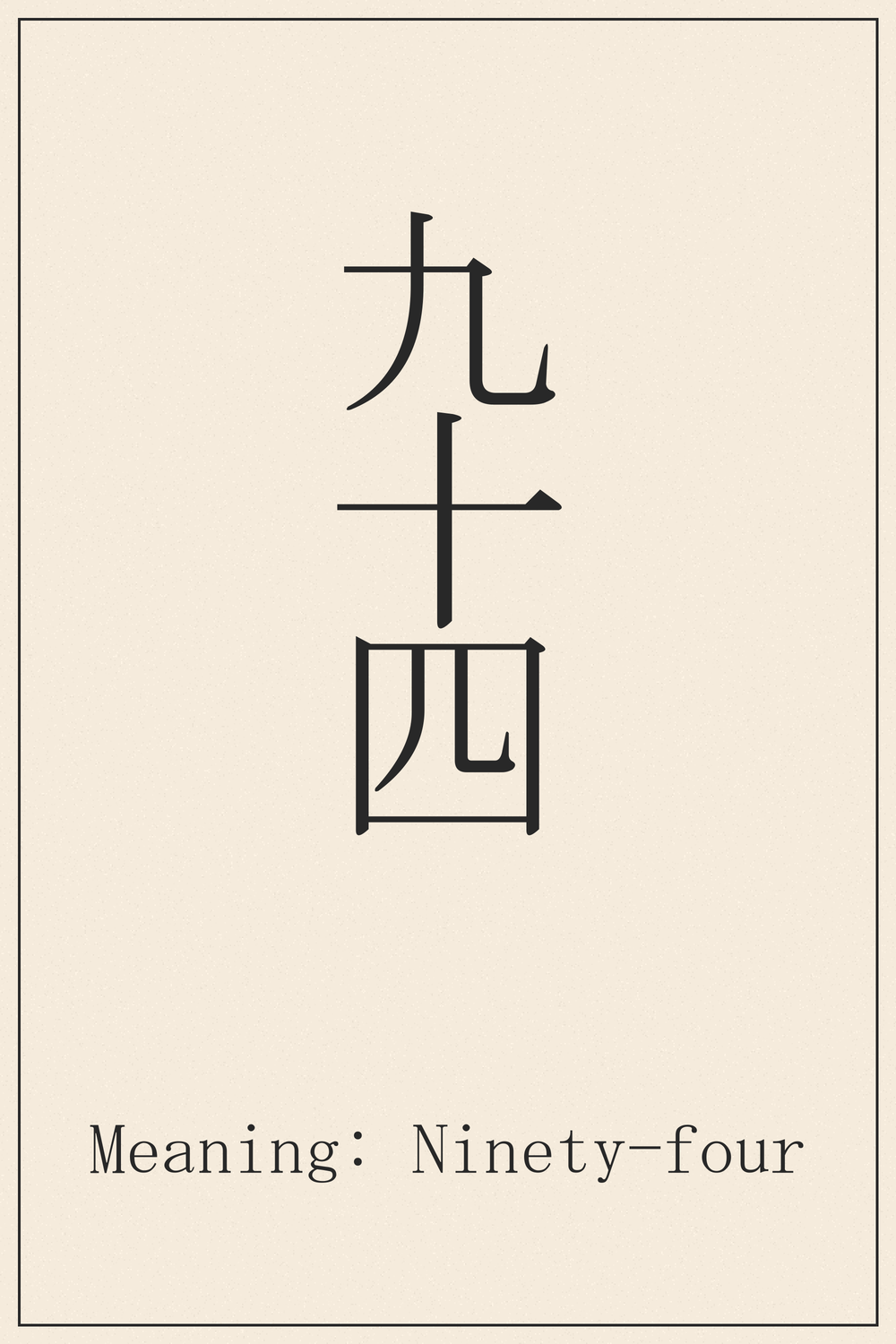
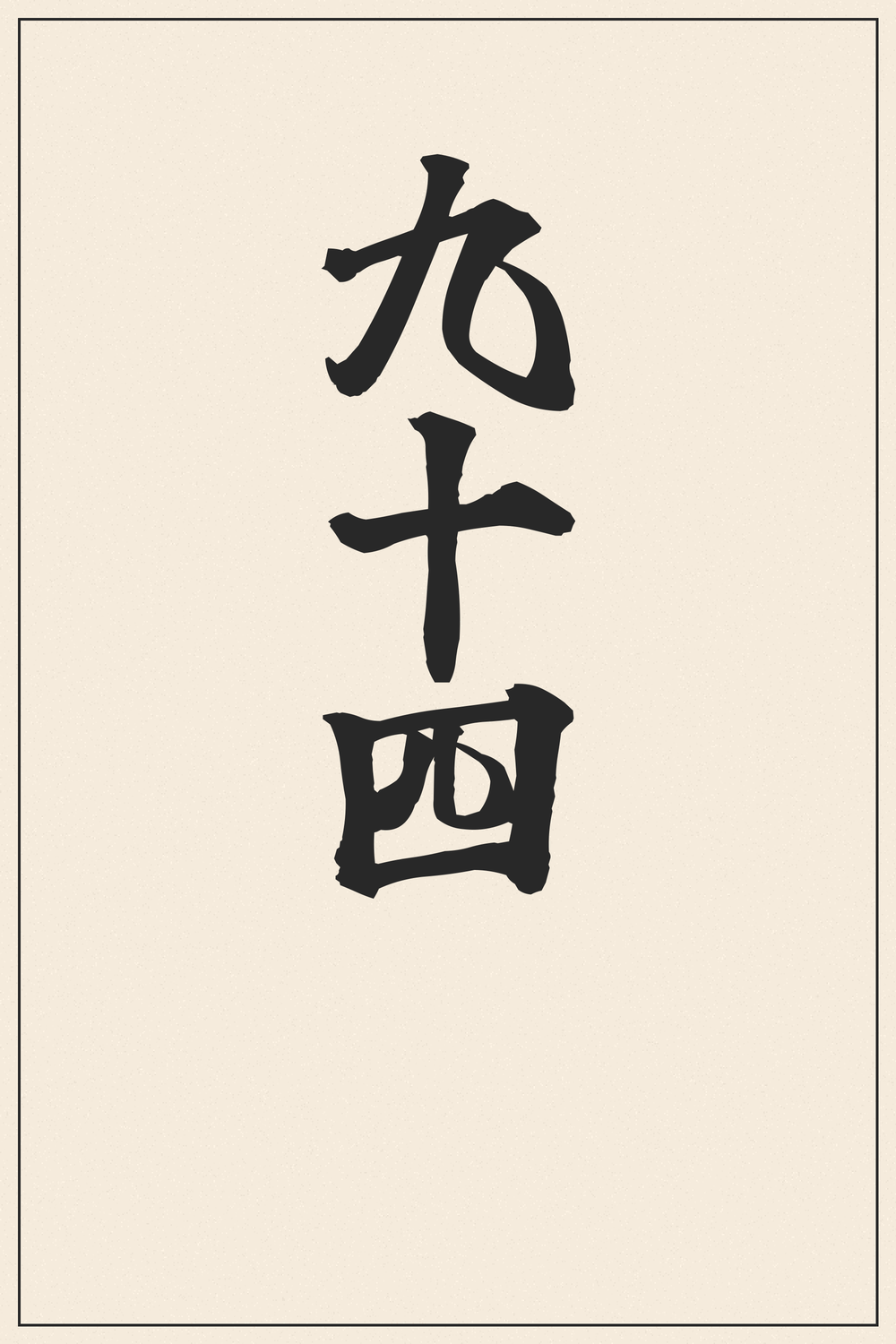
Numbers transcend language, embodying precision and universal understanding. ‘九十四’ (Ninety-four) represents a specific quantity, a point of measure in the vast expanse of numerical concepts.
The atmosphere of a Kanji character changes dramatically depending on the font style. A character that looks elegant in a brush style might look bold and modern in a different font.
Recommendation:
Since a tattoo is permanent, we strongly recommend comparing various font styles beyond what is shown here. Use our designs as a trusted reference for the correct structure, but feel free to explore different artistic variations to find the perfect match for your vision.
The Deep Meaning Behind 九十四
The Kanji ‘九十四’ combines three fundamental numerical characters: ‘九’ (nine), ‘十’ (ten), and ‘四’ (four). The character ‘九’ originally depicted a bent arm, later evolving to signify the number nine. ‘十’ is thought to represent a needle or a cross, symbolizing completeness or the joining of multiple units to form ten. ‘四’ is a pictograph of four lines enclosed, directly representing the quantity four.
In Japanese, numbers can sometimes carry phonetic connotations, such as ‘shi’ (四) sounding like ‘death’ and ‘ku’ (九) like ‘pain’. However, when combined into larger numbers like ‘九十四’ (kyuujuuyon), these negative connotations are largely diminished, and the number is typically perceived purely for its quantitative value. This particular combination is common in everyday counting and measurement, devoid of significant mystical or symbolic weight beyond its face value.
Kanji Breakdown
The numerical expression ‘九十四’ is composed of three distinct Kanji, each contributing to its overall meaning.
Meaning: Nine. This character represents the number nine. Its ancient form is believed to be a pictograph of a bent arm or elbow, which gradually came to symbolize the numerical value.
Meaning: Ten. Representing the number ten, this kanji is thought to derive from a simple vertical stroke, or possibly a needle. It often conveys a sense of completion or a full unit in counting systems.
Meaning: Four. This character denotes the number four. Its ancient script shows a representation of four lines within an enclosure, directly depicting the quantity.
Conclusion
While some numbers in Japanese carry specific cultural or phonetic nuances, ‘九十四’ primarily serves as a straightforward numerical representation of ninety-four. It stands as a testament to the clarity and efficiency of the Kanji system for conveying precise quantities.
Choosing ‘九十四’ as a tattoo symbolizes an appreciation for specific numerical significance, perhaps commemorating an age, a date, or a count important to the individual. Its clean lines and clear meaning make it a bold yet understated choice for those seeking a personal numerical emblem.

Comments