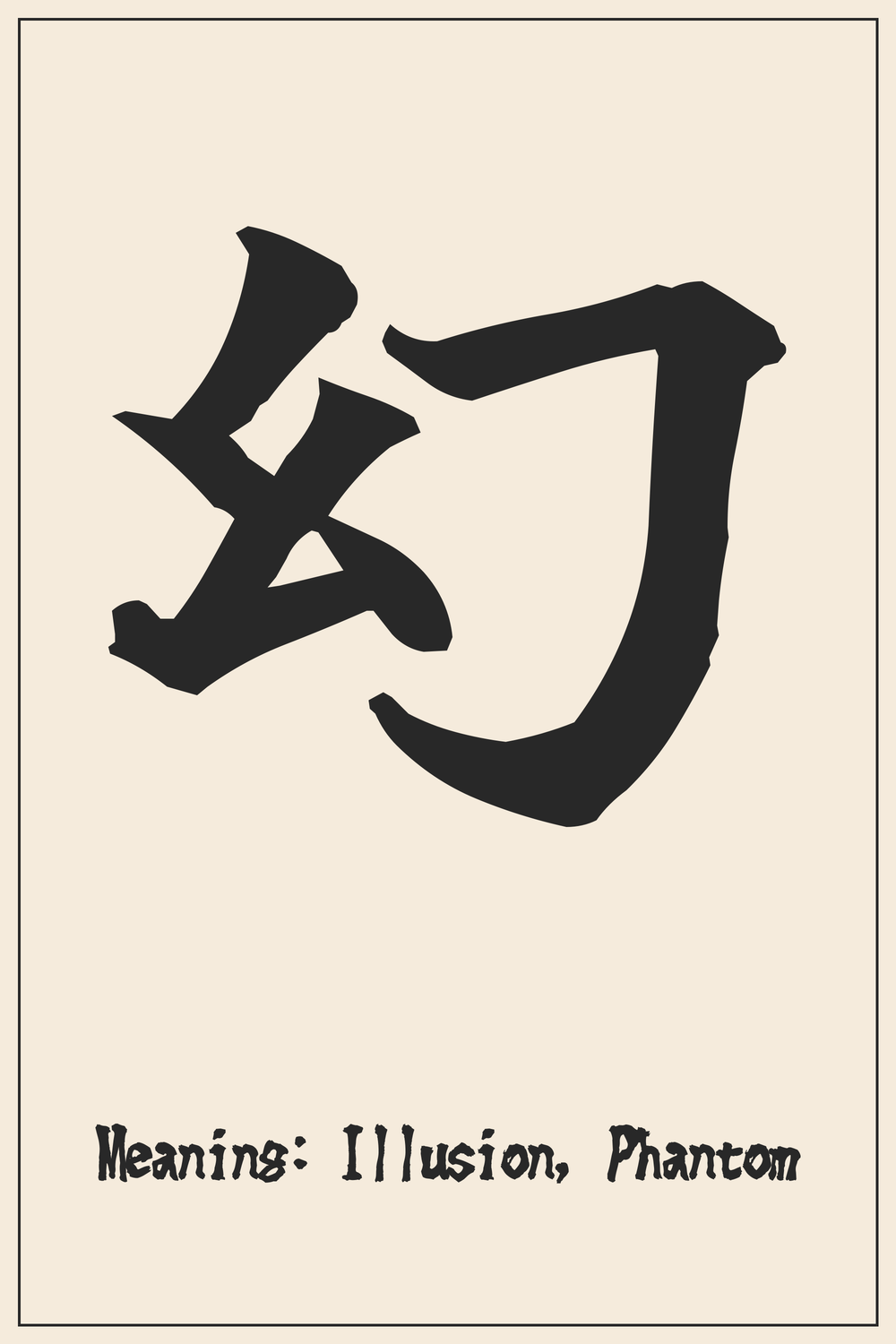
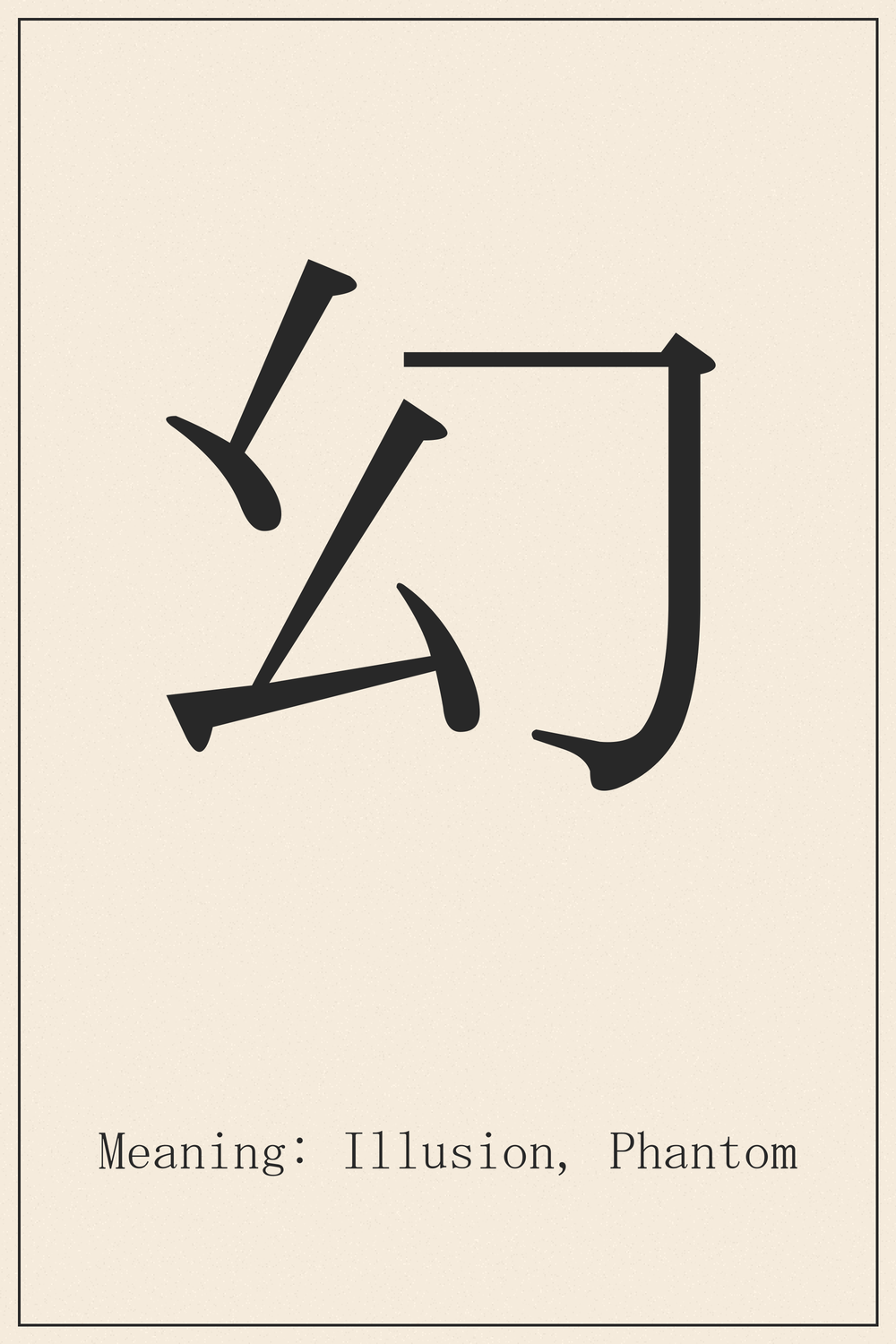
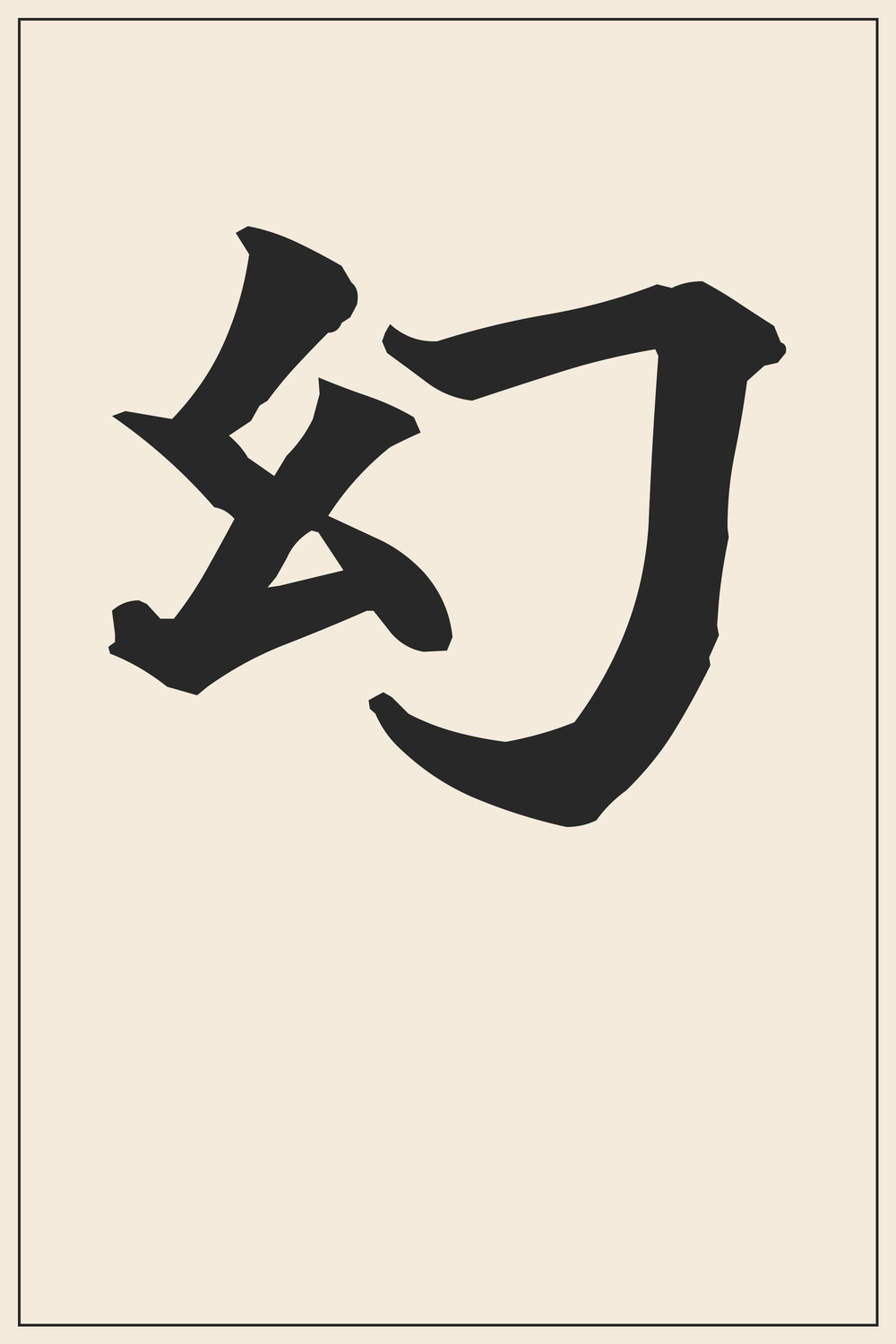
Dive into the realm of the unseen with the Kanji 幻 (Maboroshi), a symbol captivating the essence of illusion and dreams. This character speaks to the transient nature of perception, urging a deeper look beyond the surface.
The atmosphere of a Kanji character changes dramatically depending on the font style. A character that looks elegant in a brush style might look bold and modern in a different font.
Recommendation:
Since a tattoo is permanent, we strongly recommend comparing various font styles beyond what is shown here. Use our designs as a trusted reference for the correct structure, but feel free to explore different artistic variations to find the perfect match for your vision.
The Deep Meaning Behind 幻
The Kanji 幻 (Maboroshi) signifies ‘phantom,’ ‘illusion,’ ‘vision,’ or ‘dream.’ It refers to something that appears to be real but has no physical substance, or something beautiful that is fleeting and hard to grasp.
In Japanese culture, Maboroshi is often used to describe legendary or mythical items (like a “phantom sword”) or events that are so rare and beautiful they feel like a dream. It embodies the aesthetic of mystery and the ephemeral nature of reality.
Kanji Breakdown
The character 幻 is composed of elements that historically describe a deceptive sight.
Meaning: Tiny, Small Thread.
This component represents a fine silk thread or something very small. It suggests faintness, subtlety, or something that is difficult to see clearly.
Meaning: Inversion / Confusion.
Etymologically, this part depicts a weaver’s shuttle (予) turned upside down or moving confusingly. Combined with the thread element, it signifies a “confusing winding” or a visual trick, leading to the meaning of an illusion or something that deceives the eye.
Conclusion
The Kanji 幻 (Maboroshi) is a profound symbol of the ephemeral, representing dreams, illusions, and the unseen forces that shape our perception. It speaks to the beauty in transient moments and the depth found beyond tangible reality.
Choosing 幻 for a tattoo signifies an appreciation for introspection, mystery, and the poetic dance between what is real and what is imagined. It’s a striking reminder to seek truth beyond surface appearances and to cherish the fleeting nature of existence.
Comments