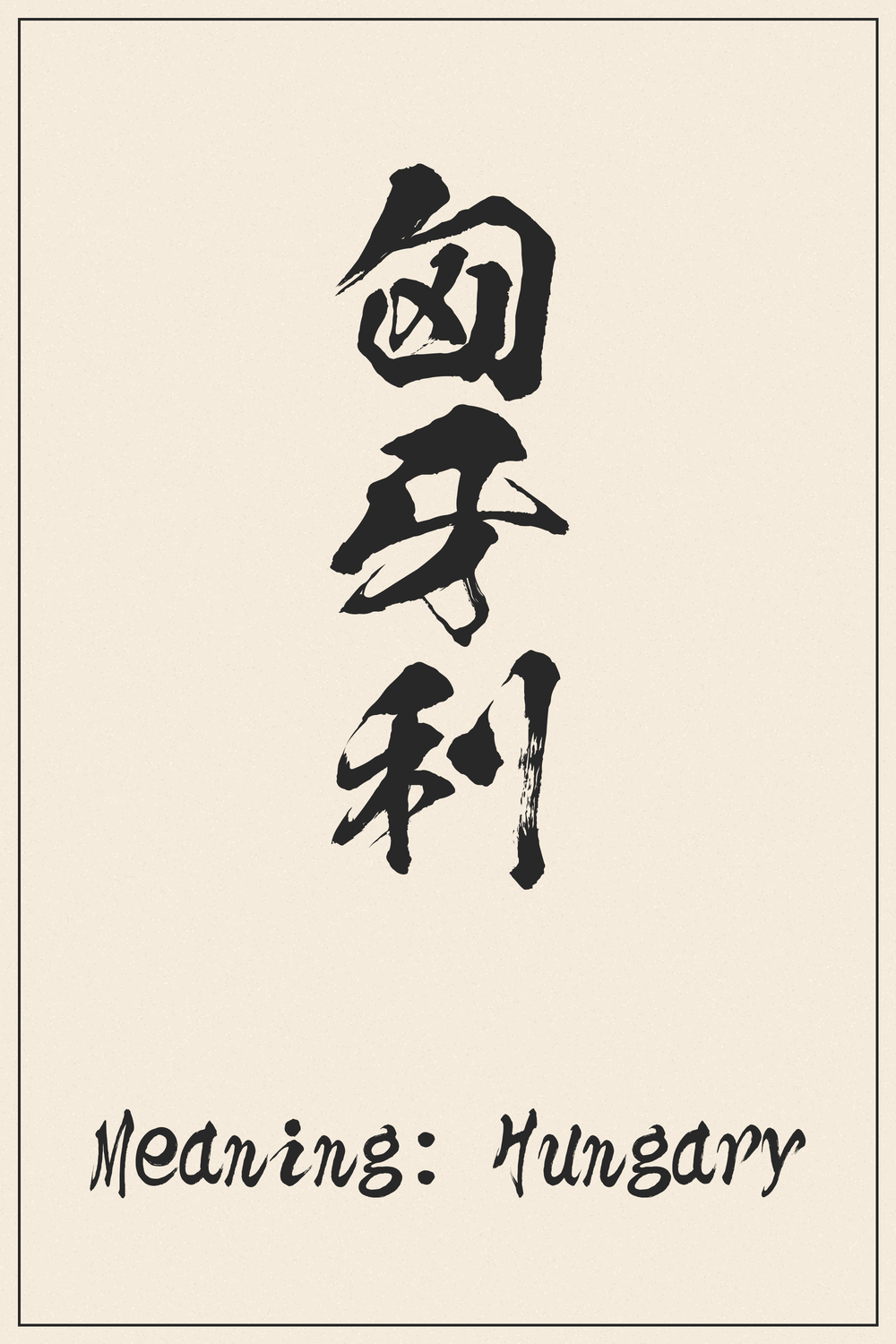
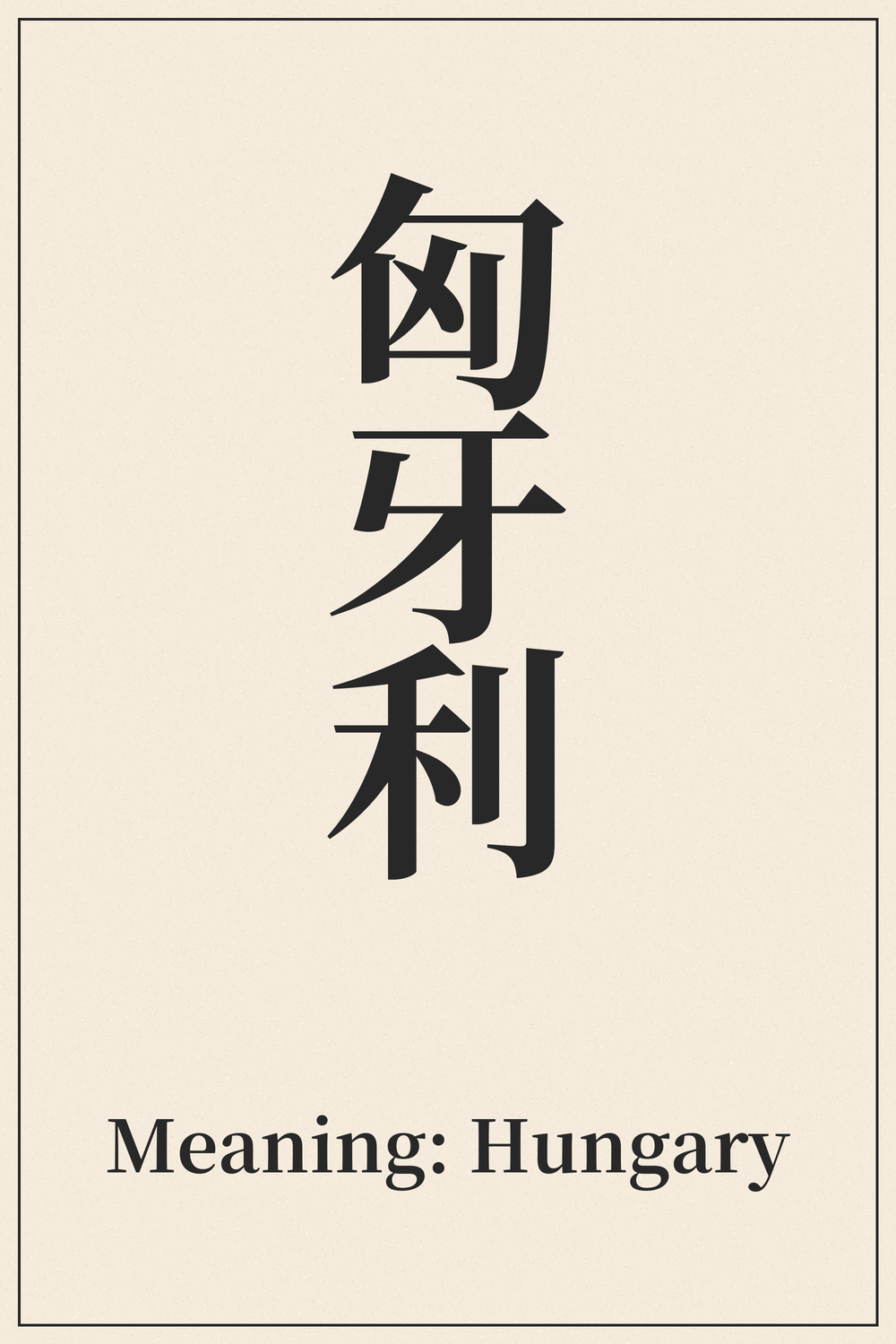
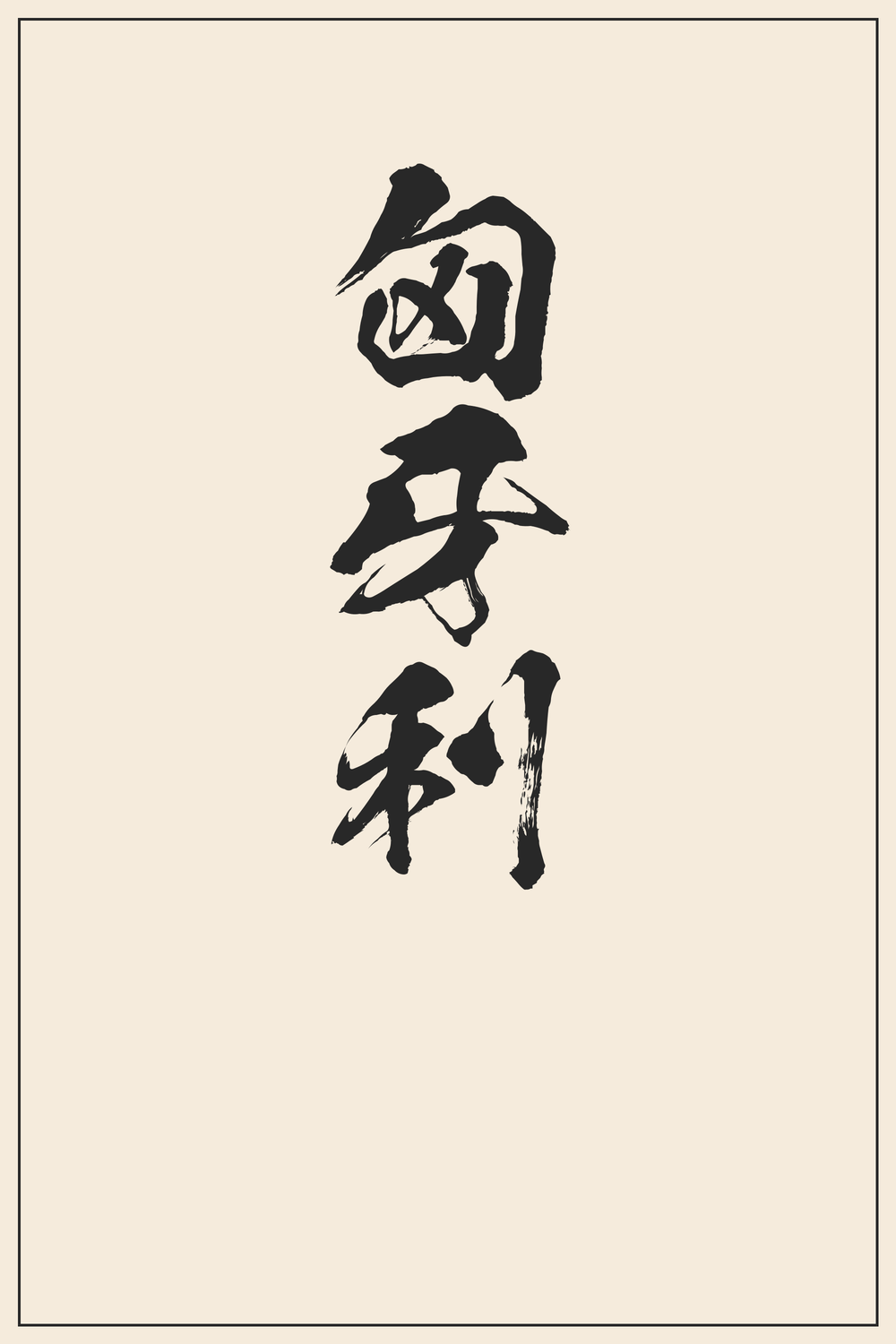
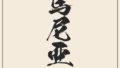
The Kanji 匈牙利 (Hungarii) represents the European nation of Hungary. It is a prime example of ‘Ateji’, where characters are used for their sound rather than their inherent meaning to transcribe foreign words.
The atmosphere of a Kanji character changes dramatically depending on the font style. A character that looks elegant in a brush style might look bold and modern in a different font.
Recommendation: Since a tattoo is permanent, we strongly recommend comparing various font styles beyond what is shown here. Use our designs as a trusted reference for the correct structure, but feel free to explore different artistic variations to find the perfect match for your vision.
The Deep Meaning Behind 匈牙利
The Kanji combination 匈牙利 (Hungarii) is a classic example of ‘Ateji’ (当て字), a phonetic transcription system where Kanji characters are used purely for their sound, rather than their inherent meaning, to represent foreign words or names. In this case, these three characters are chosen to approximate the sounds of ‘Hungary’ in Japanese.
While each character possesses its own distinct meaning, their combination here is not intended to convey a deeper symbolic message about Hungary itself. Instead, 匈牙利 serves as a functional linguistic tool, allowing Japanese speakers to refer to the European nation using a native script. This practice is common for many foreign country names in Japanese.
Kanji Breakdown
Understanding the individual components of 匈牙利 highlights the phonetic nature of its construction, rather than a semantic one.
Meaning: ‘Chest’, ‘breast’, or historically, referring to ‘Huns’. This character, pronounced ‘kyou’ or ‘ko’ in Japanese, was likely chosen for its initial sound approximating ‘Hu’ or ‘Hun’ from ‘Hungary’. Interestingly, one of its historical meanings directly relates to the Huns, a group sometimes associated with the ancestry of Hungarians, though its primary function here is phonetic.
Meaning: ‘Fang’, ‘tusk’, ‘tooth’. Pronounced ‘ga’ or ‘ge’, this character provides the ‘ga’ sound in ‘Hungarii’. Its literal meaning of ‘fang’ or ‘tooth’ is entirely coincidental and holds no semantic relevance to the nation of Hungary in this context. It’s a clear illustration of ateji where sound dominates meaning.
Meaning: ‘Profit’, ‘advantage’, ‘sharp’. The character ‘ri’ contributes the final ‘ri’ sound to ‘Hungarii’. While its original meanings include concepts like ‘profit’ or ‘sharpness’, these are disregarded when used in ateji for ‘Hungary’. Its sole purpose here is phonetic, completing the transcription of the foreign name.
Conclusion
The Kanji ‘匈牙利’ (Hungarii) stands as a fascinating example of Ateji, where Japanese characters are employed solely for their phonetic value to represent the country ‘Hungary’. Rather than conveying symbolic meanings, these characters efficiently translate the foreign sound into the Japanese script, a testament to the adaptability of Kanji.
For those considering ‘匈牙利’ as a tattoo, it’s crucial to understand its primary role as a phonetic representation. While it directly translates to ‘Hungary’, its literal character meanings (‘Hun’, ‘fang’, ‘profit’) do not inherently embody profound symbolism for the nation. It is best chosen by individuals with a deep personal connection to Hungary who appreciate the unique linguistic tradition of Ateji in Japanese culture, rather than for a deep symbolic Kanji meaning.
Comments