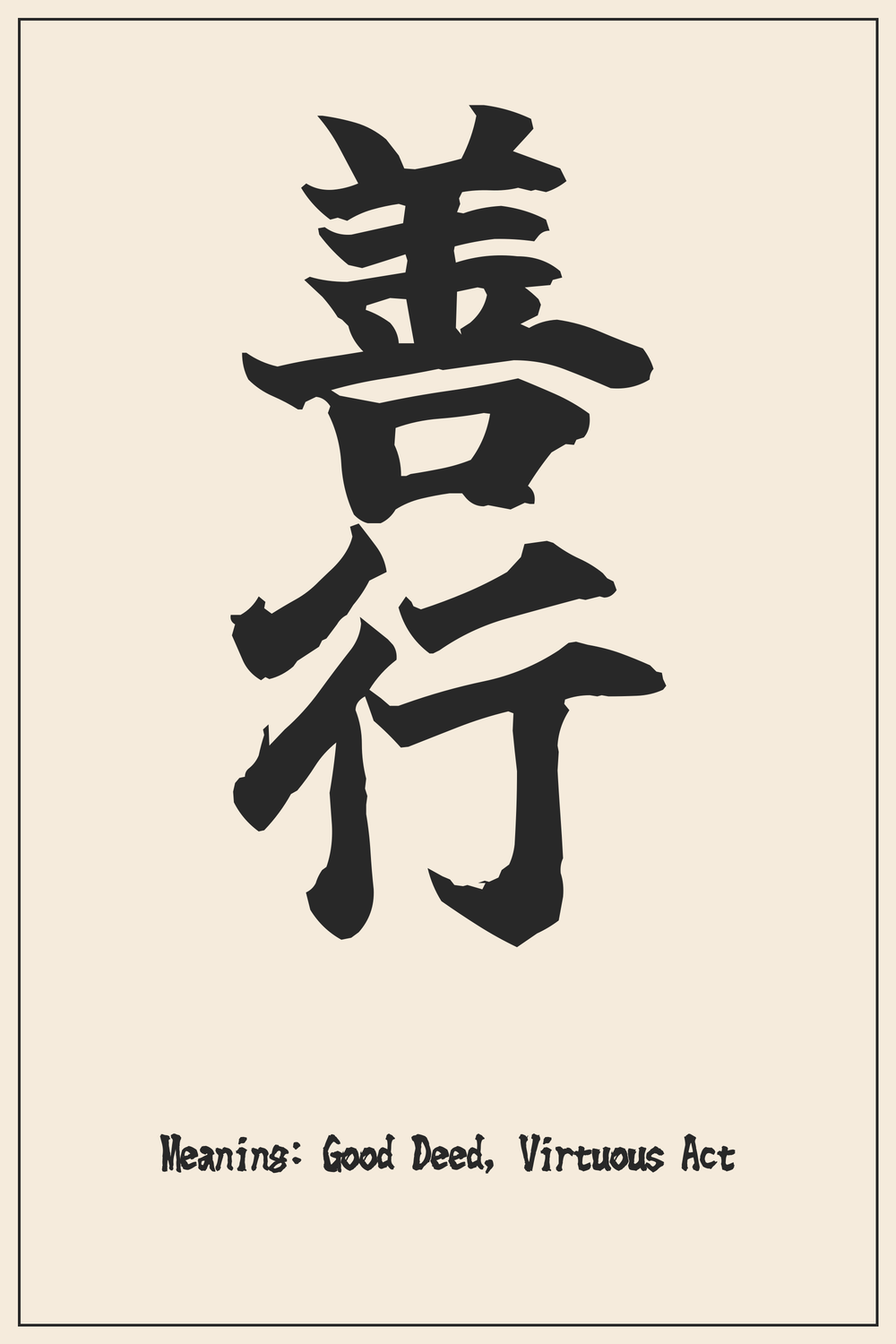
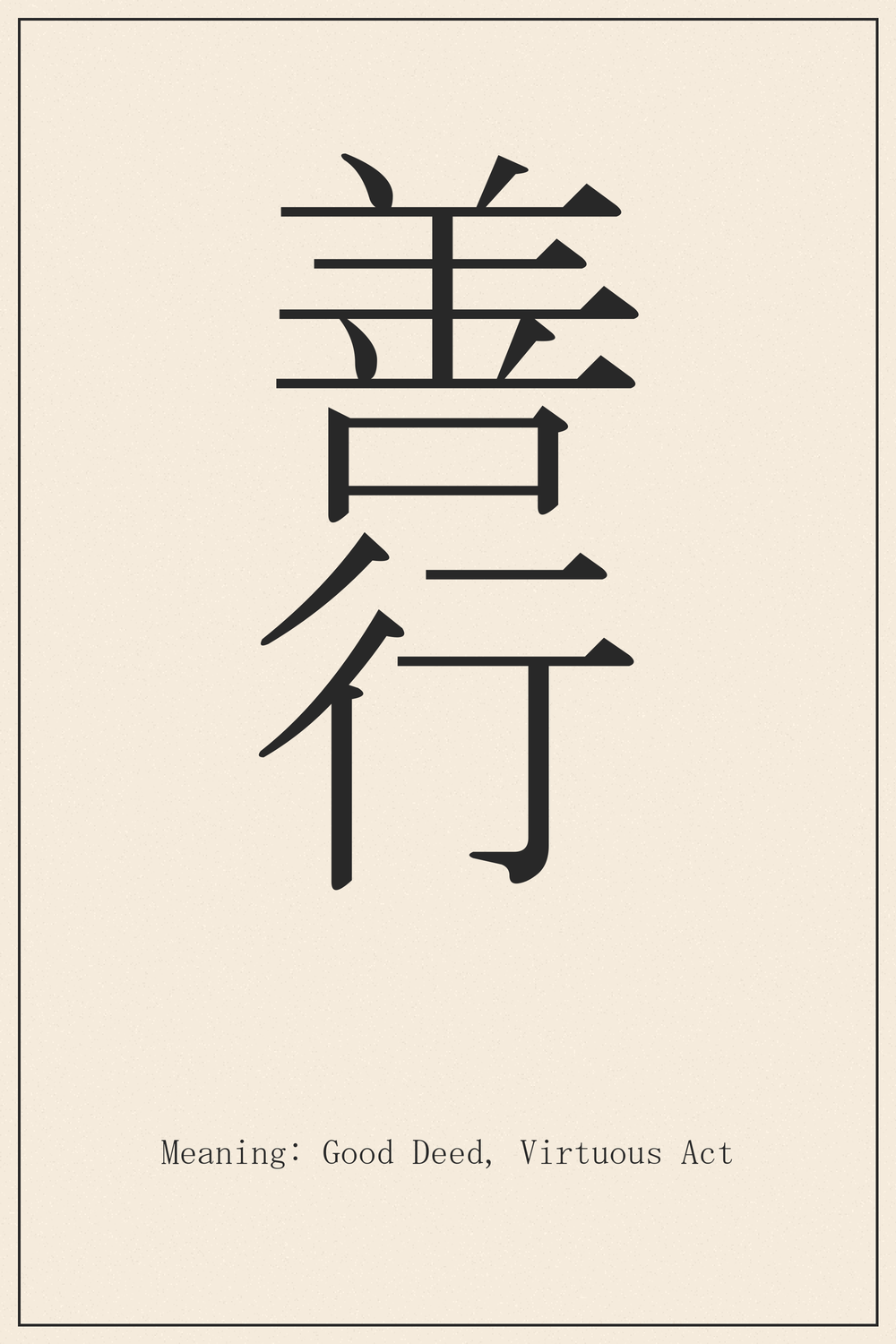
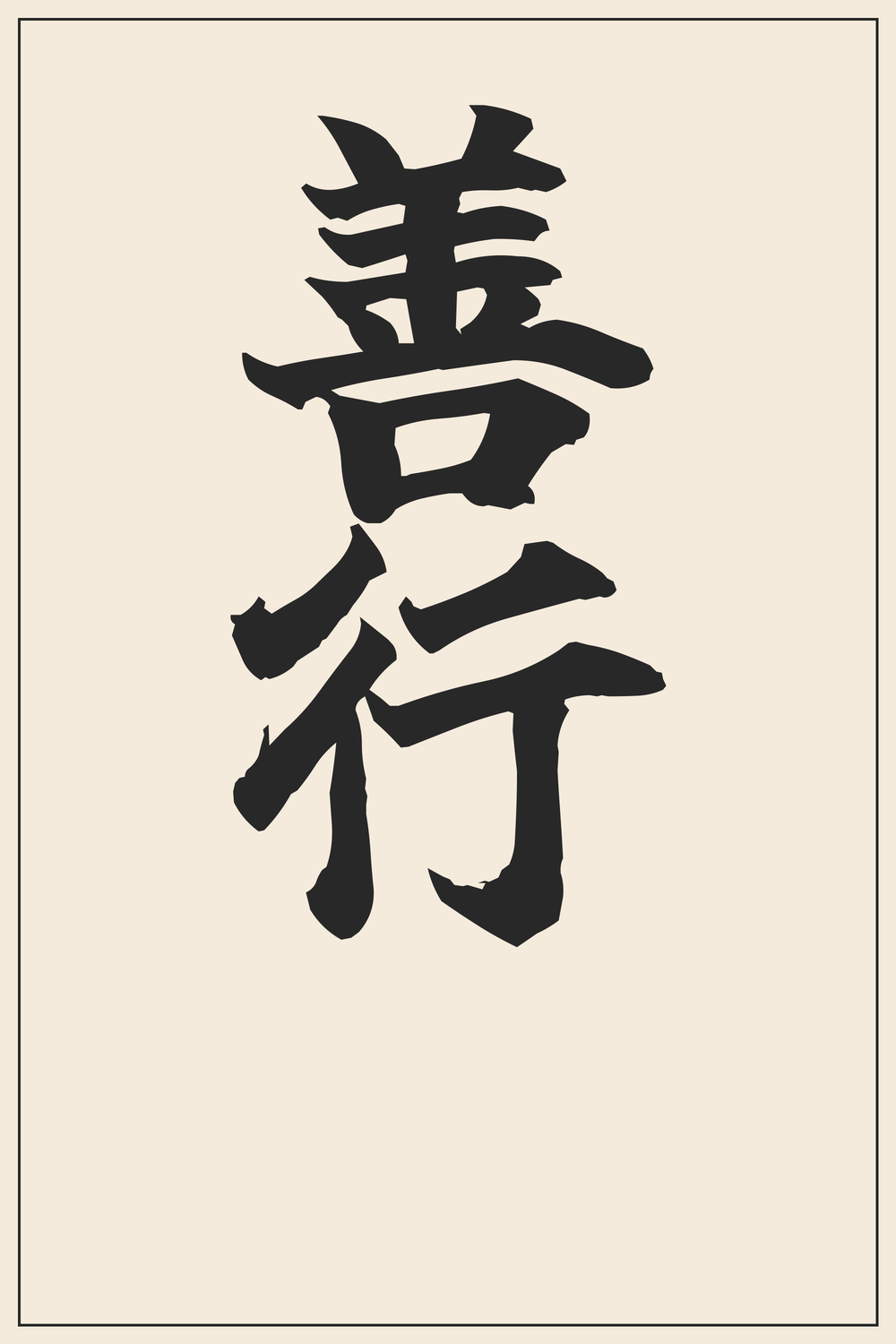
Embody the spirit of compassion and integrity with ‘Zenkou’ (善行), a powerful Kanji representing a virtuous act. This symbol transcends mere action, reflecting a profound commitment to ethical living and positive impact.
The atmosphere of a Kanji character changes dramatically depending on the font style. A character that looks elegant in a brush style might look bold and modern in a different font.
Recommendation:
Since a tattoo is permanent, we strongly recommend comparing various font styles beyond what is shown here. Use our designs as a trusted reference for the correct structure, but feel free to explore different artistic variations to find the perfect match for your vision.
The Deep Meaning Behind 善行
The term 善行 (Zenkō) translates to ‘good deeds’ or ‘virtuous conduct.’ It combines the concepts of inherent goodness (善) and action (行).
In Japanese culture, particularly influenced by Buddhist philosophy, practicing Zenkō is believed to accumulate positive karma (merit), leading to a harmonious life and inner peace. It emphasizes that true virtue is found not just in good thoughts, but in the actual performance of good deeds.
Kanji Breakdown
The compound 善行 is formed by two characters that bridge the gap between moral intent and physical action.
Meaning: Good, Virtue. The top component is 羊 (Sheep), a traditional symbol of auspiciousness and peace. The bottom component represents speech or discussion, historically derived from the character for “word” (言), but visually represented in its modern form by the 口 (Mouth) radical. Together, they symbolize “virtuous speech” or goodness.
Meaning: Go, Act, Conduct. This character is originally a pictograph of a crossroad (intersection). It signifies movement, a journey, and by extension, the “path” of one’s conduct or actions in life.
Conclusion
‘Zenkou’ (善行) encapsulates the essence of performing good deeds and living a virtuous life, reflecting a deep commitment to ethical conduct and positive influence. It is a timeless reminder to act with benevolence and integrity in all endeavors.
For those considering ‘Zenkou’ as a tattoo, it serves as a powerful symbol of personal dedication to morality and kindness. Choosing this Kanji signifies a vow to walk a path of virtue, inspiring both the wearer and observers with its profound message.
Comments