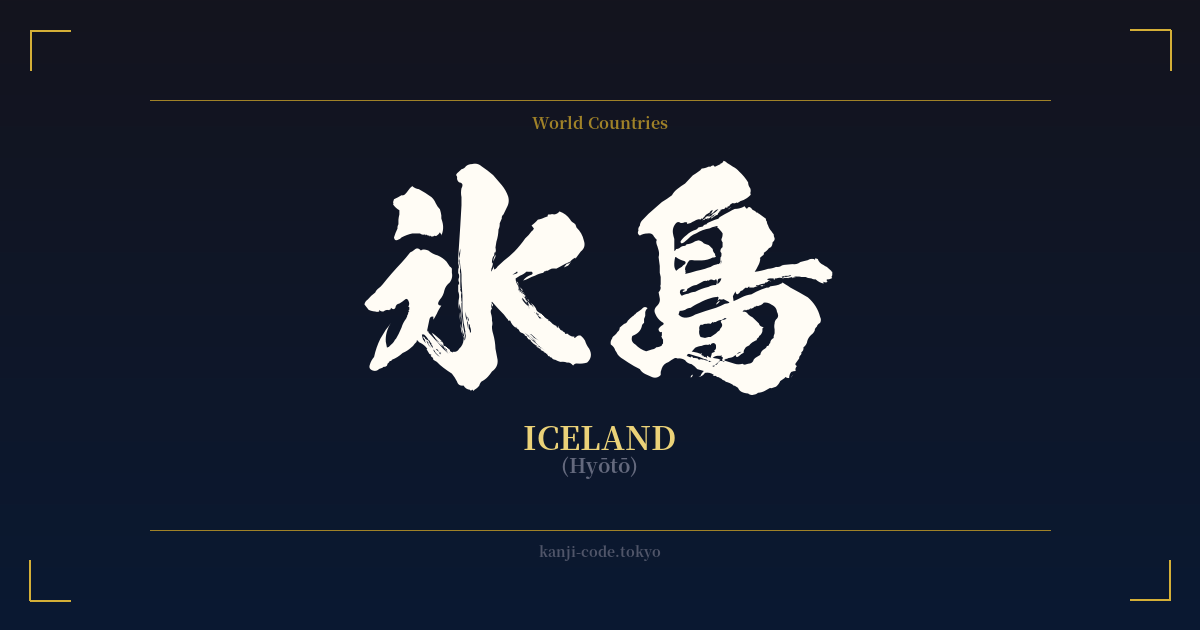
✍️ 氷島 (Hyōtō) — Contexto cultural
氷島 (Hyōtō) es la representación en kanji japonés del nombre de Islandia. A diferencia de muchos nombres de países extranjeros que se transcriben fonéticamente usando kanji ateji, 氷島 es una traducción directa y bellamente literal. El nombre se compone de dos caracteres: 氷 (hyō), que significa "hielo", y 島 (tō), que significa "isla". Juntos, forman "Isla de Hielo", un nombre que captura a la perfección la esencia de la impresionante geografía del país.
Este método de nombrar a Islandia contrasta notablemente con la práctica moderna, más común, de usar katakana. Hoy en día, casi siempre se ve Islandia escrita como アイスランド (Aisurando), que es una transcripción fonética del nombre en inglés. El uso de 氷島 se ha vuelto menos frecuente en la vida cotidiana, adquiriendo ahora un significado más formal, literario o incluso poético. Es similar a referirse a Irlanda como 'la Isla Esmeralda' en inglés: todo el mundo entiende la referencia, pero no es el término estándar.
La creación de nombres descriptivos era común durante la Restauración Meiji (1868-1912), un periodo en el que Japón se modernizaba rápidamente y asimilaba la cultura y la geografía occidentales. Académicos y funcionarios tenían la tarea de crear términos japoneses para nuevos conceptos y lugares. Para algunos países, eligieron ateji fonéticos (como 亜米利加 para Estados Unidos), mientras que para otros optaron por traducciones semánticas como 氷島. Esta elección refleja el deseo no solo de nombrar, sino también de comprender y categorizar el mundo desde una perspectiva japonesa.
Para los japoneses, la palabra 氷島 evoca una imagen poderosa e inmediata: una tierra remota e impoluta, dominada por glaciares, paisajes austeros y una belleza fría y nítida. Refleja una profunda apreciación por la naturaleza (自然, shizen), fundamental para la estética japonesa. El nombre evoca una sensación de sereno aislamiento y la fuerza bruta de los elementos, en consonancia con la percepción global de Islandia como tierra de fuego y hielo. Si bien los kanji solo mencionan explícitamente 'hielo', la naturaleza volcánica implícita de la isla (島) completa la imagen para muchos, creando un término sencillo y a la vez profundamente evocador.
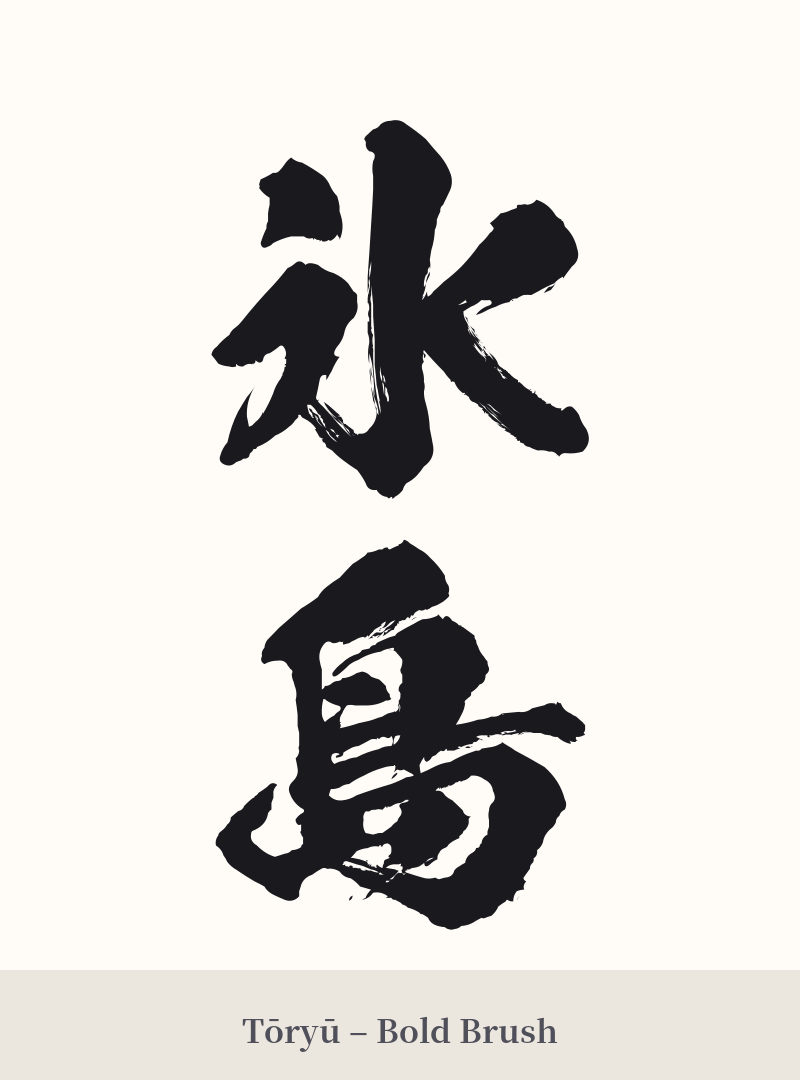
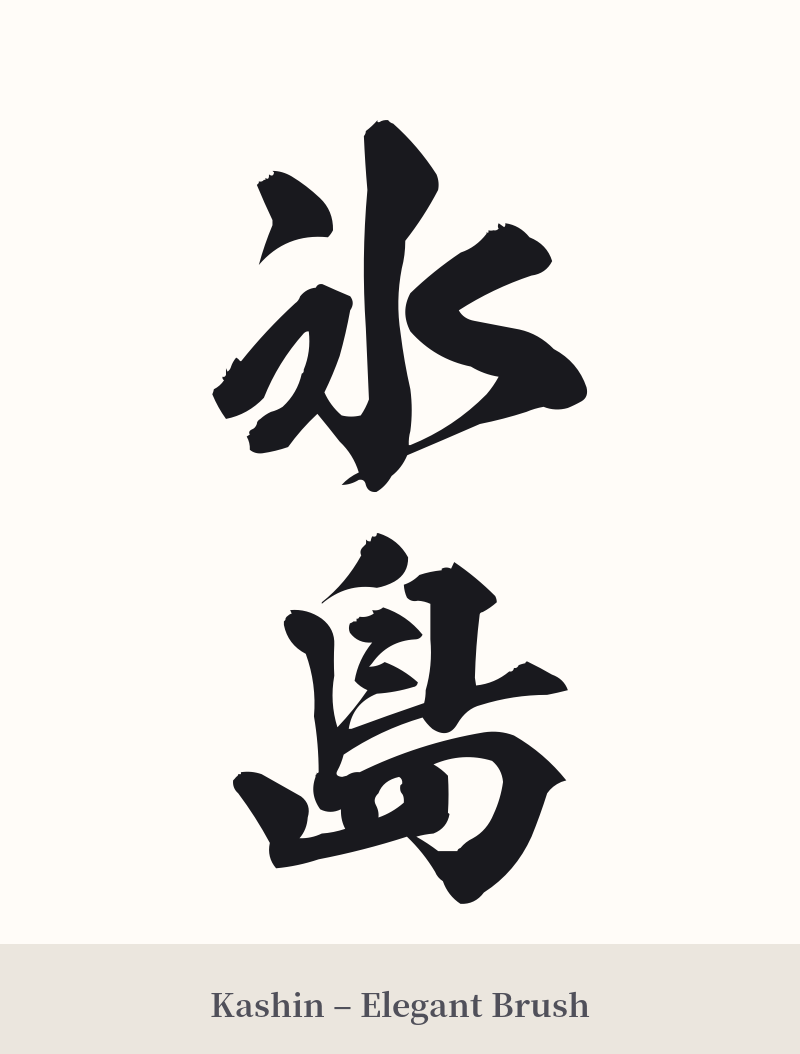
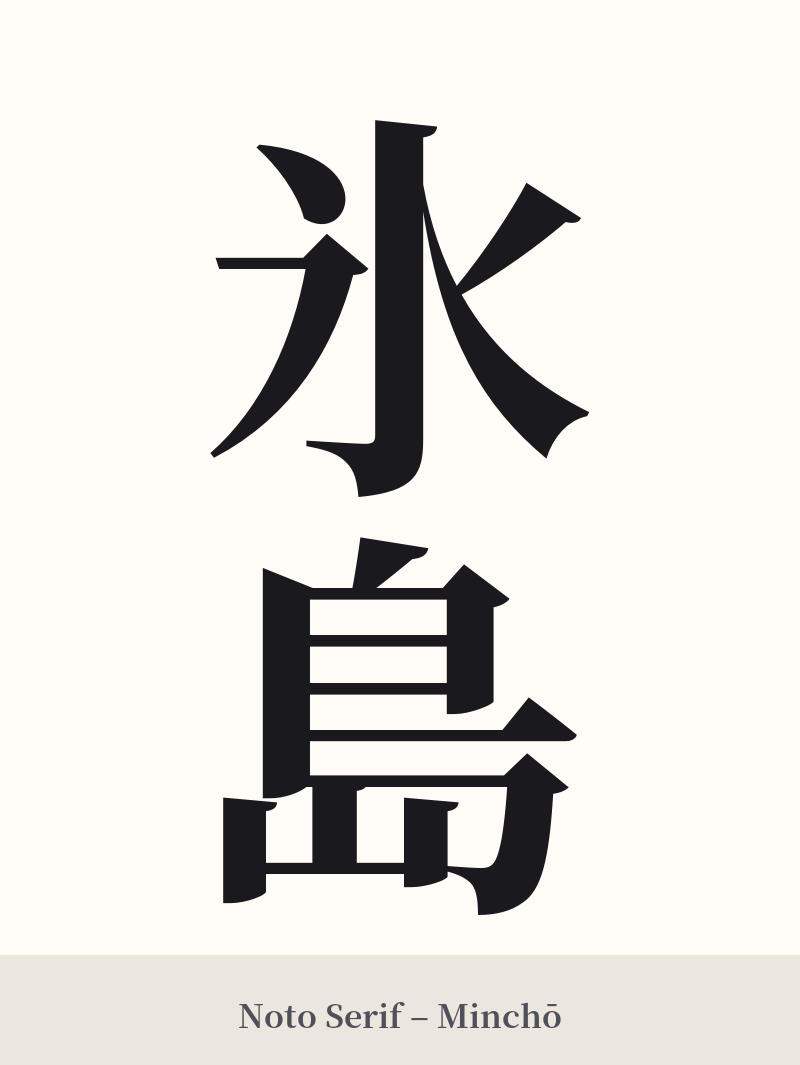
🖌️ Estilos de fuente para 氷島
Los mismos caracteres kanji pueden verse muy diferentes según el estilo de caligrafía. Elige una fuente que se ajuste al ambiente que deseas para tu tatuaje o diseño.
🎨 Idoneidad para tatuajes
📐 Guía de diseño de tatuajes
La composición de dos caracteres de 氷島 ofrece una gran flexibilidad para el diseño de un tatuaje. Su estructura equilibrada funciona bien tanto horizontal como verticalmente.
– Ubicación: Para un diseño vertical, la columna vertebral, el antebrazo o la pantorrilla son excelentes opciones, permitiendo que los caracteres fluyan hacia abajo. Una disposición horizontal se adapta perfectamente al pecho, la nuca o la parte interna del bíceps.
– Estilo de fuente: Una fuente nítida y angular como Kaisho (escritura en bloque) puede enfatizar la naturaleza cristalina y definida del hielo (氷). Para una sensación más orgánica que evoca paisajes naturales, un estilo semicursivo como Gyōsho puede añadir una sensación de movimiento, como el viento que barre una isla desierta.
– Elementos visuales: Considere combinar los kanji con imágenes relacionadas con Islandia. Unos cuantos copos de nieve, un patrón de olas minimalista, la silueta de una montaña volcánica o incluso sutiles referencias a la aurora boreal pueden enmarcar los caracteres y enriquecer la narrativa del diseño.
Comentarios