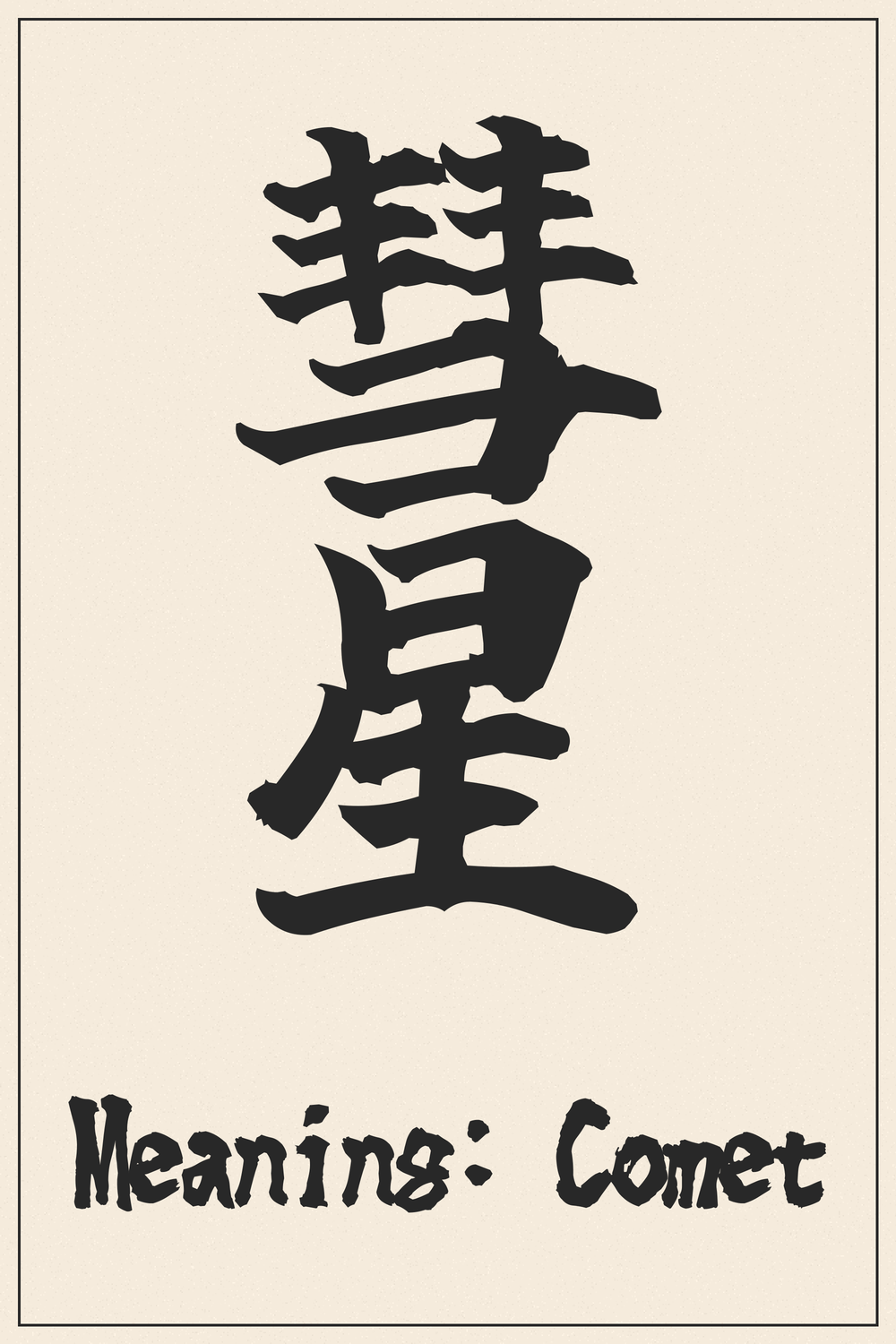
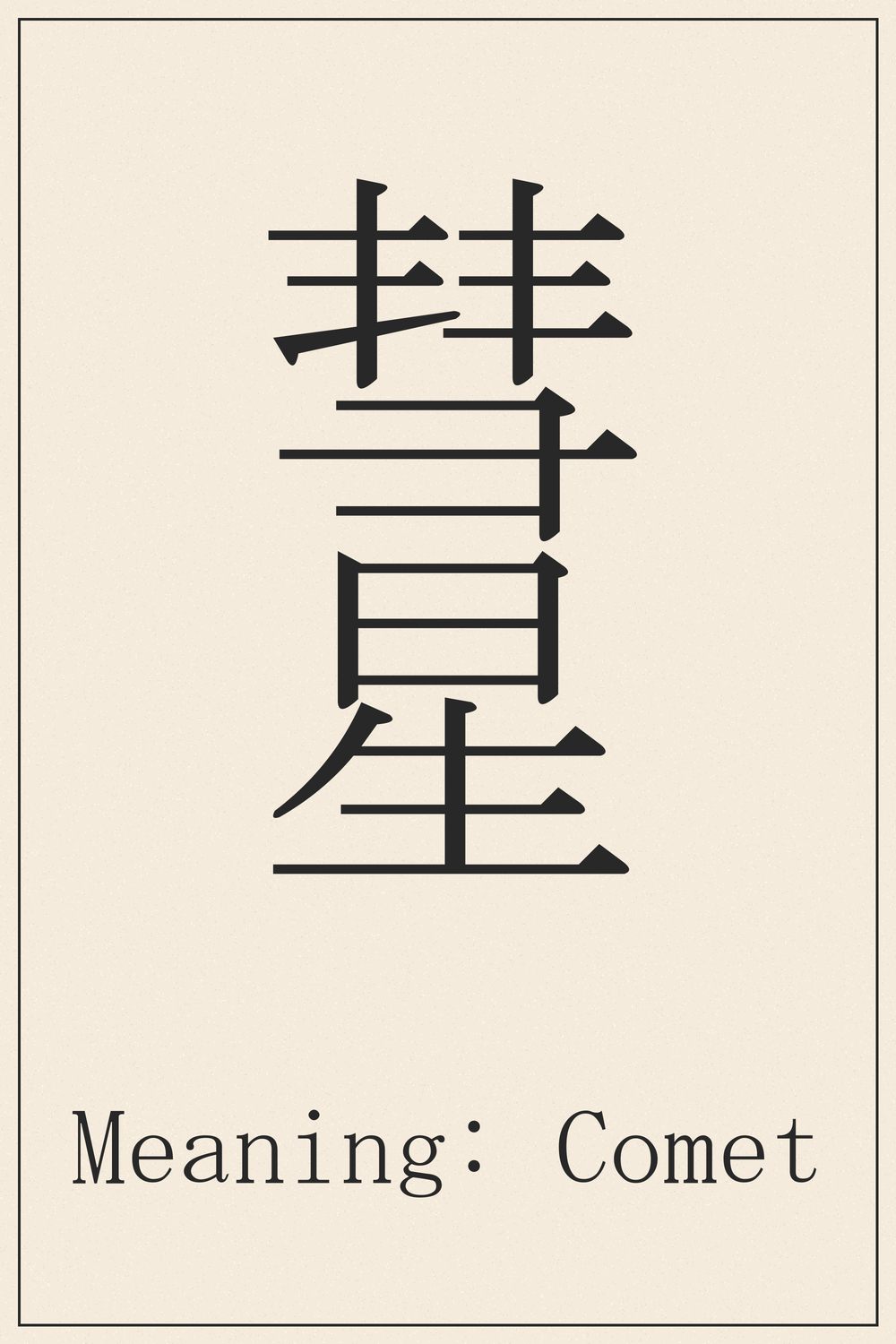
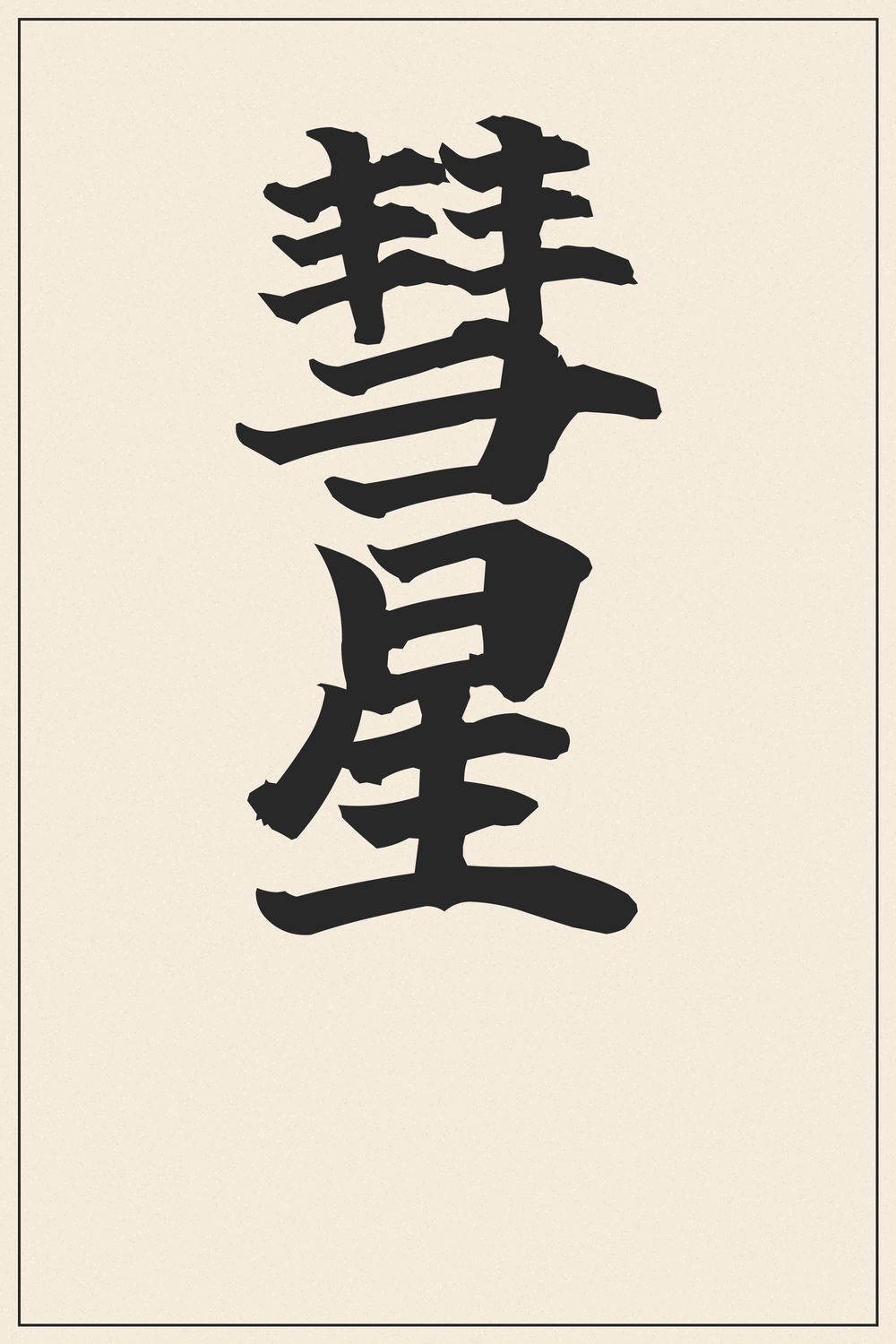
Comets, known as 彗星 (Suisei) in Japanese, embody a profound blend of celestial mystery and fleeting beauty. This potent kanji combination captures the essence of a spectacular, yet transient, natural phenomenon.
The atmosphere of a Kanji character changes dramatically depending on the font style. A character that looks elegant in a brush style might look bold and modern in a different font.
Recommendation:
Since a tattoo is permanent, we strongly recommend comparing various font styles beyond what is shown here. Use our designs as a trusted reference for the correct structure, but feel free to explore different artistic variations to find the perfect match for your vision.
The Deep Meaning Behind 彗星
The term 彗星 (Suisei) literally translates to “hairy star.” This evocative name originates from ancient observations of comets, whose luminous tails appeared like flowing hair trailing behind a star as they traversed the night sky. It’s a classical description of an astronomical wonder.
In Japanese culture and ancient traditions, comets were often seen as omens, sometimes of change or significant events, but also as breathtaking harbingers of the cosmos. Their rare and spectacular appearances imbue them with a sense of wonder, destiny, and the transient nature of existence, reflecting on the beauty of fleeting moments.
Kanji Breakdown
The profound beauty of 彗星 is unlocked by understanding its individual kanji components.
Meaning: Broom, Comet
Explanation: This character originally depicted a broom, suggested by the phonetic component, and was later borrowed to represent a comet due to the visual similarity of a comet’s tail to a broom’s bristles or a sweeping motion across the sky. It embodies the essence of “sweeping star.”
Meaning: Star, Celestial Body
Explanation: Composed of 日 (sun) and 生 (life/birth), 星 beautifully encapsulates the concept of a celestial body that ‘gives birth’ to light or appears in the sky. It is the fundamental character for any star or astronomical object.
Conclusion
The kanji 彗星 (Suisei) perfectly encapsulates the visual grandeur and transient nature of a comet, symbolizing moments of awe, celestial influence, and the fleeting beauty of life. It represents a powerful connection to the cosmos and the mysteries beyond our world.
Choosing “彗星” as a tattoo signifies an appreciation for universal wonders, the ephemeral elegance of existence, or a personal journey marked by significant, perhaps sudden, change. It serves as a constant reminder of the vastness of the universe and the beauty found in impermanence.
Comments