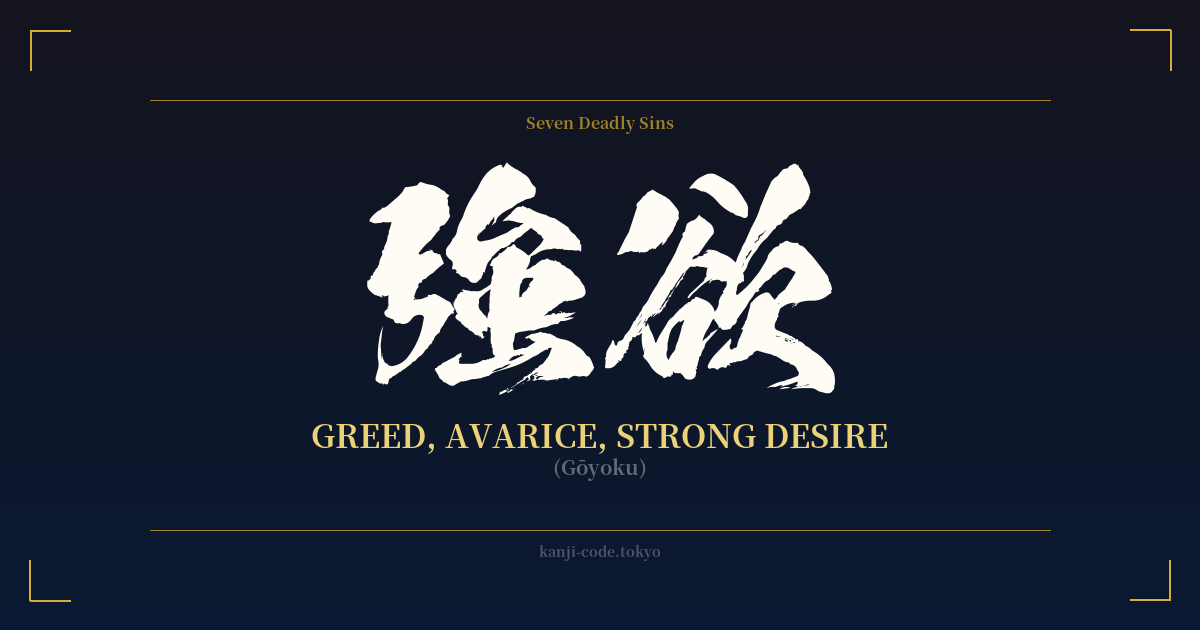
✍️ 強欲 (Gōyoku) — Cultural Context
The Japanese word 強欲 (Gōyoku) is the definitive term for greed, avarice, and an insatiable lust for wealth, power, or possessions. It paints a picture not of healthy ambition, but of a destructive, all-consuming desire that is never satisfied. The word is a powerful combination of two kanji: 強 (gō), meaning “strong,” and 欲 (yoku), meaning “desire” or “craving.” Together, they form the concept of a “strong desire,” but the nuance is overwhelmingly negative, implying a force that overpowers reason and morality.
In Japanese culture, particularly with its Buddhist roots, Gōyoku is seen as a potent source of suffering. Buddhism teaches that earthly cravings and attachments (煩悩, bonnō) are the primary obstacles to enlightenment. Gōyoku is one of the most powerful of these bonnō, a desire so intense it chains a person to the material world and a cycle of dissatisfaction. It’s the hunger that can never be filled, the thirst that can never be quenched.
While the concept is deeply embedded in Eastern philosophy, its most popular modern association is with the “Seven Deadly Sins” (七つの大罪, Nanatsu no Taizai), a concept from Christian tradition. This framework has been widely adopted and popularized in Japanese media, especially in manga, anime, and video games like 'Fullmetal Alchemist' or the series literally named 'The Seven Deadly Sins'. In this context, Gōyoku is the direct equivalent of Greed, often personified by a character whose defining trait is an obsessive and destructive accumulation of wealth or power.
It is crucial to distinguish Gōyoku from more neutral or even positive forms of ambition. A word like 野心 (yashin), for example, also means “ambition,” but it can be used to describe a driven entrepreneur or a determined leader. Gōyoku, on the other hand, is never positive. It speaks to a moral failing, a character flaw that corrupts the individual and harms others. It’s the desire of the crooked politician, the hoarding dragon, the corporate raider who destroys lives for profit. To choose this word is to embrace a concept that is universally understood in Japan as a dark and dangerous aspect of the human condition.
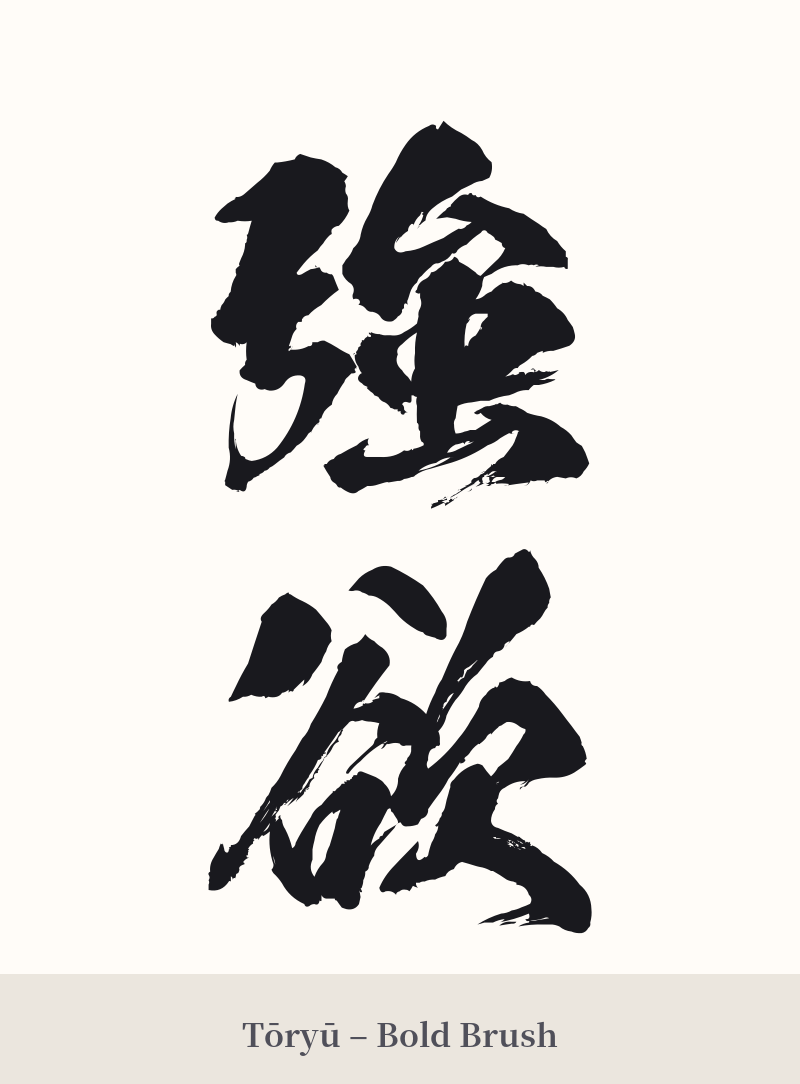
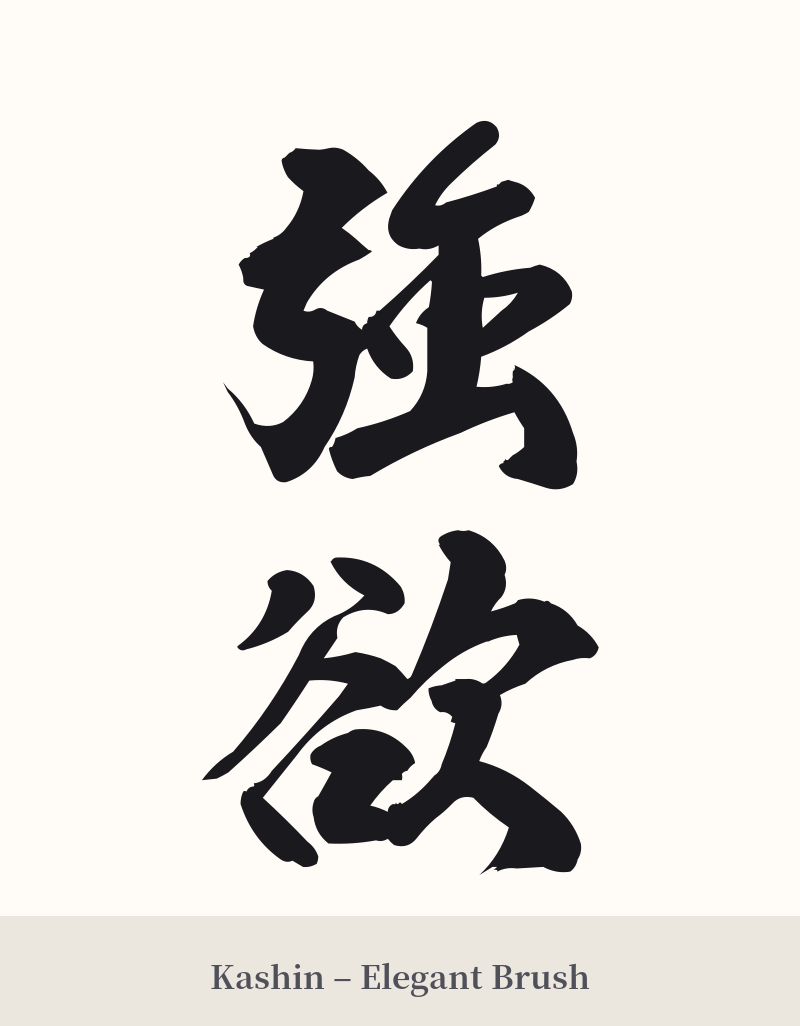
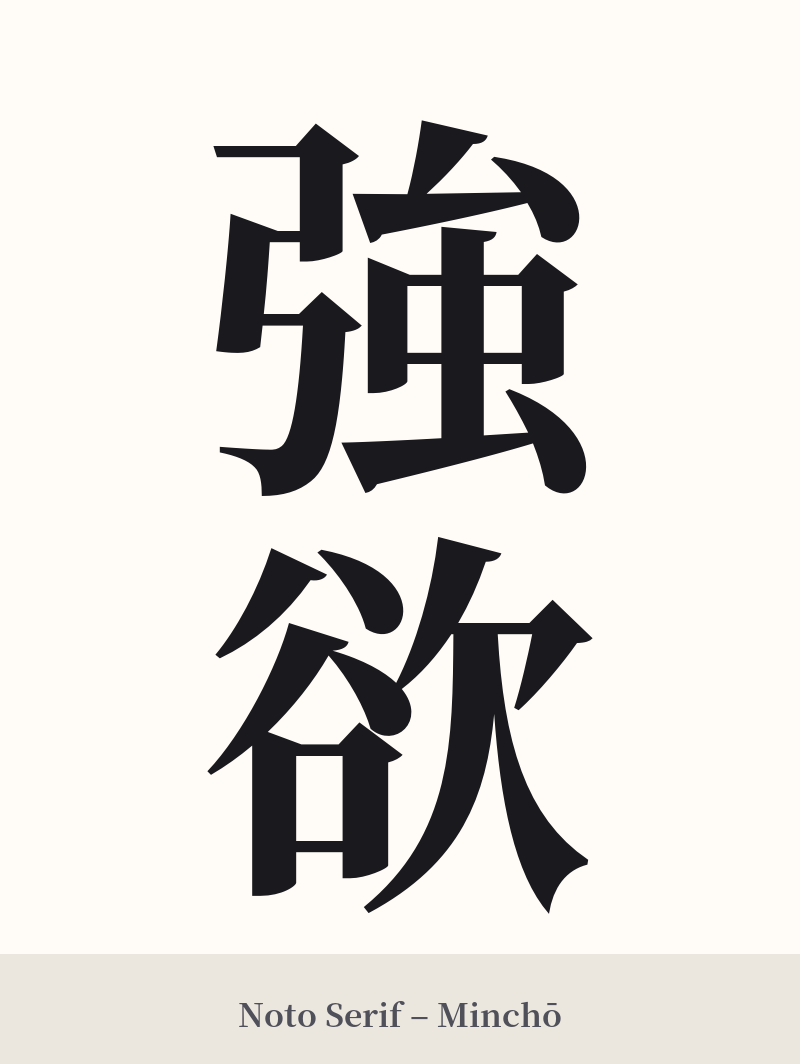
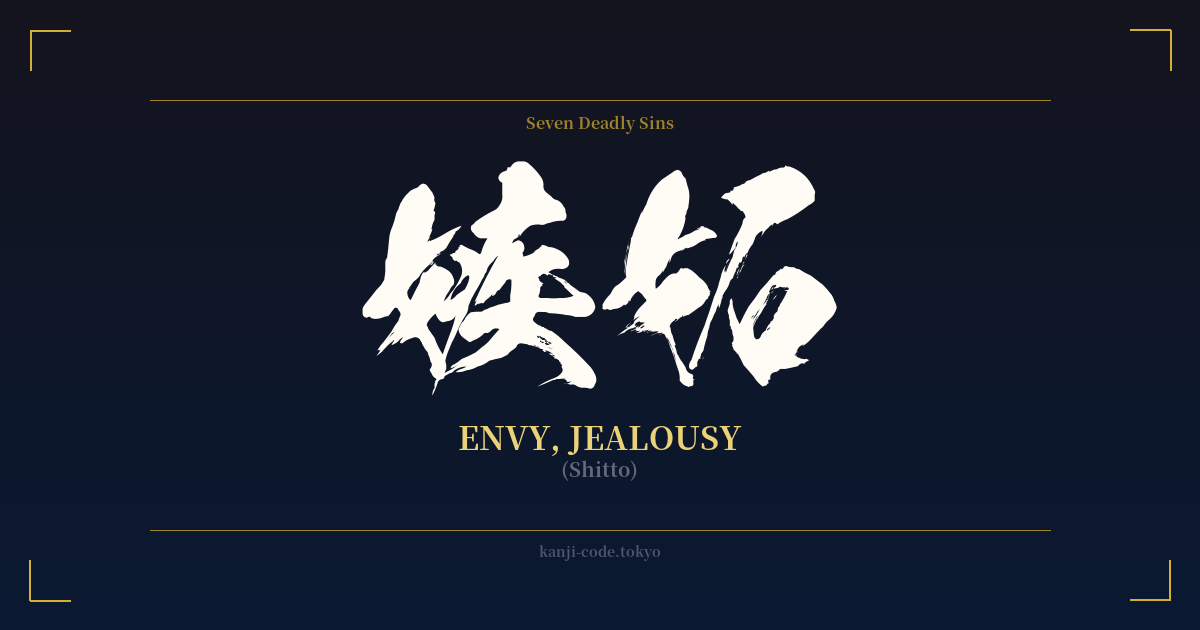
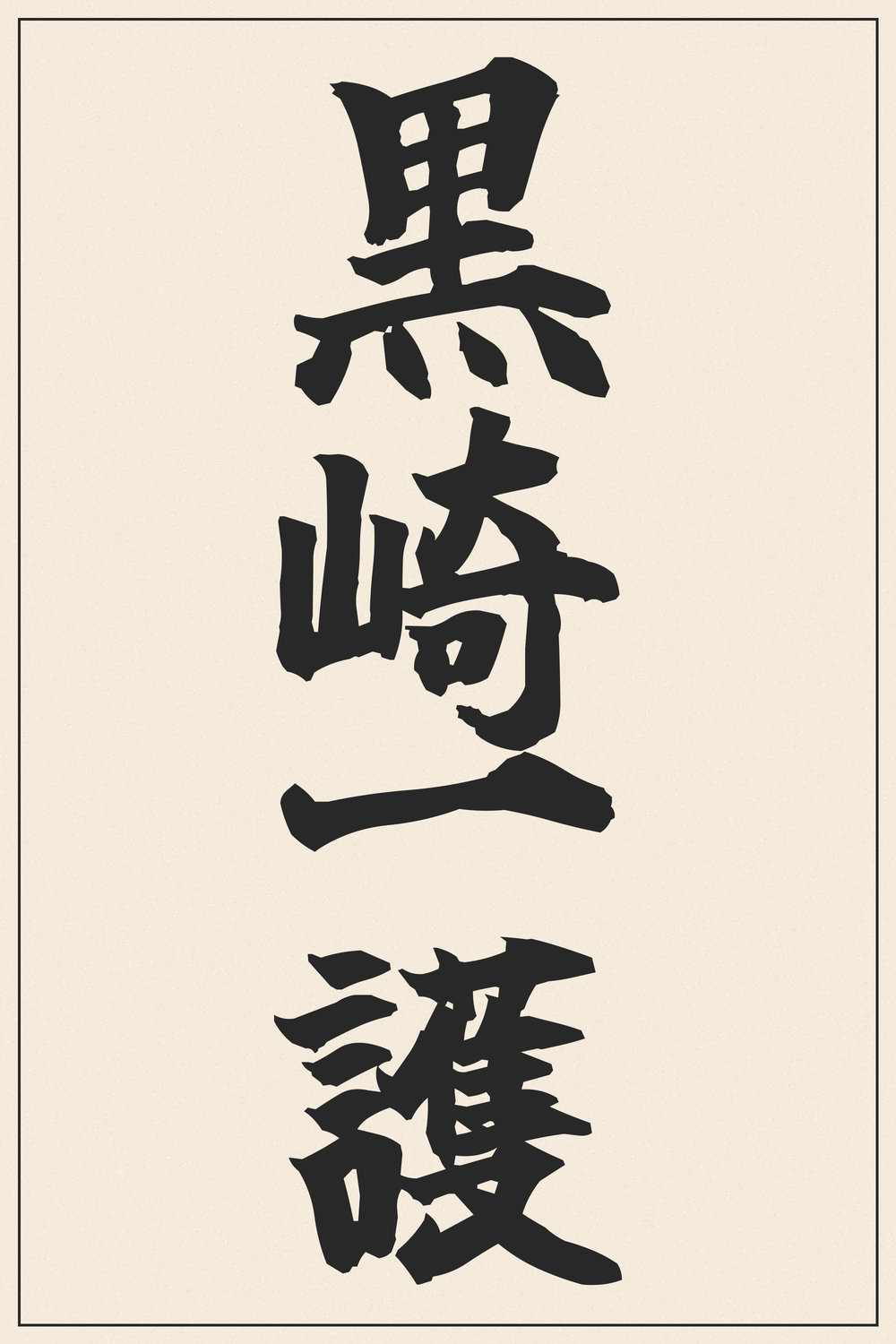
🖌️ Font Styles for 強欲
The same kanji can look dramatically different depending on the calligraphy style. Choose a font that matches the mood you want for your tattoo or design.
🎨 Tattoo Suitability
📐 Tattoo Design Guide
A tattoo of 強欲 (Gōyoku) makes a bold, dark statement. Given its intense meaning, the design should reflect its power and negative connotations.
– Placement: A vertical orientation is ideal for this two-character compound. The forearm, calf, or along the spine provides a strong canvas that complements the flow of the characters. A horizontal placement across the chest or upper back can also create an imposing look.
– Font Style: The font is key to conveying the right mood. A sharp, aggressive gyosho (semi-cursive) style can capture the chaotic energy of greed. Alternatively, a heavy, oppressive kaisho (block) script can give the word a sense of weight and inevitability. For a more conceptual piece, a fractured or decaying style could symbolize the destructive nature of avarice.
– Visual Tips: While the kanji alone is powerful, it can be paired with symbolic imagery. Consider a design where the characters are intertwined with a grasping hand, surrounded by cracking gold coins, or emerging from shadow. However, be cautious of making the design too literal, as the strength of these kanji lies in their inherent meaning.
Comments