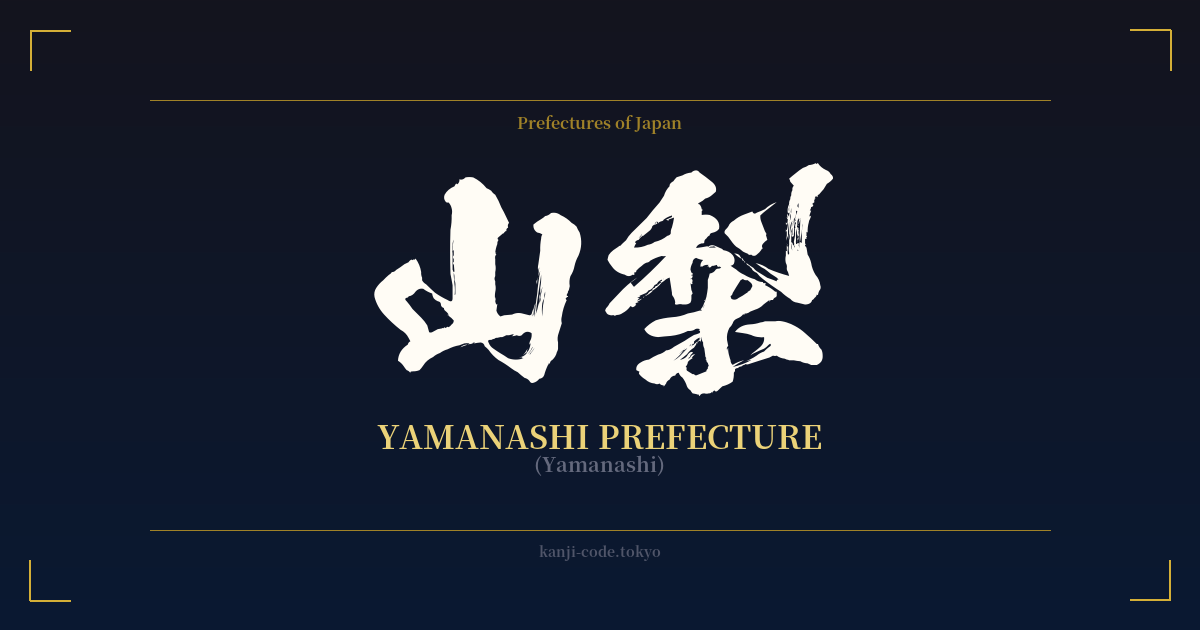
✍️ 山梨 (Yamanashi) — Cultural Context
The name 山梨 (Yamanashi) translates literally to 'Mountain Pear.' This simple name belies the region's immense natural beauty and deep historical roots. The '山' (yama) or 'mountain' character is no accident; Yamanashi is a landlocked prefecture defined by its towering mountain ranges, including the Akaishi Mountains and the Okuchichibu Mountains. Most famously, the northern half of Japan's iconic Mount Fuji lies within its borders, making the 'mountain' aspect of its name a core part of its identity.
The '梨' (nashi) or 'pear' character points to the prefecture's other great contribution: agriculture. Historically, the area may have been known for wild Japanese pear trees. Today, Yamanashi is celebrated as Japan's 'Fruit Kingdom,' renowned for producing the highest quality peaches, plums, and, most notably, grapes. In fact, Yamanashi is the heart of Japan's wine industry, with its Koshu Valley producing award-winning white wines that are gaining international acclaim. The name 'Mountain Pear' serves as a poetic and historical nod to its role as a fertile basin nestled among giants.
Before it was Yamanashi, the area was known as Kai Province (甲斐国, Kai no kuni). During the tumultuous Sengoku period (15th-17th centuries), Kai was the domain of one of Japan's most formidable warlords, Takeda Shingen. His military genius and the fierce loyalty of his retainers are legendary. Takeda's famous battle standard bore the words from Sun Tzu's 'The Art of War': 風林火山 (Fūrinkazan), meaning 'Wind, Forest, Fire, Mountain.' This powerful motto is still deeply associated with Yamanashi, representing the swiftness, quiet, ferocity, and immovability of Takeda's army and, by extension, the spirit of the land itself.
Modern Yamanashi is a blend of this rich history and breathtaking nature. It is home to the Fuji Five Lakes (Fujigoko), a stunning area at the northern base of Mount Fuji that offers unparalleled views and recreational activities. The prefecture is also dotted with onsen (hot springs), making it a popular getaway for those seeking relaxation and a connection to nature. Therefore, the name 山梨 encapsulates not just 'mountain' and 'pear,' but a legacy of powerful warriors, a kingdom of fruit, and the majestic presence of Japan's most sacred peak.
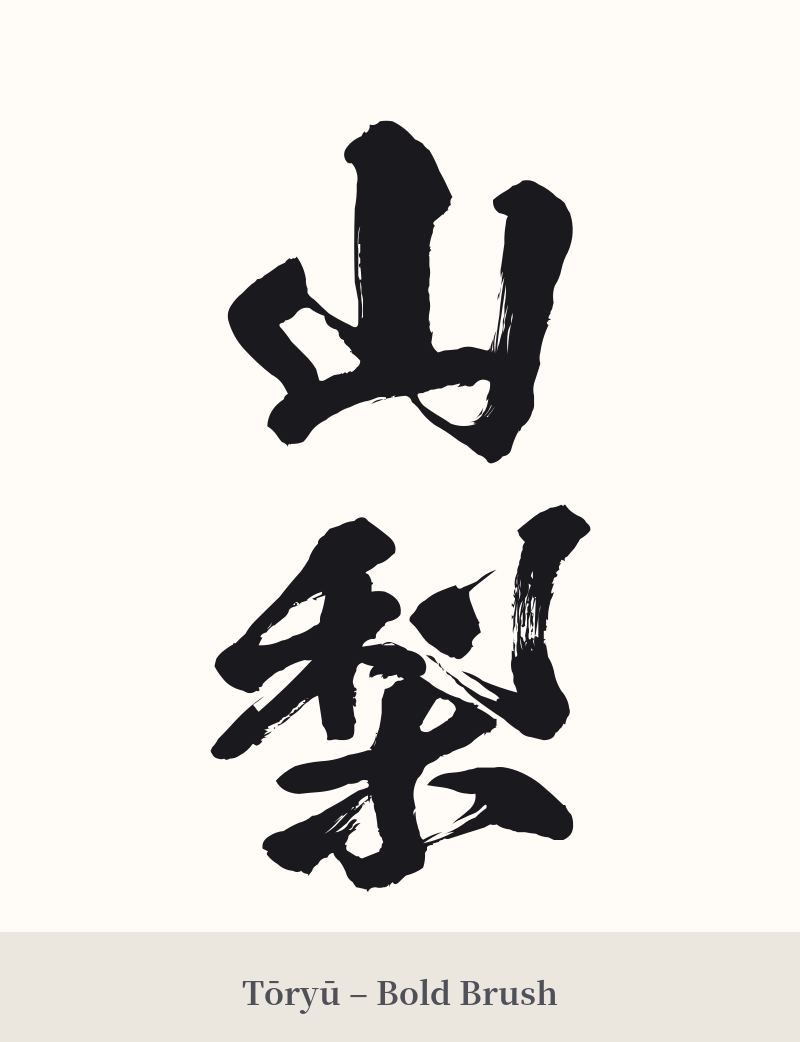
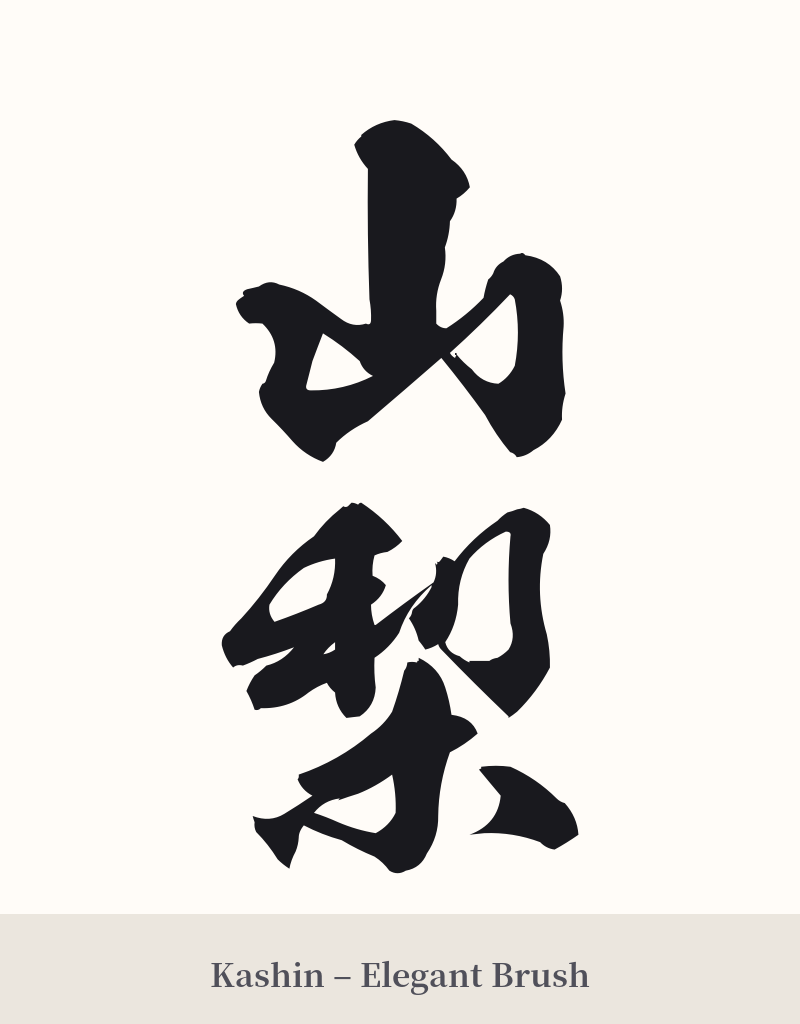
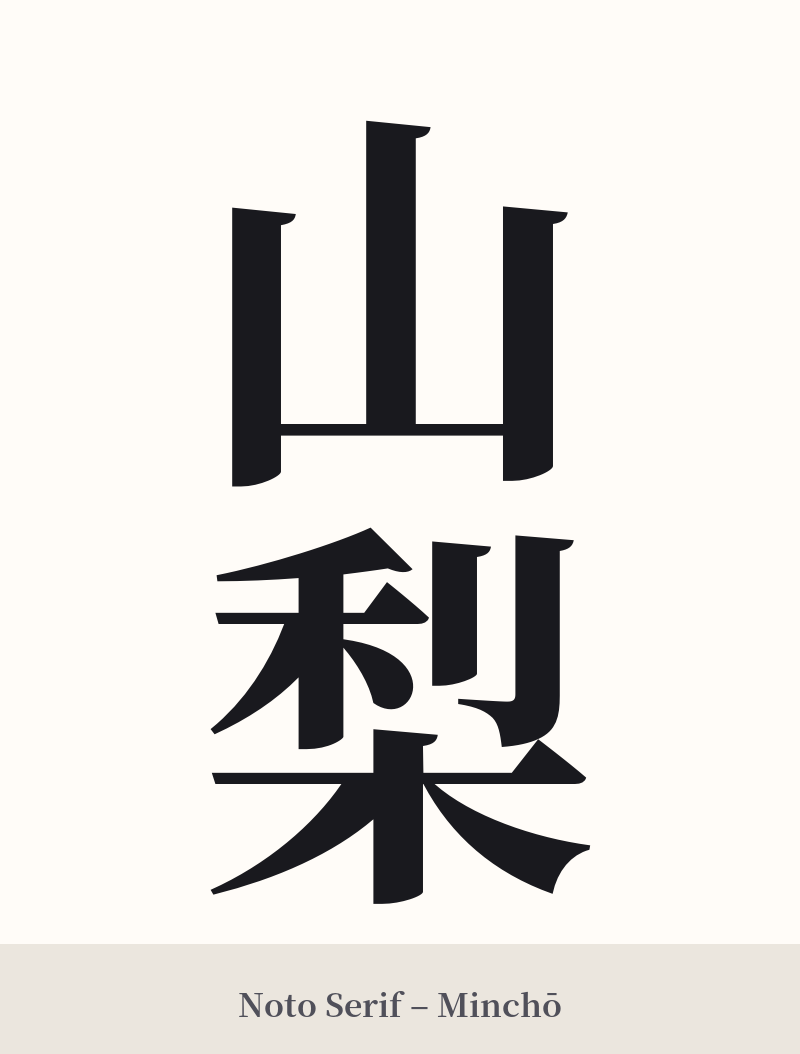
🖌️ Font Styles for 山梨
The same kanji can look dramatically different depending on the calligraphy style. Choose a font that matches the mood you want for your tattoo or design.
🎨 Tattoo Suitability
📐 Tattoo Design Guide
For a tattoo of 山梨, consider a vertical arrangement, which is traditional for Japanese writing and complements the flow of limbs like the forearm or calf. This orientation allows each character to be appreciated individually while forming a cohesive whole.
– Font Style: A classic Kaisho (block script) or Gyosho (semi-cursive script) would honor the historical weight of the name, connecting it to its samurai past and calligraphic traditions. For a more modern or nature-focused interpretation, a clean, minimalist Mincho style could also work well.
– Placement: Good placements include the outer forearm, the side of the calf, or along the spine or ribs. These spots provide a long, flat canvas for the vertical script.
– Visual Embellishments: Because the name is a place, consider adding elements that provide context. A silhouette of Mount Fuji rising behind the kanji, or a subtle integration of a grapevine or peach blossom branch wrapping around the characters, can enrich the design and communicate the intended meaning beyond just the literal 'Mountain Pear.'
Comments