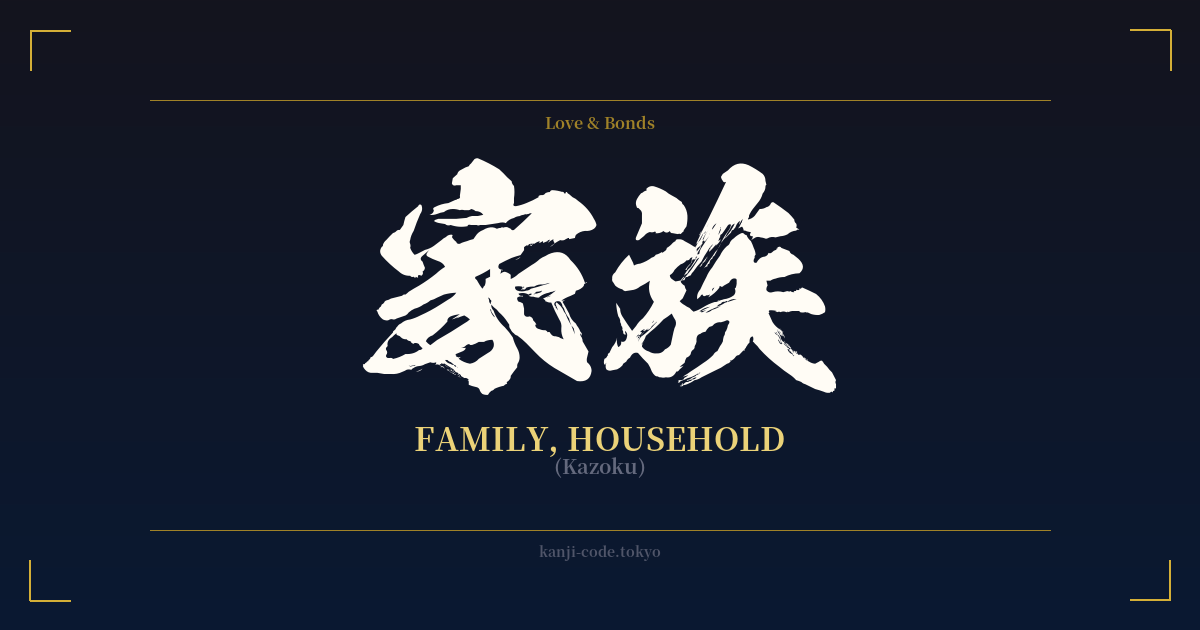
✍️ 家族 (Kazoku) — Cultural Context
The word 家族 (Kazoku) is the modern Japanese term for 'family.' It typically refers to the nuclear family unit—parents and their children—a concept that became more prevalent during the Meiji Restoration as Japan modernized and adopted Western ideas.
However, to truly understand its depth, one must contrast it with the older, more traditional concept of the 家 (ie). The 'ie' system was the bedrock of pre-modern Japanese society, representing a multi-generational household or clan. It was less about emotional bonds and more about lineage, property, and the continuation of the family name. The head of the 'ie' held immense authority, and the collective's survival and prosperity superseded individual desires.
The shift from 'ie' to 'kazoku' marks a significant social evolution in Japan, moving from a rigid, hierarchical clan structure to a more intimate, emotionally-connected family unit. While the 'ie' system is no longer legally recognized, its influence lingers in the deep-seated respect for elders and the importance placed on family duty and harmony.
In contemporary Japan, 家族 is a word filled with warmth. It evokes images of shared meals, family trips (家族旅行, kazoku ryokō), and mutual support. It is the core 'inside' group in the 'uchi-soto' (inside/outside) social dynamic, the safe harbor in a society that often emphasizes group conformity. The characters themselves tell a story: 家 (ka) meaning 'house' or 'home,' and 族 (zoku) meaning 'tribe' or 'clan.' Together, they literally form 'the tribe of the house,' a powerful image of a unified group sharing a common space and identity.
As Japanese society continues to evolve, so does the meaning of kazoku'. The definition is expanding to embrace more diverse structures, including single-parent households and even chosen families among close friends, reflecting a modern understanding of what it means to belong.
🖌️ Font Styles for 家族
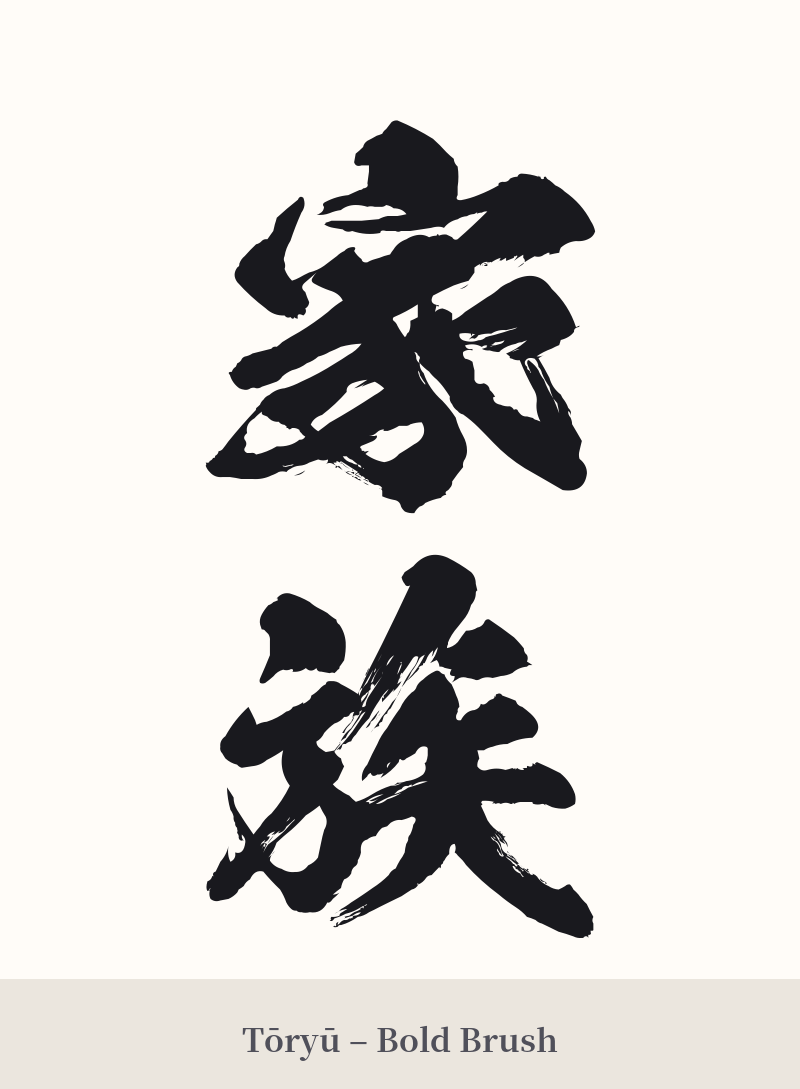
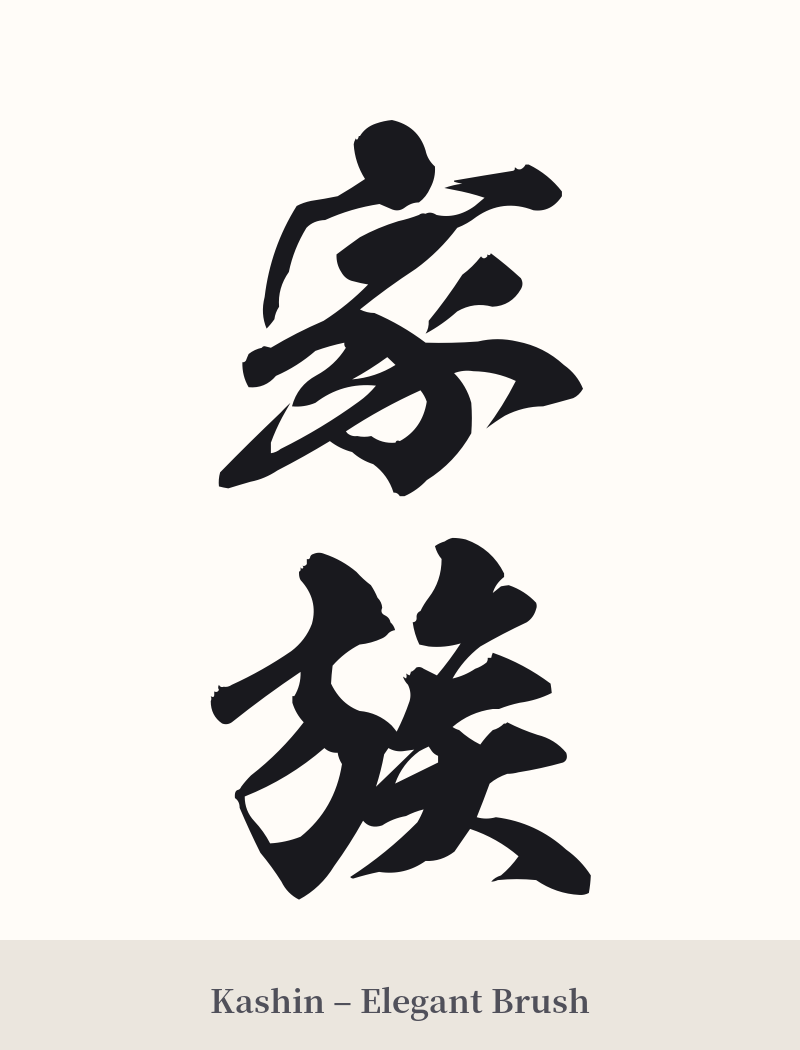
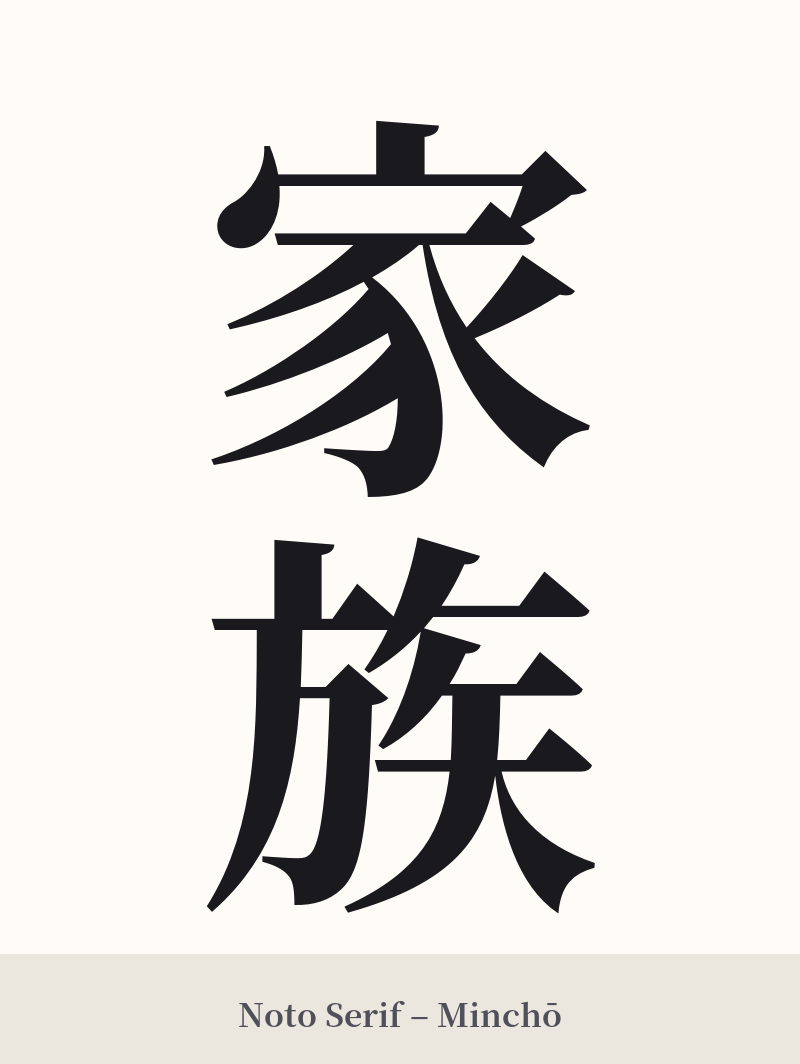
The same kanji can look dramatically different depending on the calligraphy style. Choose a font that matches the mood you want for your tattoo or design.
🎨 Tattoo Suitability
📐 Tattoo Design Guide
The word 家族 (Kazoku) offers both strength and elegance, making it versatile for tattoo designs. Its balanced, two-character structure works well in various placements and styles.
– Placement: A vertical orientation is classic for kanji and looks powerful running down the forearm, the back of the calf, or along the spine. For a horizontal layout, the chest, upper back, or inner bicep are excellent choices.
– Font Style: For a traditional and clear look, a Kaisho (block script) style emphasizes the structure and stability of family. A more fluid Gyosho (semi-cursive) style can convey the warmth and dynamic connections within a family. For a personal touch, a custom design based on the handwriting of a family member can be incredibly meaningful.
– Visual Elements: Consider pairing the kanji with other symbolic imagery. An Enso (Zen circle) can be drawn around the characters to represent the completeness and wholeness of the family unit. Incorporating a family crest (kamon), if you have one, links the design to your specific heritage. Elements like a cherry blossom branch can symbolize the beauty and preciousness of time spent with loved ones.
Comments