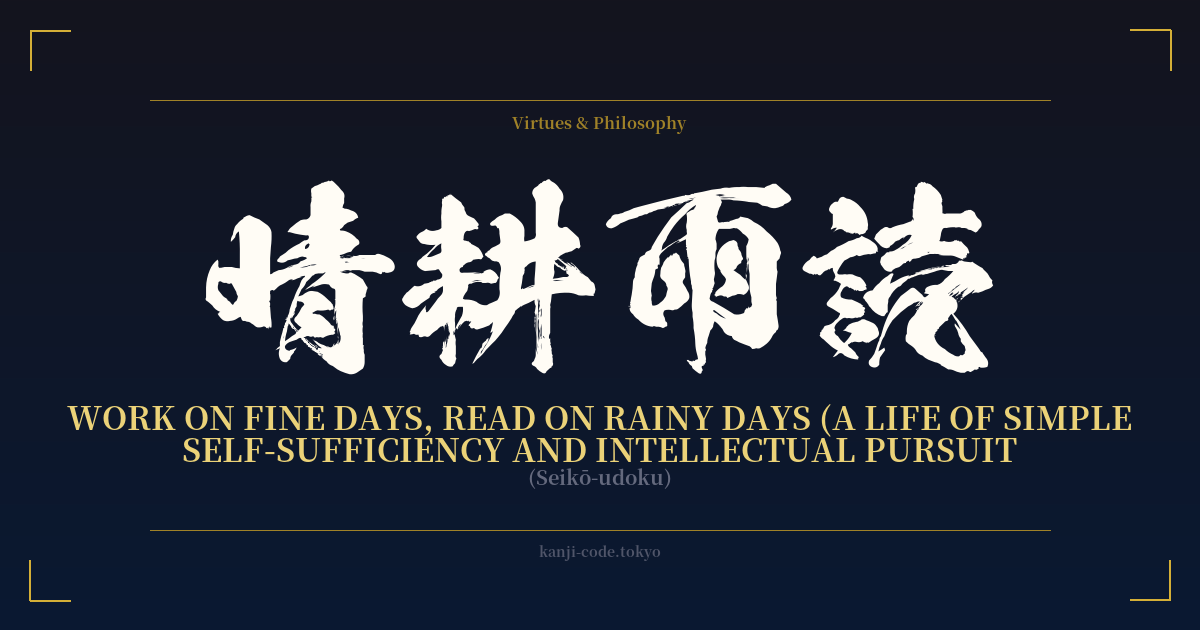
✍️ 晴耕雨読 (Seikō-udoku) — Cultural Context
晴耕雨読 (Seikō-udoku) is a four-character idiom, or yojijukugo, that paints a vivid picture of an ideal life. Translated literally, it means "till the fields on clear days, read books on rainy days." This simple phrase encapsulates a profound philosophy of living in harmony with nature, balancing physical labor with intellectual enrichment, and finding contentment outside the frantic pace of modern society.
The concept has its roots in ancient Chinese literature and the ideals of the scholar-gentleman. Historically, many intellectuals and officials, weary of political strife and the pressures of court life, would dream of retiring to the countryside. There, they could lead a life of simple means, supporting themselves through farming while dedicating their leisure time to study, poetry, and contemplation. This was not seen as a lazy life, but as a purer, more authentic existence.
In Japan, this ideal was readily adopted and integrated into a culture that already held a deep reverence for nature and the changing seasons. Seikō-udoku speaks to a rhythm of life dictated by the weather, not by a clock. The sunny day is for productive, physical work that connects one to the earth—the act of cultivation. The rainy day, which keeps one indoors, becomes a welcome opportunity for introspection and the cultivation of the mind through reading.
This idiom embodies the virtue of self-sufficiency (自給自足, jikyūjisoku). It champions a life where one is not wholly dependent on external systems for sustenance or entertainment. There's a quiet dignity in working the land to feed oneself and using natural downtime to expand one's own knowledge. It is the antithesis of a consumer-driven lifestyle, focusing instead on production, learning, and inner peace.
Today, Seikō-udoku remains a romantic and aspirational concept in Japan. For many city dwellers caught in the daily grind of corporate life, it represents a dream of a future where they can escape to the countryside (inaka) and live more deliberately. It’s a powerful reminder that a fulfilling life finds balance between the needs of the body and the nourishment of the soul, all while respecting the natural world that surrounds us.
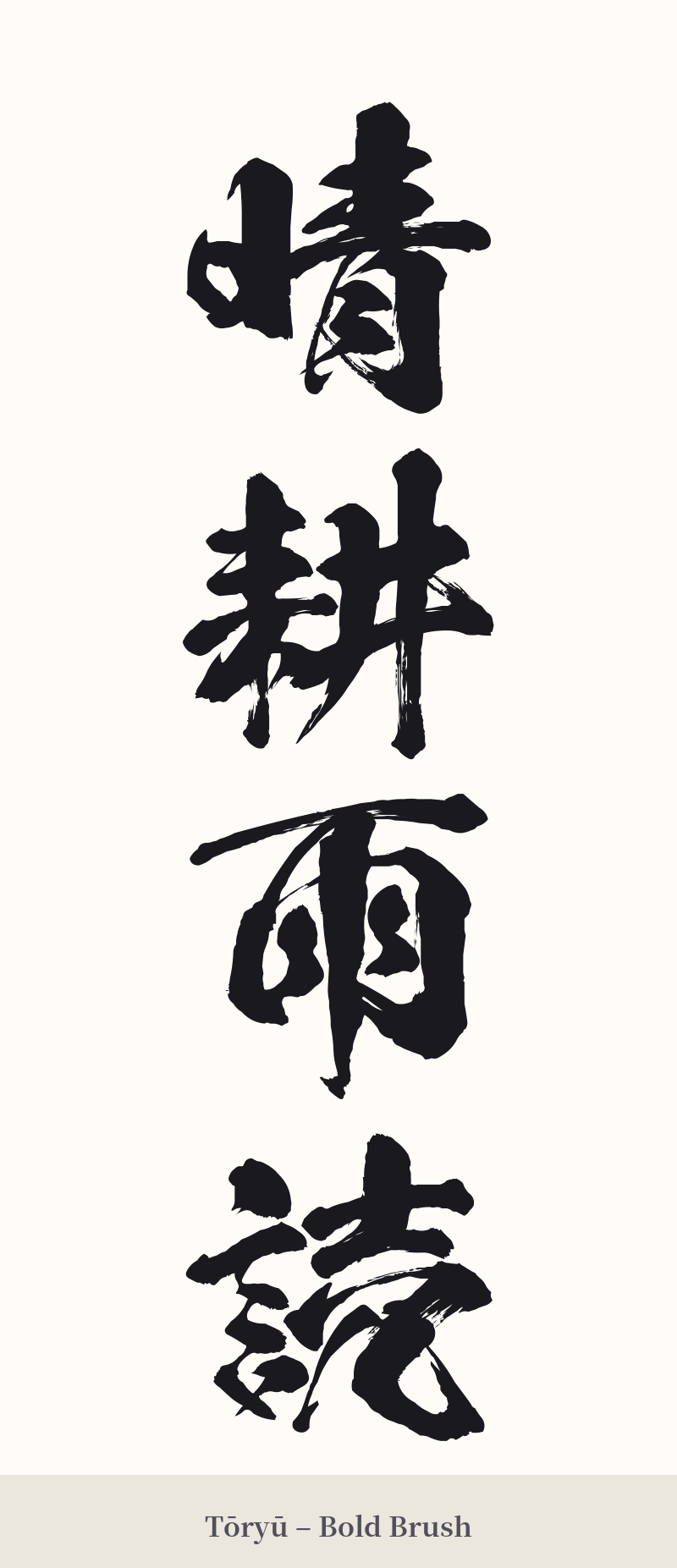
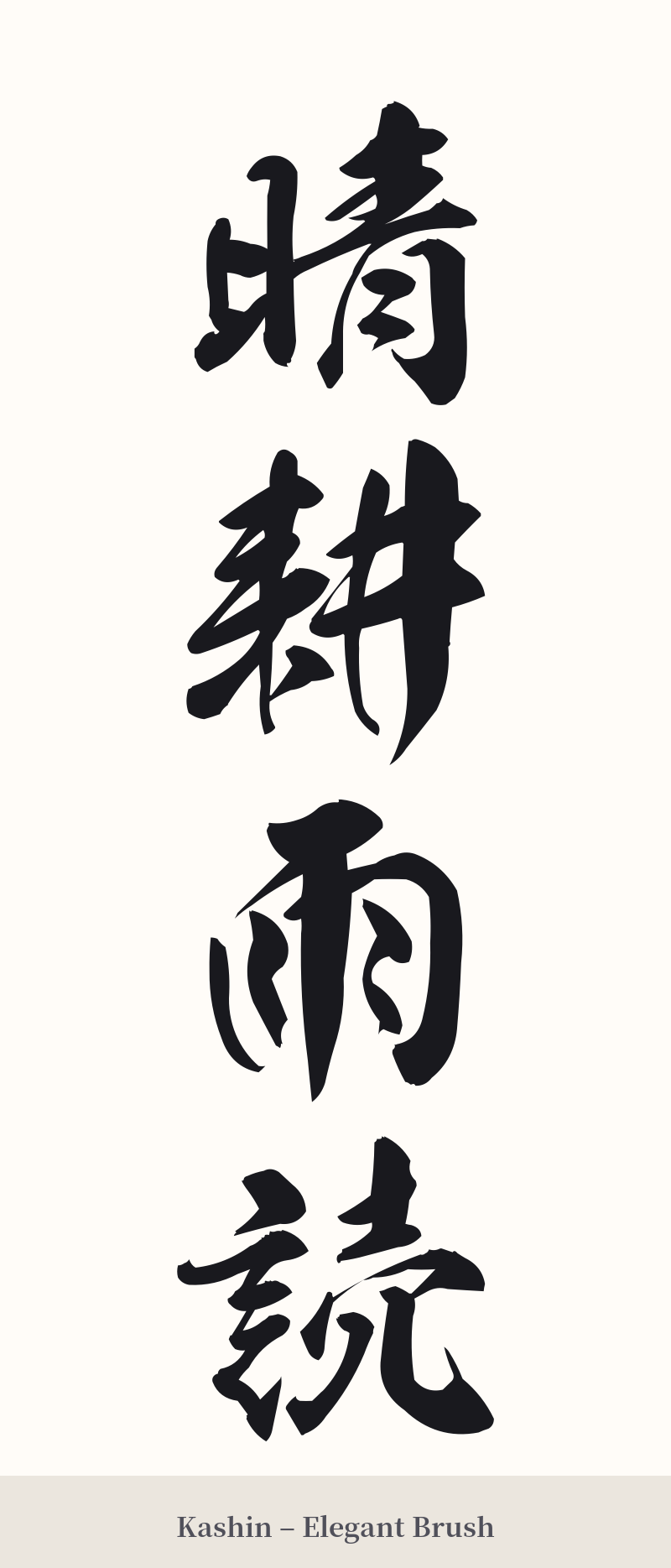
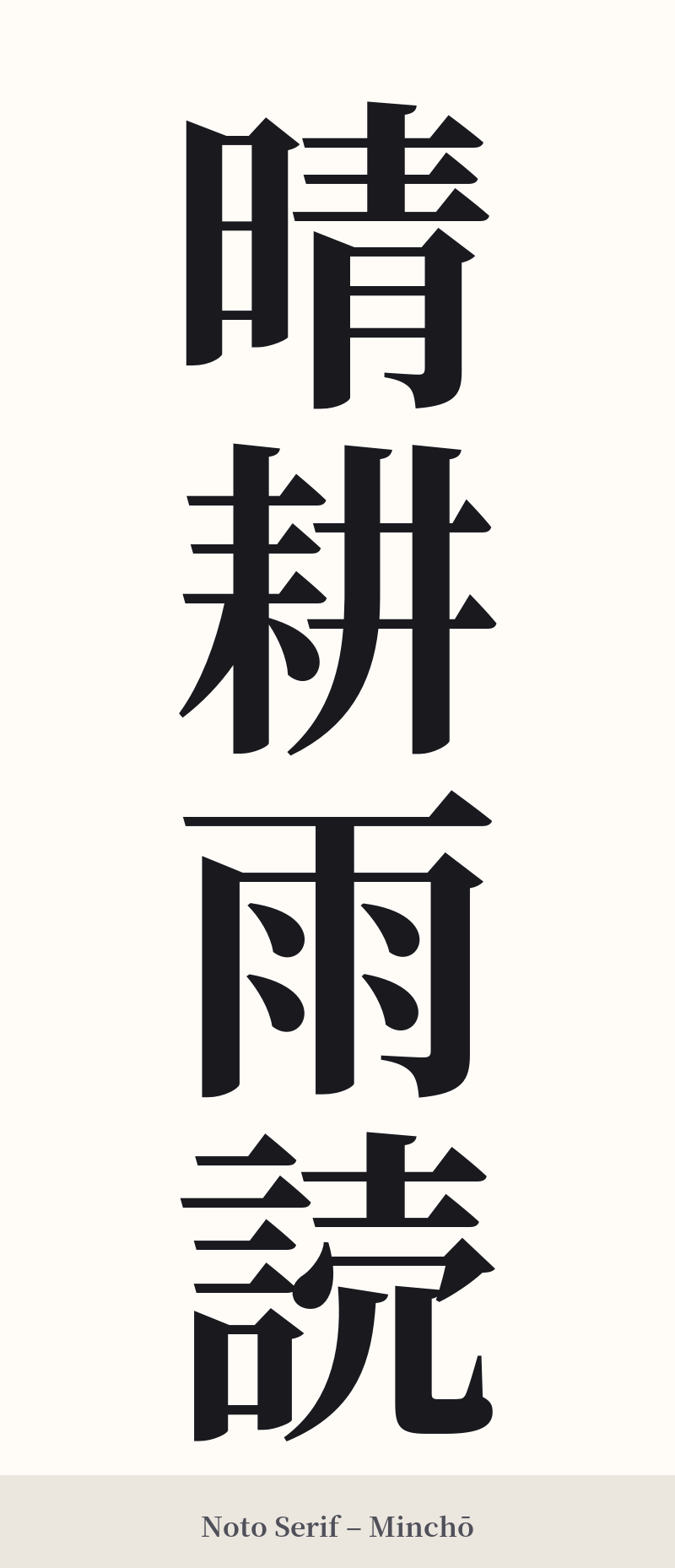
🖌️ Font Styles for 晴耕雨読
The same kanji can look dramatically different depending on the calligraphy style. Choose a font that matches the mood you want for your tattoo or design.
🎨 Tattoo Suitability
📐 Tattoo Design Guide
The structure of a yojijukugo lends itself perfectly to certain tattoo designs that emphasize its literary and aesthetic qualities.
– Placement: A vertical orientation is the most traditional and visually striking way to display 晴耕雨読. This looks exceptional running down the forearm, the calf, or along the spine. For a horizontal design, placement across the chest or upper back works well.
– Font Style: A semi-cursive script like Gyōsho (行書) can capture the fluid, poetic nature of the phrase. For a bolder, more classic look that emphasizes clarity, Kaisho (楷書) or block script is an excellent choice. Avoid overly stylized or generic "oriental" fonts which can detract from the authenticity.
– Visual Elements: Consider subtly incorporating imagery related to the kanji themselves. A small sun or stylized cloud near 晴, a hint of a plow or soil near 耕, gentle rain lines by 雨, or a scroll near 読 can create a larger, more illustrative piece that tells the story of the idiom.
Comments