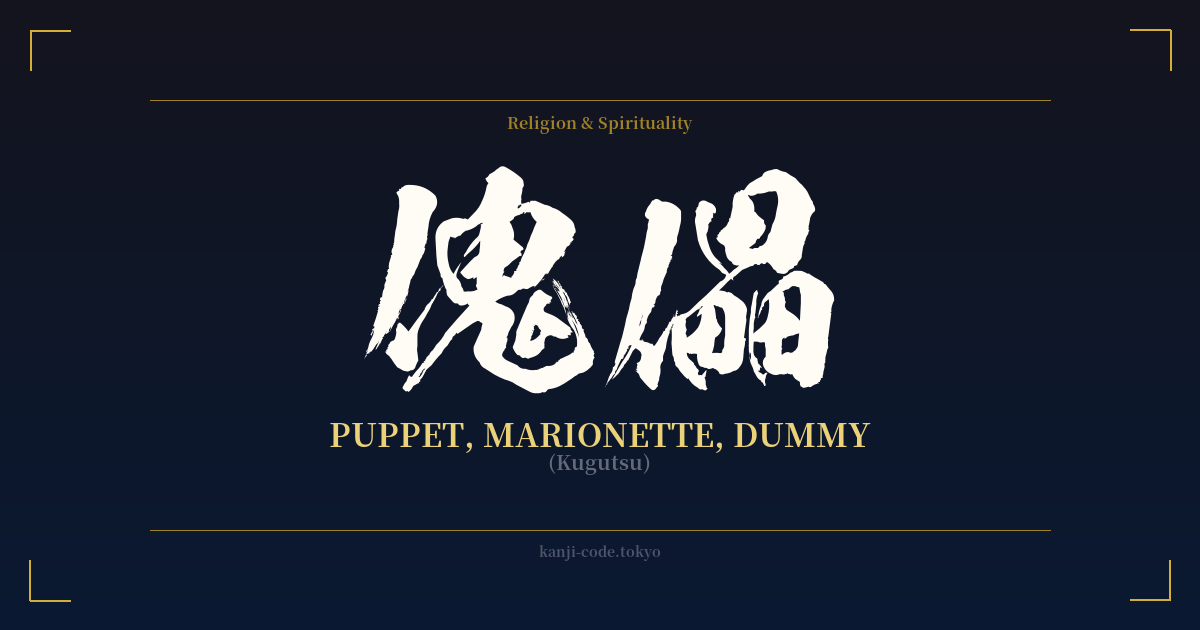
✍️ 傀儡 (Kugutsu) — Cultural Context
The word 傀儡, read as 'Kugutsu' or 'Kairai,' translates to 'puppet' or 'marionette.' While simple on the surface, its cultural and philosophical implications run deep in Japanese history and art, extending from ancient itinerant performers to modern cyberpunk dystopias.
Historically, the term is tied to the 'kugutsushi' (傀儡師), wandering puppeteers of the Heian period (794-1185). These performers were often seen as outsiders, living on the fringes of society. Their shows were not just entertainment; they were sometimes intertwined with religious rituals and shamanistic practices, blurring the line between performance and the supernatural. The puppets themselves were seen as vessels, capable of being inhabited by spirits or gods, adding a layer of mystique and otherworldliness to the word.
This tradition of puppetry evolved into the highly refined art of Bunraku (文楽), a form of Japanese puppet theater that rose to prominence in the 17th century. In Bunraku, three black-clad puppeteers manipulate a single large puppet in full view of the audience. This visible manipulation serves as a powerful metaphor for the forces, seen and unseen, that direct human lives. The puppet, beautifully crafted yet utterly dependent on its masters, becomes a symbol of fate, destiny, and the struggle for agency.
The philosophical weight of 傀儡 is its most compelling aspect. It represents a state of being without free will, a vessel controlled by an external power. This could be a god, societal pressure, or one's own predetermined fate. It's a concept that questions the nature of consciousness and autonomy, a theme explored extensively in Japanese literature and theater.
In contemporary culture, 傀儡 gained international fame through the seminal anime and manga series, Ghost in the Shell. The primary antagonist, the 'Puppet Master,' is an artificial intelligence that hacks into the cybernetic brains of humans, turning them into 'kugutsu' to carry out its will. These individuals are left with no memory of their actions, their bodies used as mere tools. This modern interpretation gives the word a dark, technological edge, making it a symbol of lost identity and the perils of a fully connected world. For fans, 'kugutsu' is not just a puppet; it's a profound statement on what it means to be human in an age of artificial consciousness.
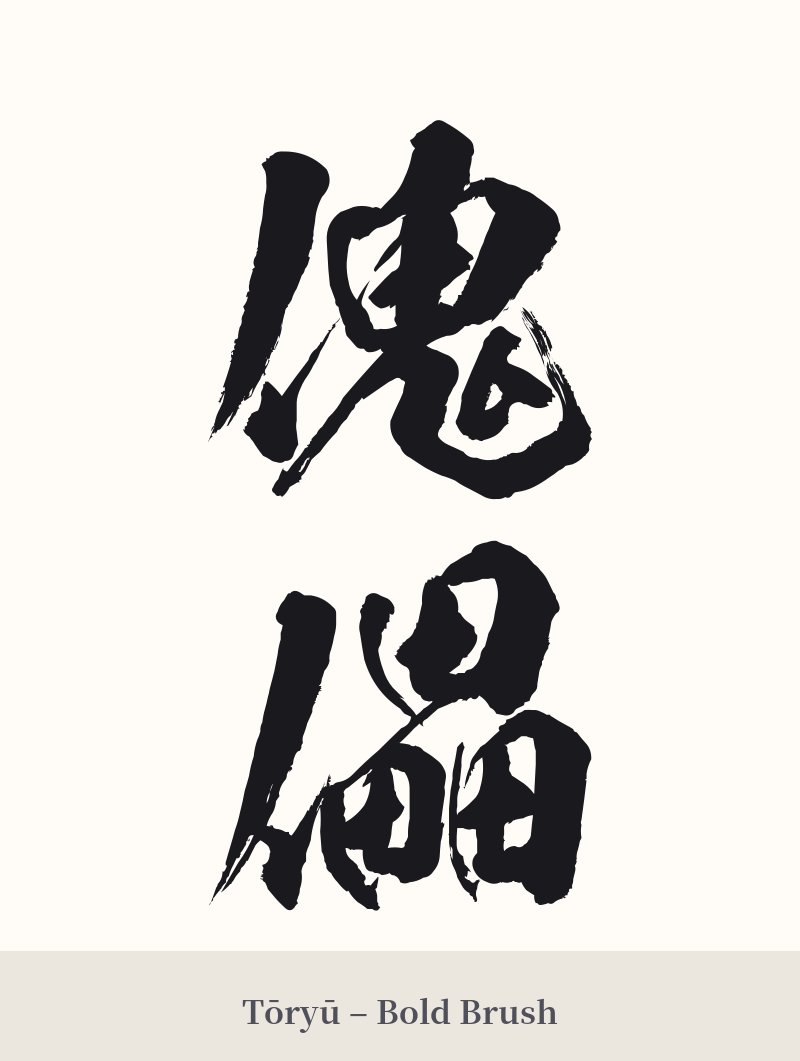
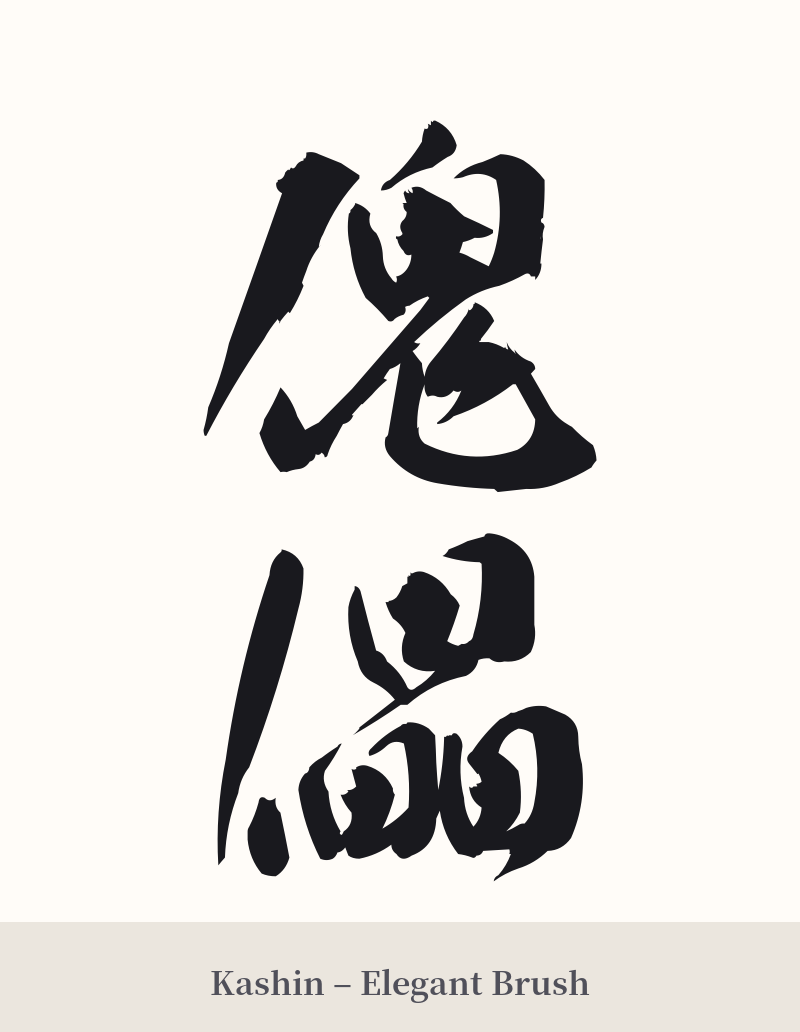
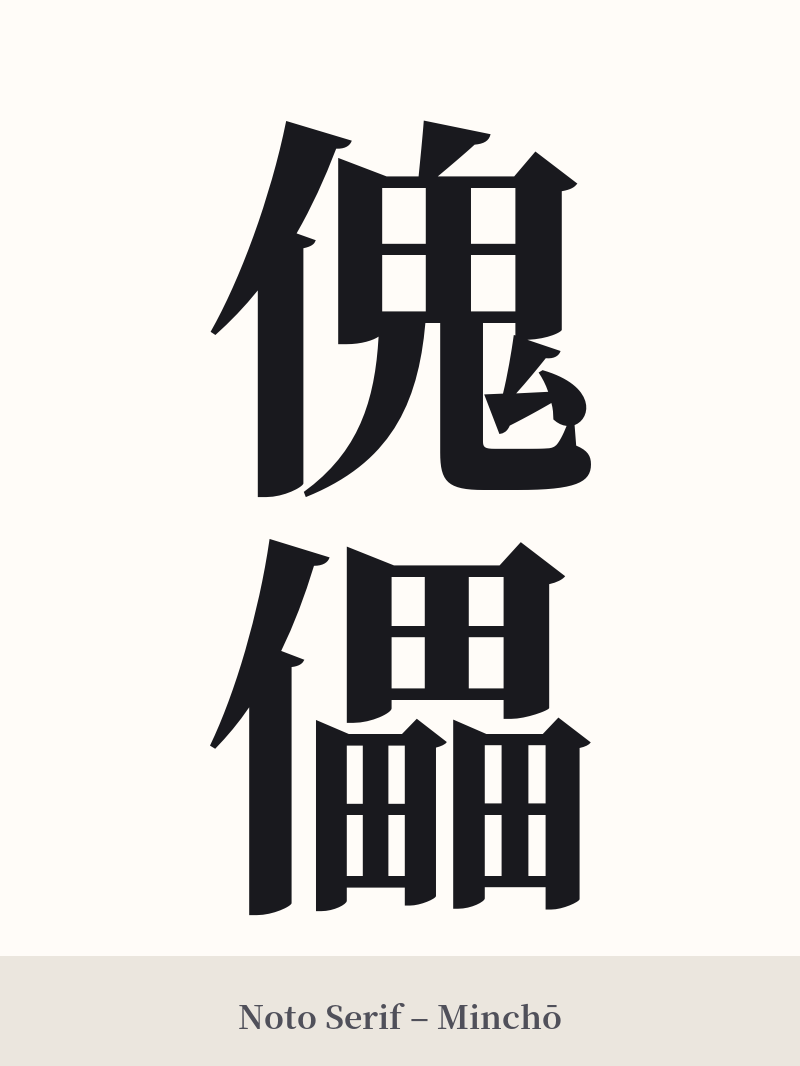
🖌️ Font Styles for 傀儡
The same kanji can look dramatically different depending on the calligraphy style. Choose a font that matches the mood you want for your tattoo or design.
🎨 Tattoo Suitability
📐 Tattoo Design Guide
Due to the high complexity and stroke count of both characters, a 傀儡 tattoo requires careful planning.
– Placement: Choose a larger, flatter area of the body. The back, chest, forearm, or calf are ideal as they provide enough space to render the intricate details without them blurring together over time. Avoid small or highly curved areas like the wrist or ankle.
– Font Style: Legibility is key. A clear, crisp Kaisho (block script) style is highly recommended. Avoid highly stylized or cursive scripts like Sousho, as they will make the already complex characters completely unreadable.
– Visual Elements: Consider adding imagery to provide context and reinforce your intended meaning. For a philosophical theme, you could incorporate broken puppet strings or a puppeteer's hands. For a Ghost in the Shell inspired design, adding glitch effects, digital code, or cybernetic wiring can directly link the kanji to its cyberpunk meaning.
Comments