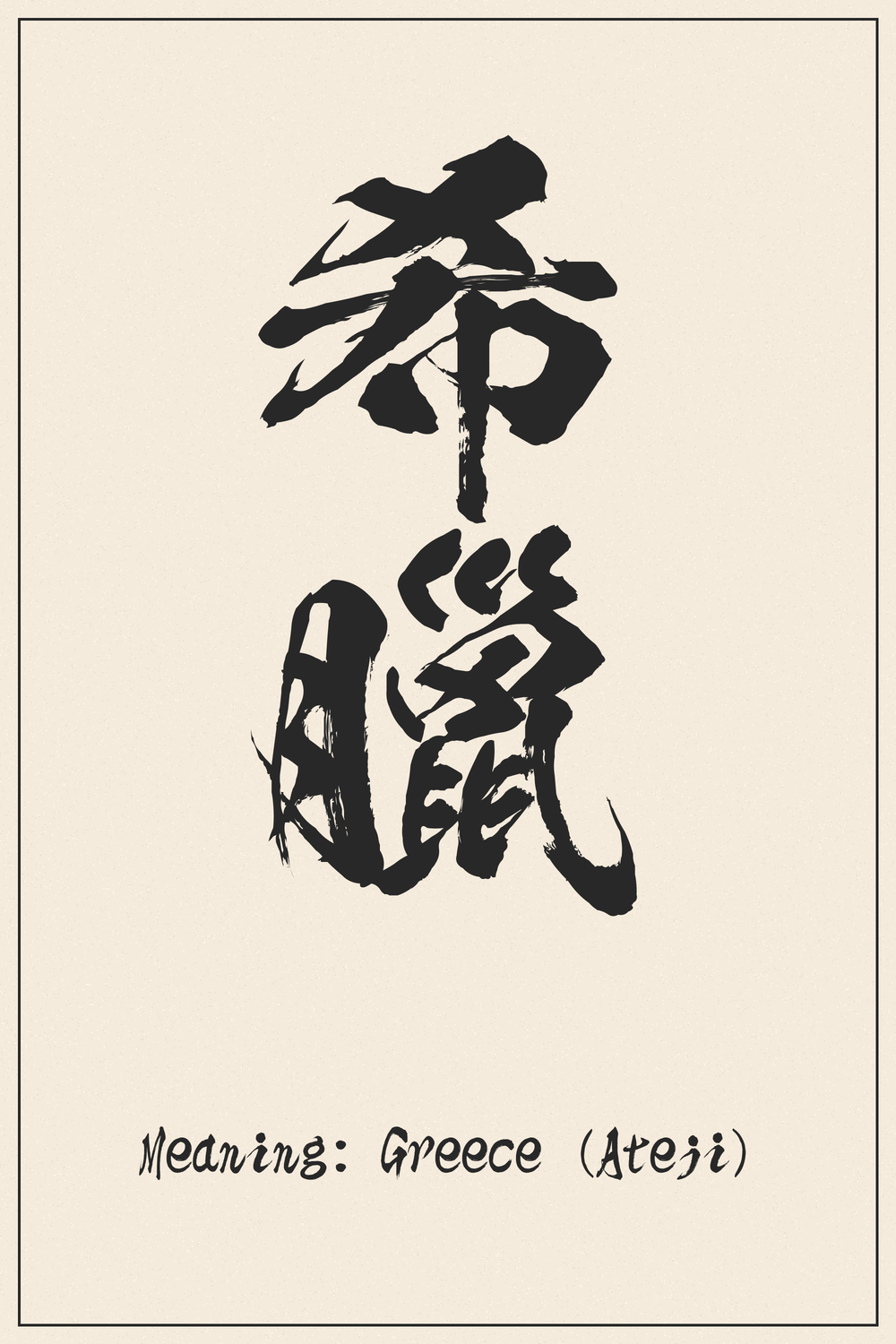
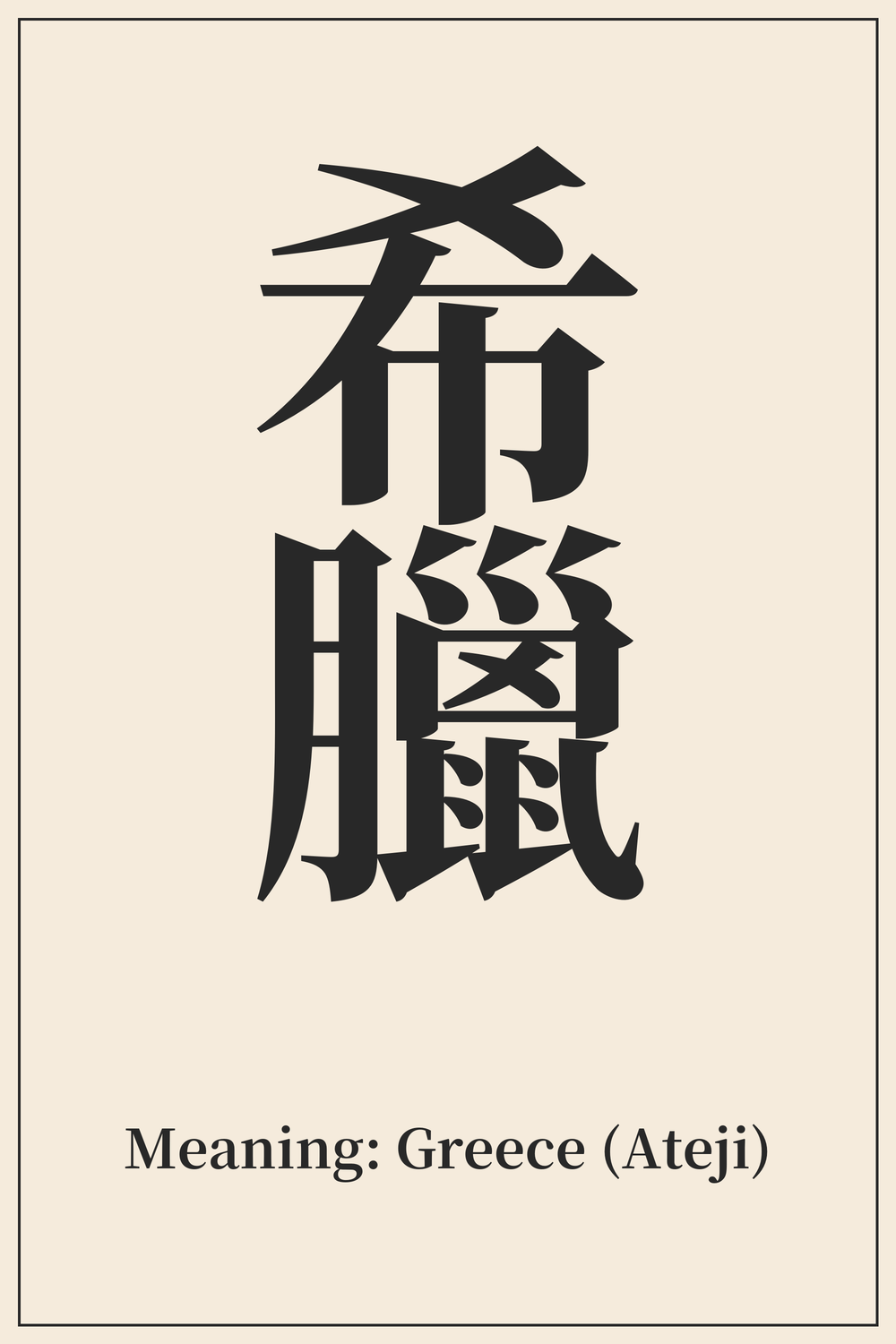
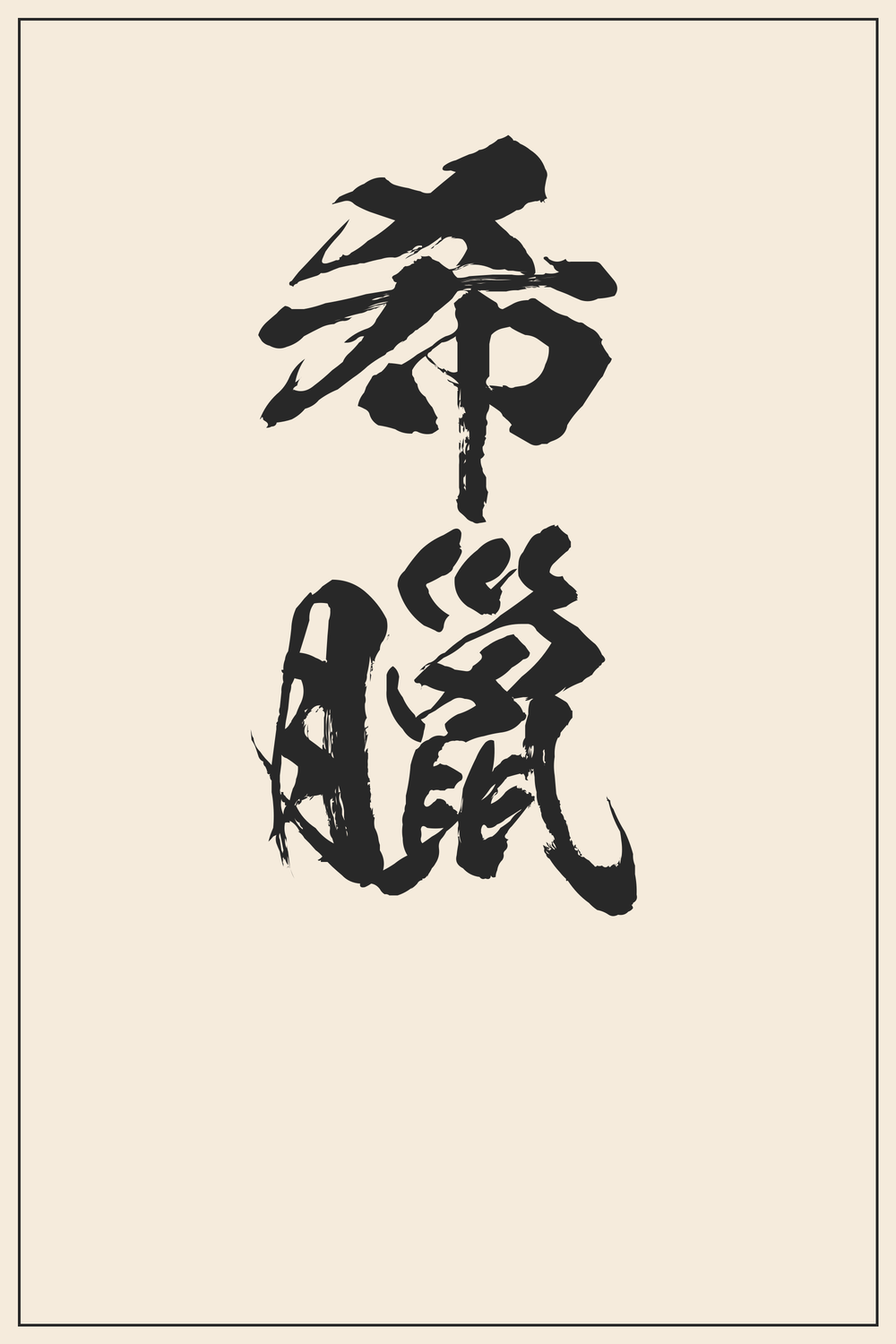
Discover the unique way Japan adopts foreign country names through Kanji, a fascinating blend of sound and ancient script. 希臘 (Girisha) offers a prime example of this cultural adaptation, representing the vibrant nation of Greece.
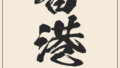
The atmosphere of a Kanji character changes dramatically depending on the font style. A character that looks elegant in a brush style might look bold and modern in a different font.
Recommendation: Since a tattoo is permanent, we strongly recommend comparing various font styles beyond what is shown here. Use our designs as a trusted reference for the correct structure, but feel free to explore different artistic variations to find the perfect match for your vision.
The Deep Meaning Behind 希臘
The Kanji combination 希臘 (Girisha) is a classic example of ‘Ateji’ (当て字), where characters are chosen purely for their phonetic values to represent a foreign word or name, rather than their inherent meanings. In this case, ‘Girisha’ phonetically approximates the word ‘Greece’.
This method of phonetic transliteration highlights Japan’s historical approach to incorporating foreign concepts and places into its language. While the individual Kanji carry their own rich histories, their combined use for ‘Greece’ is a testament to linguistic ingenuity rather than a direct semantic translation.
Kanji Breakdown
To fully appreciate 希臘, let’s look at the individual characters, understanding that their combined meaning here is purely phonetic.
Meaning: Rare, hope, wish, few.
This character evokes concepts of scarcity, desire, or expectation. Its older forms often depicted threads being woven or a person reaching out, embodying the idea of hope or something desired but infrequent.
Meaning: Twelfth month, dried meat, sacrifice at year-end.
This character traditionally refers to the twelfth month of the lunar calendar, particularly associated with end-of-year rituals and the preparation of dried meats for offerings or storage. Its components hint at meat and ancient sacrificial practices.
Conclusion
希臘 (Girisha) stands as a captivating example of Ateji, demonstrating how the Japanese language ingeniously adapted to represent foreign lands like Greece. Its beauty lies not in a literal translation, but in its phonetic ingenuity and cultural significance as a recognized country name.
For those considering 希臘 as a tattoo, it serves as a unique cultural marker, representing Greece through a distinctly Japanese linguistic lens. While the individual characters’ literal meanings do not directly convey ‘Greece,’ the combination holds the cultural weight of being the established Kanji representation. Embrace this cultural depth rather than searching for a direct symbolic translation.
Comments