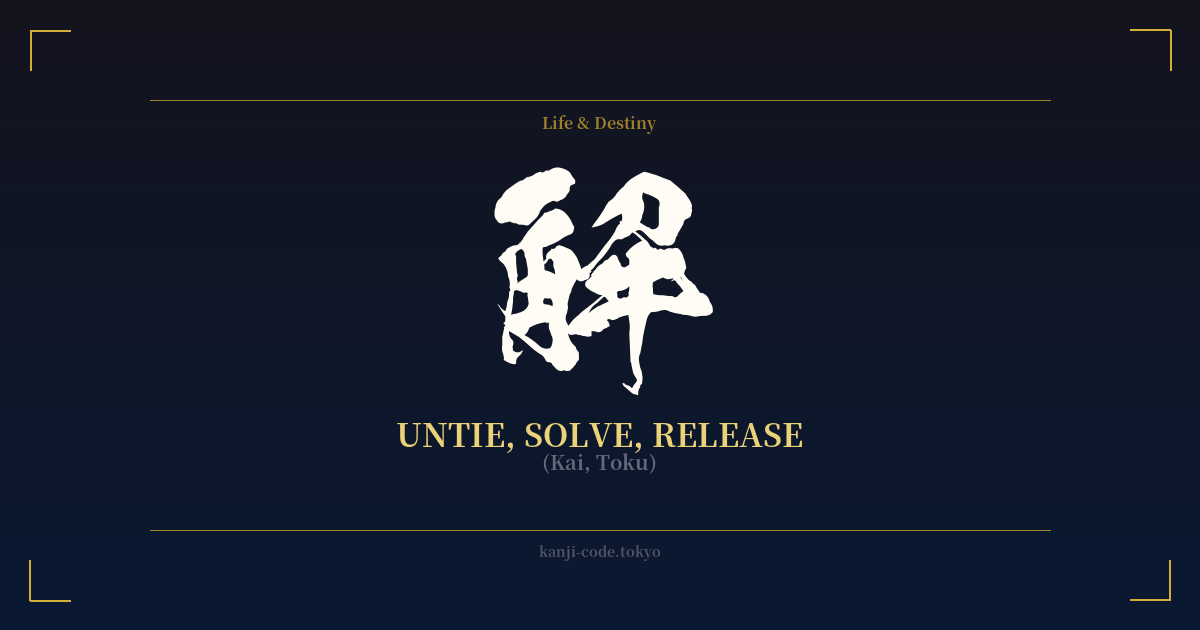
✍️ 解 (Kai, Toku) — Contexto cultural
El kanji japonés 解 (kai) es un carácter rico en significados, todos ellos centrados en la separación y la clarificación. Su historia comienza con su forma antigua, un vívido pictograma que combina un cuerno (角), un cuchillo (刀) y un buey (牛). La imagen representa el acto de separar hábilmente el cuerno del buey con una hoja, un acto de cuidadosa disección y análisis. Este poderoso relato de origen explica todos sus significados modernos.
En su sentido más literal, 解 significa 'desatar', 'desatar' o 'aflojar'. Esto puede ser tan simple como desatar un nudo (紐を解く – himo o toku) o tan profundo como resolver un malentendido. Este acto físico de desenredar se extiende maravillosamente al ámbito metafórico, representando la liberación de cargas emocionales o situaciones difíciles. Es la sensación de quitarse un peso de encima.
De esta idea de desmontar algo para ver cómo funciona, obtenemos el significado de 'resolver' o 'responder'. Cuando resuelves un rompecabezas o un problema matemático (問題を解く – mondai o toku), esencialmente lo estás diseccionando, descomponiéndolo en componentes comprensibles para encontrar la solución (解答 – kaitō). Esto le confiere al kanji una fuerte cualidad intelectual y analítica. Representa el momento de '¡eha!', la revelación, la claridad que llega tras un período de confusión.
Esto nos lleva a otro significado crucial: 'entender' (理解 – rikai). La verdadera comprensión, en este contexto, no es mera aceptación pasiva; es un proceso activo de análisis y comprensión. Al desglosar una idea compleja, se llega a captar su esencia. Esta búsqueda intelectual es una parte fundamental de la identidad del personaje.
Quizás su aplicación más profunda se encuentre en un contexto espiritual, particularmente dentro del budismo. La palabra 解脱 (gedatsu) significa liberación o emancipación, específicamente, la liberación del ciclo de sufrimiento y renacimiento (samsara). Aquí, 解 simboliza la disolución definitiva de los apegos y las ilusiones mundanas, que conduce a la iluminación. Representa una profunda y transformadora libertad del espíritu, convirtiéndose así en un símbolo de profundo crecimiento personal y despertar espiritual.
🖌️ Estilos de fuente para 解
Los mismos caracteres kanji pueden verse muy diferentes según el estilo de caligrafía. Elige una fuente que se ajuste al ambiente que deseas para tu tatuaje o diseño.
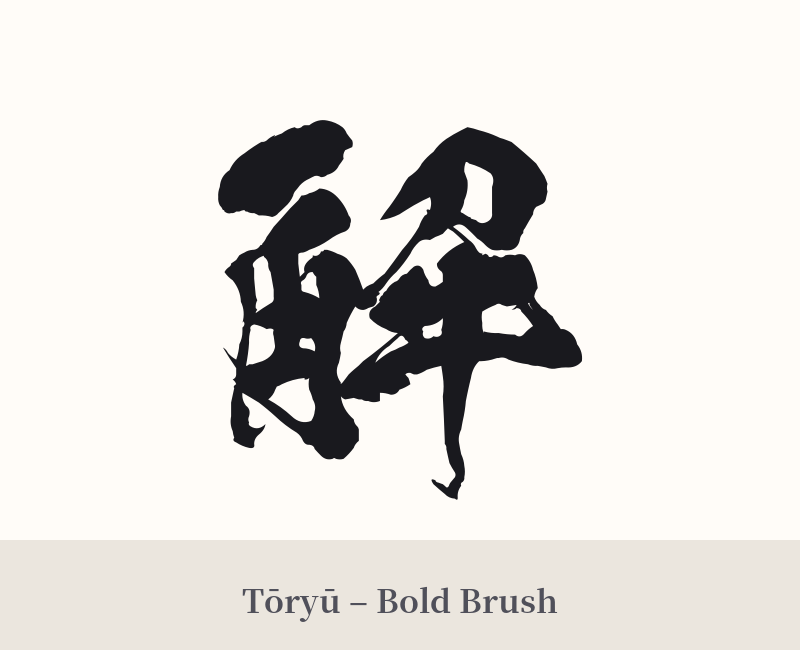
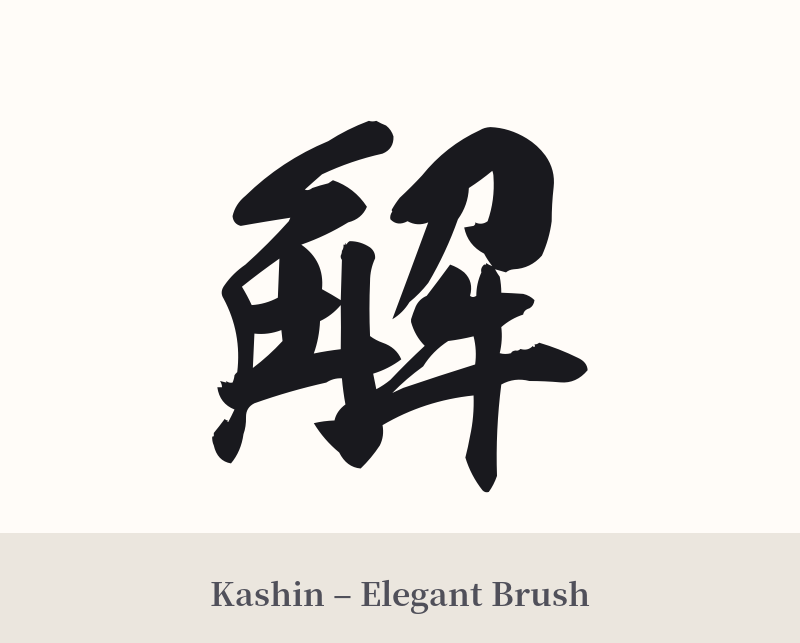
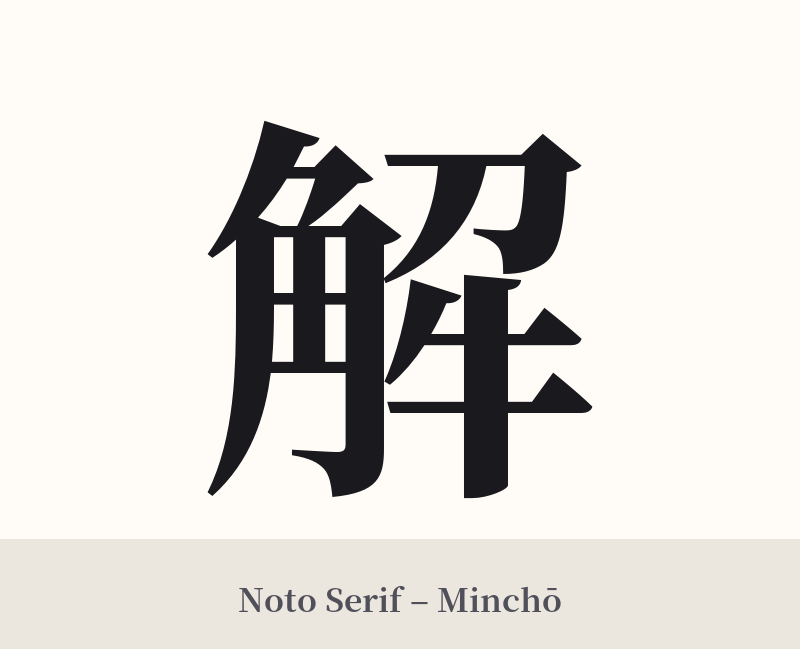
🎨 Idoneidad para tatuajes
📐 Guía de diseño de tatuajes
El kanji 解 ofrece una gran flexibilidad para el diseño de un tatuaje, adaptándose tanto a enfoques llamativos como sutiles.
– Ubicación: Para un significado personal e introspectivo como 'liberación' o 'comprensión', considere ubicaciones como la parte interna de la muñeca, el antebrazo o sobre el pecho. Para una declaración más contundente sobre 'resolver' o 'liberarse', la nuca o a lo largo de la columna vertebral pueden ser muy efectivas.
– Estilo de fuente: La elección del tipo de letra puede alterar drásticamente la sensación que transmite. Una letra Kaisho (de imprenta) fuerte y clara enfatiza el aspecto analítico y resolutivo del personaje. Para una sensación más fluida y personal, un estilo Gyōsho (semicursivo) o Sōsho (cursivo) puede representar visualmente la idea de liberación y desatar.'
– Complementos visuales: Para añadir contexto y evitar ambigüedad, considere combinar 解 con otras imágenes. Un diseño que incluya una cuerda desenredándose, una llave, una cadena rota o un pájaro alzando el vuelo puede reforzar poderosamente el tema de la liberación. Para el aspecto de 'comprensión', puede incorporar elementos como un círculo (ensō) o una simple pincelada.
Comentarios