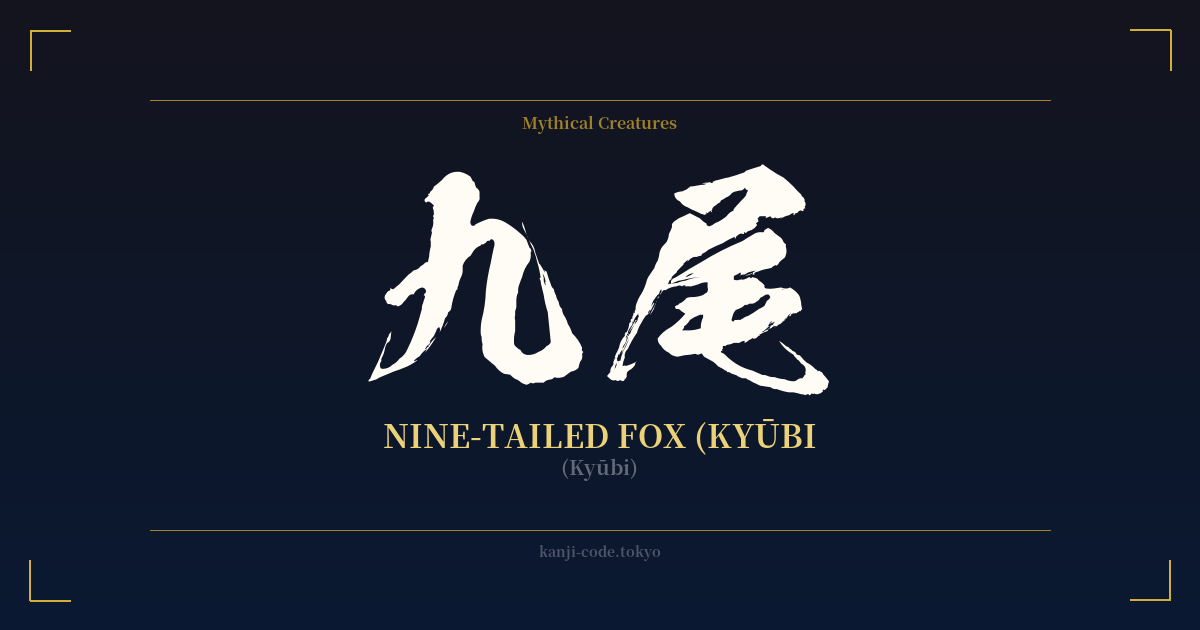
✍️ 九尾 (Kyūbi) — Contexto cultural
Kyūbi, que literalmente significa "nueve colas", hace referencia a una de las criaturas más emblemáticas y poderosas del folclore de Asia Oriental: el zorro de nueve colas. Si bien esta imagen es reconocida mundialmente hoy en día, en gran parte gracias a la cultura pop japonesa, sus orígenes se remontan a la antigua mitología china antes de llegar a Japón.
En las leyendas japonesas, el Kyūbi no Kitsune (九尾の狐) es la forma suprema de un kitsune (espíritu zorro). Se dice que un zorro puede desarrollar una cola adicional por cada cien años de vida. Al desarrollar su novena cola, su pelaje suele volverse blanco o dorado, y asciende a un estado casi divino, poseyendo un poder inmenso, una sabiduría ilimitada y poderosas habilidades mágicas, como la metamorfosis, la creación de ilusiones y el control del fuego de zorro (kitsunebi).
El Kyūbi es una figura de profunda dualidad. En algunos relatos, es una criatura benévola, un sabio mensajero de la deidad sintoísta Inari, o un espíritu guardián que trae fortuna y guía a personas dignas. Esta versión del Kyūbi encarna la sabiduría acumulada durante un milenio y actúa como un ser celestial de gran importancia.
Sin embargo, la representación más famosa del Kyūbi es la de un yōkai (monstruo sobrenatural) astuto y malévolo. El ejemplo más legendario es Tamamo-no-Mae, uno de los "Tres Grandes Yōkai Malignos de Japón". Según la leyenda, era una cortesana de incomparable belleza e inteligencia en la corte del emperador Konoe durante el siglo XII. En realidad, era una zorra de nueve colas que usó su encanto y magia para embrujar al emperador, provocándole una grave enfermedad mientras le drenaba secretamente su fuerza vital, todo en un complot para hacerse con el poder. Su verdadera forma fue finalmente descubierta por un onmyōji (un adivino espiritual), y fue cazada y derrotada.
Esta dualidad —la capacidad tanto para el bien inmenso como para el mal catastrófico— es fundamental para la identidad del Kyūbi. No es simplemente un monstruo, sino una fuerza de la naturaleza, una entidad cuyo poder trasciende la mera moralidad humana. Representa el poder puro e indomable, la sabiduría ancestral y el peligro seductor de una hermosa ilusión.
En la era moderna, el Kyūbi se ha consolidado en la conciencia global a través del anime y los videojuegos. El ejemplo más significativo es 'Naruto', donde el protagonista es el huésped de un espíritu zorro de nueve colas llamado Kurama. Esta representación ha definido en gran medida a la criatura para una nueva generación, combinando su poder destructivo con un arco argumental más complejo y, en última instancia, comprensivo. Esto ha hecho que el kanji 九尾 sea reconocible al instante para millones de personas en todo el mundo, portando consigo un legado de mitos antiguos y narraciones modernas.
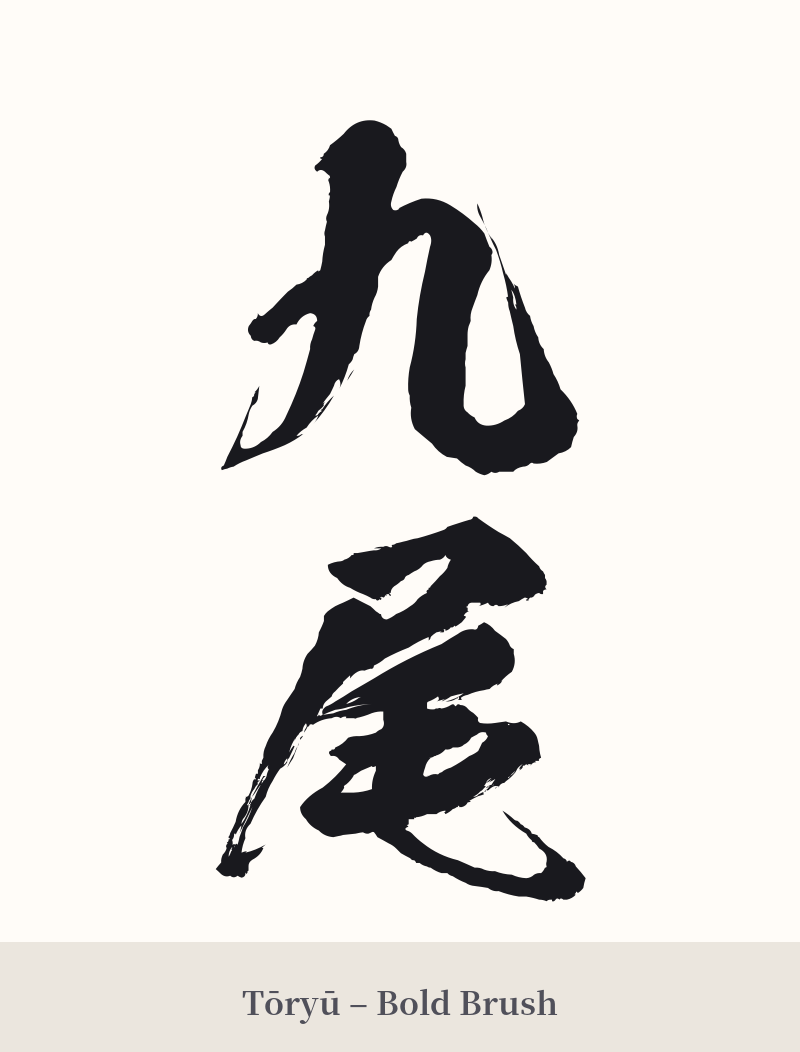
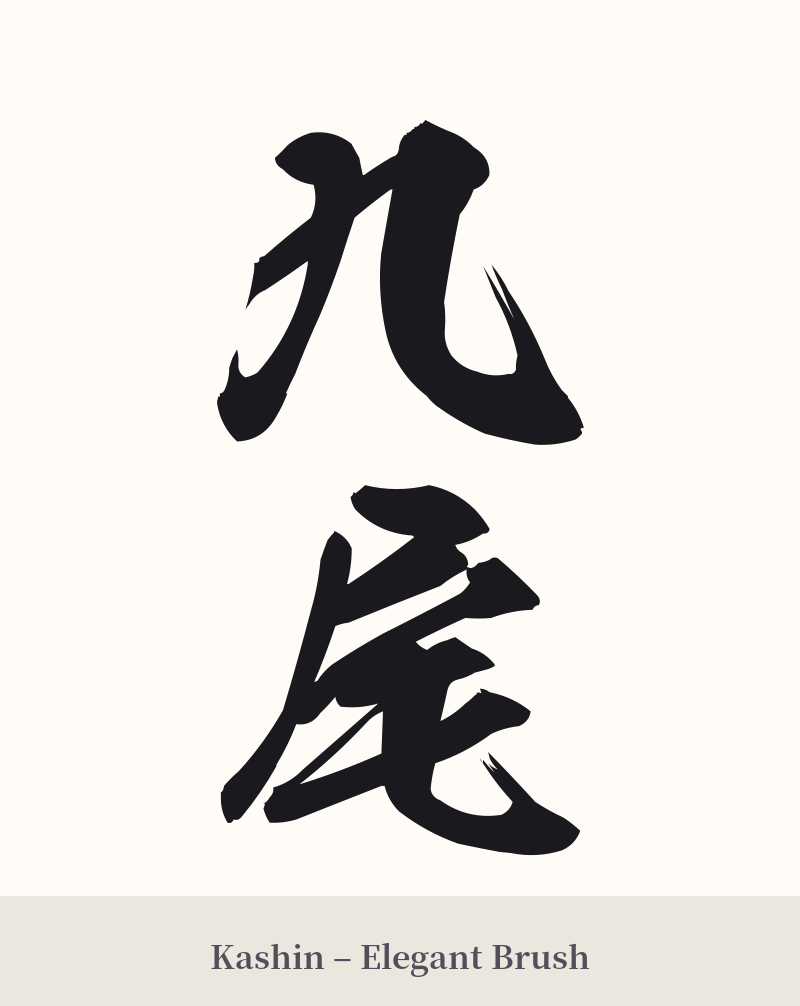
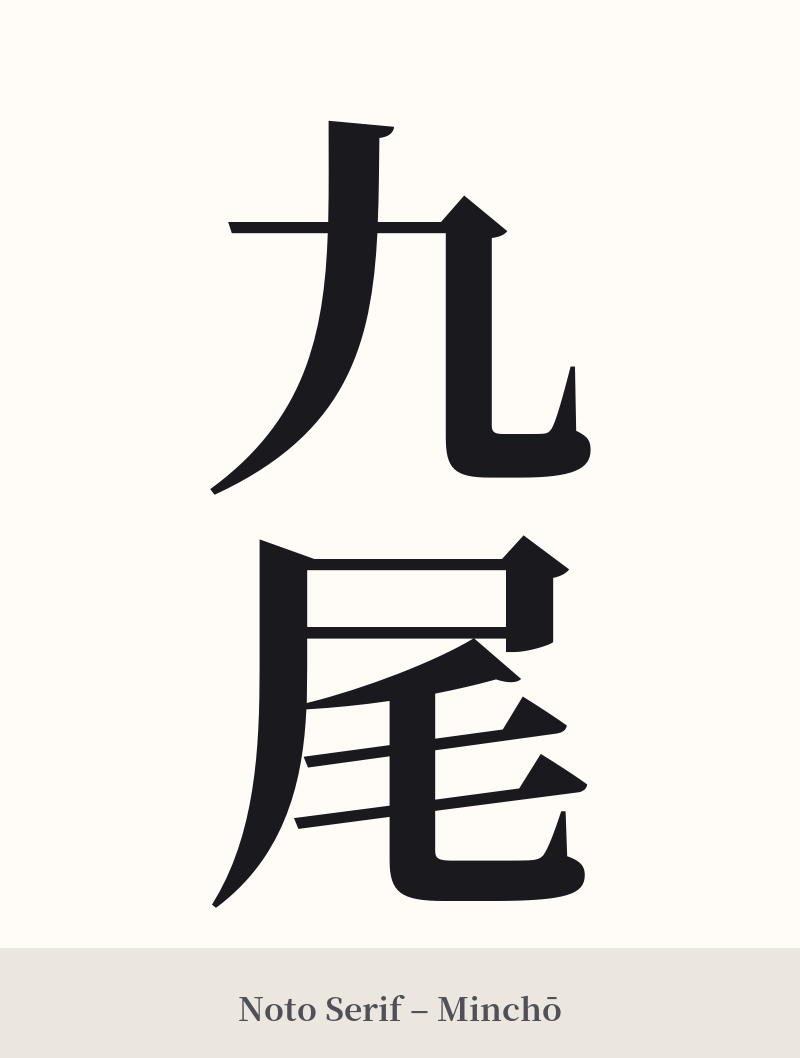
🖌️ Estilos de fuente para 九尾
Los mismos caracteres kanji pueden verse muy diferentes según el estilo de caligrafía. Elige una fuente que se ajuste al ambiente que deseas para tu tatuaje o diseño.
🎨 Idoneidad para tatuajes
📐 Guía de diseño de tatuajes
El kanji de Kyūbi, 九尾, ofrece una fantástica combinación de simplicidad y peso simbólico, lo que lo convierte en una opción versátil para un diseño de tatuaje.
– Ubicación: Su composición vertical luce excelente en el antebrazo, la columna vertebral, la pantorrilla o junto a las costillas. Para un diseño más discreto, la parte interna de la muñeca o la nuca son lugares sutiles pero impactantes.
Estilo: Un estilo dinámico, semicursivo o de pinceladas (shodō) puede capturar la energía salvaje y fluida del espíritu del zorro. Para una versión más audaz y moderna, una fuente de bloques limpia y definida como Mincho o un estilo geométrico pueden proporcionar un impacto gráfico sorprendente.
– Integración visual: Considere incorporar los kanji en una pieza más grande. Los caracteres podrían formar el punto de partida de las nueve colas del zorro o ubicarse dentro de la silueta del zorro mismo. La incorporación de elementos como tonos rojos o naranjas para el fuego del zorro (kitsunebi) o un brillo dorado puede realzar el tema mítico.
Comentarios