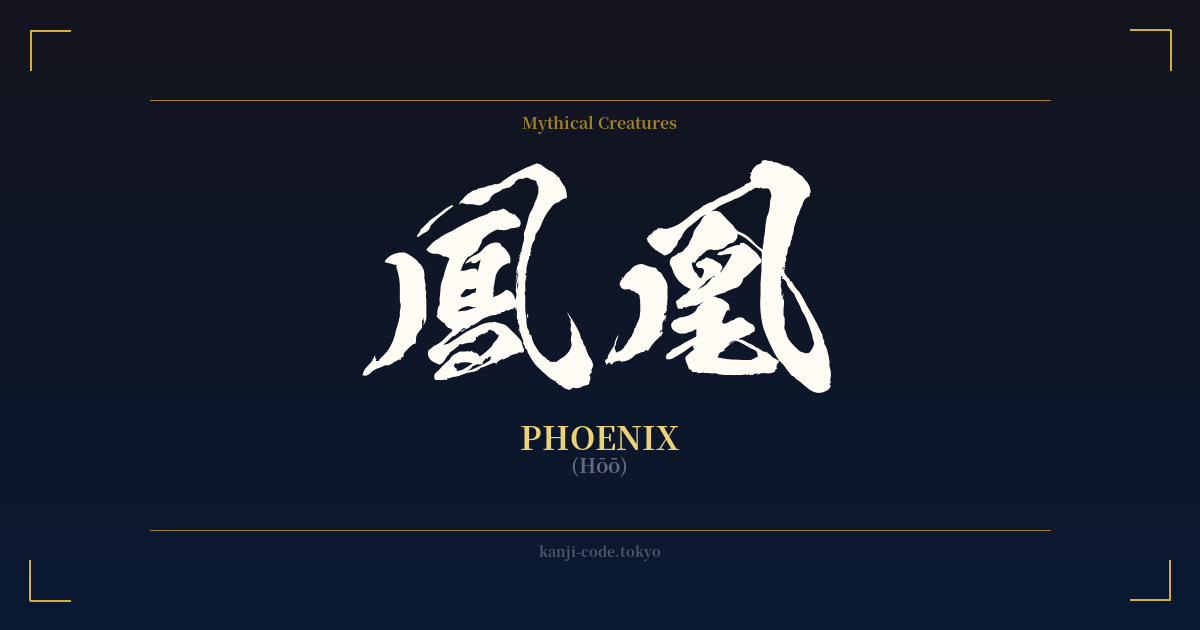
✍️ 鳳凰 (Hōō) — Contexto cultural
El Hōō (鳳凰) es una de las criaturas más veneradas y hermosas de la mitología de Asia Oriental. Se trata de un ave celestial cuya aparición anuncia una era de paz y prosperidad. Sus orígenes se remontan al Fenghuang chino, pero lleva siglos profundamente arraigado en la cultura japonesa.
A diferencia del fénix occidental, conocido por su ciclo de muerte y renacimiento en llamas, el Hōō no se asocia con el fuego. Se le considera un ser gentil y benévolo, que, según se dice, solo aparece en tierras gobernadas por un líder virtuoso y sabio. Su presencia es un poderoso presagio de buena fortuna, armonía y las bendiciones del cielo.
La palabra 鳳凰 es la unión de dos caracteres: 鳳 (Hō) representa al pájaro macho, mientras que 凰 (Ō) representa a la hembra. Juntos, simbolizan una unión perfecta y armoniosa, similar al concepto de Yin y Yang. Esta dualidad convierte al Hōō en un poderoso emblema de matrimonio dichoso y de una relación equilibrada.
Históricamente, el Hōō se convirtió en un poderoso símbolo de la casa imperial, en particular de la Emperatriz. Mientras que el dragón (龍, Ryū) se asociaba con el Emperador, el Hōō representaba la gracia, la virtud y la autoridad de la Emperatriz. Esta conexión está inmortalizada en la arquitectura del Salón del Fénix del templo Byōdō-in en Uji, Kioto. Se dice que la elegante forma del edificio se asemeja a un Hōō descendiendo a la tierra, y dos brillantes estatuas doradas de fénix adornan su techo.
Según la leyenda, el Hōō es una criatura compuesta por muchas aves: tiene la cabeza de un faisán dorado, el cuerpo de un pato mandarín, la cola de un pavo real, las patas de una grulla, el pico de un loro y las alas de una golondrina. Se dice que su canto es una hermosa melodía de cinco notas, y que se alimenta exclusivamente de las semillas del árbol de paulownia y bebe de manantiales sagrados.
En el Japón moderno, el Hōō sigue siendo un motivo popular en el arte, los textiles y el diseño. Se puede apreciar en todo tipo de objetos, desde el kimono tradicional hasta el reverso del billete de 10.000 yenes. Su atractivo perdurable reside en su profundo simbolismo: una representación atemporal de la paz, la justicia y la esperanza de una era dorada.
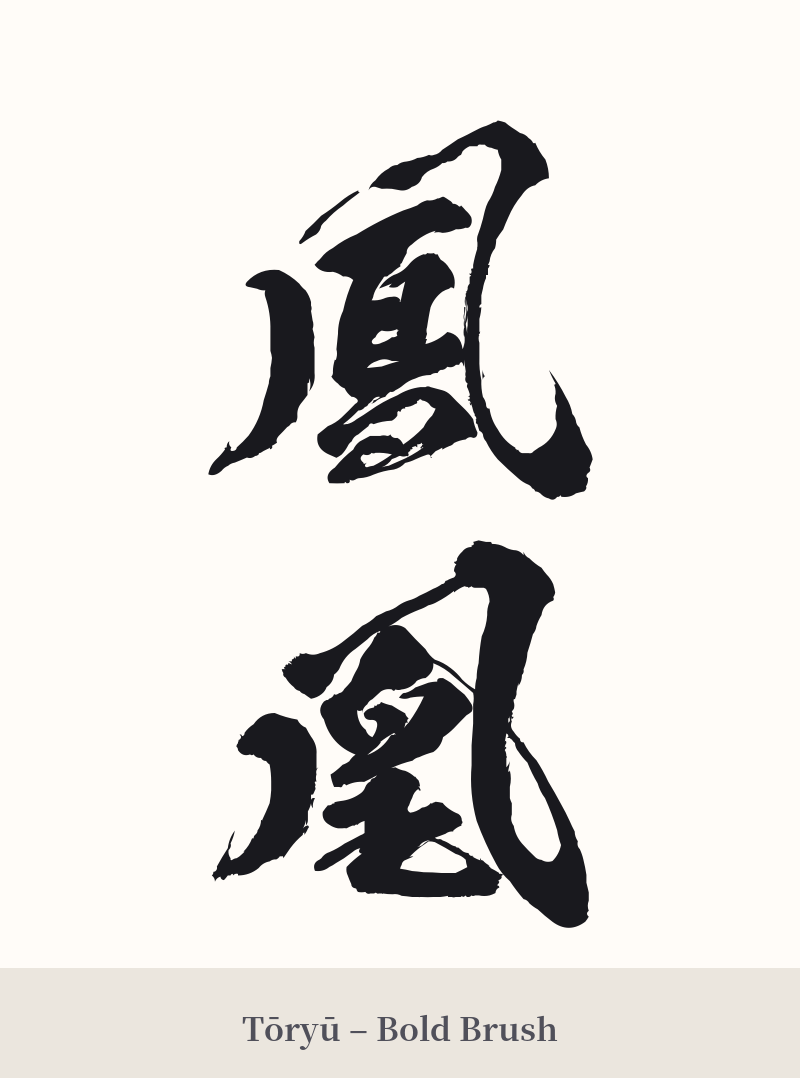
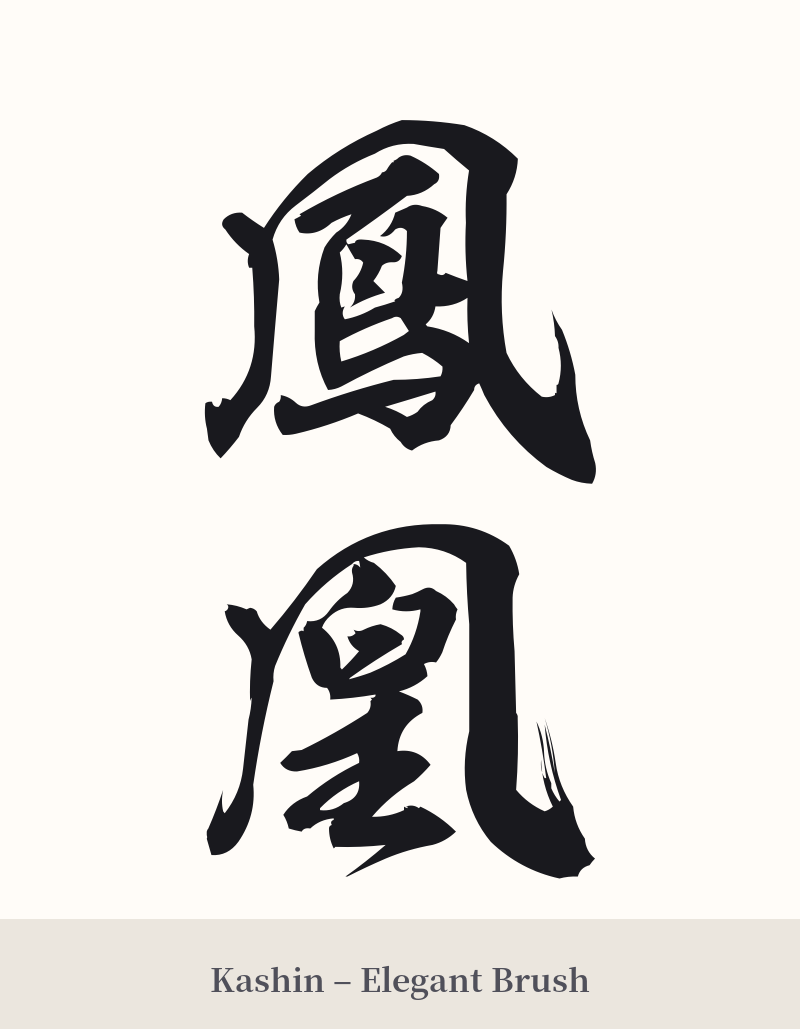
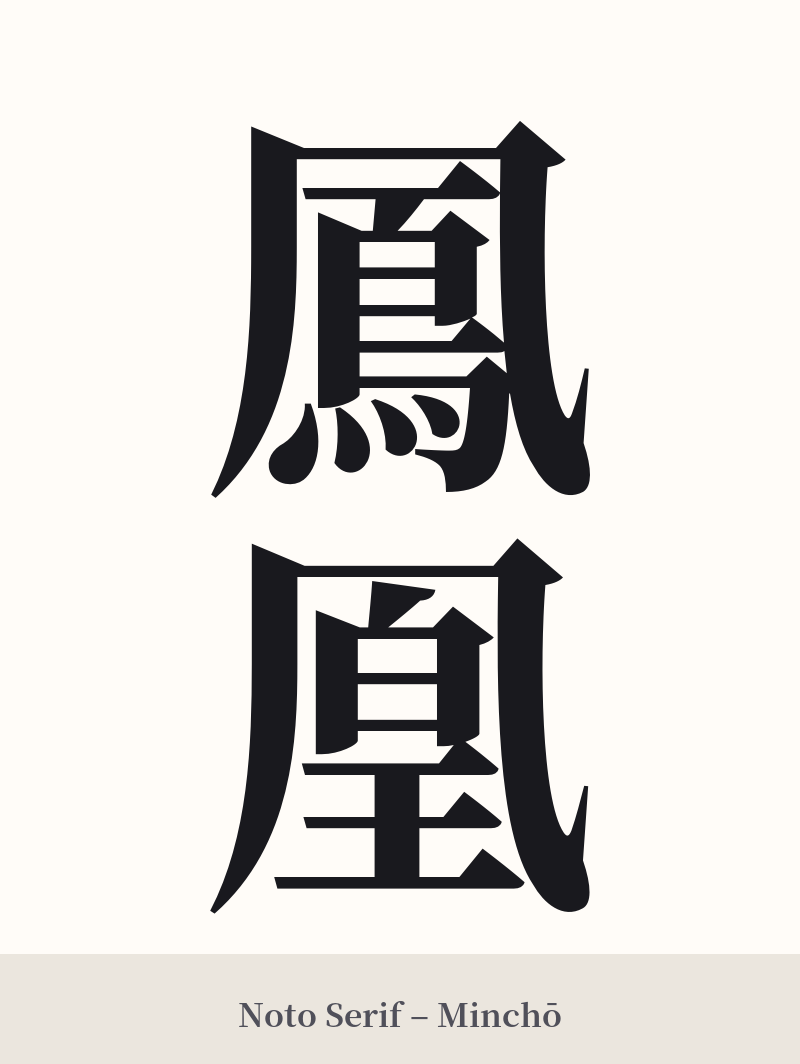
🖌️ Estilos de fuente para 鳳凰
Los mismos caracteres kanji pueden verse muy diferentes según el estilo de caligrafía. Elige una fuente que se ajuste al ambiente que deseas para tu tatuaje o diseño.
🎨 Idoneidad para tatuajes
📐 Guía de diseño de tatuajes
El kanji 鳳凰 ofrece un diseño majestuoso e intrincado, ideal para una ubicación que permita apreciar los detalles y la escala.
– Ubicación: Considere áreas amplias como la espalda, el pecho o el muslo. Un texto vertical a lo largo de la columna vertebral o el antebrazo también puede resultar muy llamativo, resaltando la elegancia de los caracteres.
Estilo: Se recomienda encarecidamente el estilo tradicional de pincelada (Shodō). Una escritura dinámica Gyōsho (semicursiva) o Sōsho (cursiva) puede capturar la gracia y el movimiento míticos del ave. Para un aspecto más majestuoso y formal, una escritura Kaisho (de imprenta) limpia funciona bien.
– Elementos visuales: Complementa los kanji con imágenes del propio Hōō, con sus largas plumas de la cola que recuerdan a las de un pavo real. Otros elementos auspiciosos que combinan bien incluyen flores de paulownia (kiri), bambú o nubes estilizadas para simbolizar su naturaleza celestial.
Comentarios