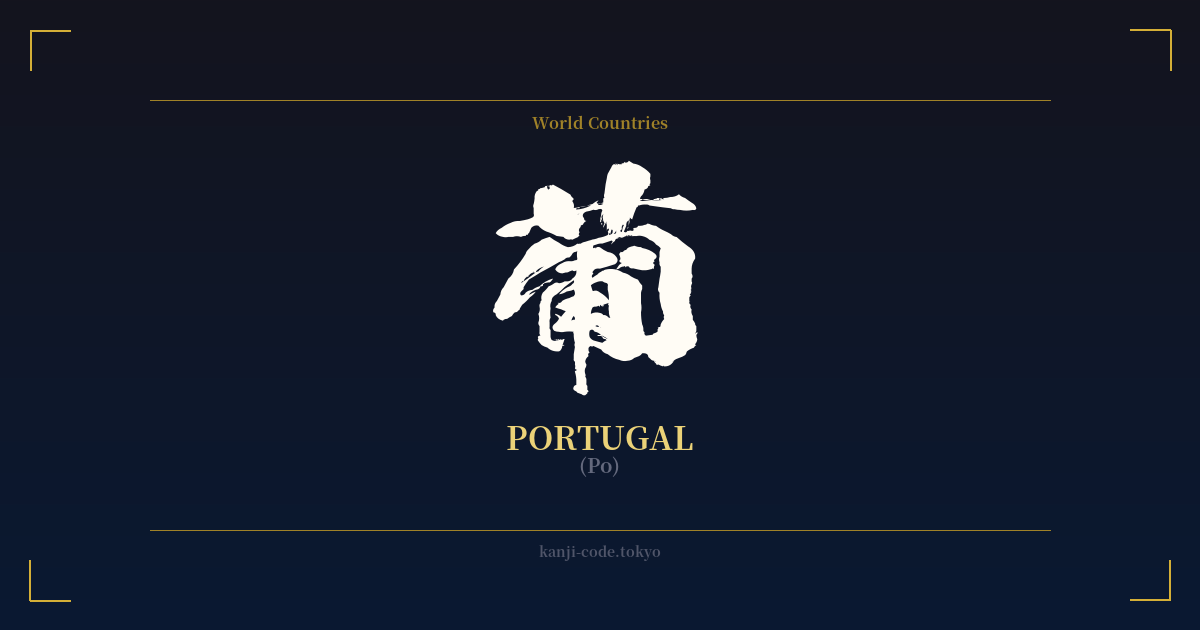
✍️ 葡 (Po) — Contexto cultural
El kanji 葡 es un carácter fascinante que actúa como puente entre Japón y Occidente, portando siglos de historia en sus doce trazos. Su función principal en el japonés moderno es la de abreviatura de Portugal (ポルトガル, Porutogaru). Sin embargo, su historia está profundamente ligada a otra palabra: 葡萄 (budō), que significa 'uva'.'
Esta conexión no es casual. Cuando los comerciantes y misioneros portugueses llegaron a Japón a mediados del siglo XVI, fueron los primeros europeos en establecer contacto directo. Los japoneses de la época, necesitando una forma de escribir la palabra extranjera 'Portugal', utilizaron un sistema llamado ateji, donde los kanji se usan por su sonido fonético en lugar de por su significado. Eligieron los caracteres 葡萄牙, que se pueden leer como 'Po-ru-to-ga-ru'.'
Por una coincidencia histórica, los caracteres elegidos, 葡 (bu) y 萄 (dō), ya formaban la palabra para 'uva'. Esto creó un vínculo inquebrantable entre el país y la fruta. Si bien las uvas ya existían en Japón con anterioridad, a los portugueses se les suele atribuir la introducción de la viticultura y el vino, lo que hace que la elección de estos caracteres resulte particularmente acertada en retrospectiva. Eran conocidos como los nanban (南蛮), o 'bárbaros del sur', y su llegada marcó el comienzo de un período transformador de comercio e intercambio cultural.
Hoy en día, el carácter completo ateji 葡萄牙 para Portugal se usa raramente, habiendo sido reemplazado por la escritura katakana, más sencilla. Sin embargo, el primer carácter, 葡, ha sobrevivido como abreviatura formal. Es posible verlo en titulares de periódicos o textos académicos para referirse al país en palabras compuestas, como 日葡関係 (Nichi-Po kankei), que significa "relaciones entre Japón y Portugal".'
Por lo tanto, el carácter 葡 no existe en el vacío. Es símbolo de un encuentro histórico específico, un enigma fonético y una referencia botánica, todo en uno. Representa el momento en que Japón miró por primera vez hacia Occidente y decidió nombrar lo que vio utilizando los caracteres de la vid, vinculando para siempre a Portugal con la vid en el imaginario lingüístico japonés.
🖌️ Estilos de fuente para 葡
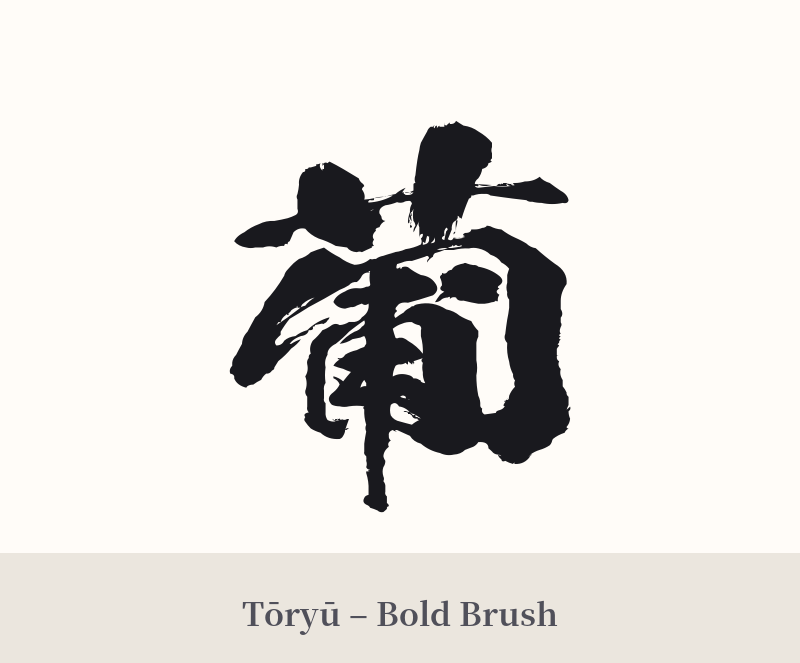
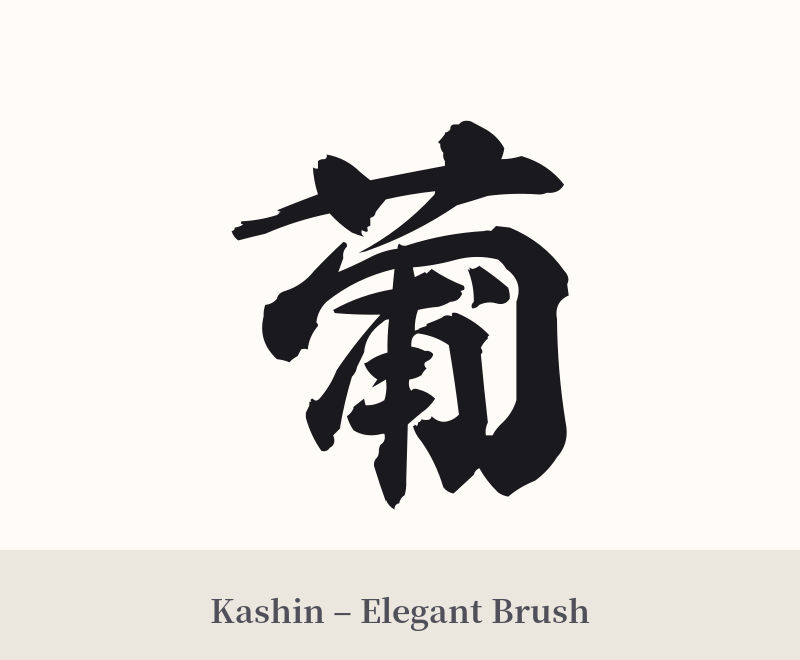
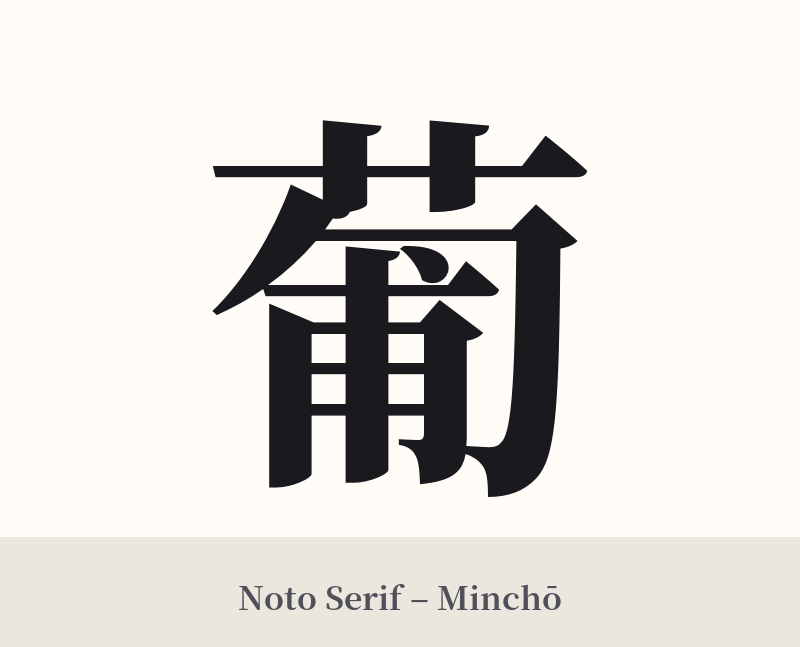
Los mismos caracteres kanji pueden verse muy diferentes según el estilo de caligrafía. Elige una fuente que se ajuste al ambiente que deseas para tu tatuaje o diseño.
🎨 Idoneidad para tatuajes
📐 Guía de diseño de tatuajes
Aunque no se recomienda encarecidamente un tatuaje del carácter único 葡 debido a su naturaleza incompleta, si estás comprometido con el diseño por razones personales, hay maneras de abordarlo.
– Ubicación: Dado que se trata de un solo carácter que puede parecer "perdido", considera ubicaciones más pequeñas y contenidas, como la parte interna de la muñeca, detrás de la oreja o en el tobillo. Evita espacios amplios como la espalda o el pecho, donde su soledad sería más evidente.
– Proporcionar contexto: La mejor manera de usar este kanji es darle el contexto que le falta. Considera combinarlo con un elemento visual. Un diseño que incorpore una vid que envuelve el carácter, una carabela portuguesa del siglo XVI o un pequeño mapa de Portugal aclararía instantáneamente su significado.
– Usa la palabra completa: Para un tatuaje más apropiado cultural y lingüísticamente, considera usar la palabra completa de dos caracteres 葡萄 (budō) si tu conexión es con las uvas o el vino. Es una palabra completa, hermosa y fácil de entender.
– Estilo de fuente: Un estilo Kaisho (楷書) clásico y robusto enfatizará la estructura del carácter. Por el contrario, una escritura Gyōsho (行書) o Sōsho (草書) más fluida podría transmitir una sensación de historia y movimiento, quizás aludiendo al largo viaje de los exploradores portugueses.
Comentarios