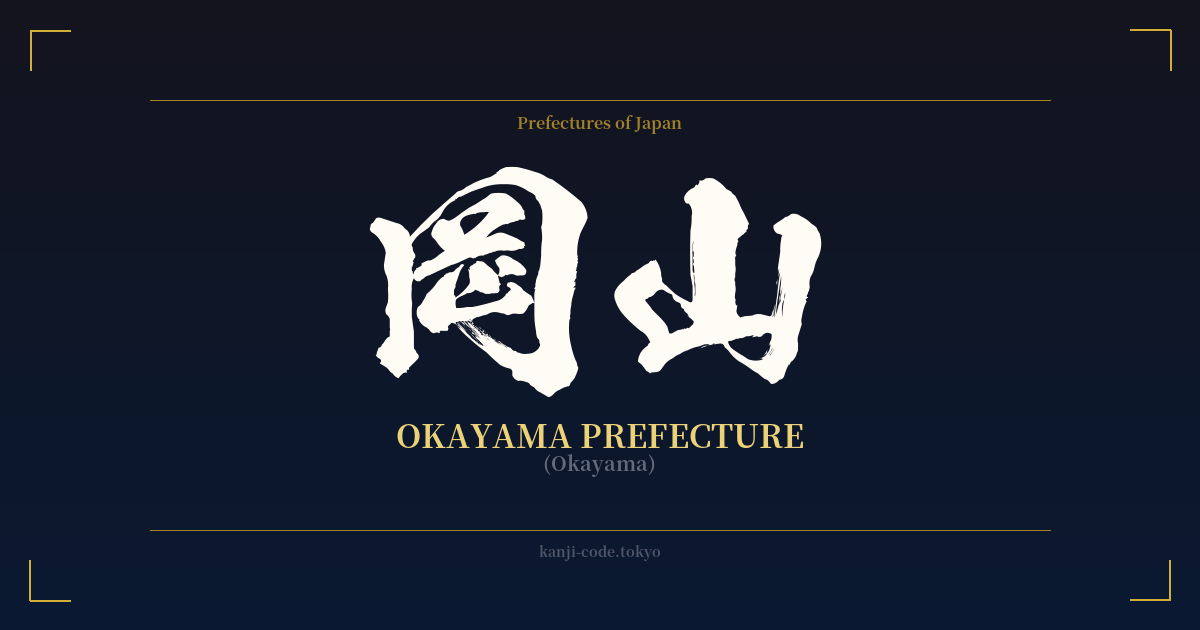
✍️ 岡山 (Okayama) — Cultural Context
The name 岡山 (Okayama) literally translates to 'Hill Mountain,' a simple and descriptive name that belies the region's rich cultural tapestry. The name is said to have originated from the location of Okayama Castle, which was strategically built upon a small hill (岡) in the 16th century. This fortress, with its distinctive black exterior, earned the nickname U-jō (烏城), or 'Crow Castle,' and stands as a powerful symbol of the area's feudal past.
Okayama is deeply intertwined with one of Japan's most famous folktales: the story of Momotarō, the 'Peach Boy.' Legend has it that the brave boy, born from a giant peach, grew up to defeat a band of marauding oni (demons) with his companions—a dog, a monkey, and a pheasant. This tale of courage and camaraderie is celebrated throughout the prefecture, with statues and imagery of Momotarō found everywhere, making him Okayama's unofficial mascot.
Beyond its castle and folklore, Okayama is renowned for Kōraku-en (後楽園), a breathtaking landscape garden that is ranked among the three greatest in all of Japan. Established in the 1700s by the local daimyo (feudal lord), the garden was designed to be a place of leisure and beauty, featuring expansive lawns, ponds, and teahouses. Its name, meaning 'garden of pleasure after,' is a reference to a Confucian proverb advising a ruler to worry about his people's troubles first and seek pleasure only afterward.
The region is also famous as the 'Land of Sunshine' (晴れの国, Hare no Kuni) due to its many sunny days and relatively low rainfall, which contributes to its success in agriculture, particularly fruit cultivation. This combination of dramatic history, enchanting folklore, and serene natural beauty makes 岡山 more than just a name on a map. It represents a place where the past is proudly preserved and nature's beauty is meticulously cultivated.
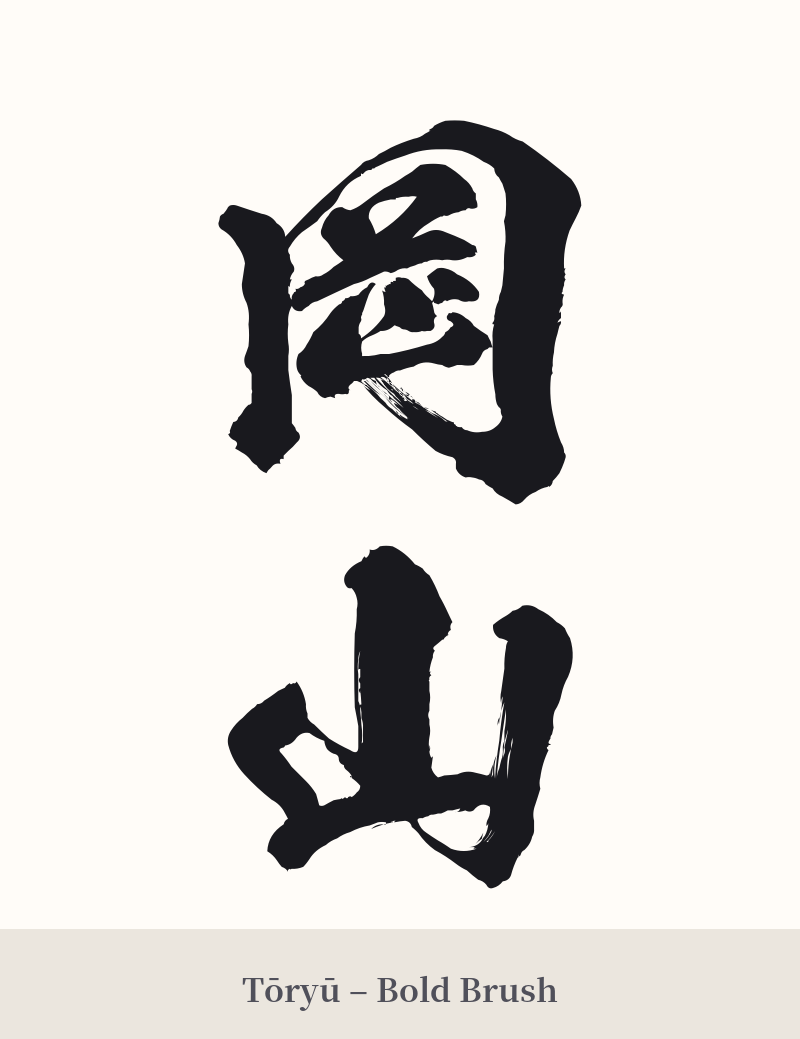
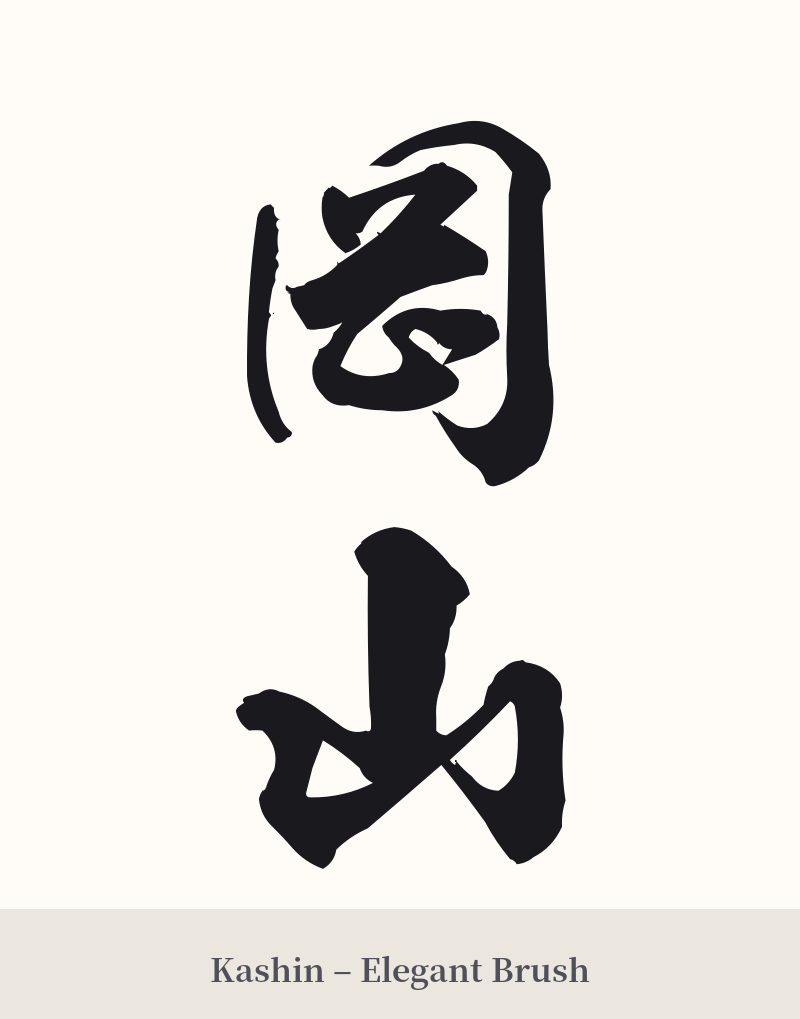
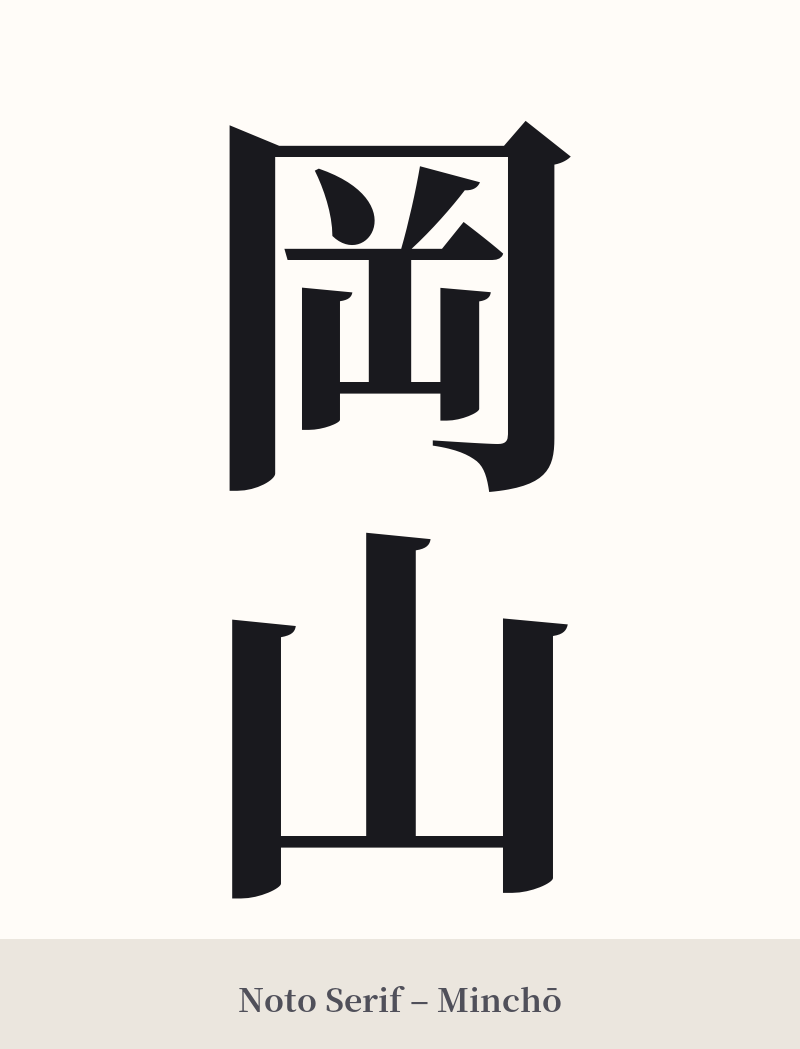
🖌️ Font Styles for 岡山
The same kanji can look dramatically different depending on the calligraphy style. Choose a font that matches the mood you want for your tattoo or design.
🎨 Tattoo Suitability
📐 Tattoo Design Guide
For a tattoo of 岡山, the design should reflect the personal significance of the place. Given its nature as a geographical name, it carries a sense of identity and personal history.
– Placement: Consider areas that feel personal, such as the inner forearm, the ribs, or across the shoulder blade. A vertical placement on the calf or along the spine can also create a strong visual statement.
– Font Style: A classic, crisp Kaisho (block) script is an excellent choice, emphasizing the historical roots and the architectural strength of Okayama Castle. For a softer feel that evokes Kōraku-en garden or the flowing rivers of the region, a semi-cursive Gyosho script would be beautiful.
– Visual Elements: Enhance the kanji with imagery directly related to Okayama. A small peach or a silhouette of Momotarō can connect the design to the famous folklore. Incorporating a motif from Bizen-yaki pottery or the silhouette of the black 'Crow Castle' can add a unique and deeply personal layer to the tattoo.
Comments