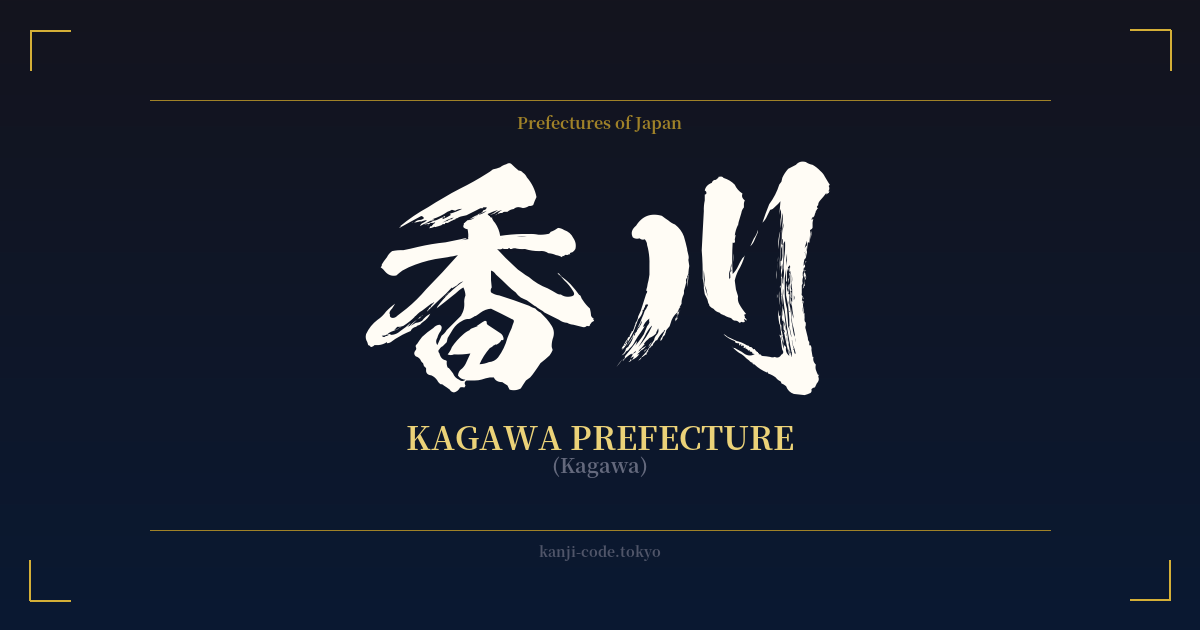
✍️ 香川 (Kagawa) — Cultural Context
香川 (Kagawa) is the name of Japan's smallest prefecture by area, nestled on the northeastern coast of Shikoku Island, facing the tranquil Seto Inland Sea. The name itself translates literally to 'Fragrant River,' a poetic and evocative title that hints at a serene and pleasant landscape. While the exact origin is debated, it's believed to have come from a specific river in the area known for its sweet-smelling water or the fragrant plants that grew along its banks.
Despite its small size, Kagawa holds a colossal reputation for one thing above all else: Sanuki Udon. The prefecture's former name was Sanuki Province (讃岐国), and this historical name lives on in its world-famous noodles. Sanuki Udon is celebrated for its firm, chewy texture, a result of the local wheat and traditional preparation methods. For the people of Kagawa, udon is not just food; it's a cultural cornerstone, with more udon shops per capita than anywhere else in Japan. There are even 'udon taxis' that will take visitors on a tour of the best and most iconic noodle restaurants.
But Kagawa's identity extends far beyond its culinary fame. In recent decades, it has transformed into a global hub for contemporary art. The prefecture includes several small islands in the Seto Inland Sea, most notably Naoshima, Teshima, and Shodoshima. These 'art islands' are home to world-class museums, architectural marvels designed by figures like Tadao Ando, and numerous outdoor installations that blend seamlessly with the natural environment. The renowned Setouchi Triennale art festival attracts visitors from all over the world, turning the entire region into a sprawling, living gallery.
Historically, Kagawa has always been a place of cultural significance. It is home to Ritsurin Garden, one of Japan's most celebrated historical gardens, and several temples that are part of the 88 Temple Pilgrimage of Shikoku. This blend of deep-rooted tradition, culinary excellence, and cutting-edge contemporary art makes Kagawa a truly unique place, a small prefecture that offers an incredibly rich and diverse cultural experience.
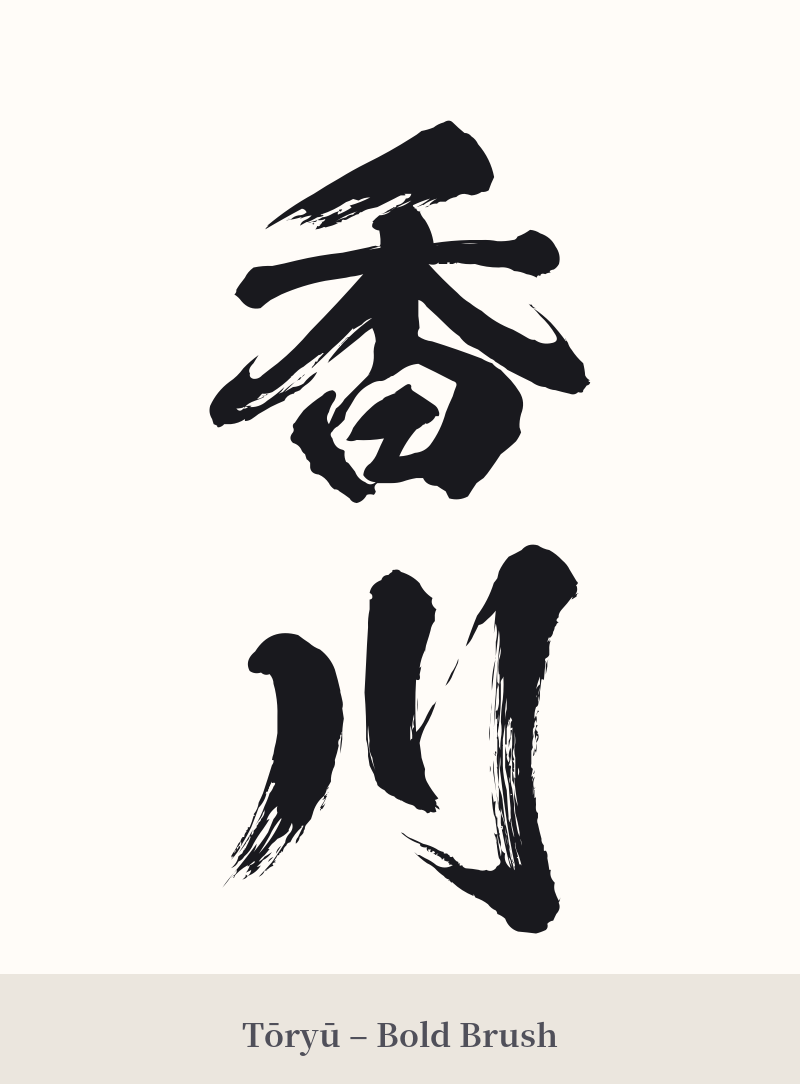
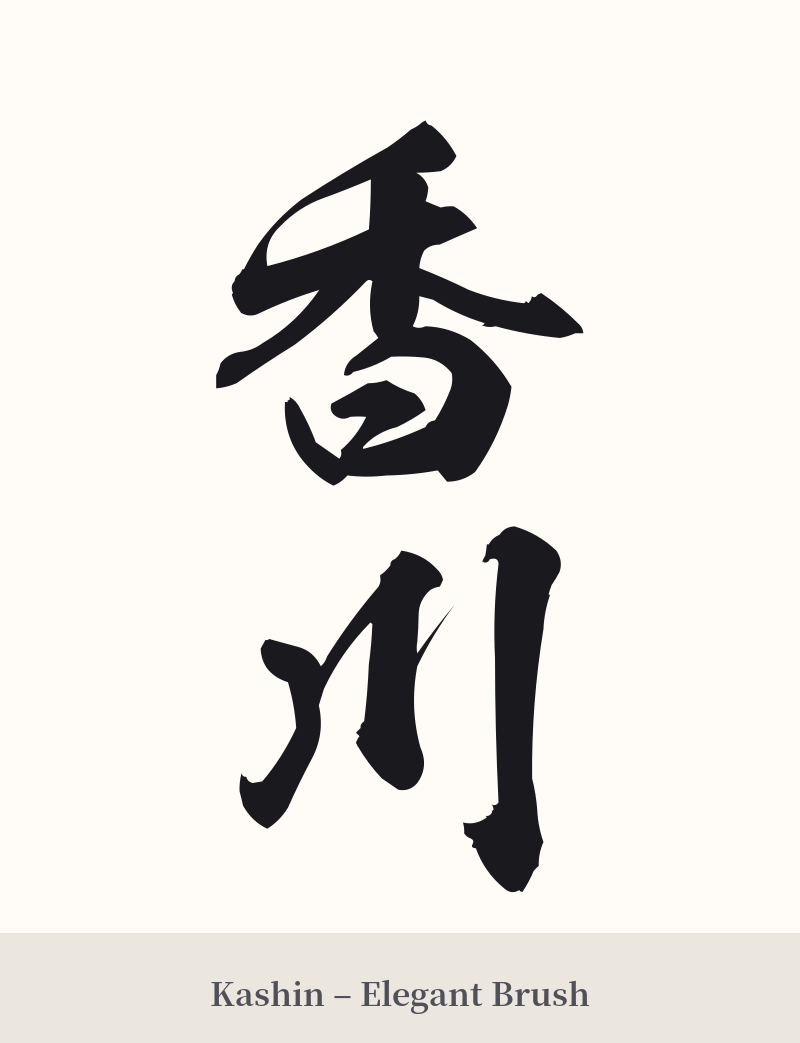
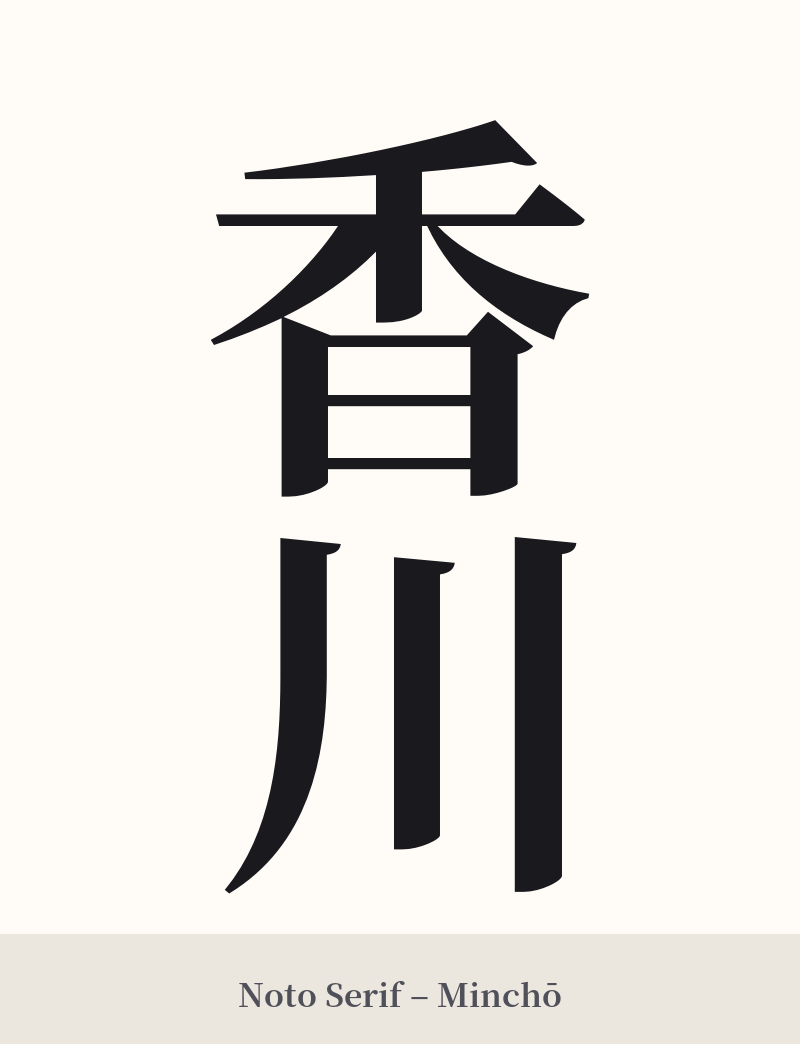
🖌️ Font Styles for 香川
The same kanji can look dramatically different depending on the calligraphy style. Choose a font that matches the mood you want for your tattoo or design.
🎨 Tattoo Suitability
📐 Tattoo Design Guide
For a tattoo of 香川, the design can reflect its dual nature as a place name and a poetic phrase.
– Placement: As a two-character compound, it fits well on the forearm, bicep, calf, or vertically along the spine. Its balanced nature makes it versatile for many body parts.
– Font Style: A bold, classic Kaisho (block) script would emphasize its status as a formal place name. Conversely, a more fluid Gyosho (semi-cursive) or Sosho (cursive) style could beautifully capture the 'river' (川) element and the artistic, flowing nature of the region.
– Visual Elements: Consider incorporating imagery that speaks to Kagawa's identity. This could be stylized waves of the Seto Inland Sea, a simple outline of a noodle bowl, or even abstract geometric shapes inspired by the modern art on Naoshima Island. A subtle watercolor background in blues and greens could evoke the 'fragrant river' and the coastal landscape.
Comments