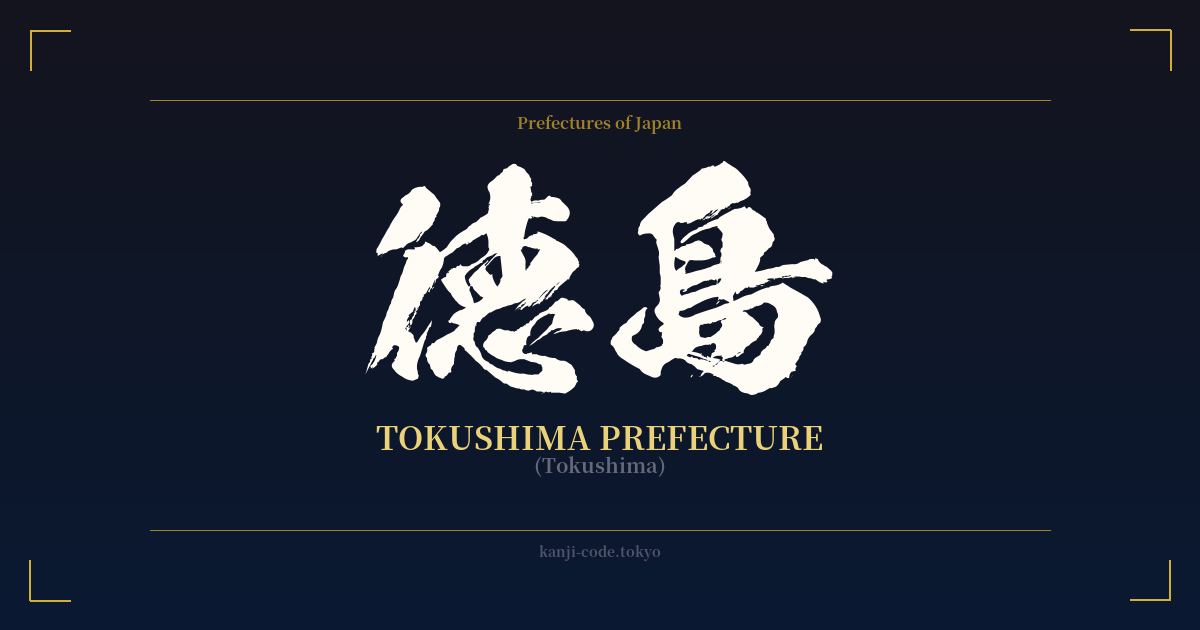
✍️ 徳島 (Tokushima) — Cultural Context
The name 徳島 (Tokushima) translates literally to “Virtue Island” or “Benevolent Island,” a name that carries a sense of auspiciousness and good character. It is the name of both a prefecture and its capital city, located on the island of Shikoku in southwestern Japan.
The name’s origin is tied to the establishment of Tokushima Castle in 1585 by the feudal lord Hachisuka Iemasa. The castle was built on a small hill in the delta of the massive Yoshino River. This hill was effectively an island, or “shima” (島), within the river basin. Lord Iemasa chose the character 徳 (toku), meaning virtue and benevolence, to prefix the name, creating an aspirational and powerful title for his new domain.
Beyond its literal meaning, Tokushima is inseparable from its vibrant cultural identity, most famously embodied by the Awa Odori (阿波踊り). This is one of Japan's most spectacular and energetic dance festivals, held every August during the Obon season. Millions of visitors flock to watch and participate as teams of dancers, called “ren,” parade through the streets to the sound of shamisen, taiko drums, and flutes.
The festival's famous chant captures its spirit: “It's a fool who dances and a fool who watches! If both are fools, you might as well dance!” This encapsulates a philosophy of joyous abandon and communal celebration, a core part of Tokushima's identity. The image of the dancers in their traditional straw hats and colorful yukata is an iconic symbol of Japanese summer.
Tokushima is also home to the awe-inspiring Naruto Whirlpools (鳴門の渦潮), massive tidal whirlpools that form in the strait between Shikoku and Awaji Island. This powerful natural wonder has inspired artists and writers for centuries and is another key element of the region's character, representing the raw, untamed power of nature that coexists with its rich culture. Historically, the area was known as Awa Province, a name still deeply connected to its traditions, including Awa Ai, a celebrated form of Japanese indigo dyeing.
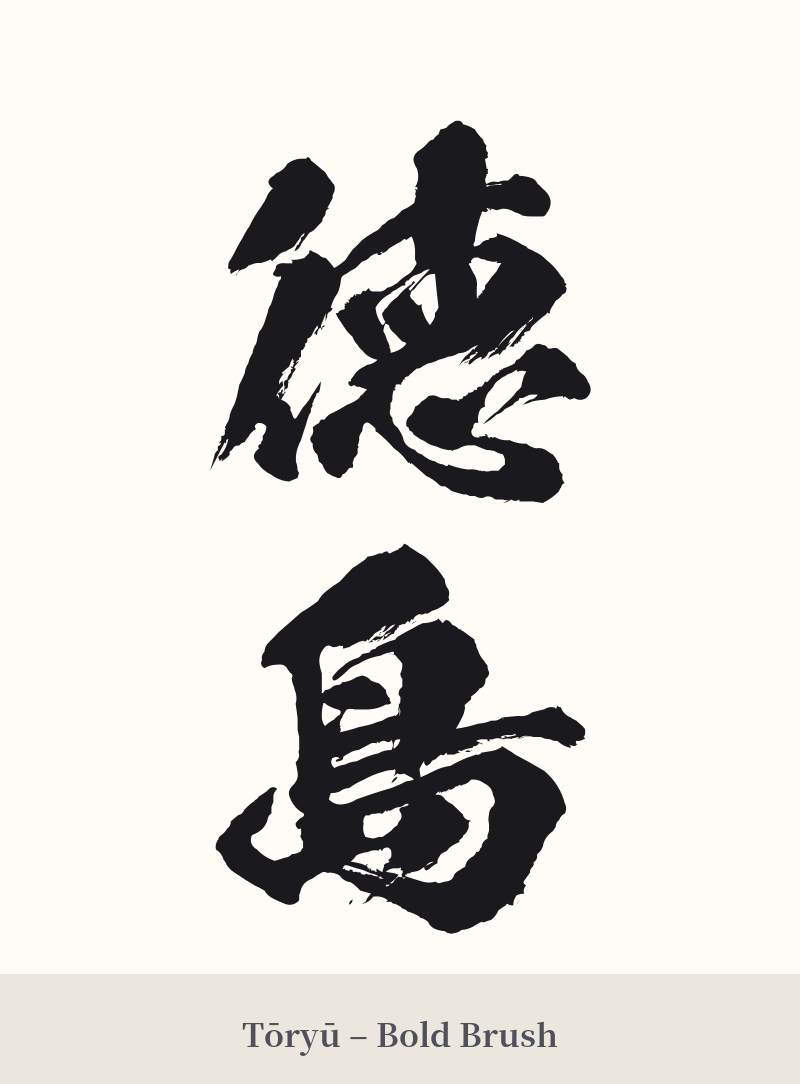
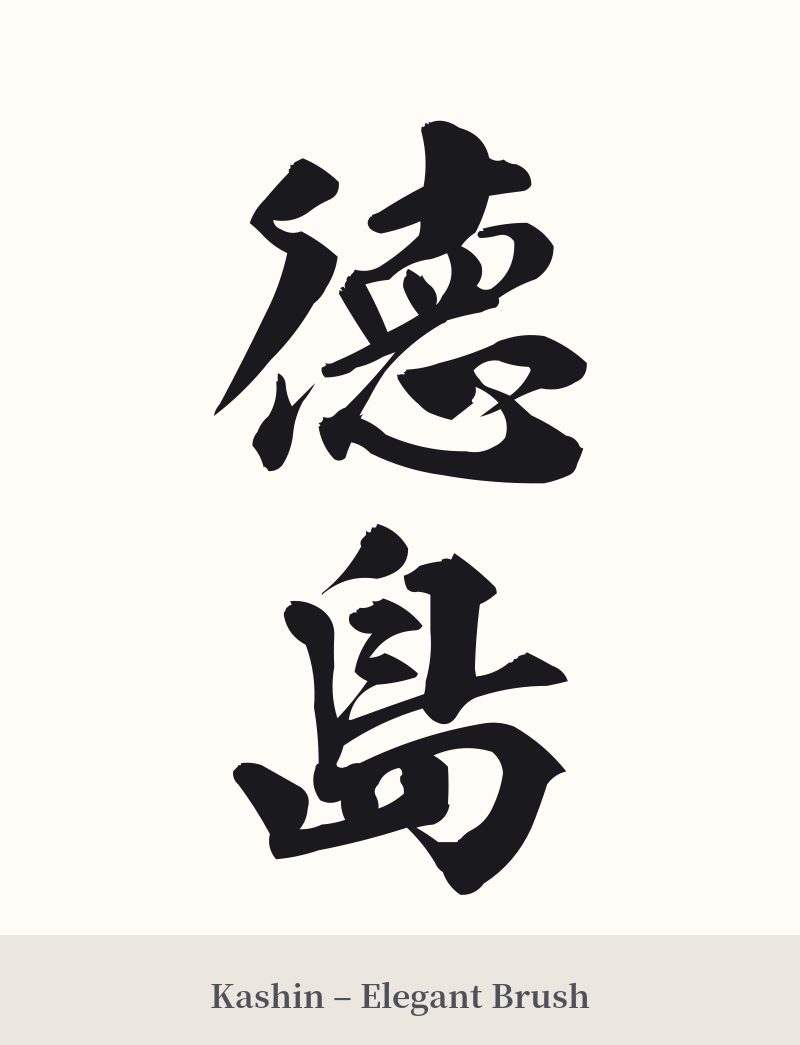
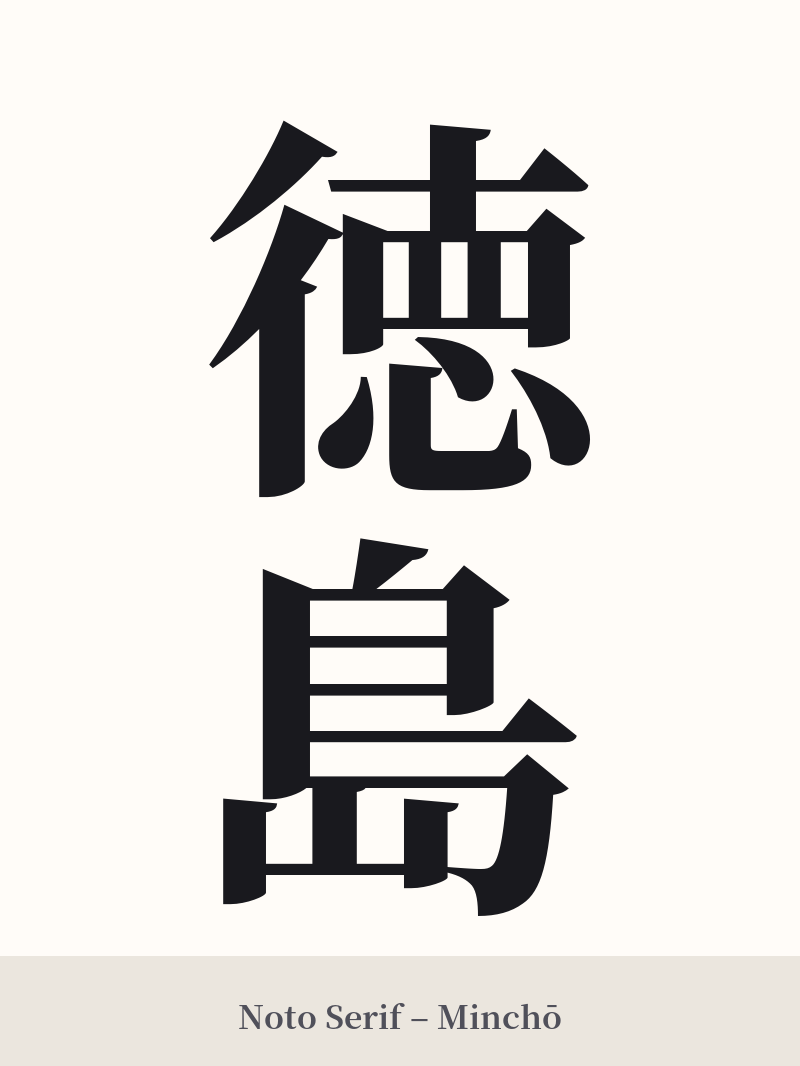
🖌️ Font Styles for 徳島
The same kanji can look dramatically different depending on the calligraphy style. Choose a font that matches the mood you want for your tattoo or design.
🎨 Tattoo Suitability
📐 Tattoo Design Guide
For a 徳島 tattoo, the design can reflect the region's dynamic culture or its natural beauty.
– Placement: Vertical alignment works beautifully on the forearm, bicep, or down the calf, echoing the flow of traditional Japanese writing. A horizontal placement is well-suited for the chest, upper back, or across the shoulder blades.
– Font Style: A bold, energetic calligraphy script (gyōsho or sōsho) can capture the lively spirit of the Awa Odori festival. For a more grounded and traditional feel, a clean and precise block script (kaisho) emphasizes the name's historical weight and dignity.
– Visual Elements: Consider pairing the kanji with imagery associated with the prefecture. Subtle waves or a whirlpool motif can reference the Naruto Strait, while incorporating the patterns from an Awa Odori yukata or the shape of a dancer's straw hat can create a unique and deeply personal design.
Comments