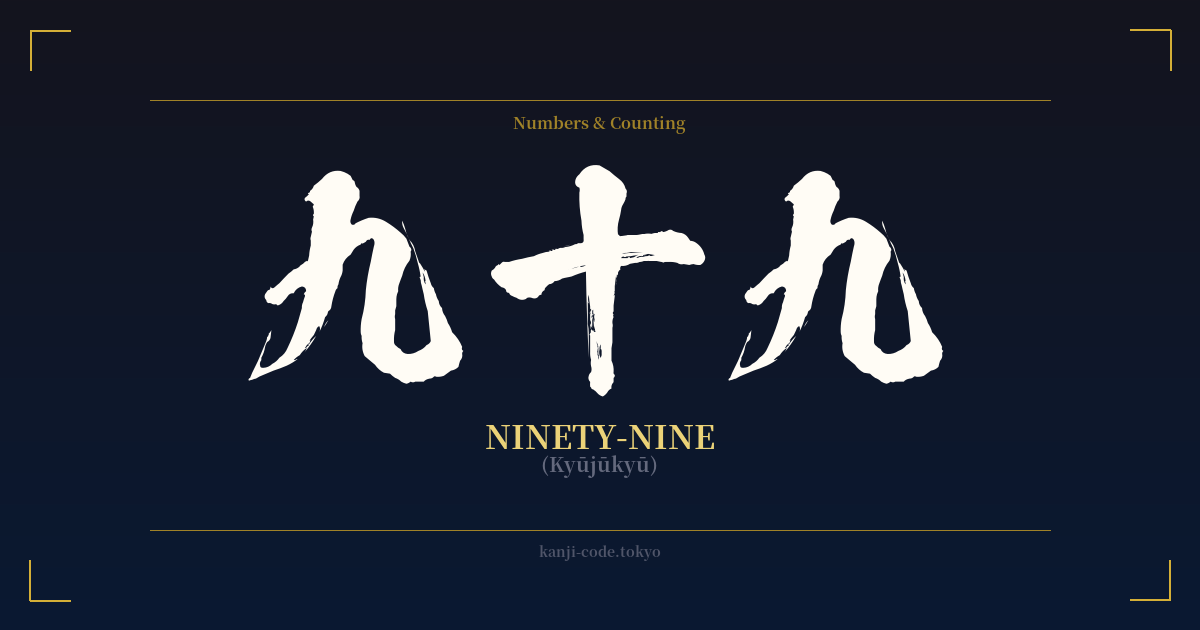
✍️ 九十九 (Kyūjūkyū) — Cultural Context
At first glance, 九十九 (Kyūjūkyū) is simply the Japanese word for the number ninety-nine. Its construction is logical and direct: 九 (kyū, nine) followed by 十 (jū, ten) and another 九 (kyū, nine), literally forming "nine-tens-nine." While mathematically straightforward, in Japanese culture, numbers are rarely just numbers. They carry layers of symbolism, and ninety-nine is a prime example of a number that represents a powerful threshold.
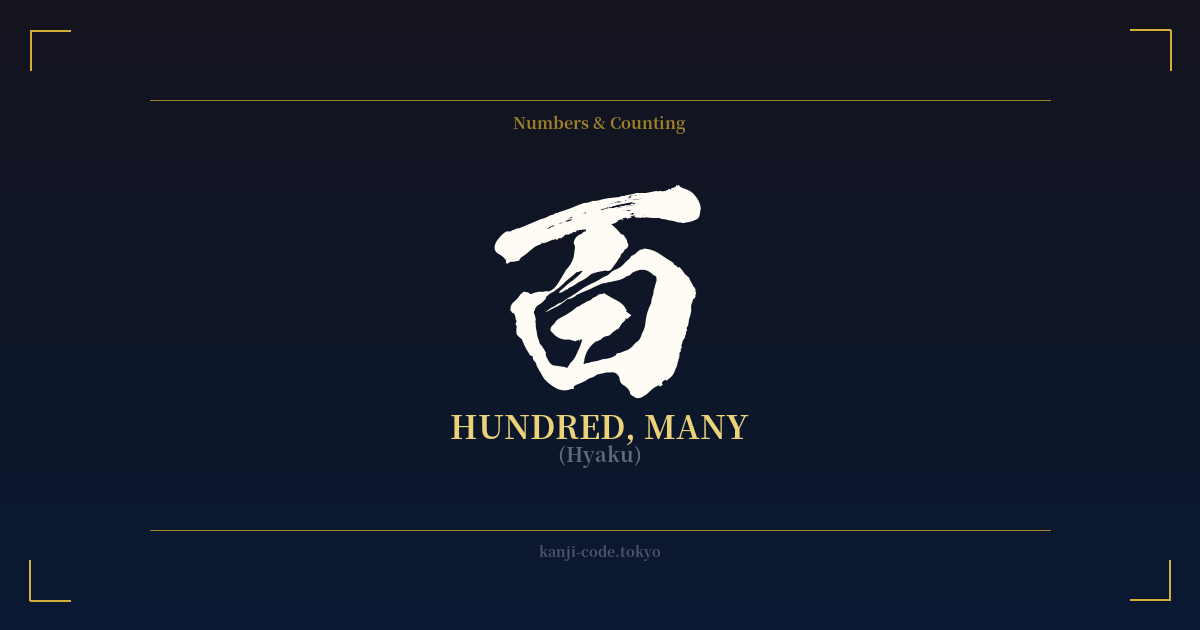
Its primary symbolic meaning stems from its position as being just one short of one hundred (百, Hyaku). This makes it a symbol of being on the cusp, at the very end of a long journey but not quite at the final destination. It can represent near-perfection, great longevity, or the penultimate step before a major transformation. This concept evokes a feeling of anticipation, the tension before a climax, and the wisdom gained through a long, but not yet complete, existence.
This idea of transformation after a long time is most famously embodied in the concept of Tsukumogami (付喪神 or つくもがみ). According to Japanese folklore, household objects and tools—such as umbrellas, lanterns, sandals, or musical instruments—that reach their one-hundredth year of service (or often poetically, their ninety-ninth) can acquire a soul or spirit (kami) and come to life. These are the Tsukumogami. An older spelling for this term was 九十九髪, also pronounced 'tsukumogami,' which literally translates to "ninety-nine hairs," an allusion to the white hair of a very old woman. This directly links the number ninety-nine with the process of aging, transformation, and the animist belief that even inanimate objects can gain a spirit over time.
The stories of Tsukumogami range from mischievous tricksters who play pranks on their former owners to vengeful spirits angry at being discarded carelessly. This folklore serves as a powerful cultural reminder to treat one's belongings with respect and care, embodying the Shinto belief that divinity can exist in all things. Therefore, the number ninety-nine is not just about being incomplete; it's about the magic that happens at the boundary of the mundane and the spiritual, the moment an ordinary object becomes extraordinary.
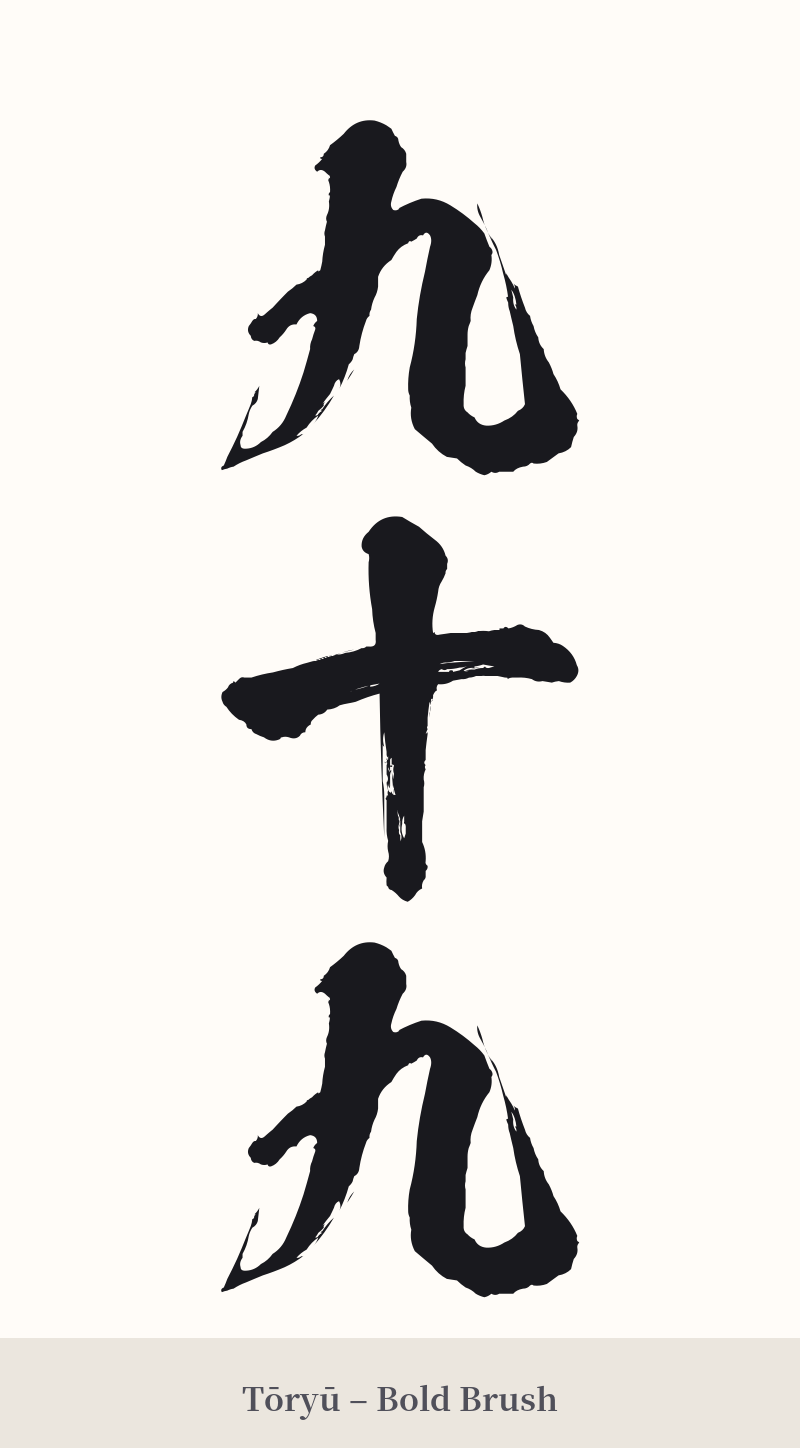
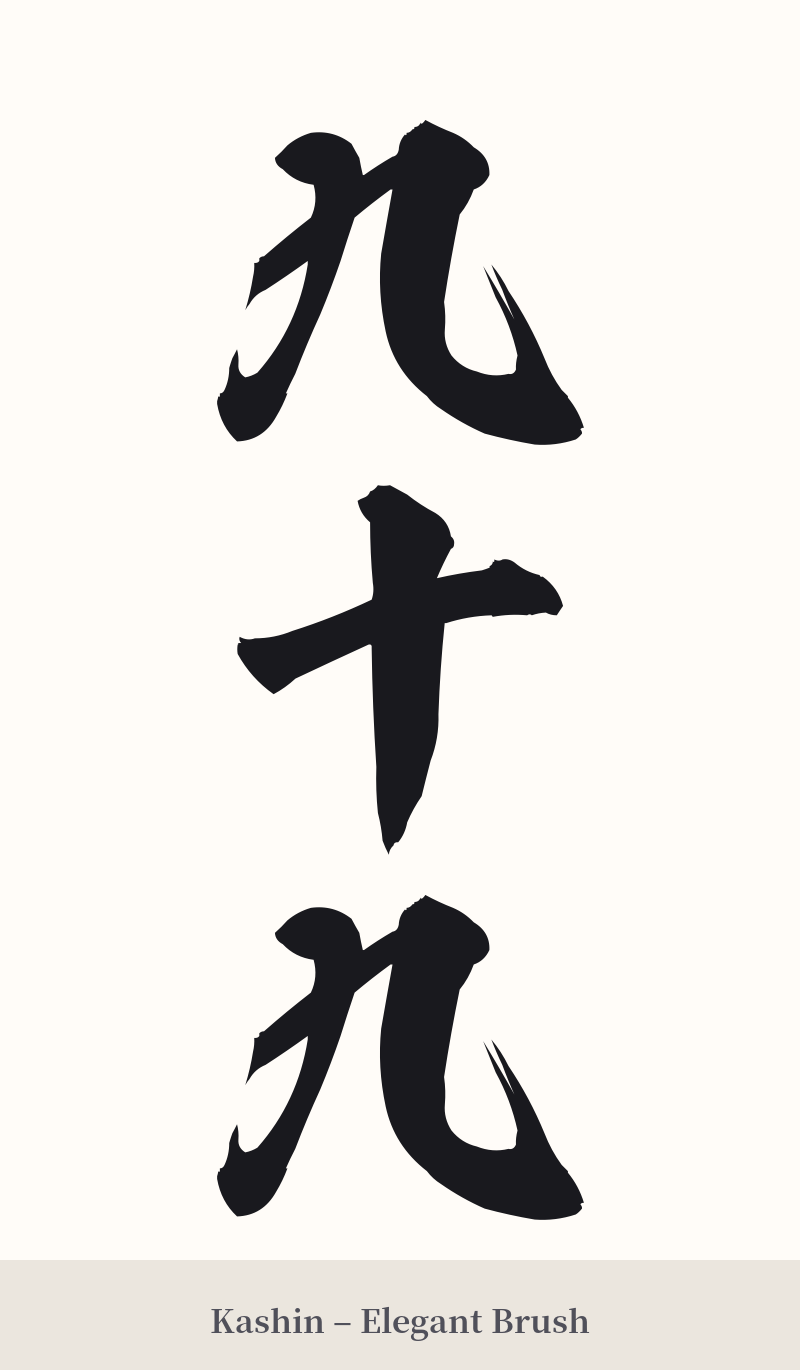
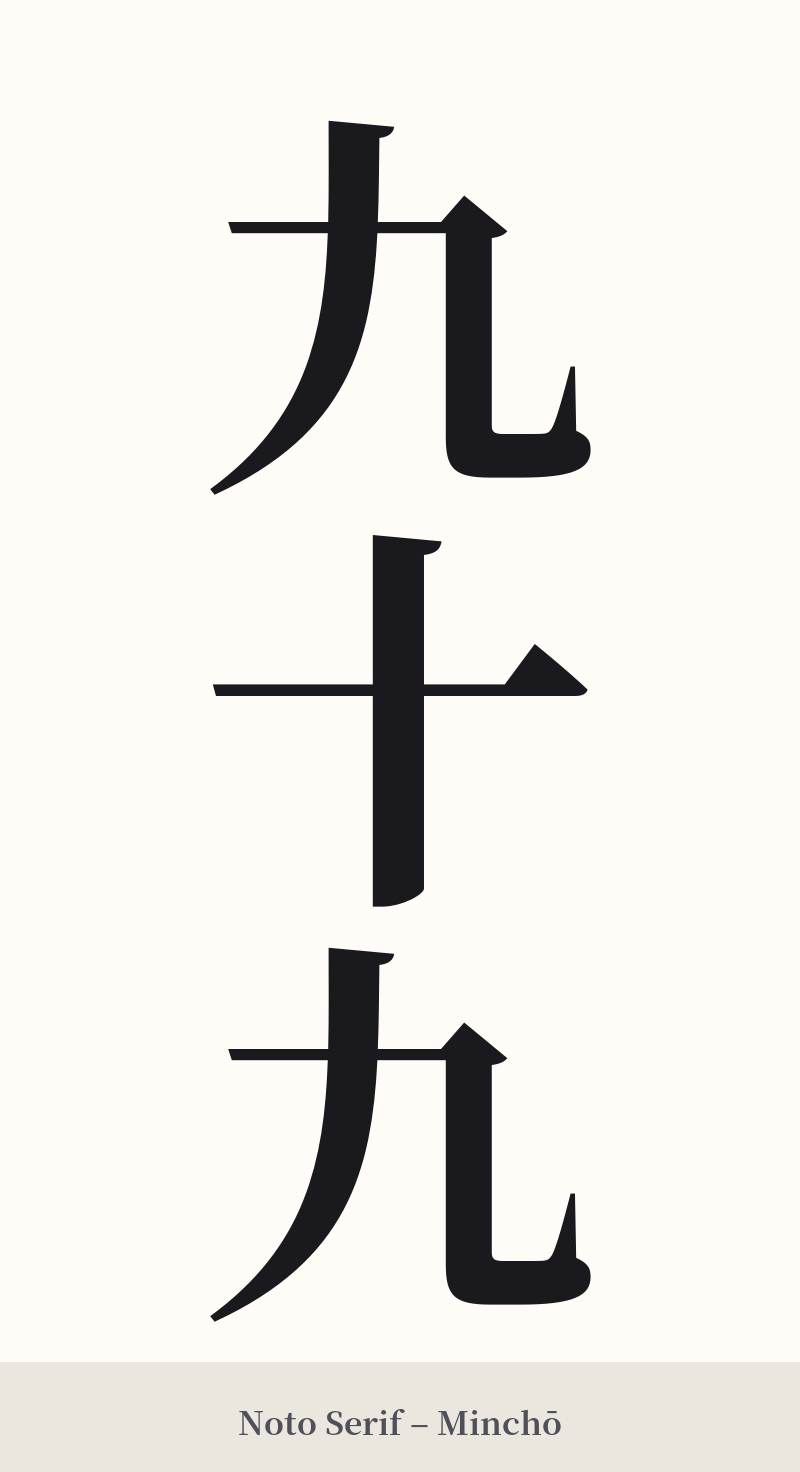
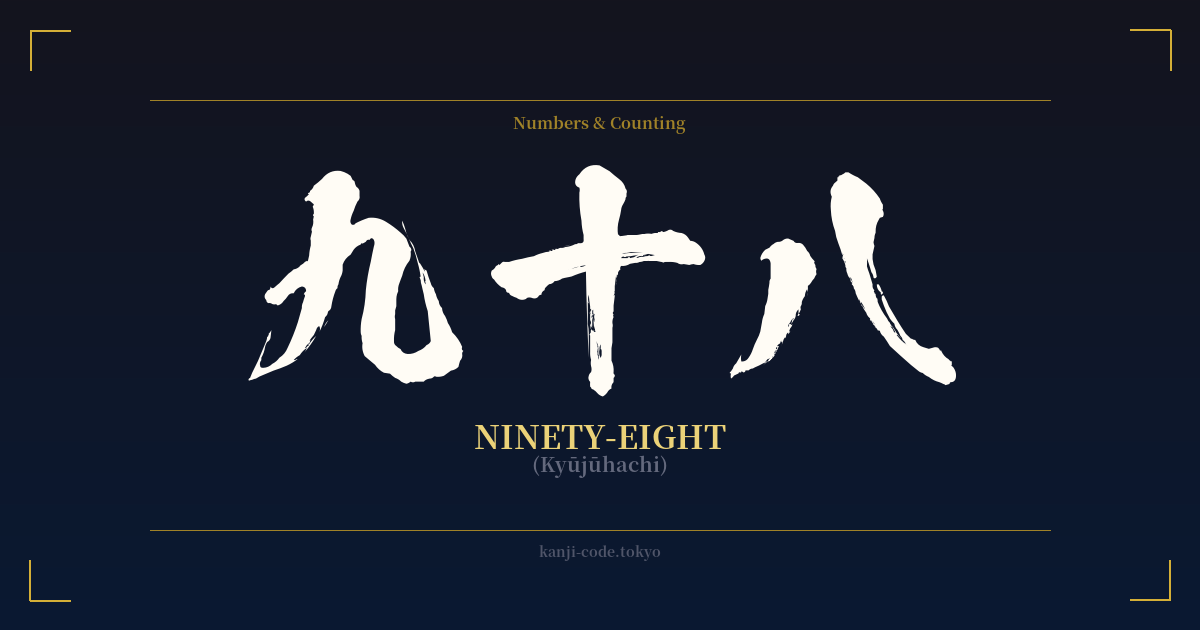
🖌️ Font Styles for 九十九
The same kanji can look dramatically different depending on the calligraphy style. Choose a font that matches the mood you want for your tattoo or design.
🎨 Tattoo Suitability
📐 Tattoo Design Guide
The simplicity of 九十九 offers unique design challenges and opportunities. Due to its vertical nature, it is well-suited for narrow placements on the body.
– Placement: A vertical column along the spine, forearm, or calf would complement the flow of the characters. Horizontally, it could work across the collarbone or upper back, but the vertical arrangement is more traditional.
– Font Style: The characters are extremely simple (only two strokes each). To add visual interest, a dynamic calligraphy style like gyōsho (semi-cursive) or sōsho (cursive) is highly recommended. These styles can imbue the simple forms with energy and movement. A rigid, blocky kaisho font might look too plain and sterile.
– Visual Tips: Because the meaning is so deeply tied to the Tsukumogami concept, consider pairing 九十九 with imagery. A tattoo could feature an old, personified object like a paper lantern with an eye, or a worn-out sandal sprouting a limb, with the kanji placed nearby to provide context. This turns a simple number into a rich, narrative piece about folklore and transformation.
Comments