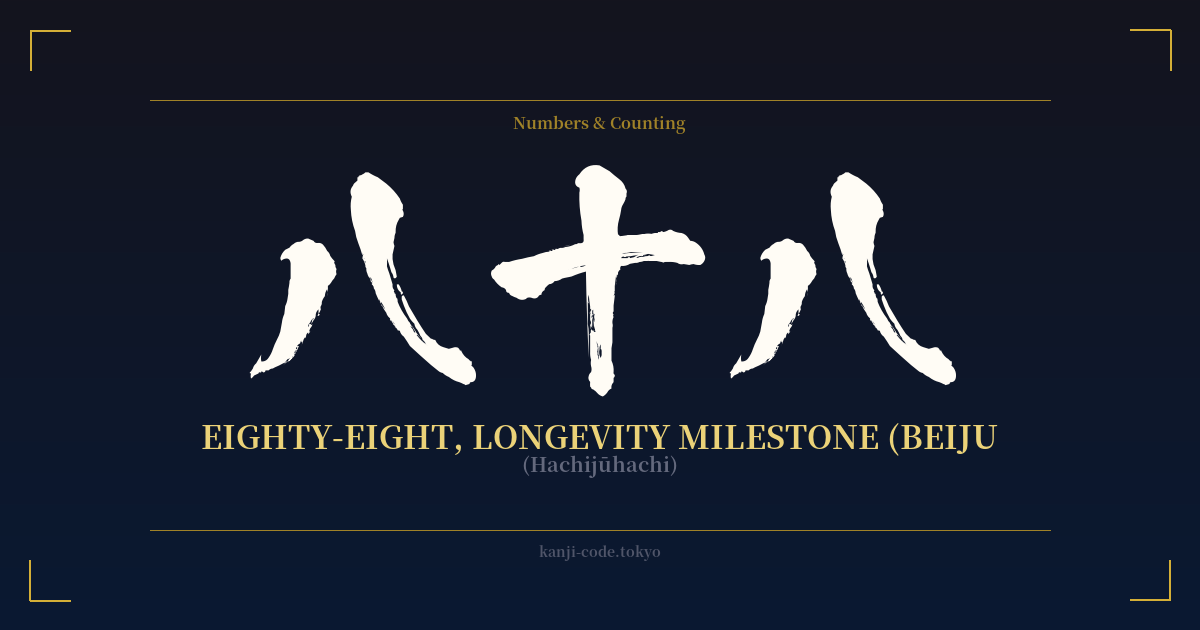
✍️ 八十八 (Hachijūhachi) — Cultural Context
On the surface, 八十八 (Hachijūhachi) simply means 'eighty-eight.' However, in Japanese culture, this number carries a profound significance tied to one of life's most cherished milestones: the celebration of longevity.
This special status comes from a clever form of Japanese wordplay known as 'goroawase' or, in this case, a visual deconstruction. The 88th birthday is called 'Beiju' (米寿), which translates to 'rice longevity.' The reason for this name is a beautiful visual pun. If you take apart the kanji for rice, 米 (kome or bei), you are left with the characters for eight, ten, and eight: 八十八.
Therefore, the number eighty-eight is intrinsically linked to rice, and by extension, to the celebration of a long and fruitful life. In Japan, rice is more than just a staple food; it's a cultural cornerstone symbolizing diligence, purity, prosperity, and even divinity. To reach the 'rice age' is to have lived a life as full and essential as this vital grain.
The 'Beiju' celebration is one of several important age milestones in Japan, known as 'kanreki' (60th), 'kiju' (77th), and 'sotsuju' (90th). During a 'Beiju' celebration, the honoree is often gifted items in yellow or gold, colors associated with rice harvests and imperial splendor, further underscoring the auspiciousness of the occasion.
Furthermore, the number eight (八, hachi) itself is considered lucky in Japan. The character's shape widens at the bottom, a form known as 'suehirogari' (末広がり), which suggests a future of growing prosperity and success. Having this lucky number appear twice in 'eighty-eight' amplifies its fortunate connotations. Thus, 八十八 is not just a number; it's a rich symbol of a life well-lived, cultural abundance, and the promise of continued fortune.
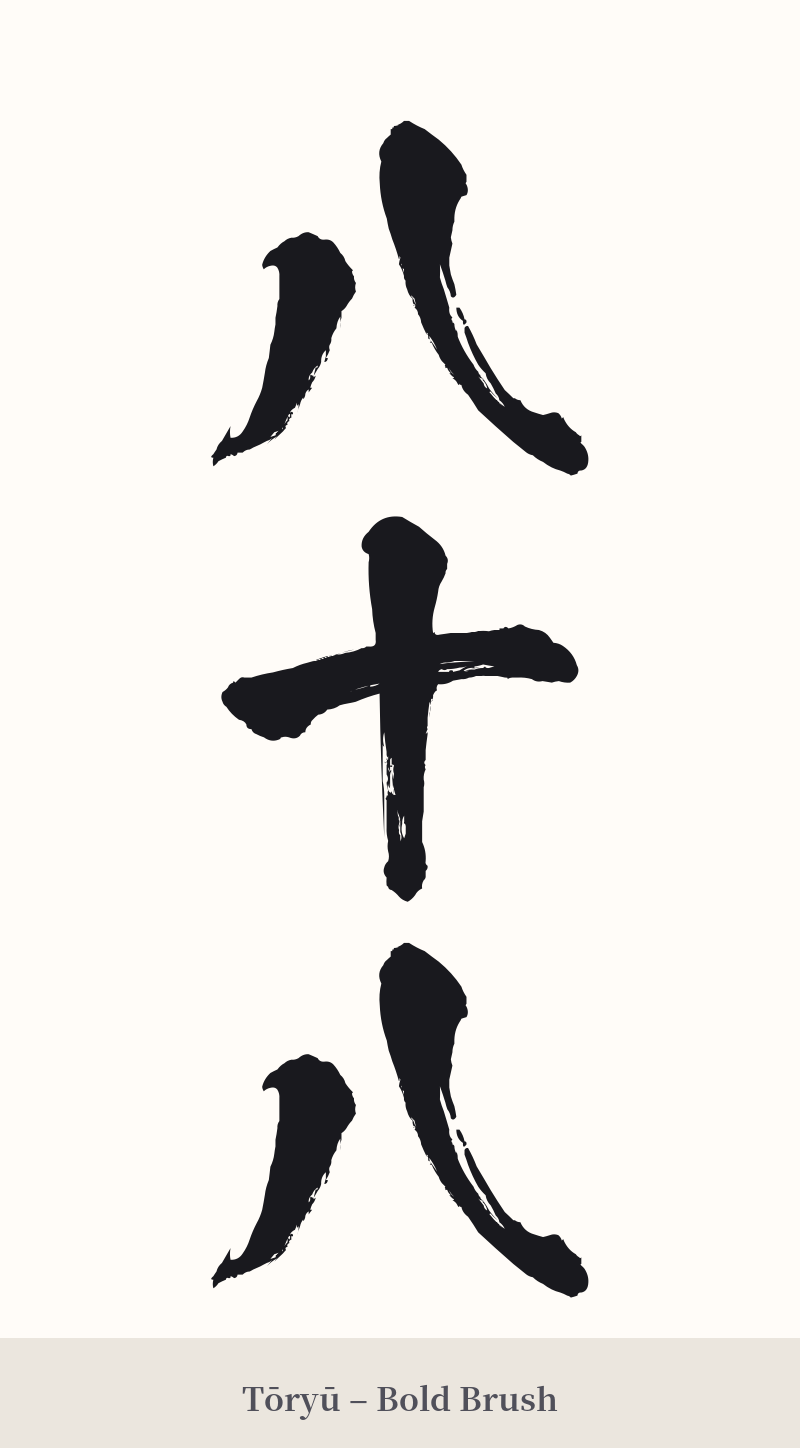
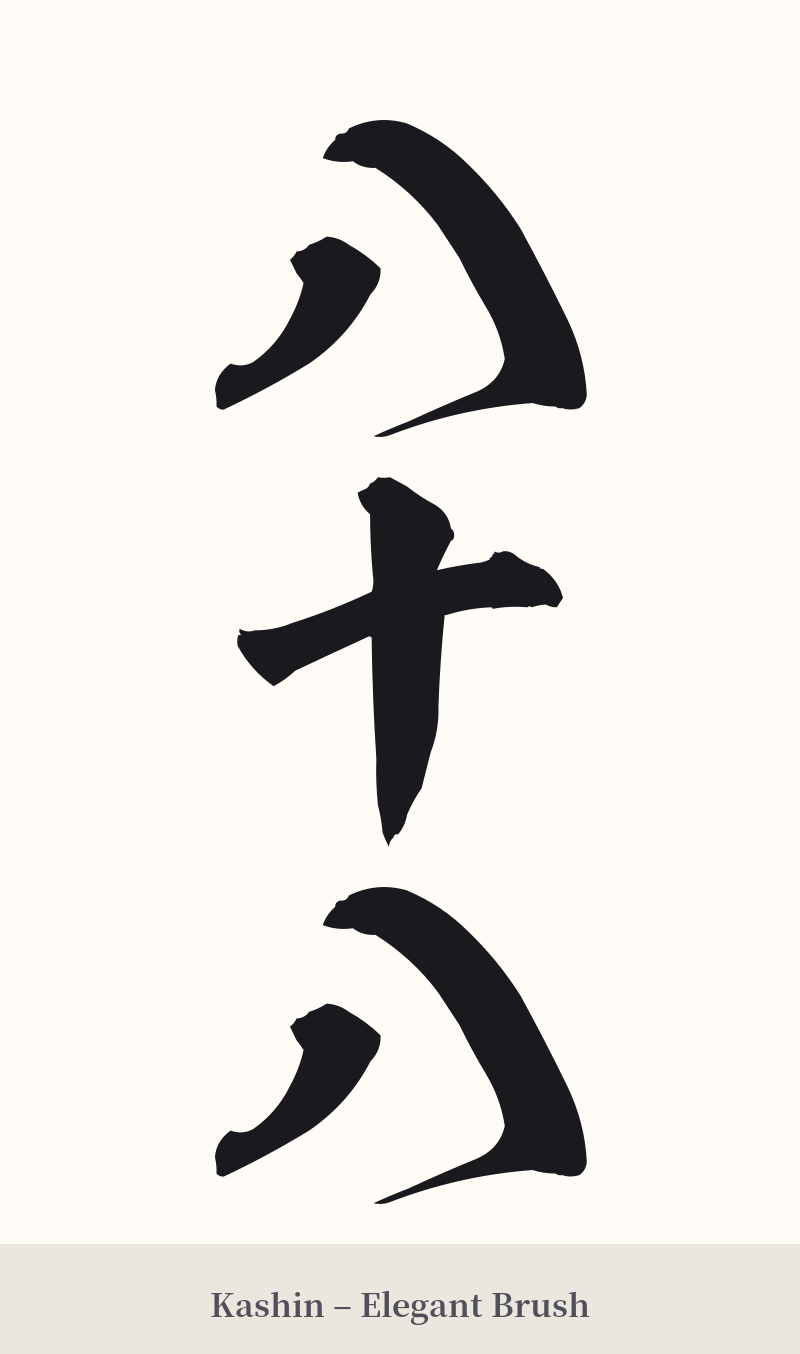
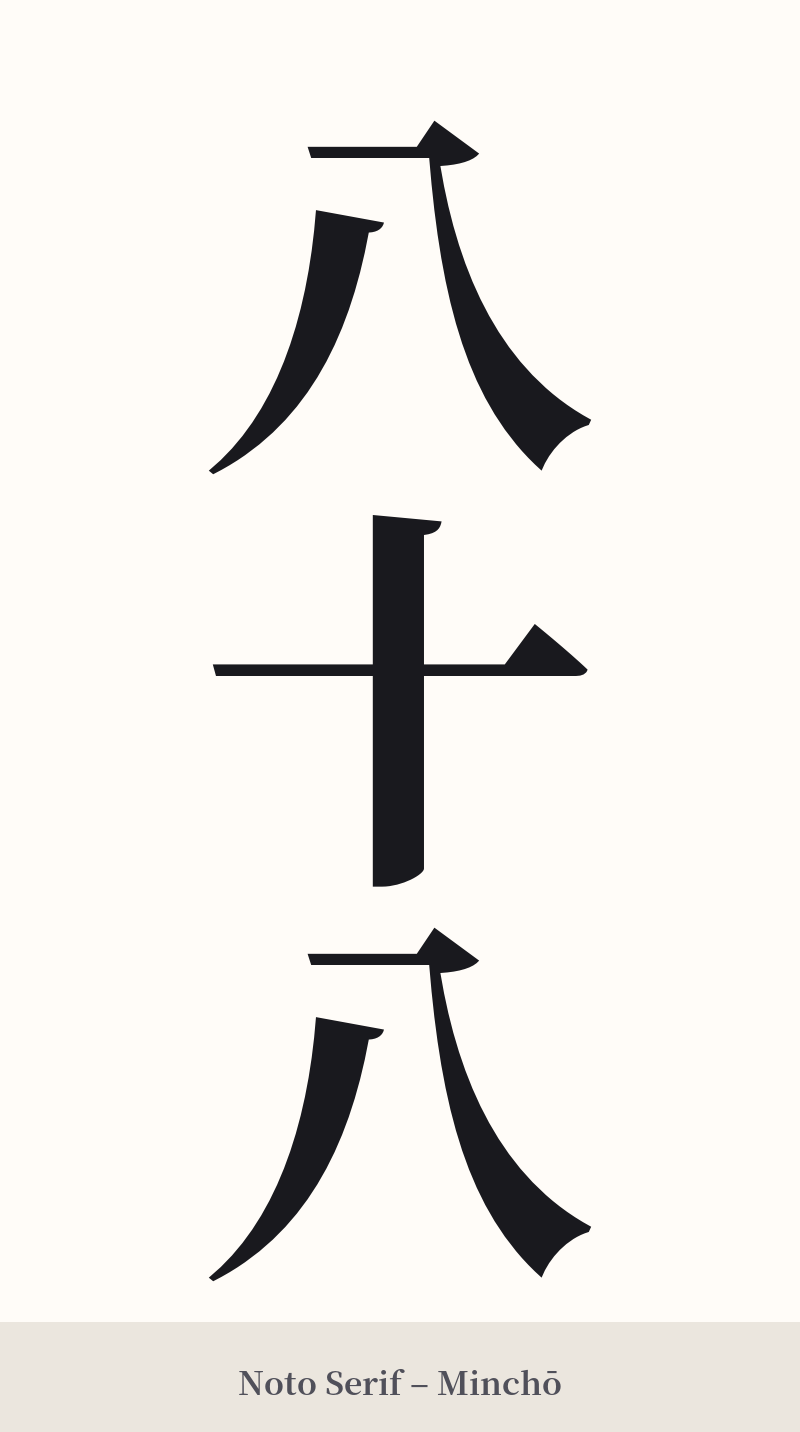
🖌️ Font Styles for 八十八
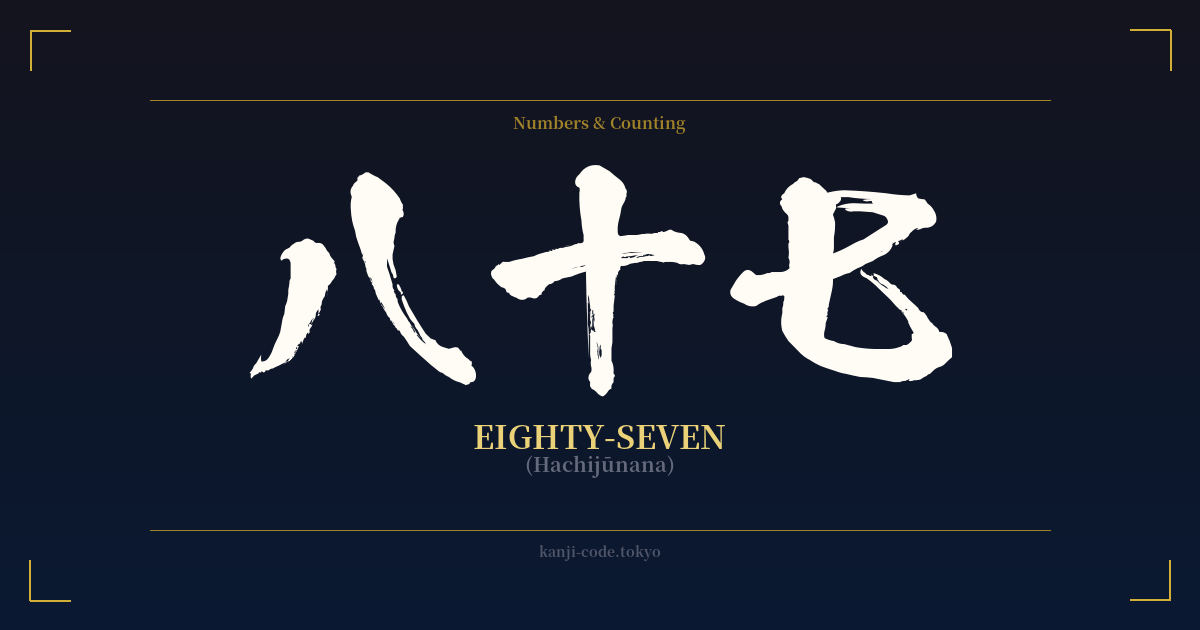
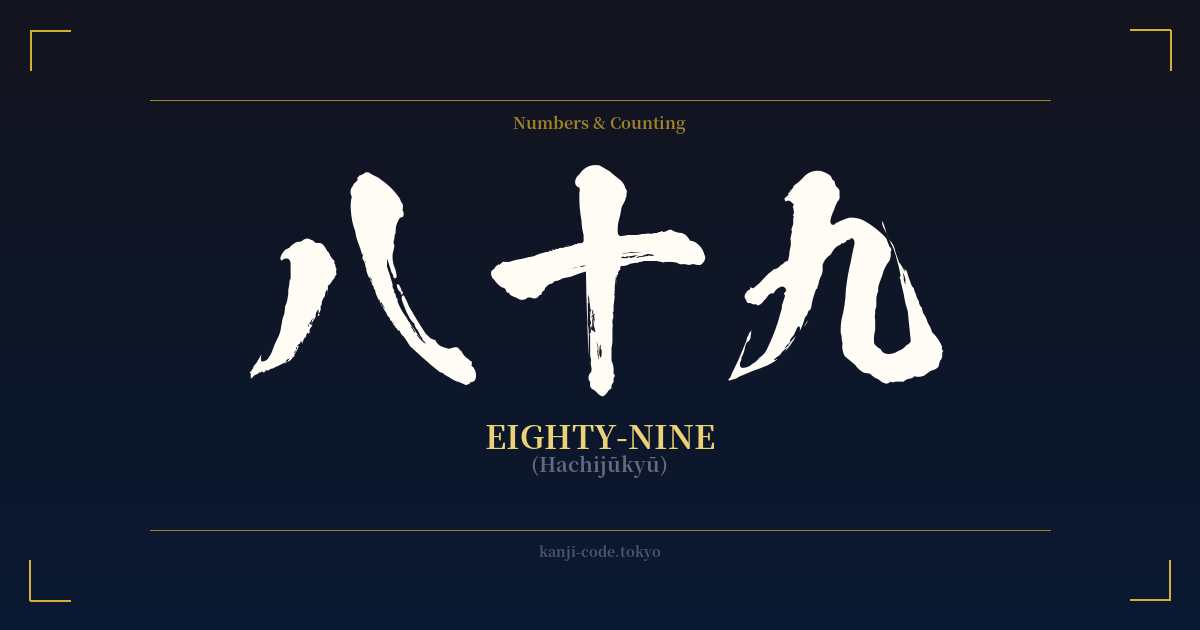
The same kanji can look dramatically different depending on the calligraphy style. Choose a font that matches the mood you want for your tattoo or design.
🎨 Tattoo Suitability
📐 Tattoo Design Guide
Due to the significant risk of misinterpretation in Western contexts, this design requires careful consideration. If you proceed, the design should emphasize its Japanese cultural context as much as possible.
– Placement: This is not a design for a large, prominent area like the back or chest. Consider a smaller, more personal placement like the inner wrist, behind the ear, or on the ankle, where it serves as a personal reminder rather than a public statement.
– Font Style: Traditional calligraphy styles are essential here. A standard block font will look generic and amplify the risk of being seen as just the numbers '88'. Opt for a flowing 'Gyosho' (semi-cursive) or a dignified 'Kaisho' (block script) to ground it in its cultural origins.
– Visual Tips: To make the meaning clear and mitigate risk, consider pairing it with other elements. The most effective strategy would be to incorporate the kanji for rice, 米 (kome), into the design. You could have 八十八 written small, emerging from or next to a larger, more artistic 米 character. Adding a stalk of rice or a small 'hanko' seal can also help frame it as a piece of Japanese art.
Comments