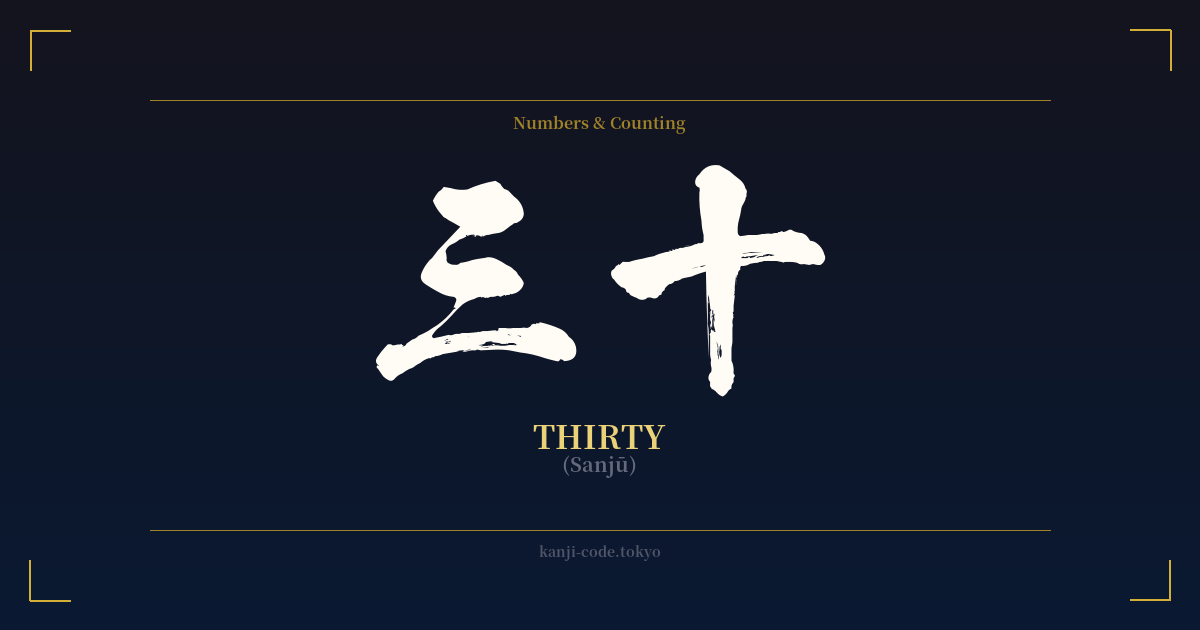
✍️ 三十 (Sanjū) — Cultural Context
The kanji compound 三十 (Sanjū) is the Japanese word for the number thirty. It is constructed in a logical, additive way that is characteristic of the Sino-Japanese numbering system: it combines the character for three (三) with the character for ten (十), literally meaning "three tens."
This straightforward construction makes it one of the easiest kanji words to read and understand. Its usage is ubiquitous in daily life, appearing in prices, dates, measurements, and, most significantly, age. Reaching the age of thirty, or 三十歳 (sanjussai), is a major milestone in Japanese culture, much like in many other parts of the world.
In Japan, turning thirty marks a definitive transition out of youth and into full-fledged adulthood. There's even a special term for this stage of life: 三十路 (misoji). This word carries a slightly more literary or poetic nuance than the simple "sanjussai" and is used to refer to the period of one's thirties. It signifies a time of expected stability, both in career and personal life, and is often associated with settling down.
Beyond age, the number thirty holds importance in the calendar. The 30th day of the month is read as 三十日 (misoka). This term also more broadly means the last day of any given month, regardless of whether it has 30 days. This is because early calendars were more closely tied to lunar cycles. This concept of "the end of the month" culminates in the most important day of the Japanese year: 大晦日 (Ōmisoka), or New Year's Eve. Here, 三十 is part of a term that represents closure, reflection, and the purification rituals performed to welcome the new year.
While 三十 itself may not be steeped in complex philosophy, its role as a building block for concepts of time, age, and cycles gives it a foundational cultural weight. It represents a significant marker in a person's life journey and a key component in the rhythm of the calendar, embodying both simple arithmetic and the profound passage of time.
🖌️ Font Styles for 三十
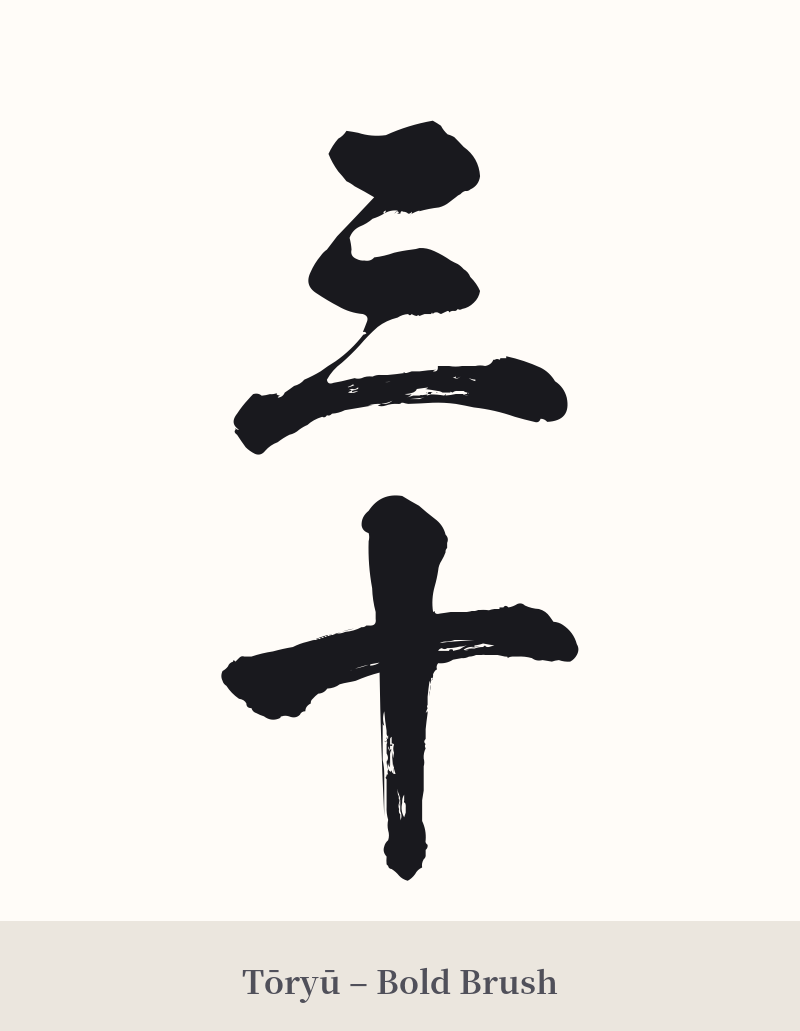
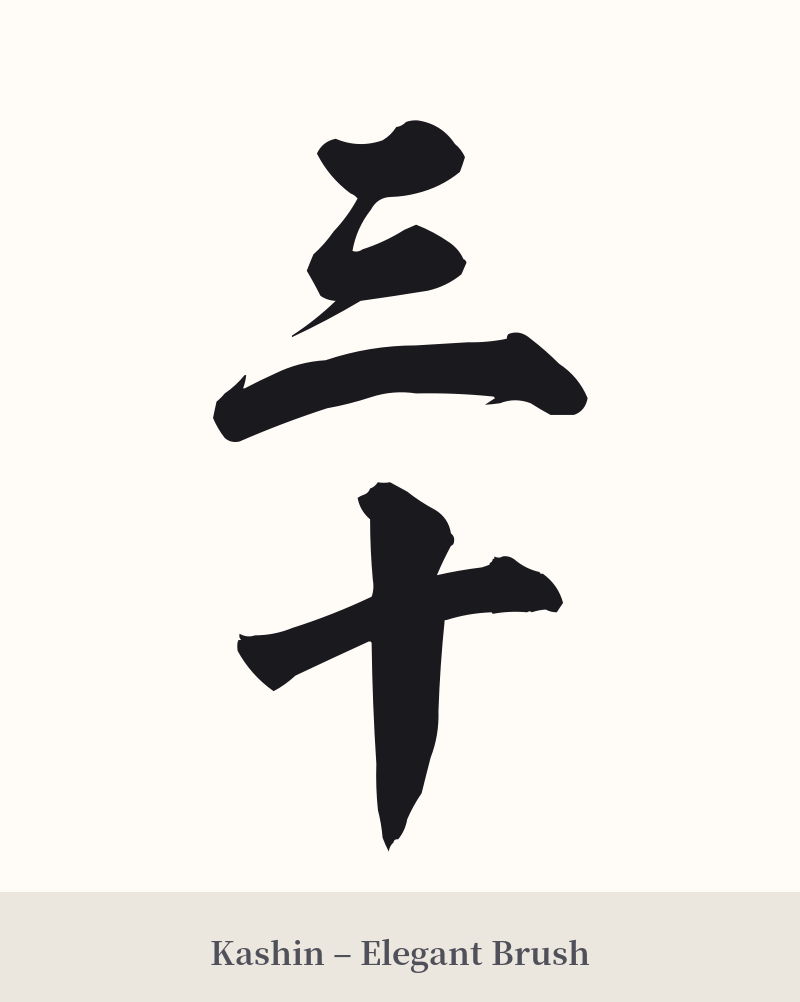
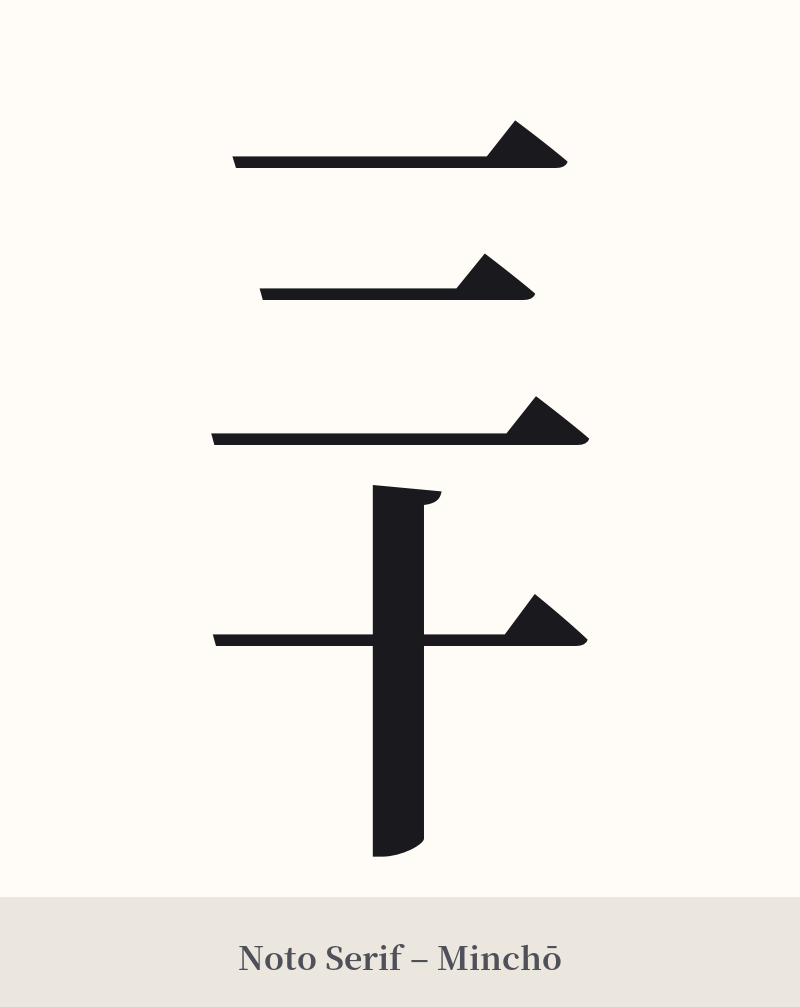
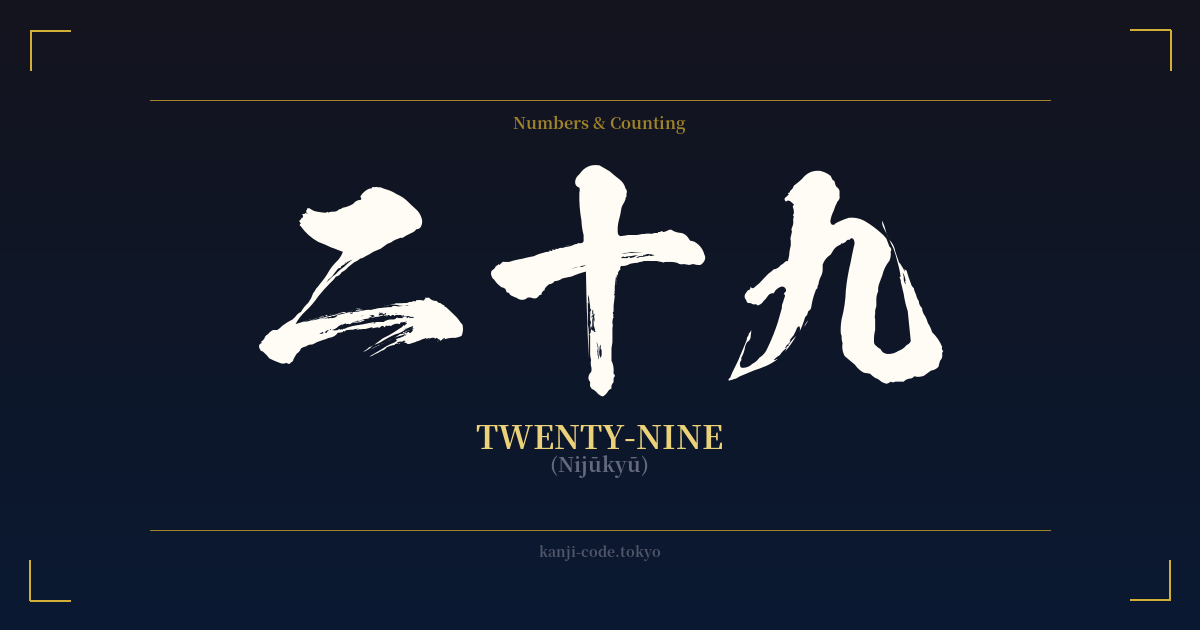
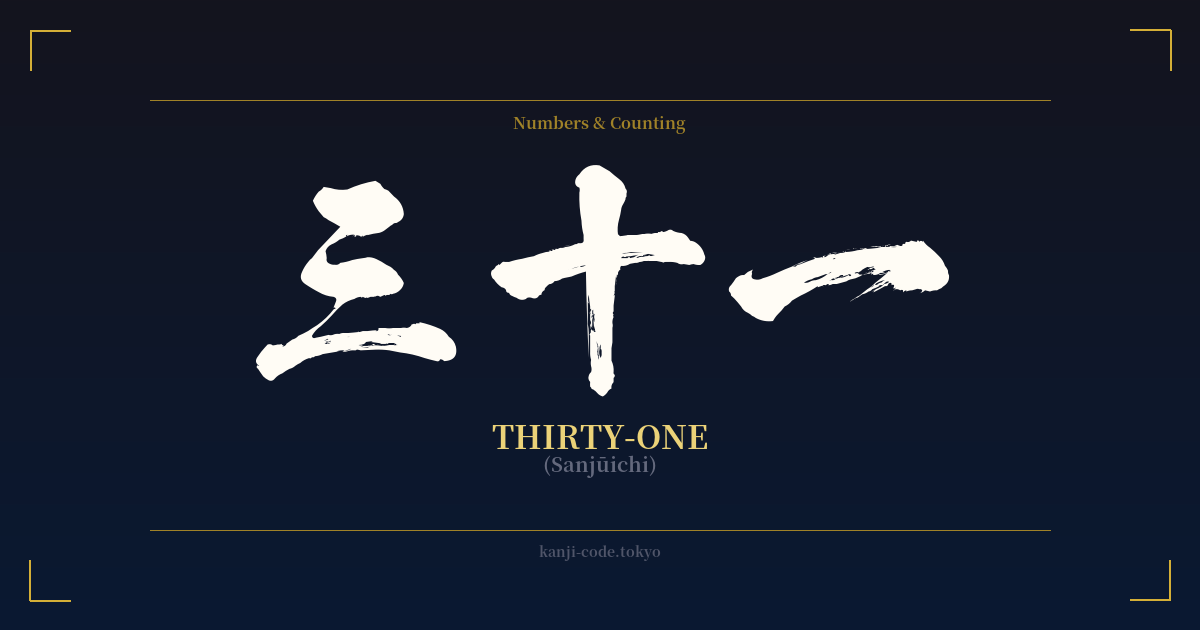
The same kanji can look dramatically different depending on the calligraphy style. Choose a font that matches the mood you want for your tattoo or design.
🎨 Tattoo Suitability
📐 Tattoo Design Guide
Given its extreme simplicity, a tattoo of 三十 (Sanjū) is best suited for a minimalist approach or as part of a larger, more complex design.
– Placement: Its small footprint makes it ideal for discreet locations. Consider the inner wrist, behind the ear, on an ankle, or even along a finger. For a more prominent placement, it could be integrated into a larger piece that gives it context.
– Font Style: The choice of font is critical. A standard, blocky computer font can make it look like a label. Instead, opt for a dynamic calligraphy script like Gyōsho (semi-cursive) or Sōsho (cursive) to inject some life and artistry into the simple strokes. A clean, elegant Mincho (serif) style can also work for a classic look.
– Visual Tips: Writing the characters vertically (tategaki) is a classic choice that aligns with traditional Japanese text. To give the tattoo meaning, consider pairing it with another element that explains its significance, such as a specific date, a flower that bloomed on a 30th birthday, or a symbol representing an achievement from that age.
Comments