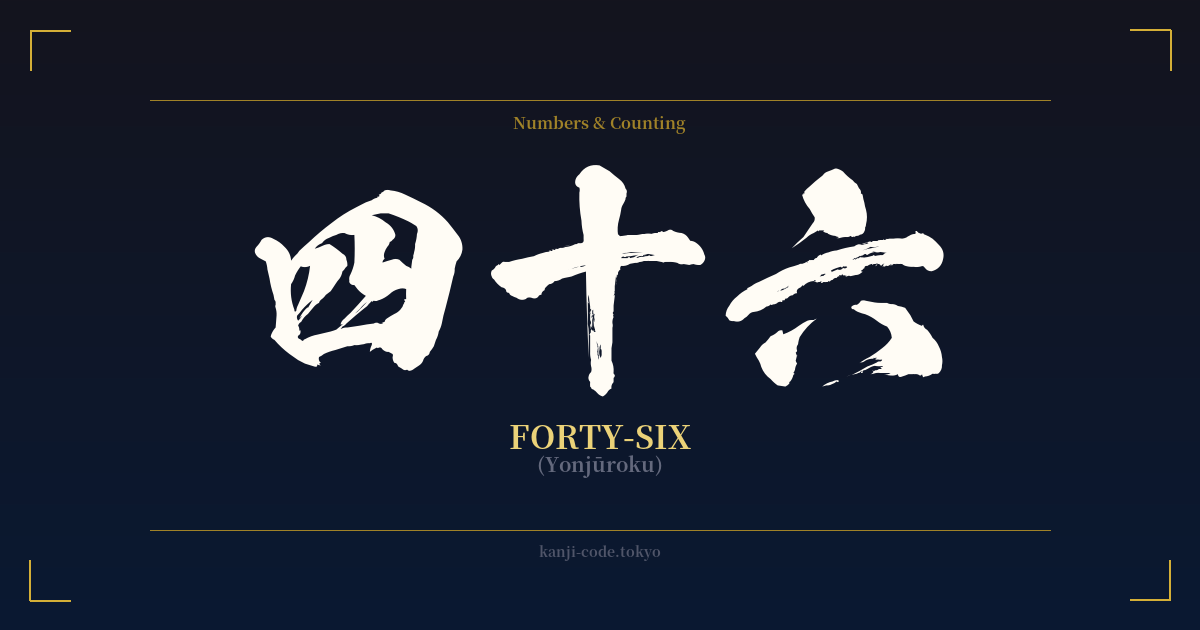
✍️ 四十六 (Yonjūroku) — Cultural Context
The Japanese word for forty-six, 四十六 (Yonjūroku), is a straightforward numerical term, constructed with logical precision. It combines the characters for four (四), ten (十), and six (六). The structure literally translates to 'four tens plus six,' showcasing the simple and efficient nature of the East Asian numbering system.
Unlike numbers such as seven (七), which is considered lucky, or four (四), which can be unlucky due to its phonetic similarity to the word for death (死, shi), the number forty-six carries no strong traditional superstition or deep symbolic meaning in Japanese culture. It is simply a number, a descriptor of quantity. This neutrality makes it an unusual choice for artistic or symbolic expression, as it doesn't tap into a wider cultural narrative or philosophy.
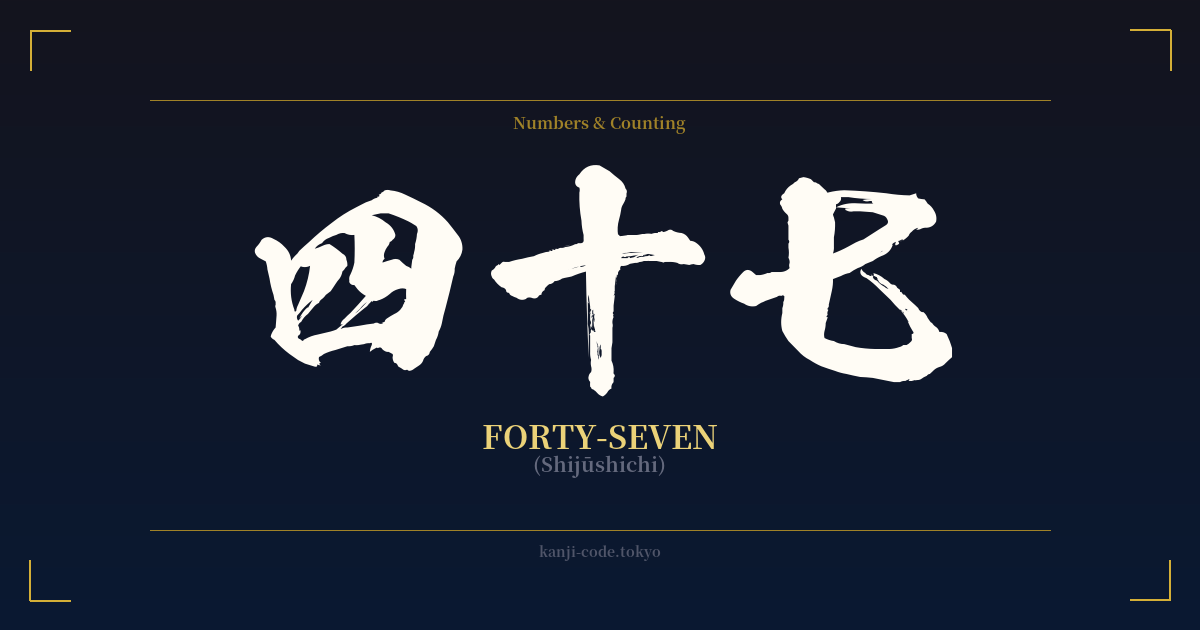
However, the proximity of 46 to 47 is culturally significant. The tale of the Forty-Seven Ronin (四十七士, Shijūshichishi) is one of the most celebrated stories in Japanese history, embodying themes of loyalty, sacrifice, and honor. It is a cornerstone of Japanese folklore and Bushido ethics. Because of this, the number 47 is instantly recognizable and loaded with meaning. Consequently, the number 46 can be perceived as falling just short of this epic tale, potentially seen as an error or an incomplete thought by those familiar with the story.
In contemporary Japan, the number 46 has been claimed by a powerful cultural force: the popular J-pop idol group Nogizaka46 (乃木坂46). Formed in 2011, this group is a massive phenomenon, and the number '46' is now inextricably linked to them in the public consciousness. For many Japanese people, seeing the number 46 will first and foremost bring this band to mind. This association is so strong that a tattoo of 四十六 would likely be interpreted as a declaration of fandom rather than a personal or abstract statement.
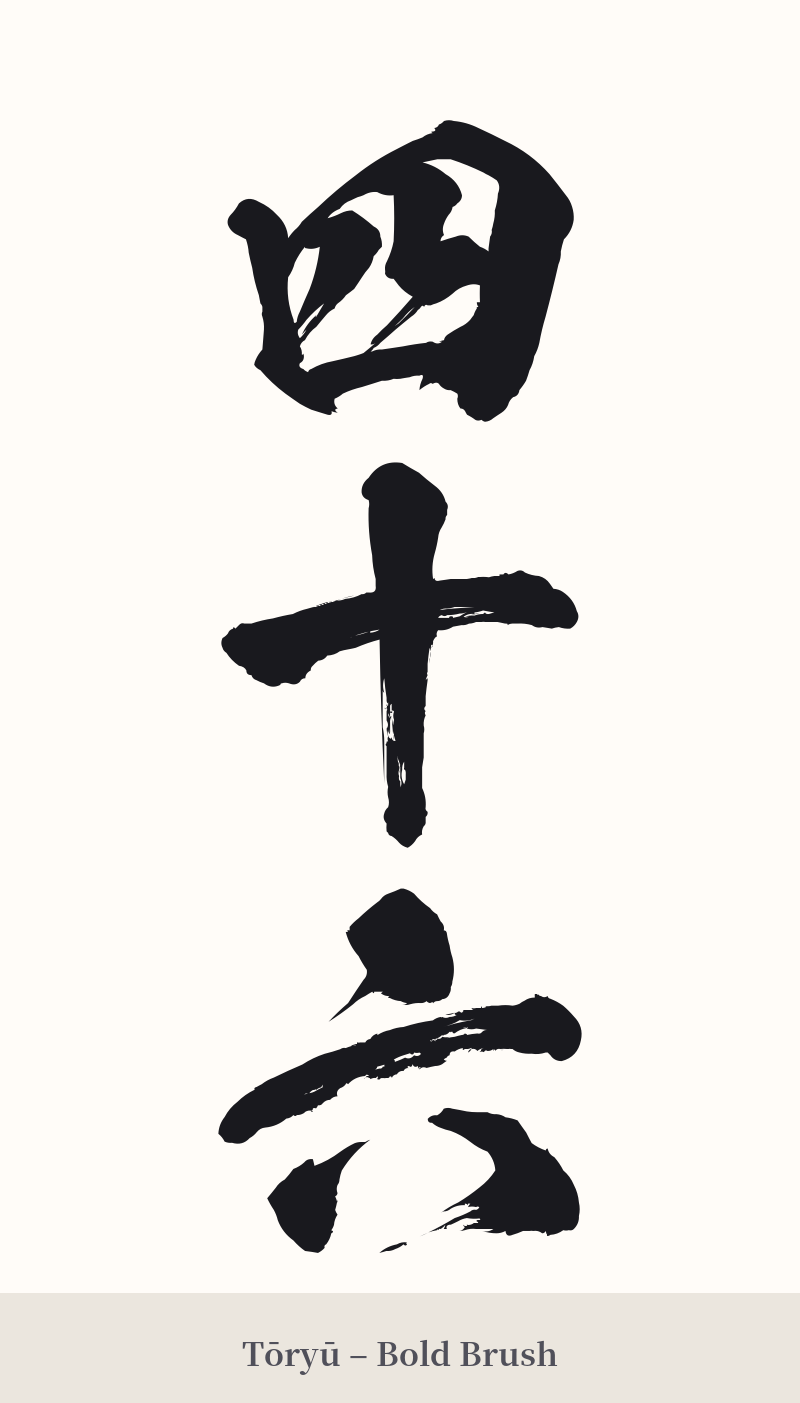
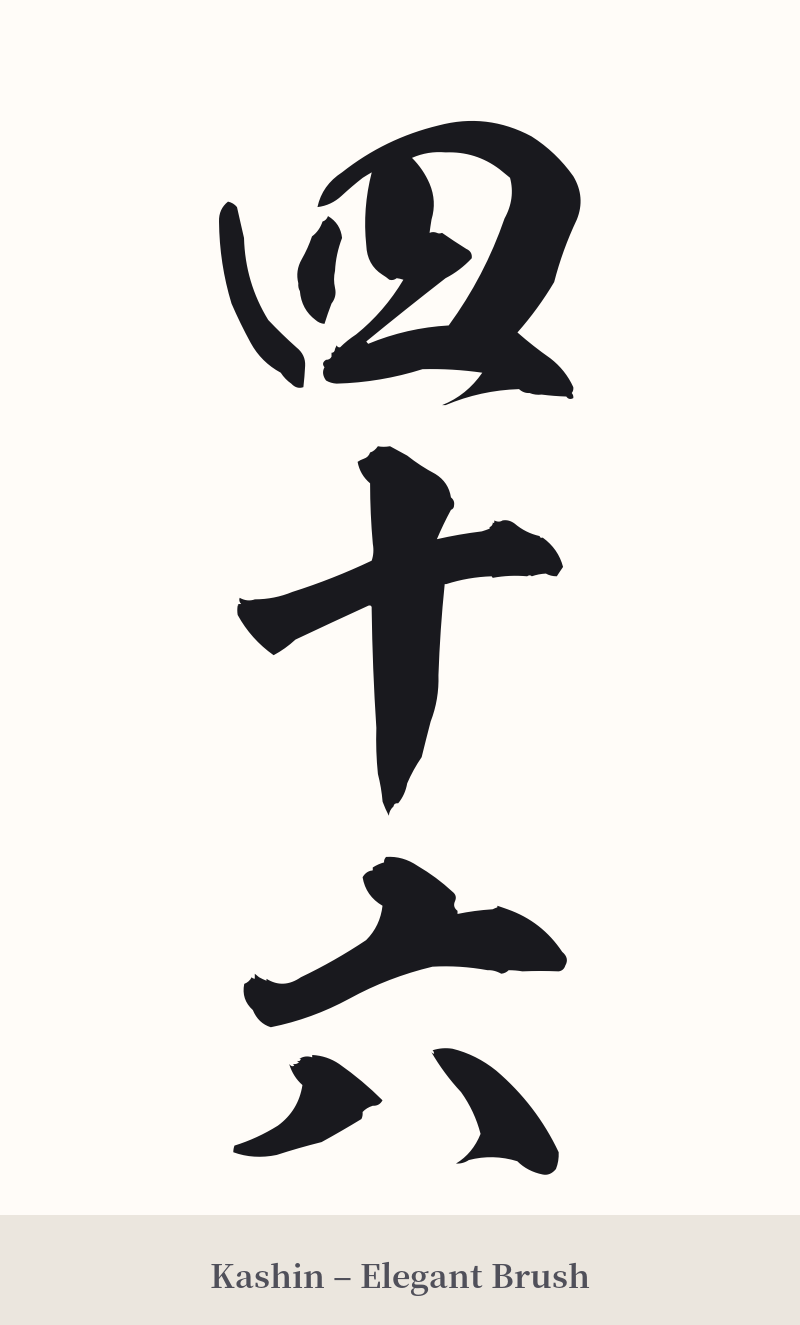
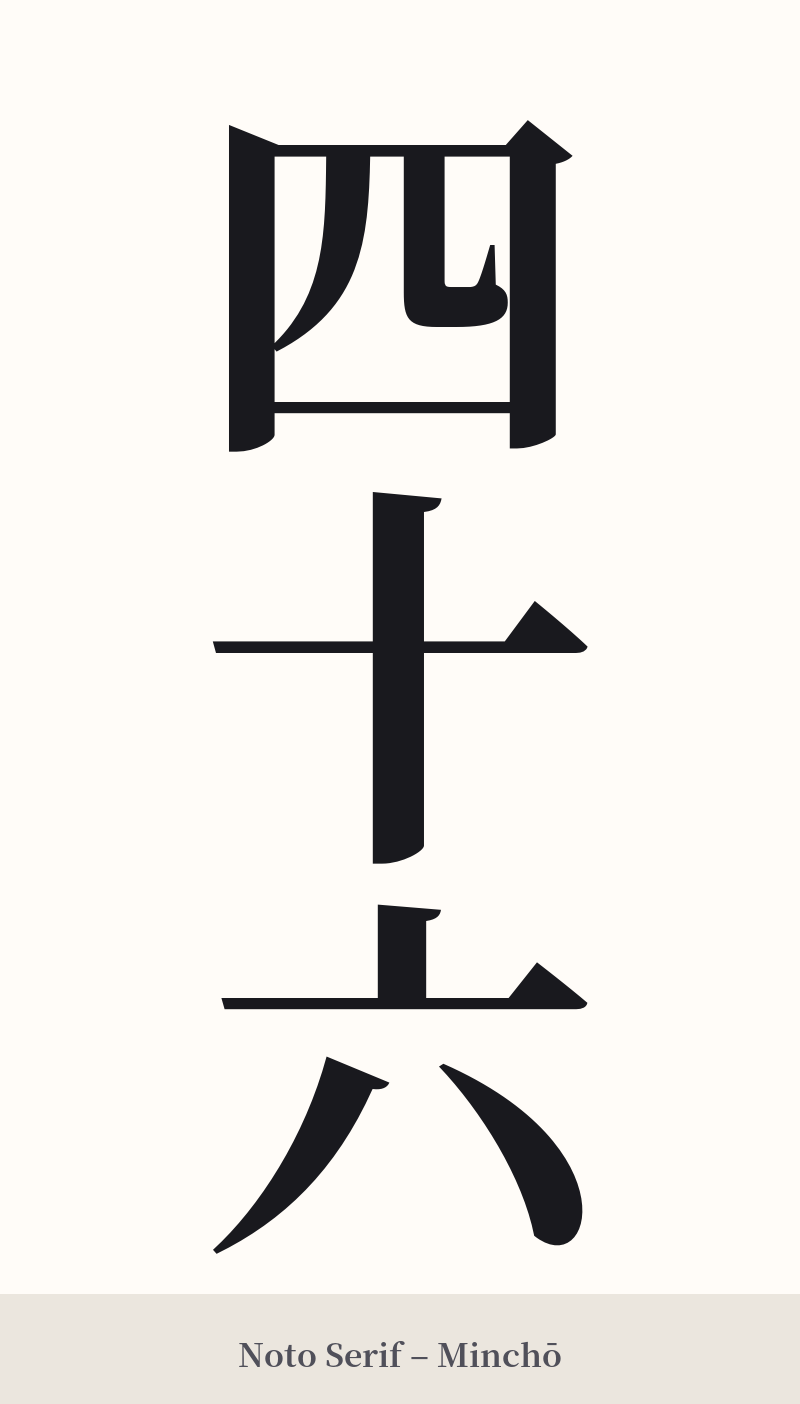
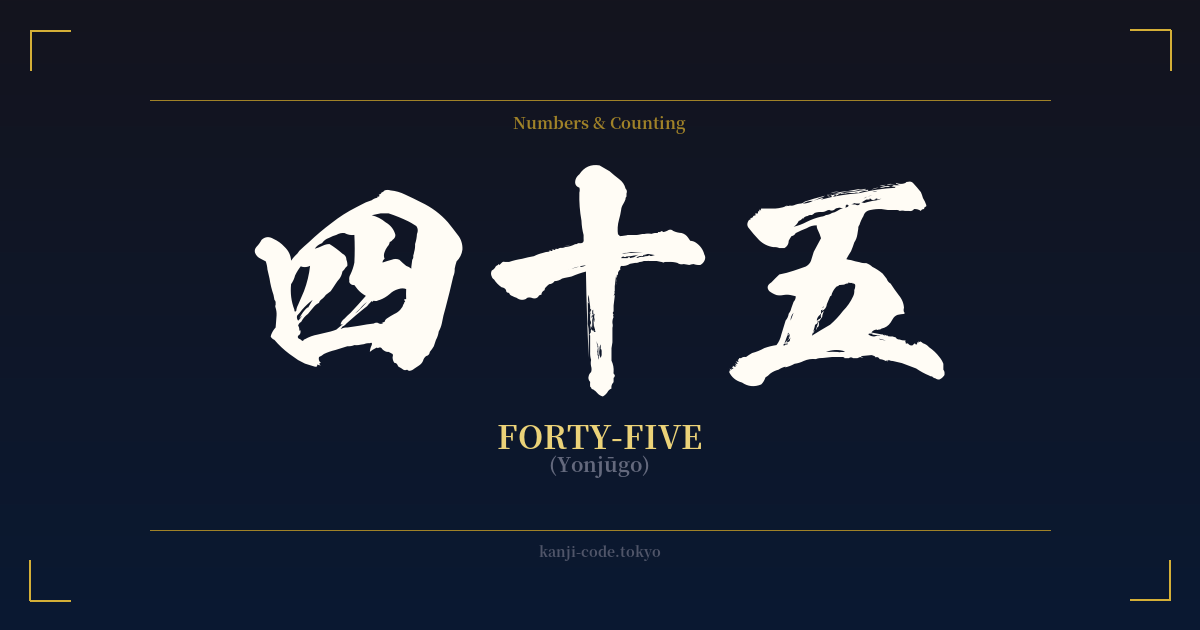
🖌️ Font Styles for 四十六
The same kanji can look dramatically different depending on the calligraphy style. Choose a font that matches the mood you want for your tattoo or design.
🎨 Tattoo Suitability
📐 Tattoo Design Guide
If you have a strong personal reason to tattoo the number forty-six, the design can be approached with simple elegance. The three-character structure lends itself well to a vertical composition, which is a classic orientation for Japanese script.
– Placement: A vertical design looks striking on the forearm, the back of the calf, or running parallel to the spine. For a more subtle approach, a horizontal arrangement could work on the inner bicep or across the collarbone.
– Font Style: A traditional 'Kaisho' (block) script will provide clarity and a timeless feel. For a more fluid and artistic look, a 'Gyosho' (semi-cursive) style can connect the characters slightly, adding a sense of movement. Avoid overly complex or abstract fonts that could obscure the simple nature of the characters.
– Visual Tips: Because the meaning is literal, consider incorporating it into a larger design that explains its significance to you. For example, if it represents a year ('46), it could be part of a design that symbolizes events from that time. Standing alone, its beauty lies in its simplicity.
Comments