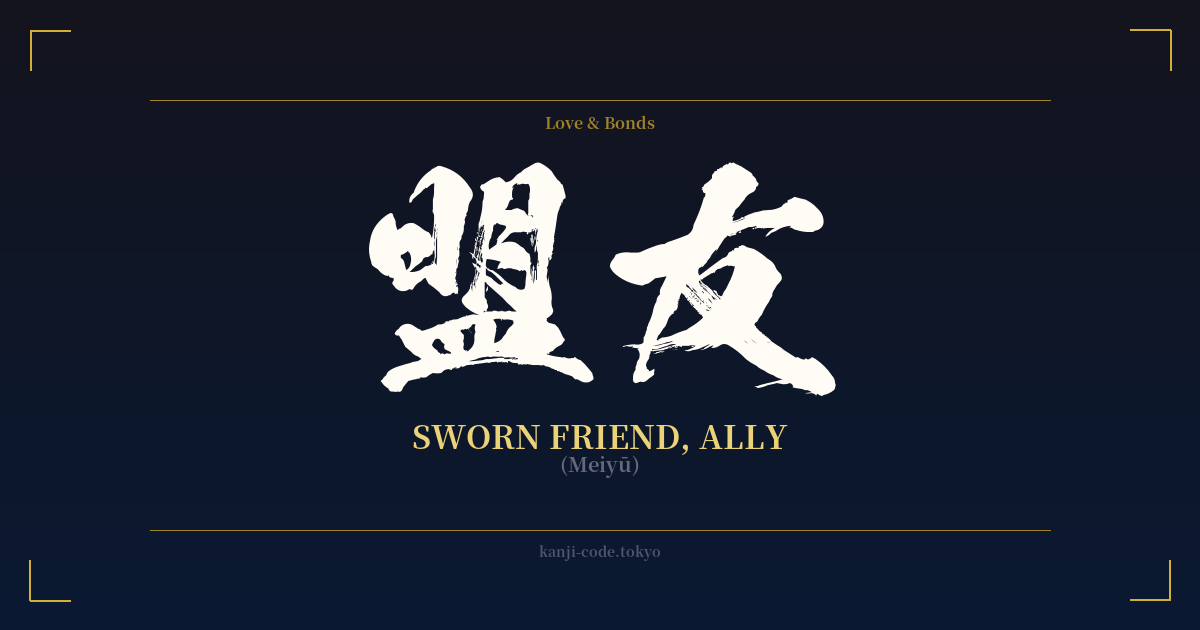
✍️ 盟友 (Meiyū) — Cultural Context
The Japanese language has many words for 'friend,' but 盟友 (Meiyū) stands in a class of its own. While 友達 (tomodachi) refers to a friend, and 親友 (shin'yū) denotes a best friend, 盟友 elevates the relationship to a sacred pact. It translates to 'sworn friend' or 'ally,' implying a bond forged not just by affection but by a solemn oath, whether spoken or unspoken.
The power of this word lies in its first character, 盟 (mei). Its etymology reveals a deep history of ritual and commitment. The character is composed of elements representing the moon (月) and a dish (皿), evoking ancient ceremonies where oaths were sealed by drinking from a shared vessel, often at night. This act symbolized a binding promise, an alliance that could not be broken.
This concept of a sworn alliance resonates deeply within Japanese history and culture, particularly in stories of samurai who pledged unwavering loyalty to their lords and to each other. Such bonds were a matter of life and death, built on mutual respect, shared purpose, and absolute trust. This archetype is a cornerstone of Japanese storytelling, from classic literature to modern manga and anime.
Think of the iconic duos in popular series who would sacrifice anything for each other. Their relationship is the very essence of 盟友. They are more than just friends; they are partners in a shared destiny, allies who face every trial together. This isn't a casual term you'd use for a coworker or a classmate. It is reserved for that one person you would trust with your life.
In contemporary Japan, while not used in everyday conversation, 盟友 retains its powerful, formal weight. It appears in literature, historical dramas, and speeches to describe profound partnerships in politics, business, or personal struggle. It signifies a bond that has been tested and proven, a relationship defined by unwavering support and a shared soul. To call someone your 盟友 is to declare them an indispensable part of your journey, a true comrade-in-arms.
🖌️ Font Styles for 盟友
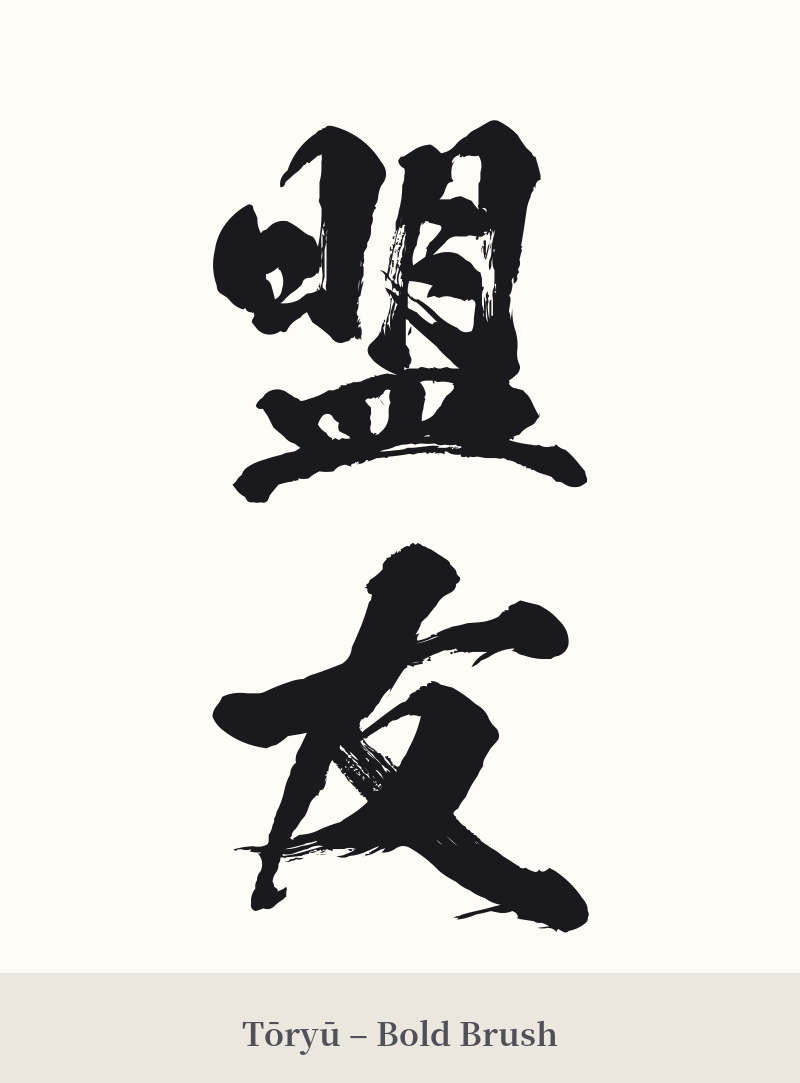
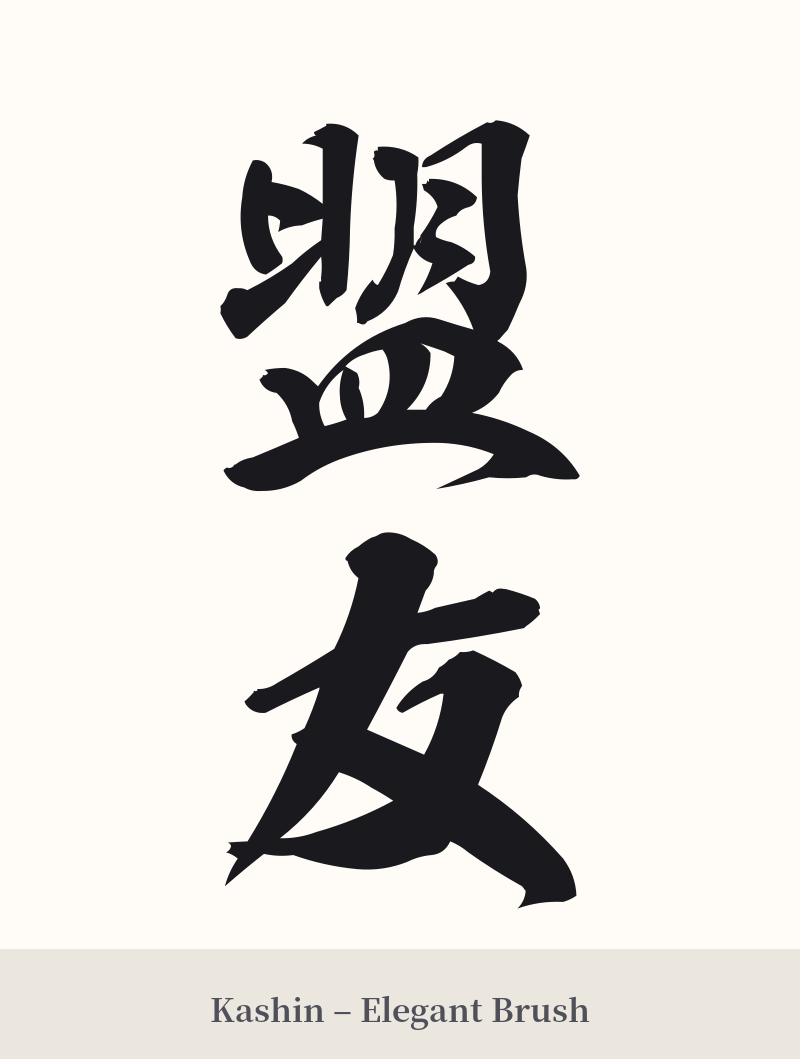
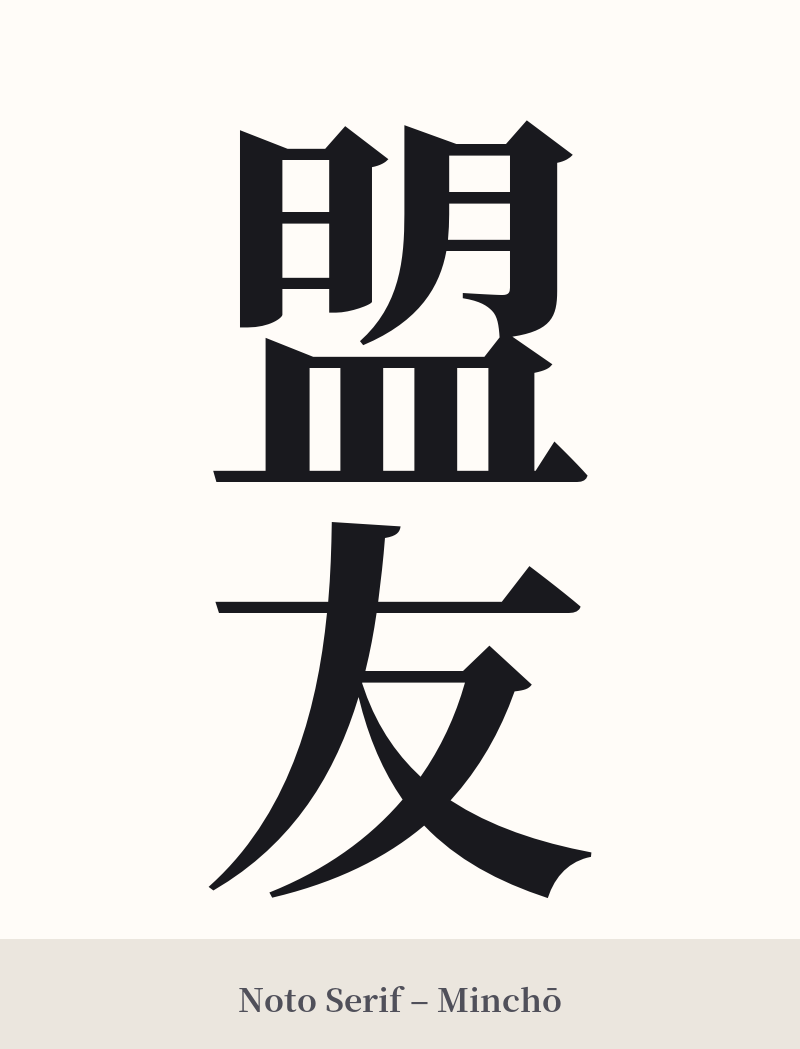
The same kanji can look dramatically different depending on the calligraphy style. Choose a font that matches the mood you want for your tattoo or design.
🎨 Tattoo Suitability
📐 Tattoo Design Guide
A 盟友 (Meiyū) tattoo is a powerful statement about loyalty and unbreakable bonds. The design should reflect this strength and solemnity.
– Placement: Vertical placement works beautifully, allowing the characters to flow down the arm, leg, or along the spine. For a horizontal design, the chest or upper back provides a strong, stable canvas.
– Font Style: A bold, semi-cursive calligraphy style (gyōsho) can capture the blend of history and personal commitment. For a more formal and solid look, a standard block script (kaisho) emphasizes the strength of the oath. Avoid overly thin or ornate fonts that might detract from the characters' inherent power.
– Visual Tips: The visual contrast between the intricate 盟 and the simple 友 is a key feature. A good design will balance these two, giving each character equal weight. Consider incorporating a subtle element that represents the specific bond, like a stylized seal (hanko) or a small symbol meaningful to the two friends, placed near the kanji.
Comments