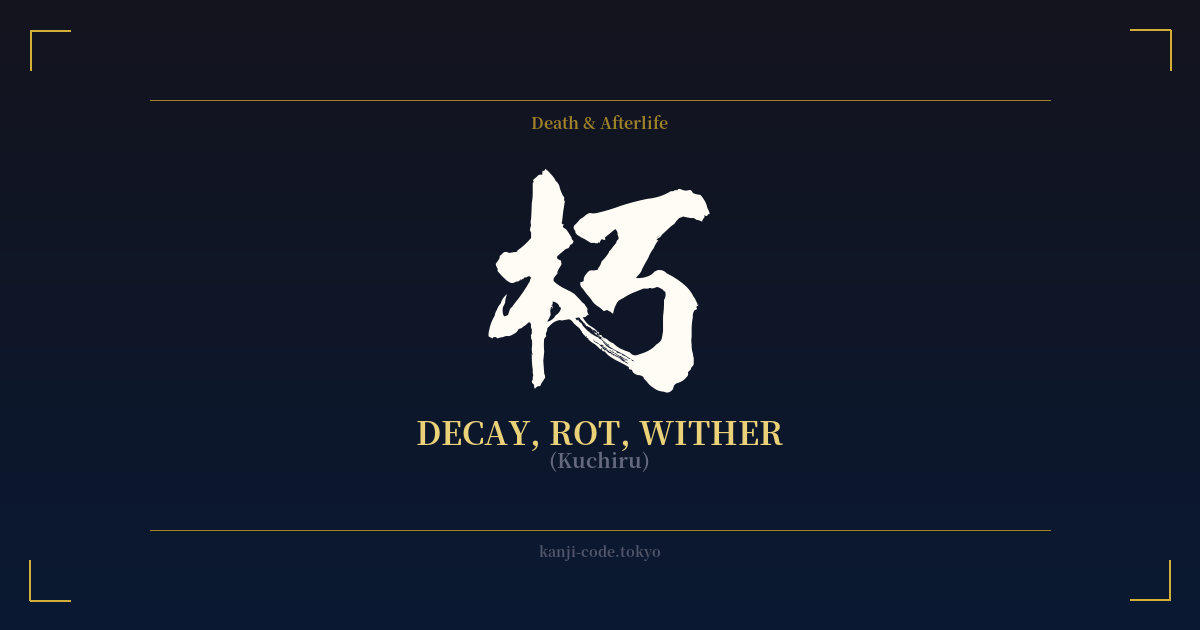
✍️ 朽 (Kuchiru) — Contexto cultural
El kanji 朽, que se lee como 'kuchiru', posee una fascinante doble identidad en la cultura japonesa. A primera vista, su significado es sencillo y algo sombrío: pudrirse, descomponerse, marchitarse. Compuesto por los radicales de 'árbol' (木) y un componente fonético, su origen evoca claramente la imagen de la madera convirtiéndose en polvo.
En el lenguaje cotidiano, 朽 tiene una connotación negativa. Describe un puente con tablones podridos, una casa abandonada con la estructura en ruinas o incluso una idea que ha quedado obsoleta. La palabra 不朽 (fukyū), que significa 'inmortal' o 'que no se descompone', se traduce literalmente como 'que no se descompone', lo que subraya que la decadencia es el estado que se debe evitar.
Sin embargo, detenerse ahí sería pasar por alto su profundo significado cultural. El concepto de 朽 (desgaste) es una piedra angular de la estética japonesa del wabi-sabi (侘寂), la apreciación de la belleza en la imperfección, la impermanencia y la incompletitud. Dentro de esta visión del mundo, el proceso de deterioro no es un final, sino una transformación: un indicador visible del paso del tiempo y la naturaleza transitoria de la vida.
La visión de una linterna de piedra cubierta de musgo (un proceso de descomposición), la madera gris desgastada de un templo antiguo o un tronco caído que regresa a la tierra en un bosque son expresiones de 'kuchiru' consideradas de profunda belleza. Nos recuerdan que todo está en constante cambio, pasando del crecimiento a la descomposición y de vuelta a la tierra. Esta aceptación del ciclo natural es un principio fundamental del budismo zen, que influyó notablemente en el wabi-sabi.
En la literatura y el arte, 朽 se utiliza para evocar una sensación de melancolía (mono no aware), nostalgia y la serena dignidad del envejecimiento. Habla de una belleza que no es vibrante ni novedosa, sino profunda, compleja y adquirida con el tiempo y la experiencia. Es la belleza silenciosa de una flor que se marchita, tan conmovedora a su manera como una flor en plena floración.
Por lo tanto, comprender 朽 es comprender un aspecto clave de la psique japonesa: la capacidad de encontrar un significado profundo no a pesar de la impermanencia, sino gracias a ella. Representa la serena aceptación de que todo debe pasar y que existe una belleza singular y sombría en ese mismo proceso.
🖌️ Estilos de fuente para 朽
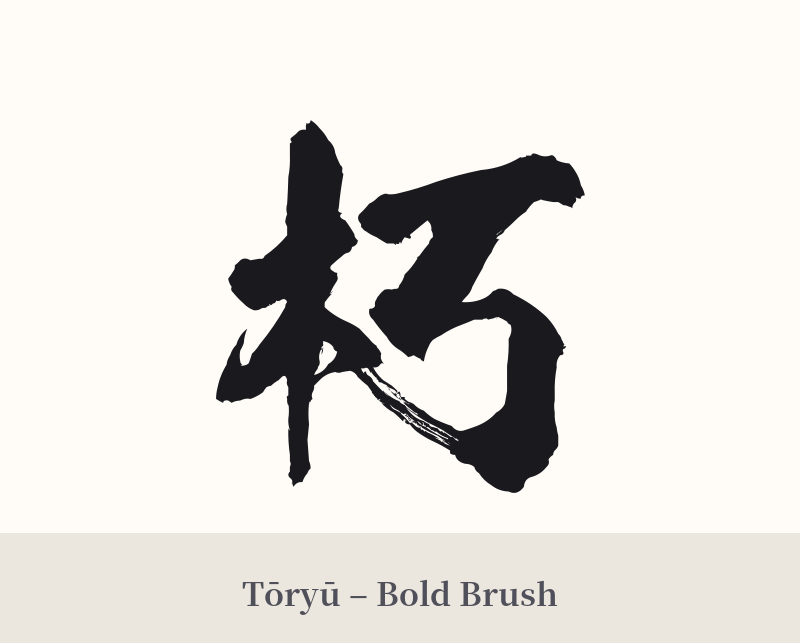
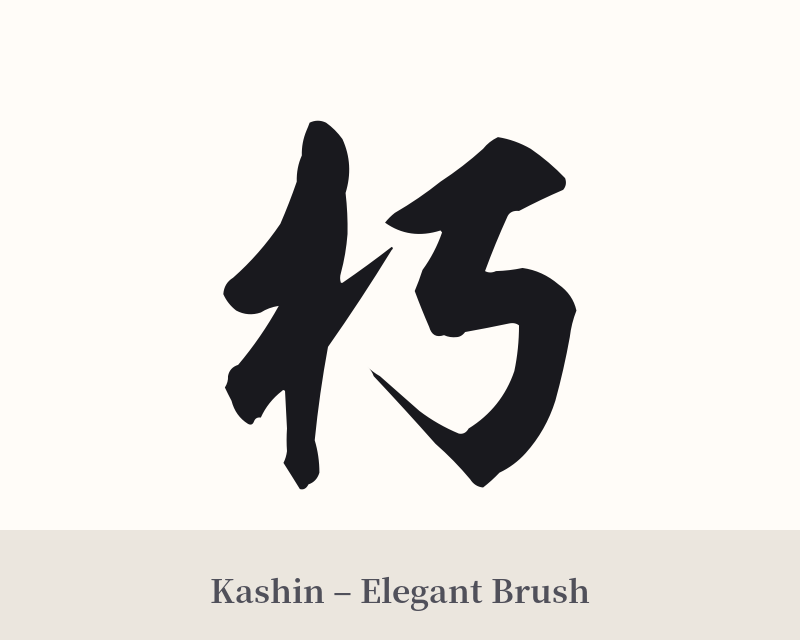
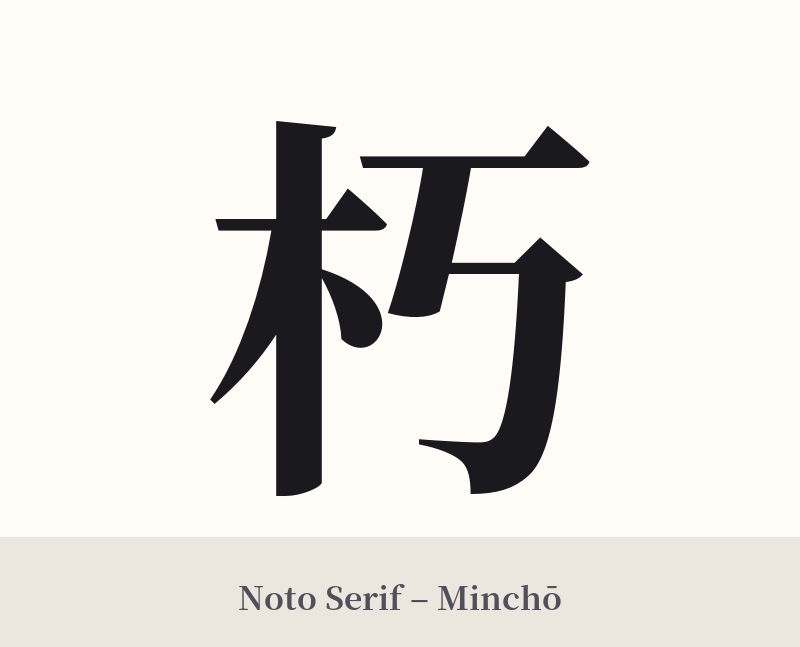
Los mismos caracteres kanji pueden verse muy diferentes según el estilo de caligrafía. Elige una fuente que se ajuste al ambiente que deseas para tu tatuaje o diseño.
🎨 Idoneidad para tatuajes
📐 Guía de diseño de tatuajes
El kanji 朽 ofrece una oportunidad de diseño minimalista pero profunda, ideal para quienes aprecian su profundidad filosófica.
– Ubicación: Considere ubicaciones que sugieran una historia o un viaje. El antebrazo permite un diseño claro y legible. A lo largo de las costillas o la columna vertebral se puede crear una declaración más íntima y personal. La parte posterior de la pantorrilla o el tobillo conectan la idea de la descomposición con la tierra.
– Estilo de fuente: La elección de la fuente es crucial. Un estilo caligráfico tosco y semicursivo (Gyosho) puede imitar la textura de la madera desgastada o la piedra desmoronada. Por el contrario, una fuente sobria y limpia al estilo Mincho puede enfatizar la naturaleza tranquila y minimalista del concepto.
– Consejos visuales: Para realzar el significado, considere integrar elementos sutiles. Podría hacer que los trazos parezcan agrietados o desgastados. Otra idea poderosa es colocar 朽 cerca de un símbolo de vida, como una hoja verde o una flor en plena floración, para representar el ciclo completo de la vida y la decadencia.
Comentarios