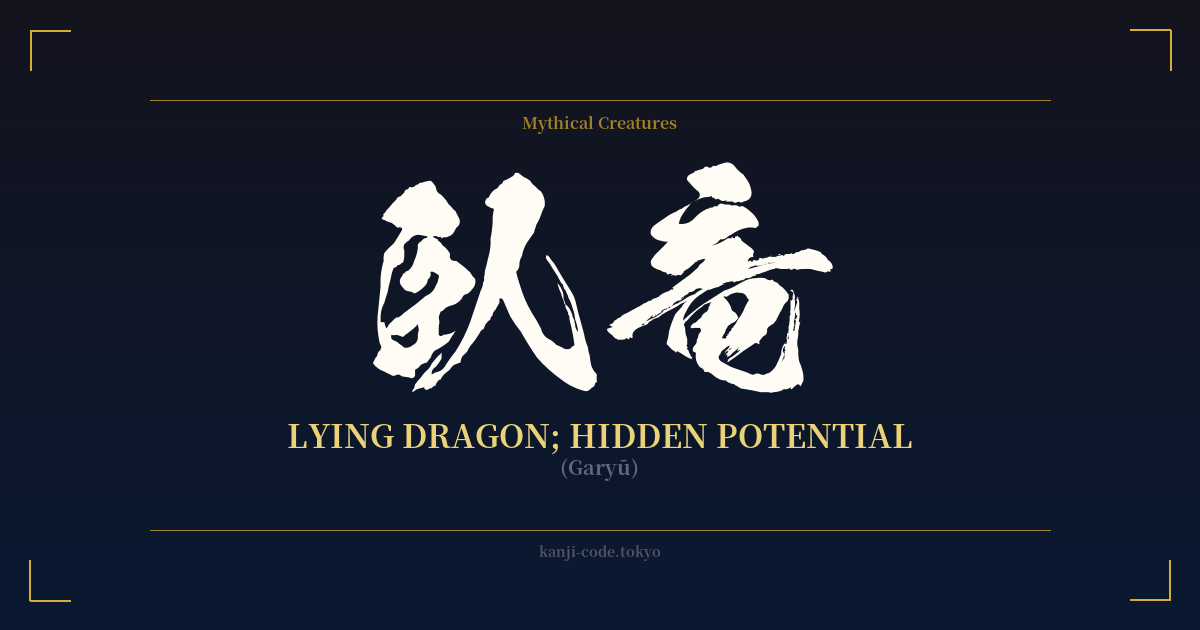
✍️ 臥竜 (Garyū) — Contexto cultural
Garyū es un término que evoca una fuerza silenciosa y un potencial inmenso aún por explotar. Su traducción literal es “Dragón Acostado” o “Dragón Agazapado”, y es una poderosa metáfora de una persona con un talento o genio extraordinario que permanece en el anonimato, cuyas habilidades aún no se han revelado al mundo. Representa al artista brillante que aún no ha sido descubierto, a la mente estratégica que espera una causa, al futuro líder que vive una vida sencilla.
El origen de este término está profundamente arraigado en la historia y la literatura chinas, y se asocia principalmente con Zhuge Liang, el legendario estratega del período de los Tres Reinos (220-280 d. C.). Antes de convertirse en el consejero indispensable del caudillo Liu Bei, Zhuge Liang vivió recluido en el campo. A pesar de su juventud y anonimato, su sabiduría era conocida por unos pocos elegidos, quienes lo llamaban 臥龍 (wòlóng, lectura china), o “Dragón Durmiente”. El nombre implicaba que era una figura de inmenso poder, que simplemente esperaba el momento oportuno —y al maestro adecuado— para despertar y transformar el mundo.
Esta historia y su término asociado fueron rápidamente adoptados por la cultura japonesa, donde encontraron cabida en la tradición samurái, los relatos históricos y la ficción moderna. El concepto de un genio oculto que espera el momento oportuno se alinea perfectamente con las virtudes tradicionales de la paciencia, la modestia y la importancia de reconocer el verdadero valor más allá de las apariencias. El dragón, o 竜 (ryū), es un símbolo de poder celestial, sabiduría y buena fortuna en Asia Oriental, un marcado contraste con las bestias malévolas que escupen fuego de la mitología occidental. La combinación de esta criatura venerada con el carácter para tumbarse, 臥 (ga), crea una vívida imagen de energía latente y contenida.
En el Japón moderno, 臥竜 se utiliza para describir a cualquier persona con un potencial formidable, aunque aún no descubierto. Un estudiante callado que saca las mejores notas en todos los exámenes, un joven atleta con un talento innato pero aún por pulir, o un empleado innovador cuyas brillantes ideas pasan desapercibidas: todos pueden considerarse Garyū. La palabra conlleva un sentimiento de respeto y expectación, la creencia de que el “dragón” algún día se alzará y ascenderá a los cielos, revelando su verdadera y magnífica forma.
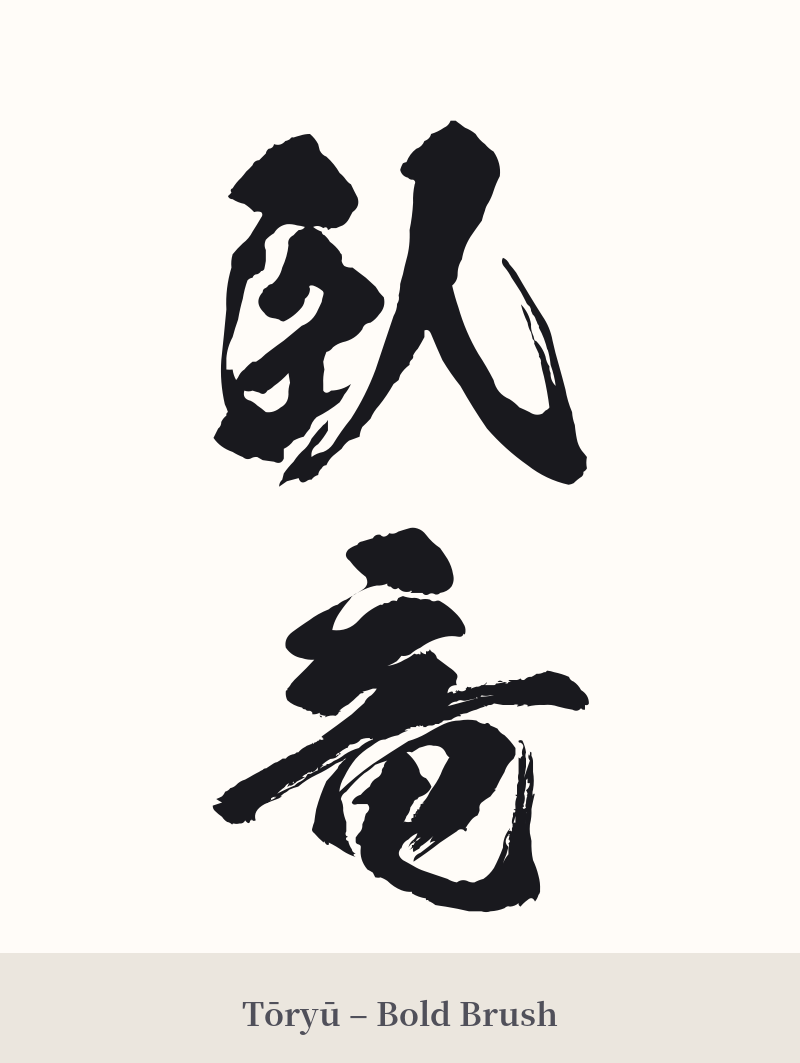
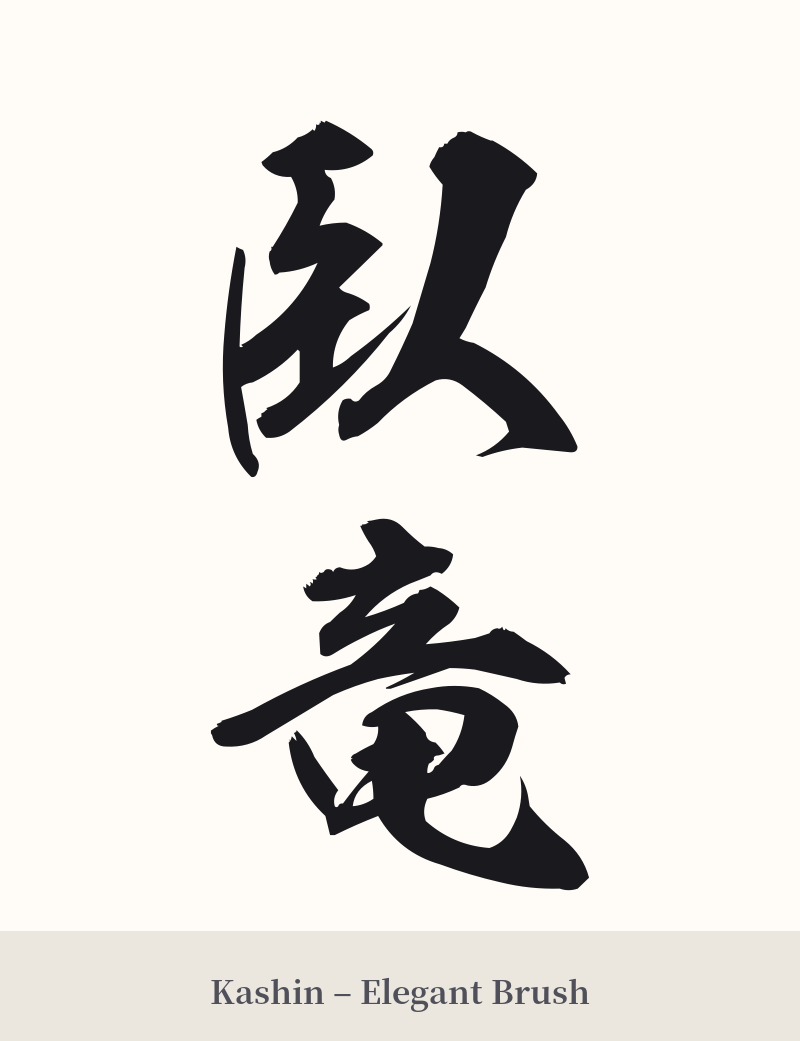
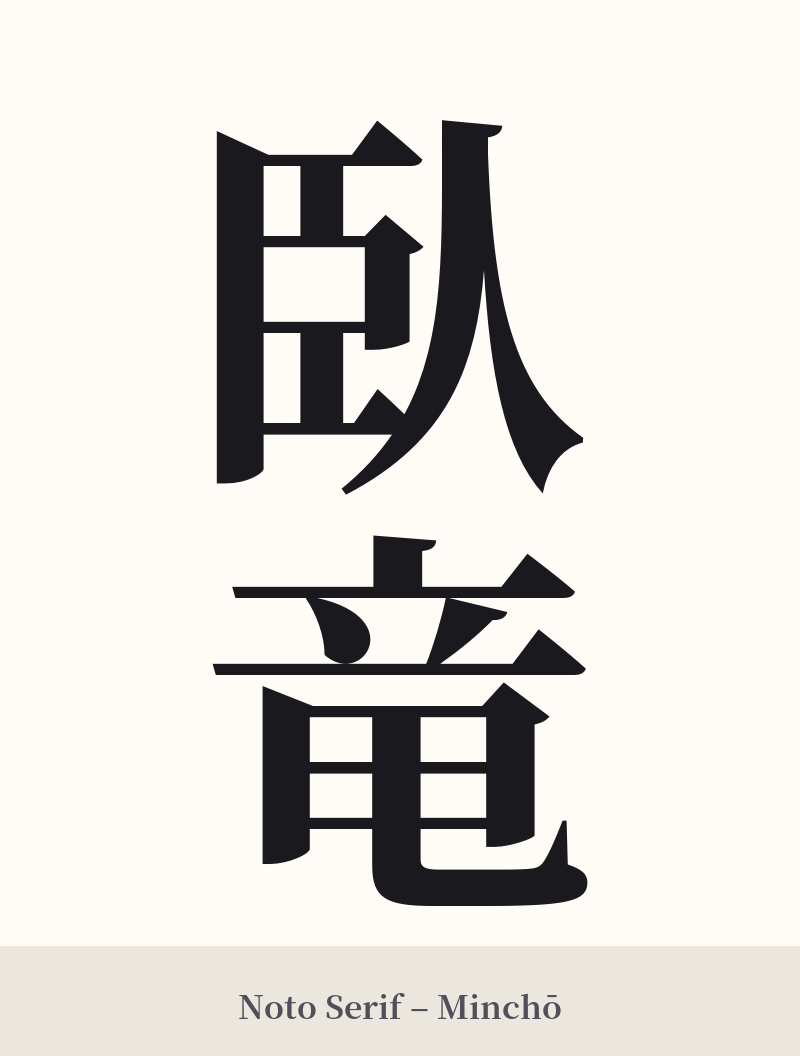
🖌️ Estilos de fuente para 臥竜
Los mismos caracteres kanji pueden verse muy diferentes según el estilo de caligrafía. Elige una fuente que se ajuste al ambiente que deseas para tu tatuaje o diseño.
🎨 Idoneidad para tatuajes
📐 Guía de diseño de tatuajes
Los dos caracteres de 臥竜 (Garyū) ofrecen un diseño equilibrado y estéticamente agradable, lleno de simbolismo.
– Ubicación: La orientación vertical es tradicional y muy recomendable. Luce especialmente llamativa a lo largo de la columna vertebral, el antebrazo o la pantorrilla. Para un diseño horizontal, el pecho o la parte superior de la espalda ofrecen un buen soporte.
Estilo: Para lograr un dinamismo que capture la energía contenida del dragón, considere una caligrafía semicursiva (gyōsho) o cursiva (sōsho). Estas escrituras fluidas evocan movimiento y potencial. Para una apariencia más sólida y firme, una escritura audaz y de líneas gruesas (kaisho) enfatiza la fuerza y la contundencia del poder oculto.
– Elementos visuales: Si bien 臥竜 tiene un gran impacto por sí solo, puede combinarse con imágenes. Una ilustración sutil y minimalista de un dragón enroscado o dormido, integrada con los kanji, puede realzar el tema. Asegúrese de que la ilustración no eclipse los caracteres, que deben seguir siendo el punto central.
Comentarios