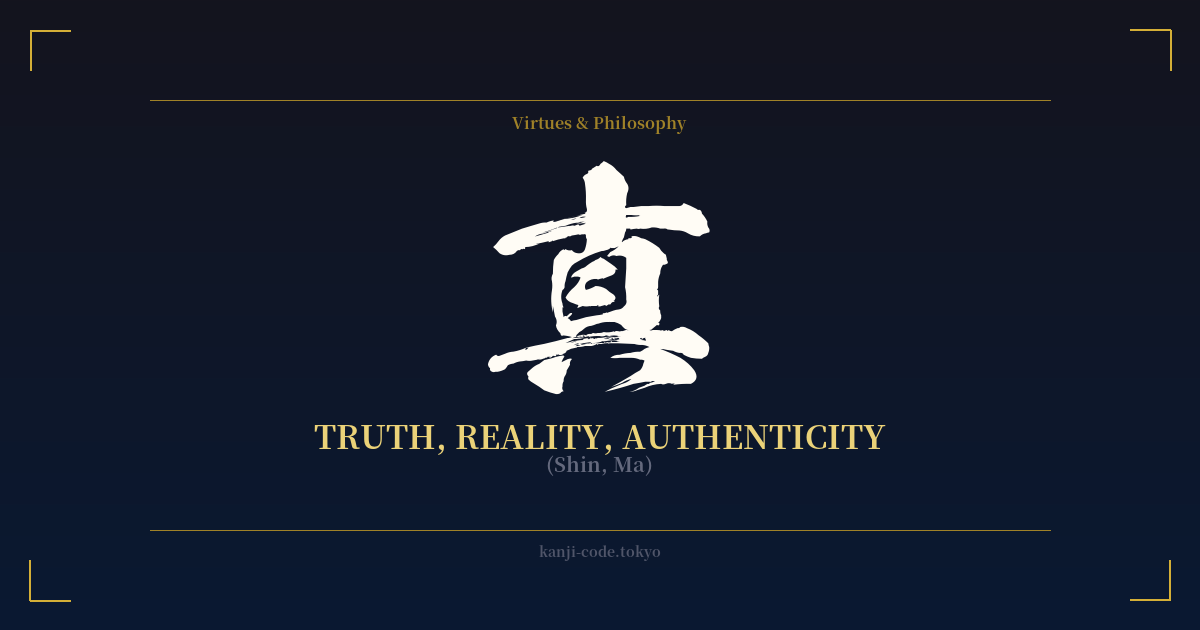
✍️ 真 (Shin, Ma) — Contexto cultural
En la compleja dinámica de la sociedad japonesa, los conceptos de 本音 (honne), los verdaderos sentimientos, y 建前 (tatemae), la fachada pública que se presenta, son esenciales para mantener la armonía social. Esta distinción facilita las interacciones fluidas, pero también crea un espacio donde lo que se siente y lo que se muestra pueden diferir. El kanji 真 (shin) se opone radicalmente a esta dualidad. Representa una verdad absoluta y sin adornos: la realidad que existe más allá de la actuación y la obligación social.
真 es el artículo genuino. Es la esencia de palabras como 真実 (shinjitsu), que se refiere a la verdad fáctica de un asunto, y 真理 (shinri), los principios universales que buscan la ciencia y la filosofía. Cuando ves una fotografía, o 写真 (shashin), estás viendo literalmente una 'copia de la verdad', un instante de la realidad capturado y preservado. Este carácter encarna la idea de que, bajo todas las capas de interpretación y presentación, existe una realidad fundamental.
La etimología de 真 contribuye a su profunda naturaleza. Una interpretación antigua representa a una persona fallecida: un cuerpo que ha experimentado su transformación final y ya no puede engañar ni cambiar. Esta imagen austera apunta a la verdad como un estado final e inalterable. Otra teoría sugiere que el carácter originalmente mostraba un cucharón llenando una olla hasta su límite absoluto, simbolizando plenitud y suficiencia. Desde esta perspectiva, la verdad es algo completo y no le falta nada.
Aunque diferentes, ambas historias sobre su origen convergen en una misma idea poderosa: la verdad como esencia última e inmutable. Este concepto resuena profundamente en las tradiciones filosóficas japonesas, incluyendo el Bushido y el budismo zen. Para el samurái, actuar con sinceridad y veracidad era una muestra de honor. En el zen, la búsqueda del "verdadero yo" es fundamental en el camino hacia la iluminación. Por lo tanto, 真 no es solo una idea abstracta; es una cualidad que se debe cultivar, un estado del ser al que aspirar: puro, auténtico y real.
🖌️ Estilos de fuente para 真
Los mismos caracteres kanji pueden verse muy diferentes según el estilo de caligrafía. Elige una fuente que se ajuste al ambiente que deseas para tu tatuaje o diseño.
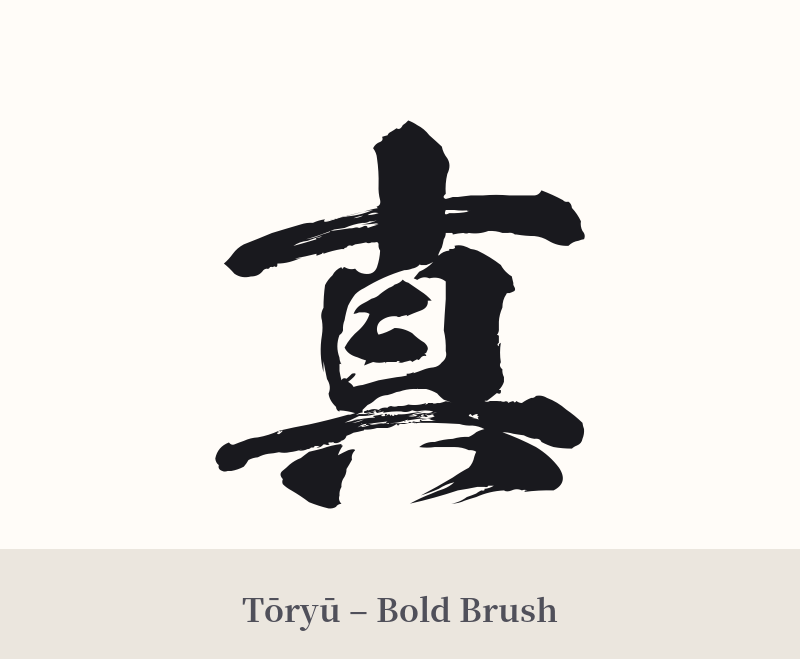
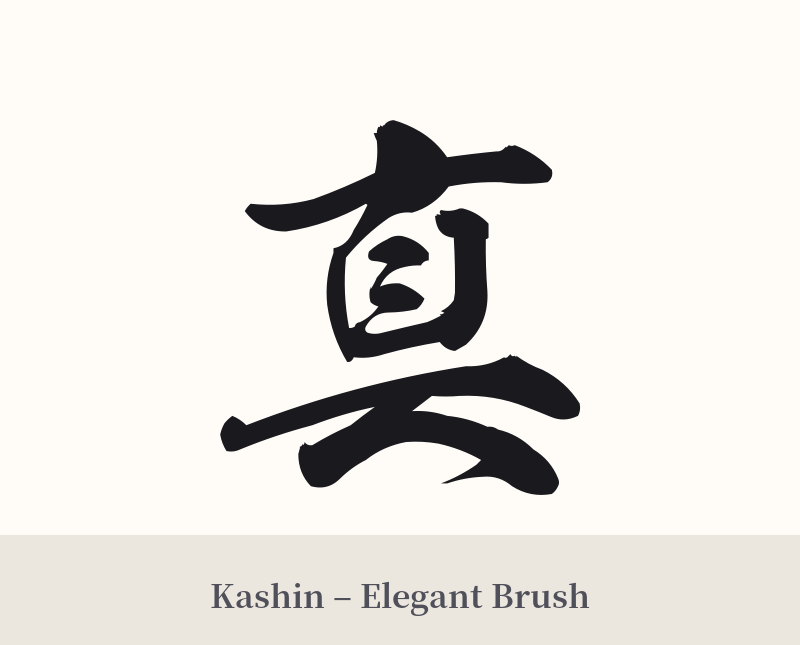
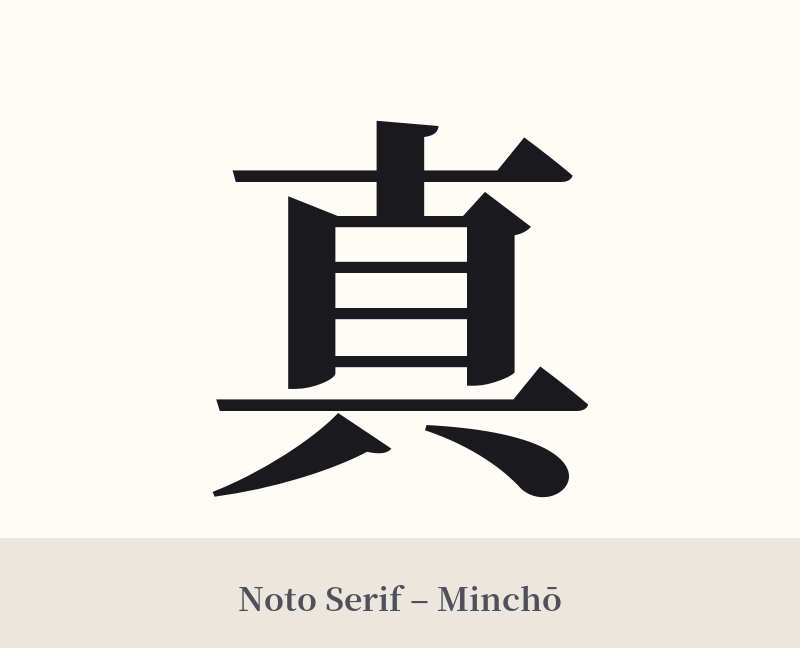
🎨 Idoneidad para tatuajes
📐 Guía de diseño de tatuajes
El kanji 真 transmite un mensaje claro y contundente, lo que lo hace ideal para un tatuaje individual. Su estructura equilibrada permite versatilidad en cuanto a ubicación y estilo.
– Ubicación: Considere áreas donde un solo emblema simbólico tenga un gran impacto, como la parte interna del antebrazo, la nuca justo debajo de la línea del cabello, el centro del pecho o sobre el corazón.
– Estilo de fuente: Un estilo Kaisho (escritura en bloque) audaz y nítido enfatiza el significado de verdad y claridad inquebrantables de los kanji. Para una sensación más personal y fluida, un estilo Gyosho (semicursivo) puede representar el viaje personal de descubrir y vivir la propia verdad.
Consejos visuales: Si bien el símbolo 真 tiene un gran impacto por sí solo, puede integrarse con otros elementos para añadirle significado. Combinarlo con un Enso (círculo zen) puede simbolizar el universo o la búsqueda de la iluminación, donde se encuentra la verdad. Colocarlo dentro o junto a una flor de loto puede representar la pureza y el surgimiento de la verdad a partir del fango de las ilusiones mundanas.
Comentarios