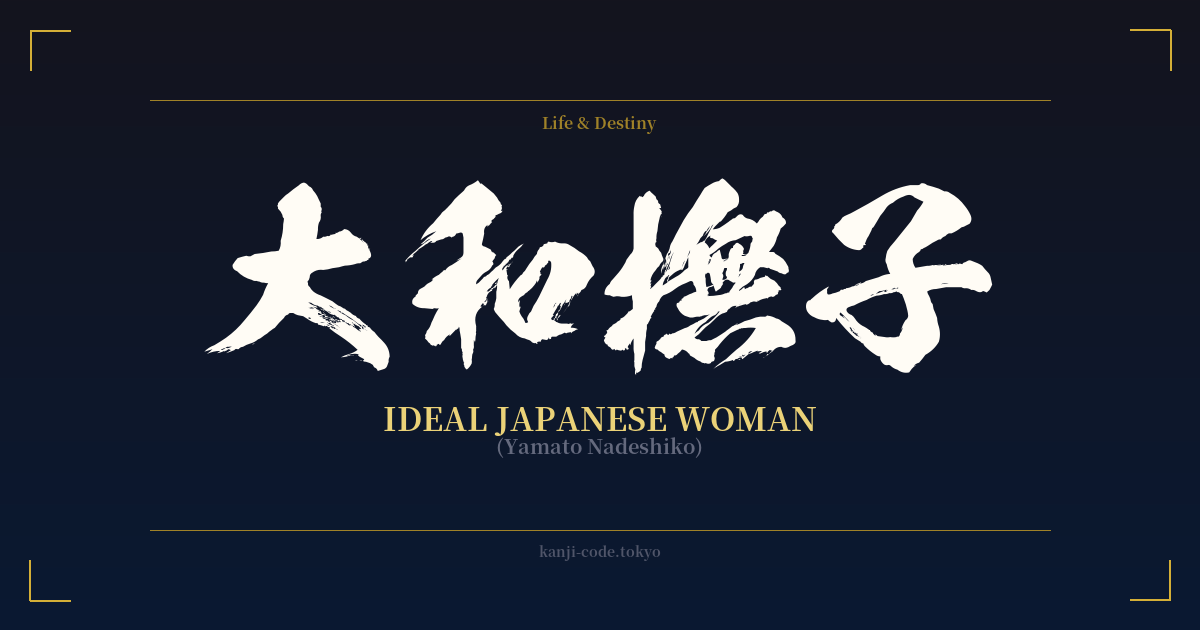
✍️ 大和撫子 (Yamato Nadeshiko) — Contexto cultural
大和撫子 (Yamato Nadeshiko) es un término poderoso y con múltiples significados que representa el ideal tradicional de la feminidad japonesa. A primera vista, combina 'Yamato', un nombre antiguo de Japón, con 'Nadeshiko', el nombre de una flor delicada pero resistente, el Dianthus superbus o clavel de flecos. La flor en sí es simbólica: bella y frágil en apariencia, pero lo suficientemente resistente como para prosperar en condiciones adversas. Esta dualidad es fundamental para el concepto.
La Yamato Nadeshiko no es simplemente una mujer hermosa; encarna virtudes específicas como la modestia, la lealtad inquebrantable, la gracia y la cortesía. Se espera que sea hábil en las tareas domésticas y que administre el hogar con discreta competencia. Fundamentalmente, posee una inmensa fortaleza interior, entereza y una voluntad de hierro, que utiliza para apoyar a su familia, especialmente a su esposo, desde la sombra. Su fortaleza no es ostentosa ni conflictiva, sino resiliente y perdurable.
Históricamente, el concepto se basa en un marco neoconfuciano que cobró protagonismo durante el período Edo, haciendo hincapié en un orden social patriarcal. La mujer ideal era aquella que sacrificaba sus propias necesidades por el bien de la familia y la nación. Era el pilar silencioso que sostenía la sociedad. Esta imagen se romantizó y propagó aún más a través de la literatura, el arte y, finalmente, la ideología estatal, especialmente durante el período de modernización y nacionalismo de Japón a finales del siglo XIX y principios del XX.
En el Japón contemporáneo, el término Yamato Nadeshiko está rodeado de complejidad y debate. Para algunos, sigue siendo un símbolo nostálgico y positivo de la gracia femenina y la fortaleza interior. Sin embargo, para muchos otros, en particular feministas y jóvenes, es una reliquia de un pasado patriarcal. Argumentan que este ideal es restrictivo, ya que coloca a las mujeres en un pedestal solo para limitar su libertad, ambiciones y autoexpresión al ámbito doméstico.
Curiosamente, el término ha sido reivindicado en algunos contextos. El ejemplo más conocido es el de la selección femenina de fútbol de Japón, apodada 'Nadeshiko Japan'. Al adoptar este nombre, recontextualizan el ideal, enfatizando el espíritu 'Nadeshiko' de resiliencia, trabajo en equipo y tenacidad en el competitivo ámbito internacional del deporte, lejos del entorno doméstico tradicional. Este uso moderno pone de manifiesto la continua evolución del término y su lugar controvertido en la cultura japonesa.
🖌️ Estilos de fuente para 大和撫子
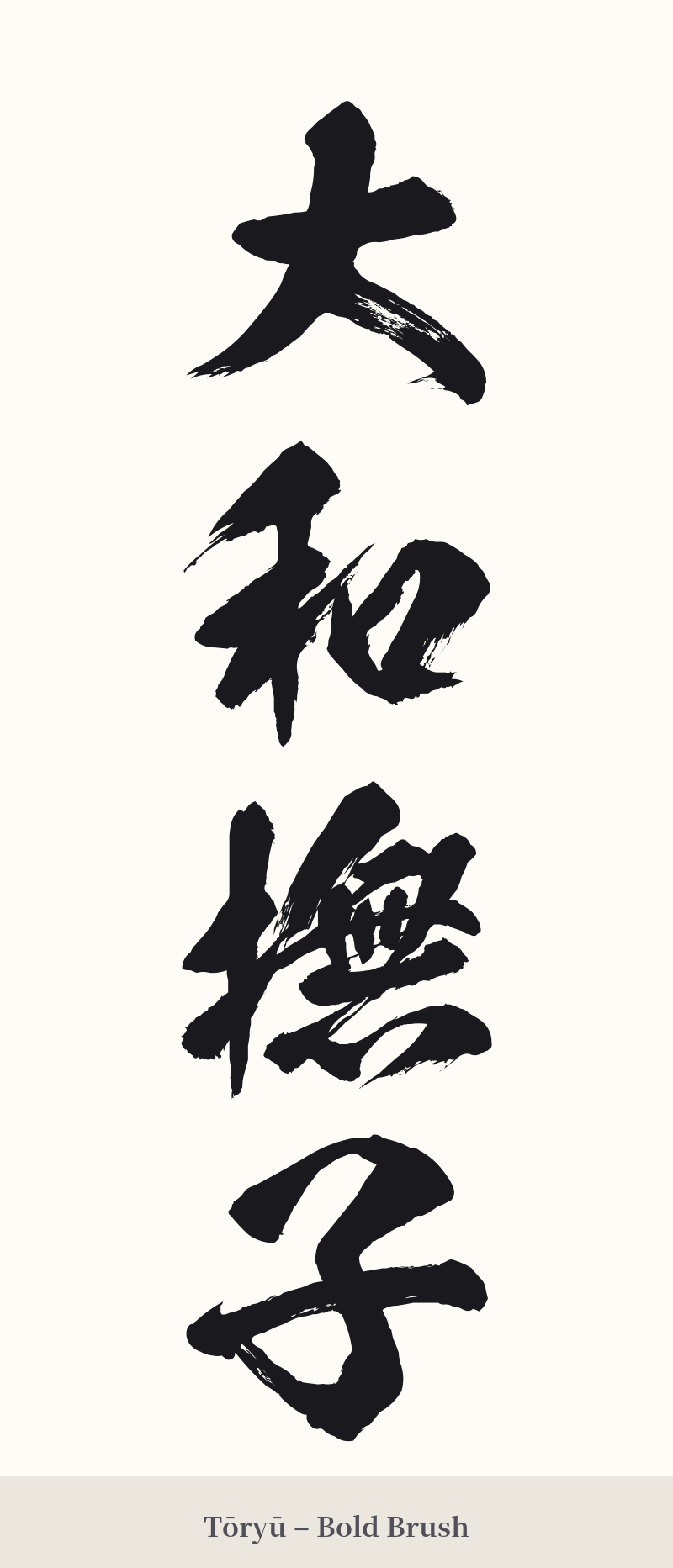
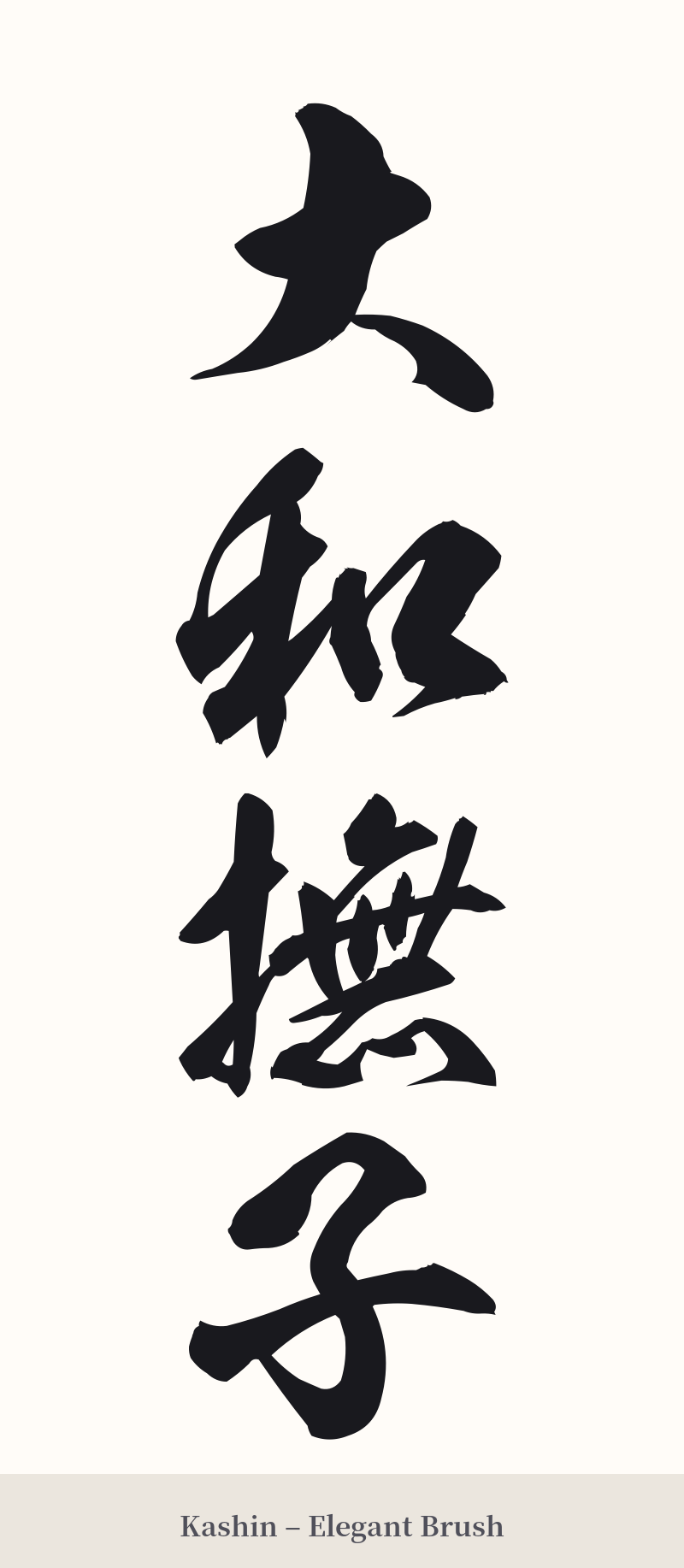
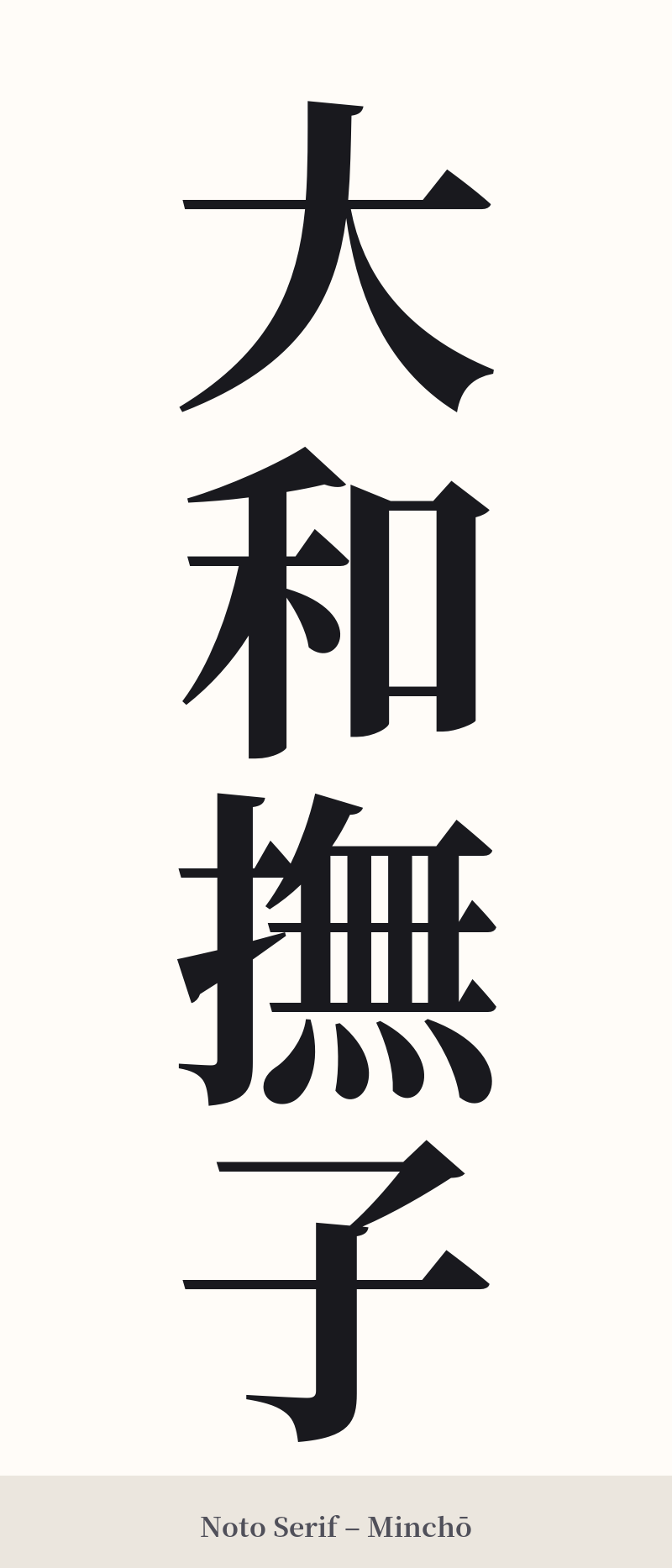
Los mismos caracteres kanji pueden verse muy diferentes según el estilo de caligrafía. Elige una fuente que se ajuste al ambiente que deseas para tu tatuaje o diseño.
🎨 Idoneidad para tatuajes
📐 Guía de diseño de tatuajes
Para un tatuaje de 大和撫子, las opciones de diseño deben reflejar los matices tradicionales y elegantes del término.
– Ubicación: Al ser un símbolo compuesto de cuatro caracteres, se muestra mejor en vertical. Las ubicaciones clásicas incluyen la columna vertebral, el costado de las costillas o la parte interna del antebrazo o la pantorrilla. Esto permite que los caracteres fluyan elegantemente uno tras otro.
Estilo de fuente: Un estilo caligráfico elegante y tradicional es el más apropiado. La tipografía estándar de imprenta (Kaishotai) ofrece claridad y atemporalidad. La tipografía semicursiva (Gyoshotai) puede añadir un toque de gracia y fluidez, reflejando las cualidades femeninas del concepto. Evite las fuentes demasiado agresivas o modernas y estilizadas, ya que desentonarían con el significado de la palabra.
Consejos visuales: El carácter 撫 (nadesu) es bastante complejo, con 15 trazos. El tamaño del tatuaje debe ser el adecuado para evitar que las líneas se difuminen con el tiempo. Un artista experto es fundamental. Considere incorporar una imagen sutil de la flor nadeshiko (una flor rosa con flecos) cerca del kanji para vincular visualmente los significados literal y figurado.

Comentarios