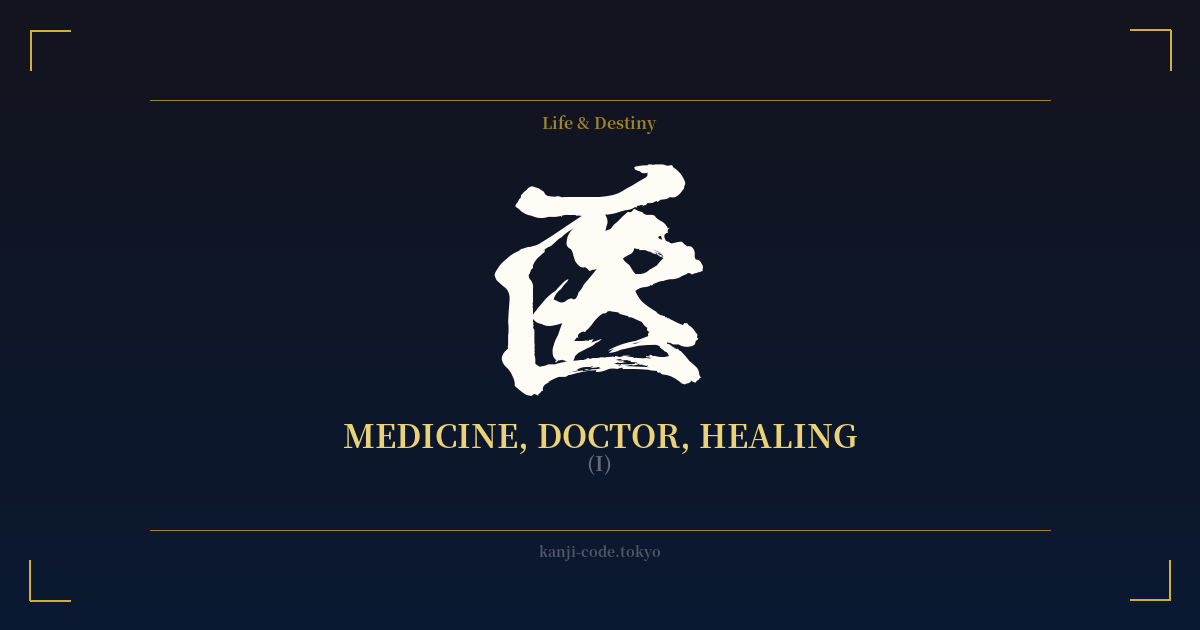
✍️ 医 (I) — Contexto cultural
El kanji 医 (I) es el carácter fundamental de la medicina en la cultura japonesa. Representa no solo la profesión de médico, sino también los conceptos de curación, tratamiento y ciencia médica. Su importancia en la sociedad es inmensa, reflejando el profundo respeto que se les profesa a quienes practican las artes curativas.
El origen del carácter ofrece una visión fascinante de las antiguas concepciones de la medicina. La teoría etimológica más común divide 医 en dos partes. El radical externo, 匚 (hakogamae), representa una caja o recipiente. El componente interno, 矢 (ya), significa 'flecha'. Se cree que esta combinación representa una caja de herramientas, donde la flecha simboliza un instrumento afilado utilizado para el tratamiento, posiblemente incluso una forma primitiva de aguja o lanceta de acupuntura.
Una forma más antigua y compleja del carácter (醫) incluía 酉 (tori), el radical de 'sake' o alcohol, situado en la parte inferior. Esta versión ilustra claramente el uso histórico de brebajes alcohólicos como desinfectantes, anestésicos o bases medicinales. La parte superior de esta forma antigua también contenía elementos que representaban un arma (殳) utilizada para 'golpear' o expulsar la enfermedad, que a menudo se personificaba como un espíritu maligno. Así, la historia del kanji resume un recorrido desde el exorcismo chamánico hasta el uso de herramientas y sustancias medicinales.
En el Japón moderno, 医 es un símbolo de progreso científico, precisión y atención compasiva. Se ve por doquier en el ámbito de la salud. Un médico es un `医者` (isha), la ciencia médica es `医学` (igaku) y la atención médica es `医療` (iryō). El camino para convertirse en médico en Japón es notoriamente riguroso, y la profesión goza de un altísimo prestigio. Por lo tanto, el carácter 医 conlleva el peso de esa confianza y respeto social.
Más allá de su significado literal y clínico, 医 también puede interpretarse a un nivel más personal. Puede representar un camino de sanación, no solo de dolencias físicas, sino también de heridas emocionales o espirituales. Para quien ha superado un gran desafío de salud, o para quien dedica su vida a ayudar a otros a sanar, este kanji puede ser un símbolo poderoso y sutil de su camino. Habla de una fortaleza interior, una dedicación a la recuperación y el deseo humano fundamental de reparar lo que está roto.
🖌️ Estilos de fuente para 医
Los mismos caracteres kanji pueden verse muy diferentes según el estilo de caligrafía. Elige una fuente que se ajuste al ambiente que deseas para tu tatuaje o diseño.
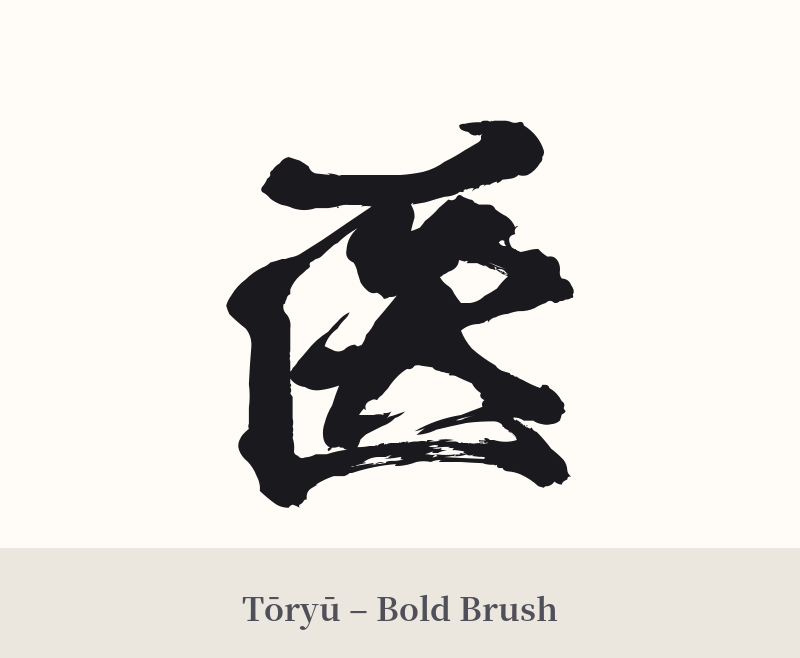
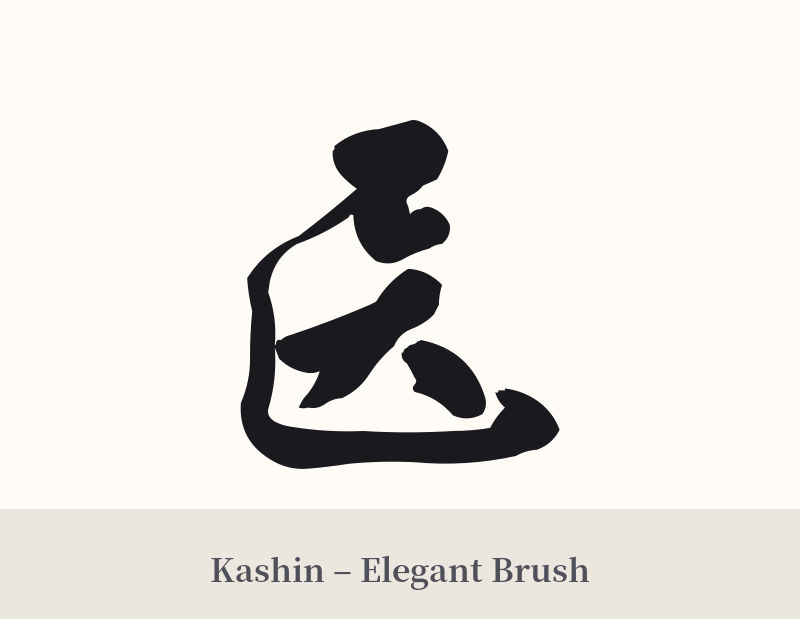
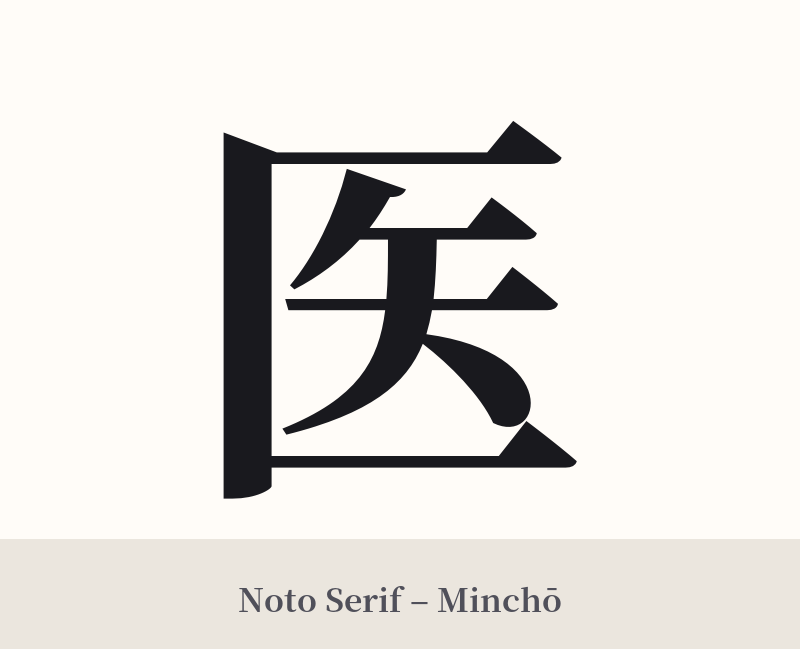
🎨 Idoneidad para tatuajes
📐 Guía de diseño de tatuajes
El kanji 医 se caracteriza por su sencillez y líneas limpias, cualidades que deben guiar cualquier elección de diseño de tatuaje. Su naturaleza directa lo hace versátil, pero se luce especialmente con un enfoque minimalista.
– Ubicación: Gracias a su forma compacta, el 医 funciona bien en lugares pequeños y discretos. Considere la parte interna de la muñeca, el antebrazo, detrás de la oreja o en el tobillo. Para una declaración más llamativa, puede colocarse en la nuca o entre los omóplatos.
– Estilo de fuente: Una tipografía estándar y nítida (Kaisho) enfatiza la conexión del kanji con la ciencia y la precisión. Para una sensación más suave que resalte el aspecto de 'sanación', un estilo semicursivo (Gyosho) puede añadir un toque de fluidez orgánica sin perder legibilidad. Evite las fuentes demasiado decorativas o agresivas, ya que desentonarían con la naturaleza seria y afectuosa del carácter.
– Combinaciones visuales: Si bien el símbolo 医 se sostiene bien por sí solo, puede combinarse con otros elementos para profundizar su significado. Combinarlo con una línea roja podría simbolizar un latido cardíaco (ECG). Colocarlo dentro de un círculo Enso puede representar la culminación de un proceso de sanación. También puede integrarse sutilmente con imágenes como una flor de loto (renacimiento, pureza) o una serpiente, haciendo eco del Bastón de Asclepio, un símbolo occidental de la medicina.
Comentarios