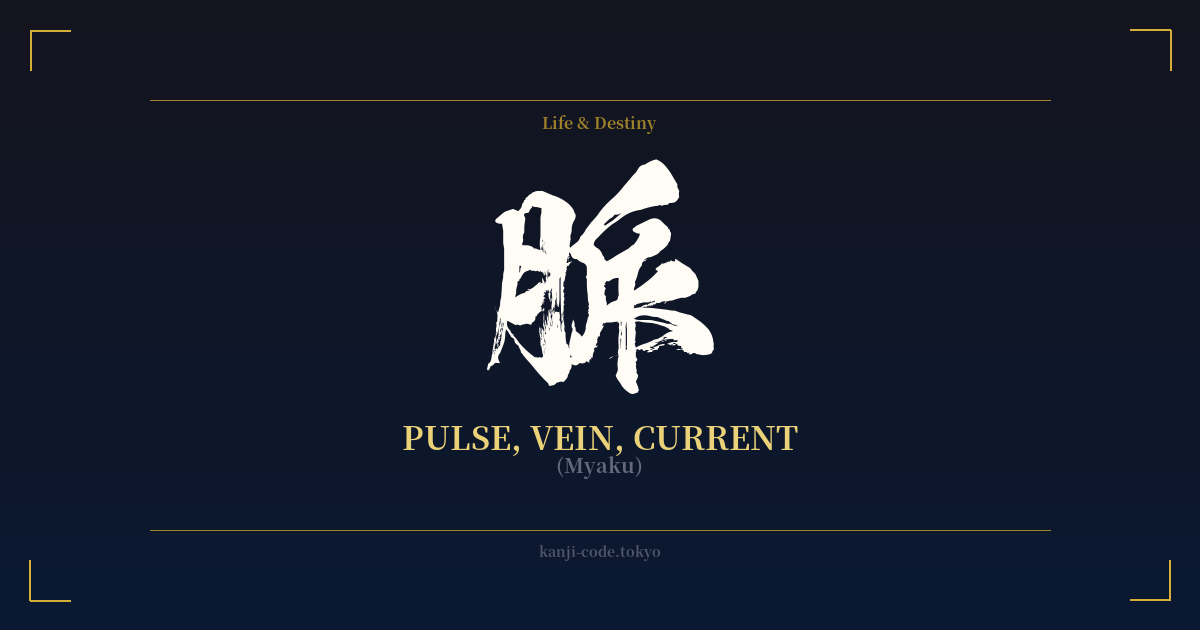
✍️ 脈 (Myaku) — Contexto cultural
El kanji 脈 (myaku) es un carácter que fluye por el corazón mismo del idioma y el pensamiento japonés, conectando el cuerpo físico con las vastas y abstractas corrientes de la vida y la naturaleza.
En su sentido más literal, 脈 se refiere al pulso que late en la muñeca o a las venas que transportan la sangre vital. En la medicina tradicional oriental, tomar el pulso (脈を診る – myaku o miru) no es solo una medición de la frecuencia cardíaca, sino un sofisticado arte diagnóstico que revela el estado de la energía interna, o 'Ki' (気). El médico percibe las sutiles cualidades del pulso para comprender el ecosistema corporal en su totalidad.
El origen del carácter ilustra a la perfección este concepto. Se compone de dos partes: el radical izquierdo 月, una variante de 肉 (niku), que significa 'carne' o 'cuerpo'. El radical derecho es una forma simplificada de 永 (ei), que significa 'eterno' o 'largo' y representa pictográficamente un río ramificado. Juntos, 脈 es el 'río eterno y ramificado dentro del cuerpo', una imagen poderosa y poética del flujo continuo de la vida.
Esta idea de una conexión continua y ramificada se extiende mucho más allá de la anatomía. En japonés, 脈 es la raíz de muchos conceptos importantes. Una cordillera, una cadena continua de picos, es un 山脈 (sanmyaku). Una veta de mineral precioso en la tierra es un 鉱脈 (kōmyaku). El flujo crucial de lógica y significado en un texto es su 文脈 (bunmyaku), o 'contexto'.'
Quizás lo más significativo en la cultura japonesa sea que el carácter japonés 脈 forma la palabra 人脈 (jinmyaku), que se traduce como 'red personal' o 'conexiones'. No se trata de una simple lista de contactos; es una red vital y dinámica de relaciones basada en la confianza y la obligación mutua, considerada esencial para el éxito tanto en los negocios como en la vida personal. Tu jinmyaku es tu salvavidas.
Incluso en el lenguaje cotidiano, el concepto persiste. La frase 脈がある (myaku ga aru), que literalmente significa 'hay pulso', se usa coloquialmente para expresar 'hay una posibilidad' o 'hay esperanza', a menudo en el contexto de un posible romance o un negocio. Si alguien dice 脈がない (myaku ga nai), significa que la situación es desesperada: la vida se ha detenido. Este único carácter, por lo tanto, engloba desde el latido del corazón hasta la red del destino humano, recordándonos que todo forma parte de un flujo interconectado más amplio.
🖌️ Estilos de fuente para 脈
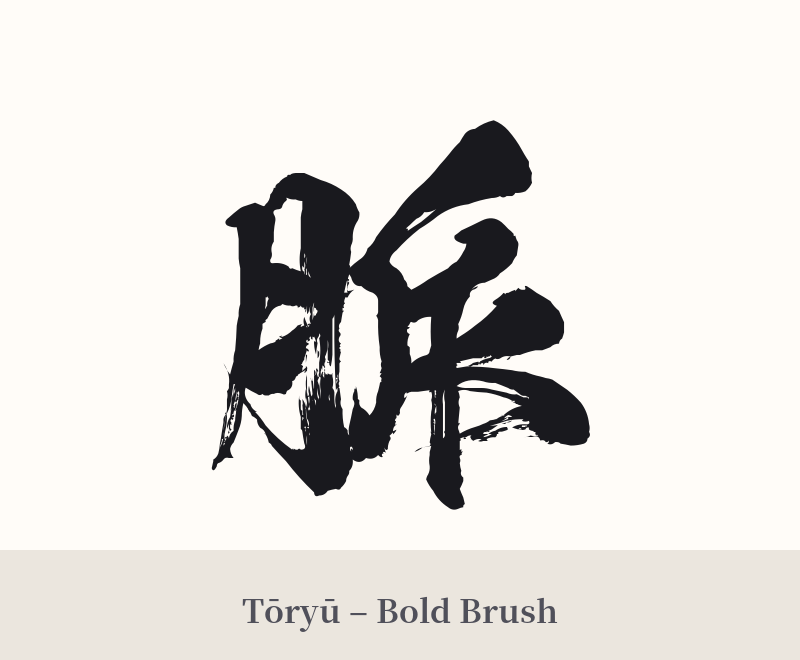
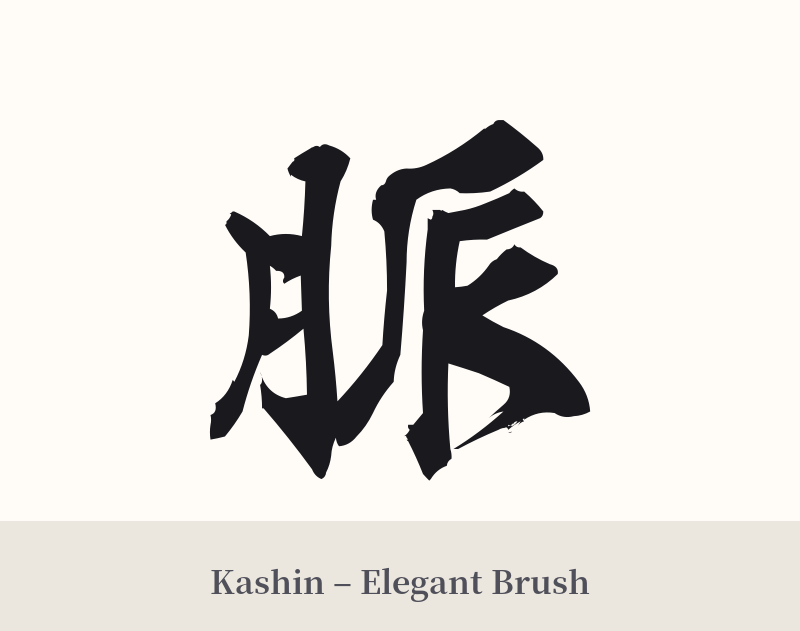
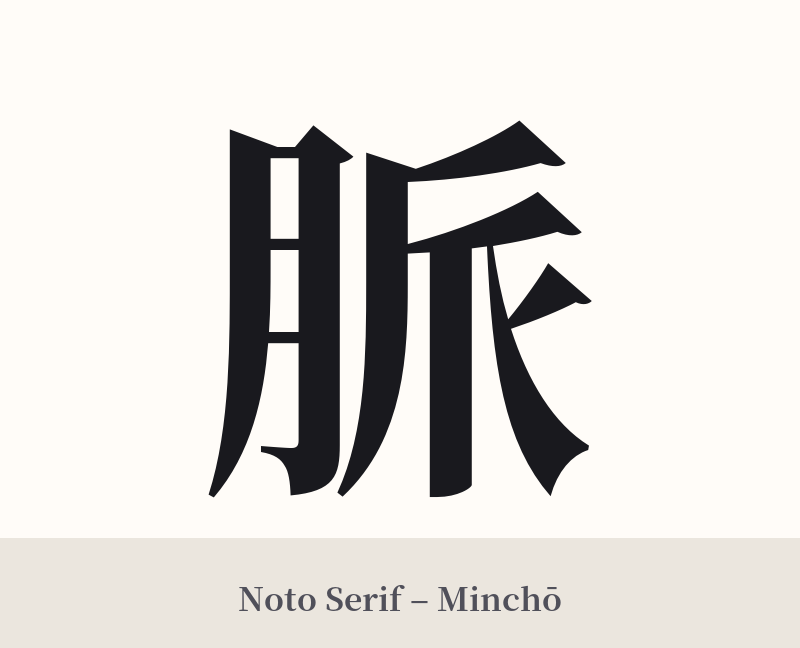
Los mismos caracteres kanji pueden verse muy diferentes según el estilo de caligrafía. Elige una fuente que se ajuste al ambiente que deseas para tu tatuaje o diseño.
🎨 Idoneidad para tatuajes
📐 Guía de diseño de tatuajes
El kanji 脈 ofrece posibilidades de diseño sutiles pero profundas que enfatizan la fluidez y la conexión.
– Ubicación: La muñeca es una ubicación muy literal y poderosa, justo sobre el pulso. Otras opciones acertadas incluyen el antebrazo, a lo largo de la columna vertebral para representar el canal central de energía, o en la nuca, donde puede ser un símbolo más íntimo.
– Estilo de fuente: Se recomienda encarecidamente un estilo caligráfico fluido, semicursivo o totalmente cursivo (gyōsho o sōsho). Esto captura la esencia de 'myaku' como corriente. Una fuente estándar y de bloques (kaisho) también puede funcionar, aportando una sensación de estabilidad y solidez.
Consejos visuales: Considere usar tinta roja para conectar directamente con la idea de sangre, vida y vitalidad. Como alternativa, una tinta azul oscuro o negra puede evocar la sensación de un río o una corriente. Este kanji también puede integrarse en un diseño más grande, tal vez como las "venas" de una hoja, las raíces de un árbol o fluyendo desde un símbolo de corazón, para hacer más explícito su significado metafórico.
Comentarios