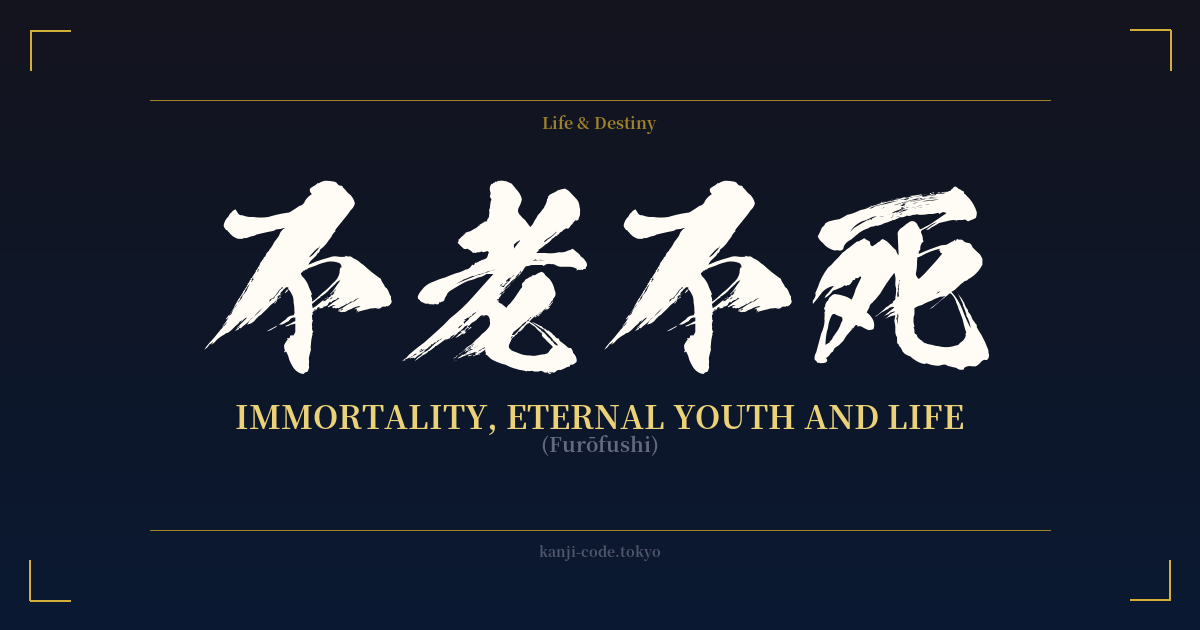
✍️ 不老不死 (Furōfushi) — Contexto cultural
不老不死 (Furōfushi) es un compuesto de cuatro caracteres, o yojijukugo, que plasma uno de los deseos más antiguos y profundos de la humanidad: vivir eternamente sin el deterioro propio del envejecimiento. Los kanji se traducen literal y poéticamente como 'no envejecer, no morir', evocando una imagen clara de eterna juventud y vida sin fin.
Este concepto no es de origen japonés, sino que fue importado de China y está profundamente arraigado en la filosofía taoísta. Maestros y alquimistas taoístas dedicaron siglos a la búsqueda de un elixir de la vida, una sustancia mítica que otorgara la inmortalidad. El buscador más famoso fue el primer emperador de China, Qin Shi Huang, quien envió vastas expediciones en busca del legendario Monte Penglai, una isla donde se decía que residían los inmortales. Estas historias y la filosofía subyacente viajaron a Japón, donde se fusionaron con las creencias y el folclore locales.
En Japón, la idea de la inmortalidad suele asociarse con los Sennin (仙人), sabios inmortales o ermitaños de montaña. Se creía que estas figuras, también derivadas de la tradición taoísta, alcanzaban su estatus mediante un entrenamiento ascético intenso, restricciones dietéticas y una profunda comunión con la naturaleza. Eran maestros de los elementos, capaces de realizar proezas mágicas y habían trascendido las limitaciones físicas del cuerpo humano. Los relatos de Sennin pueblan las leyendas japonesas, representando una vida libre de preocupaciones mundanas y de la inevitabilidad de la muerte.
El término también aparece con frecuencia en la literatura, el arte y la cultura pop japonesa moderna. Desde relatos antiguos como 'El cuento del cortador de bambú', donde la princesa Kaguya deja un elixir de la inmortalidad, hasta innumerables series de anime y manga, el tema es omnipresente. En estas historias modernas, la inmortalidad se explora a menudo no solo como una bendición, sino también como una maldición: una existencia solitaria en la que se sobrevive a los seres queridos y se observa cómo el mundo cambia sin cesar. Esta dualidad confiere al concepto de Furōfushi una profundidad trágica y filosófica que va más allá del simple deseo de vida eterna.
En definitiva, 不老不死 representa más que la simple ausencia de la muerte. Encarna la esperanza de trascendencia, el deseo de superar nuestros límites naturales y la eterna lucha entre nuestra existencia finita y nuestras aspiraciones infinitas. Es un poderoso símbolo de un sueño que ha cautivado la imaginación humana a través de culturas y milenios.
🖌️ Estilos de fuente para 不老不死
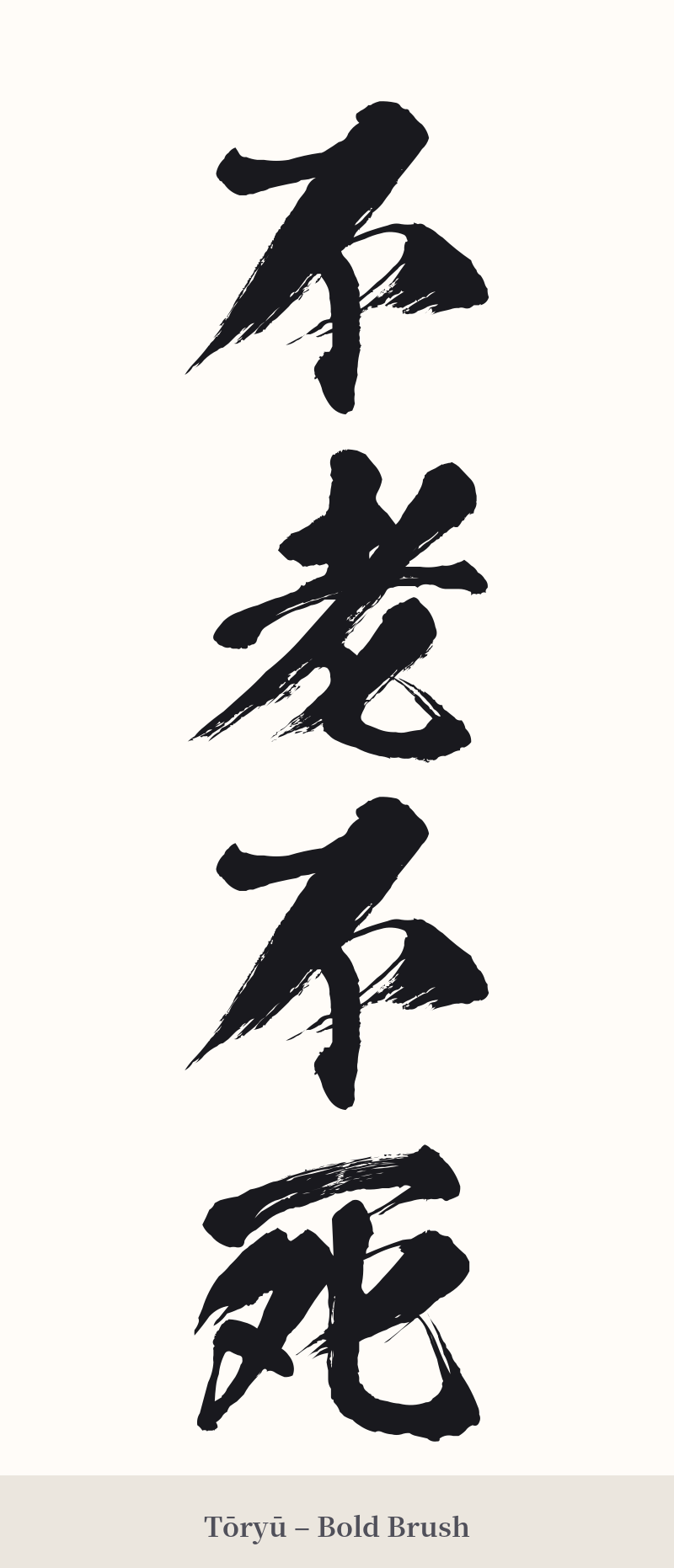
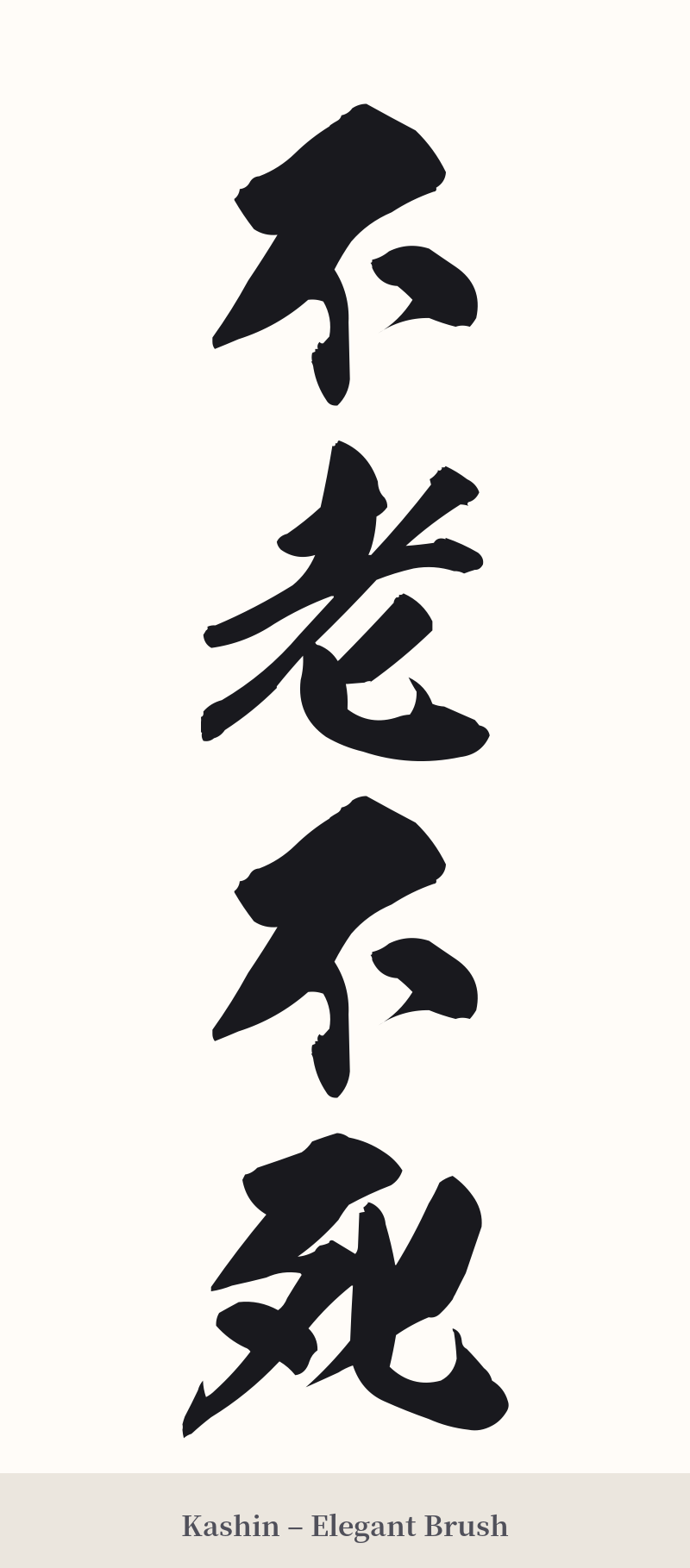
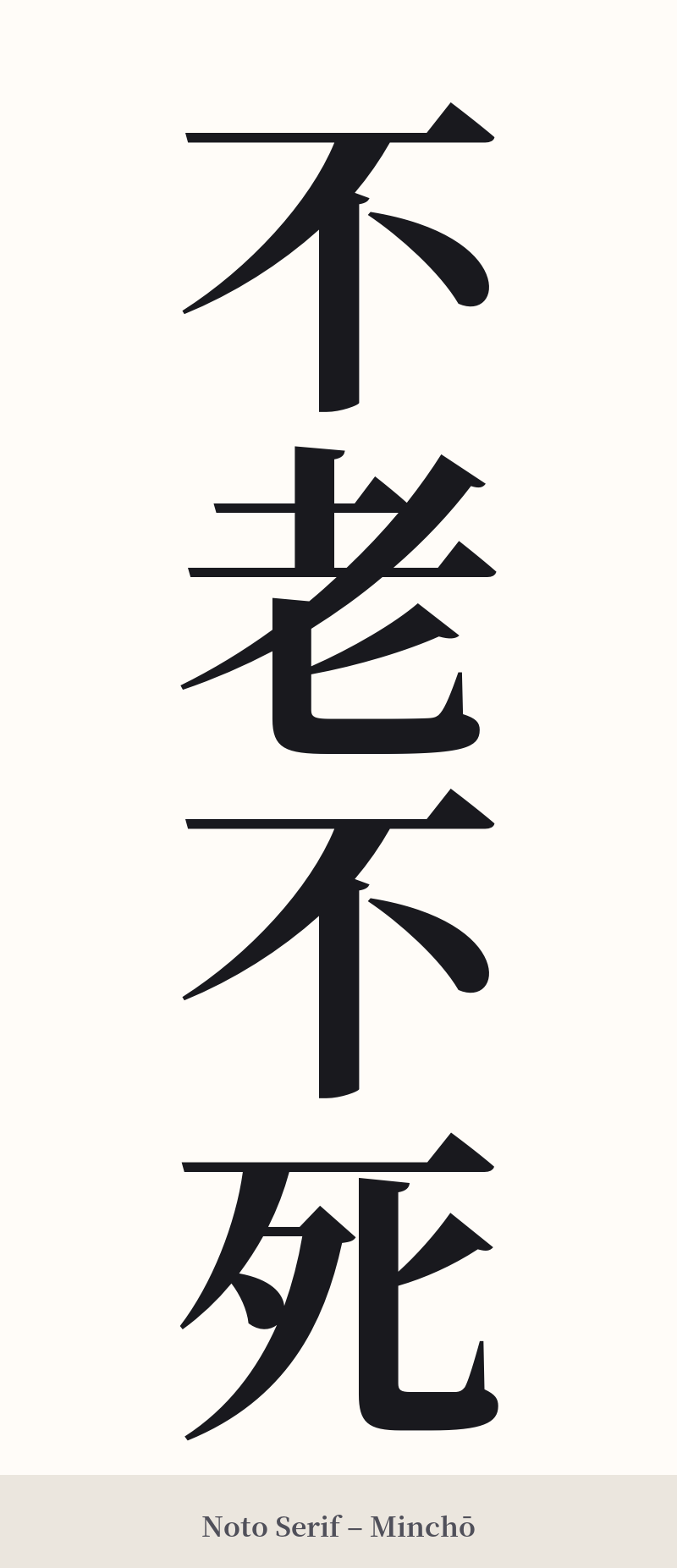
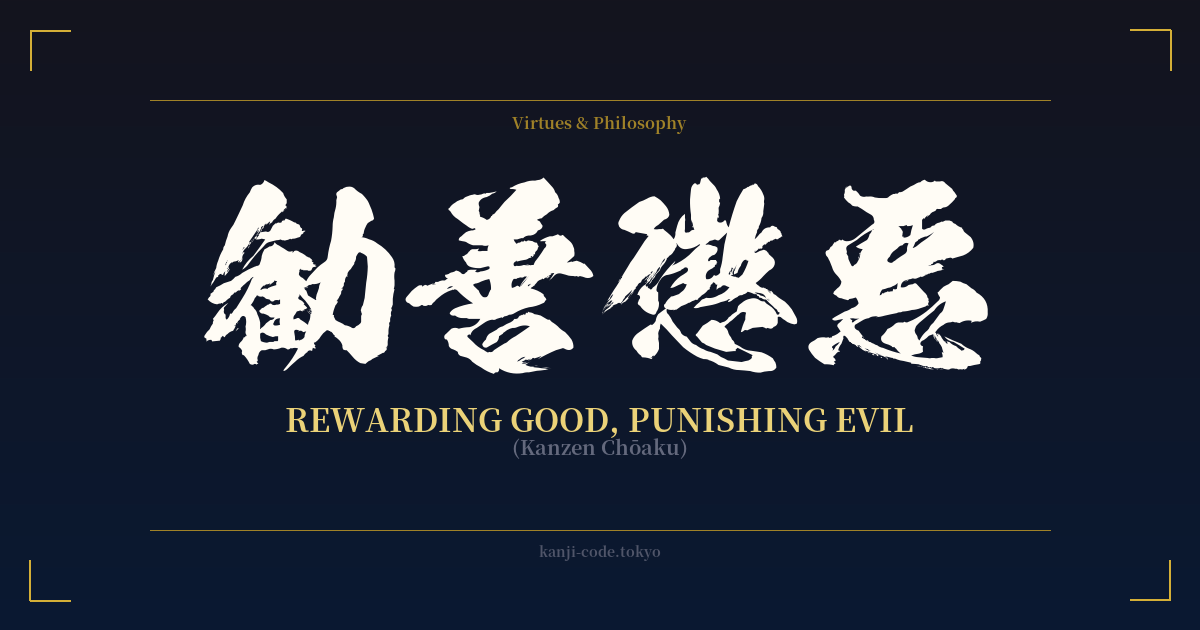
Los mismos caracteres kanji pueden verse muy diferentes según el estilo de caligrafía. Elige una fuente que se ajuste al ambiente que deseas para tu tatuaje o diseño.
🎨 Idoneidad para tatuajes
📐 Guía de diseño de tatuajes
Como palabra compuesta de cuatro caracteres (yojijukugo), 不老不死 se presta maravillosamente a diseños de tatuajes que enfatizan el equilibrio y la fluidez.
– Ubicación: La alineación vertical es la presentación más tradicional y visualmente impactante. Luce poderosa recorriendo la columna vertebral, el antebrazo o el costado de la pantorrilla. Para un diseño horizontal, funciona bien en el pecho, la parte superior de la espalda o a lo largo de las costillas.
Estilos de fuente: Considere una caligrafía clásica. El estilo 'Kaisho' (de imprenta) ofrece claridad y fuerza, otorgando a los caracteres una apariencia atemporal y monumental. Para un estilo más dinámico y artístico, el estilo 'Gyosho' (semicursivo) introduce trazos fluidos y conectados que pueden representar el flujo eterno de la vida.
Elementos visuales: Realza el tema incorporando imágenes relacionadas. Un fénix (不死鳥, fushichō, literalmente 'ave inmortal') es un compañero perfecto, que simboliza el renacimiento y la indestructibilidad. Otros símbolos poderosos como un dragón, una flor de loto que emerge del barro o un círculo Enso pueden complementar los kanji y profundizar su significado.

Comentarios