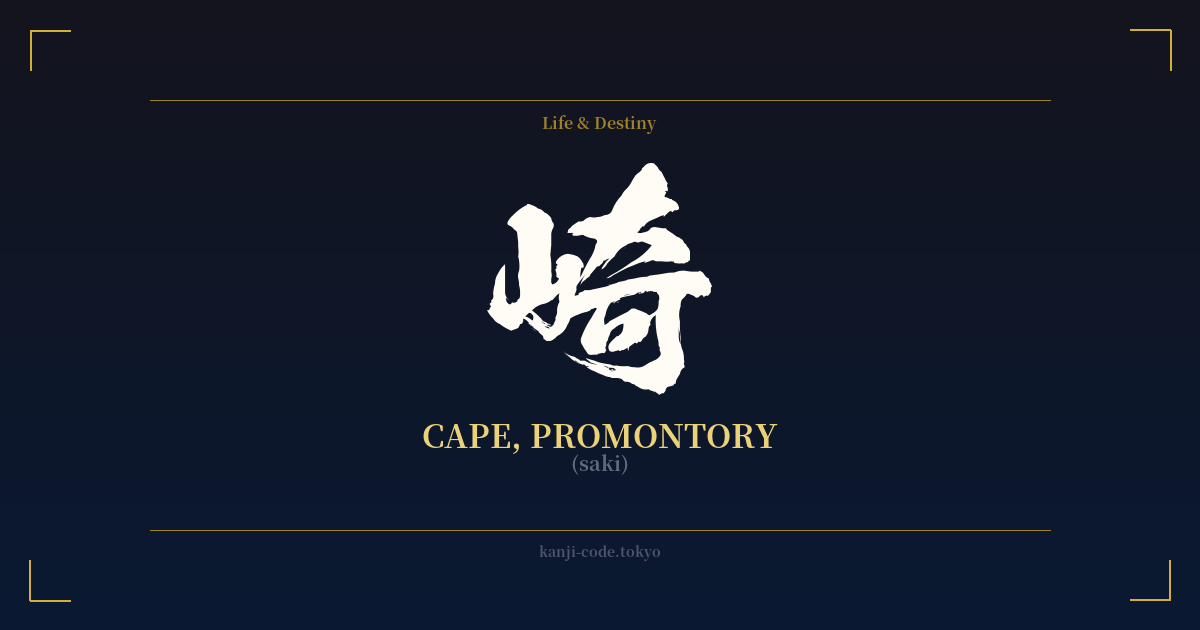
✍️ 崎 (saki) — Contexto cultural
El kanji 崎 (saki) ocupa un lugar sencillo pero profundo en la lengua japonesa, refiriéndose a un cabo o promontorio: una porción de tierra que se adentra en el agua. Su significado está profundamente arraigado en la geografía de Japón, una nación archipelágica definida por su vasta e intrincada costa. El carácter captura bellamente esta imagen a través de sus componentes: a la izquierda está 山 (yama), el radical de "montaña", y a la derecha 奇 (ki), que puede significar "extraño", "curioso" o "excelente".'
Esta combinación evoca la imagen de una montaña que se extiende de forma inusual o llamativa, adentrándose en el mar. Es una 'montaña singular' que no solo se asienta tierra adentro, sino que interactúa activamente con el agua, creando un paisaje espectacular y pintoresco. Este significado geográfico literal constituye la base de su uso.
Debido a la geografía de Japón, el carácter 崎 es omnipresente en los topónimos. El ejemplo más famoso es Nagasaki (長崎), que significa 'cabo largo'. Otros ejemplos son Miyazaki (宮崎), 'cabo santuario', y Kawasaki (川崎), 'cabo río'. Su presencia es un recordatorio constante del paisaje físico que ha moldeado la cultura, los viajes y la historia de Japón. Históricamente, estos cabos fueron vitales como puntos de referencia para los marineros, puntos estratégicos para la defensa y lugares sagrados para santuarios con vistas al mar.
Más allá de los topónimos, 崎 es uno de los elementos más comunes en los apellidos japoneses, como se observa en Yamazaki (山崎), que significa "cabo de montaña". Esto significa que el carácter es fácilmente reconocible para cualquier japonés, aunque a menudo como parte de un nombre y no como un concepto independiente. Si bien carece de la profundidad filosófica abstracta de caracteres como 愛 (amor) o 道 (el camino), 崎 ofrece un significado diferente. Simboliza una conexión con el mundo natural, el límite entre la tierra y el mar, un punto de observación privilegiado y la sensación de estar al borde del mundo, contemplando lo desconocido. Refleja el amor por la naturaleza, el paisaje y la silenciosa fuerza de las formaciones terrestres.
🖌️ Estilos de fuente para 崎
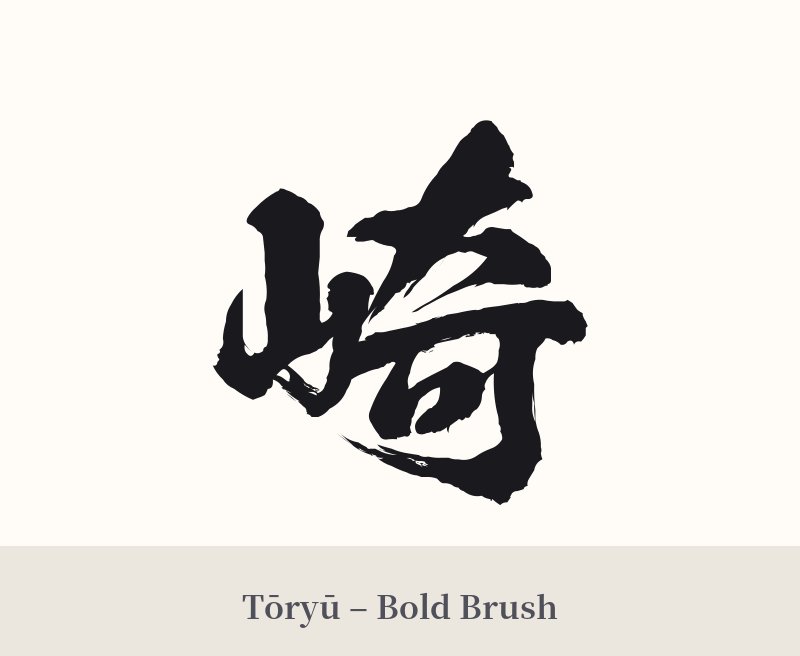
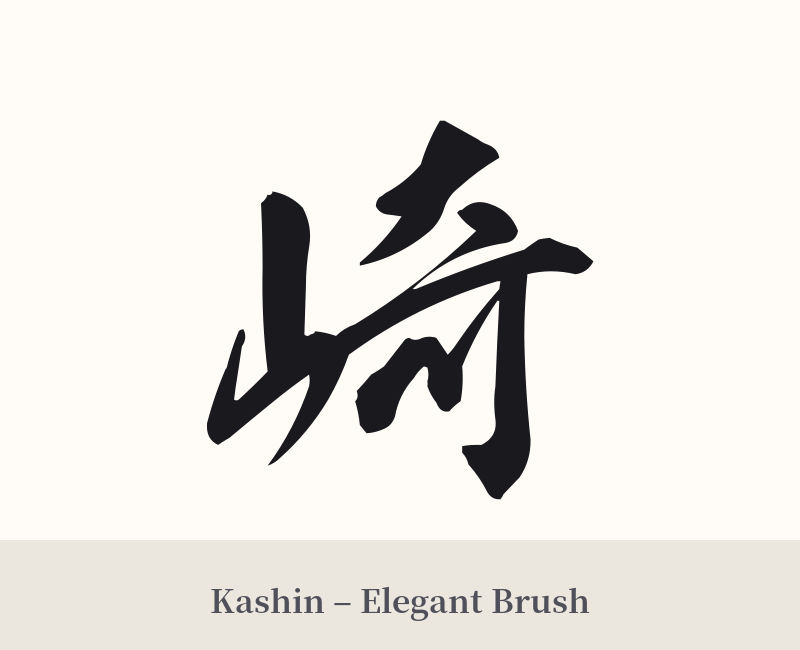
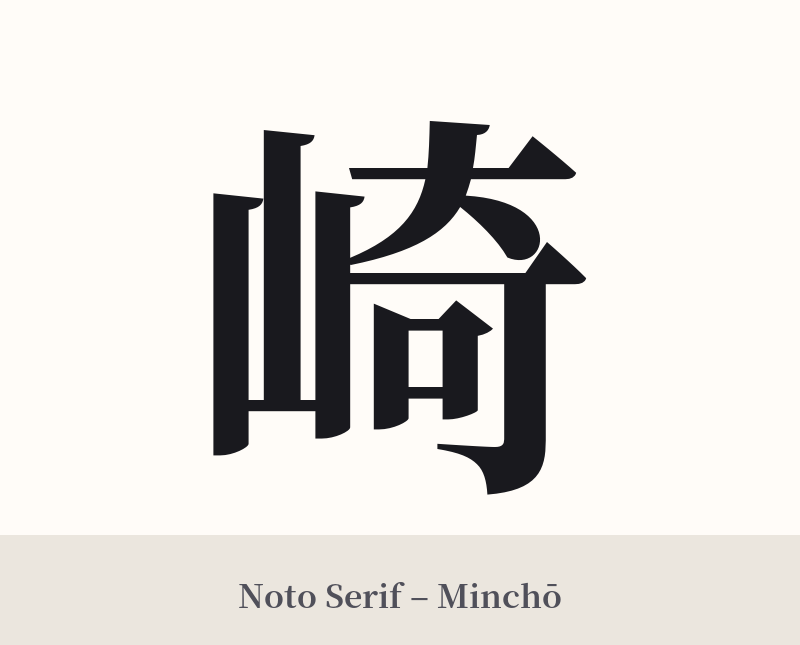
Los mismos caracteres kanji pueden verse muy diferentes según el estilo de caligrafía. Elige una fuente que se ajuste al ambiente que deseas para tu tatuaje o diseño.
🎨 Idoneidad para tatuajes
📐 Guía de diseño de tatuajes
Para un tatuaje de 崎, el diseño debe enfatizar su conexión con la naturaleza y su forma visual única.
– Ubicación: Considere zonas que complementen su estructura vertical, como el antebrazo, el costado de la pantorrilla o a lo largo de la columna vertebral. También queda bien en la parte posterior del hombro, donde puede seguir las líneas naturales del cuerpo.
– Estilo de fuente: Una escritura semicursiva (gyōsho) representaría bellamente los trazos fluidos del radical derecho (奇), dándole una sensación de movimiento como el viento o el agua. Para una sensación más sólida y firme, una escritura de imprenta estándar (kaisho) enfatizará el radical 'montaña' (山), transmitiendo fuerza y estabilidad.
Consejos visuales: Para evitar la ambigüedad de que se interprete simplemente como un nombre, considere integrarlo con otras imágenes. Colocar el kanji sobre un diseño minimalista de olas, incorporarlo a un paisaje de acantilado o incluir un pequeño faro o un pino cerca puede aclarar su significado como 'cabo'. Esto lo transforma de un simple carácter en una pequeña viñeta paisajística.
Comentarios