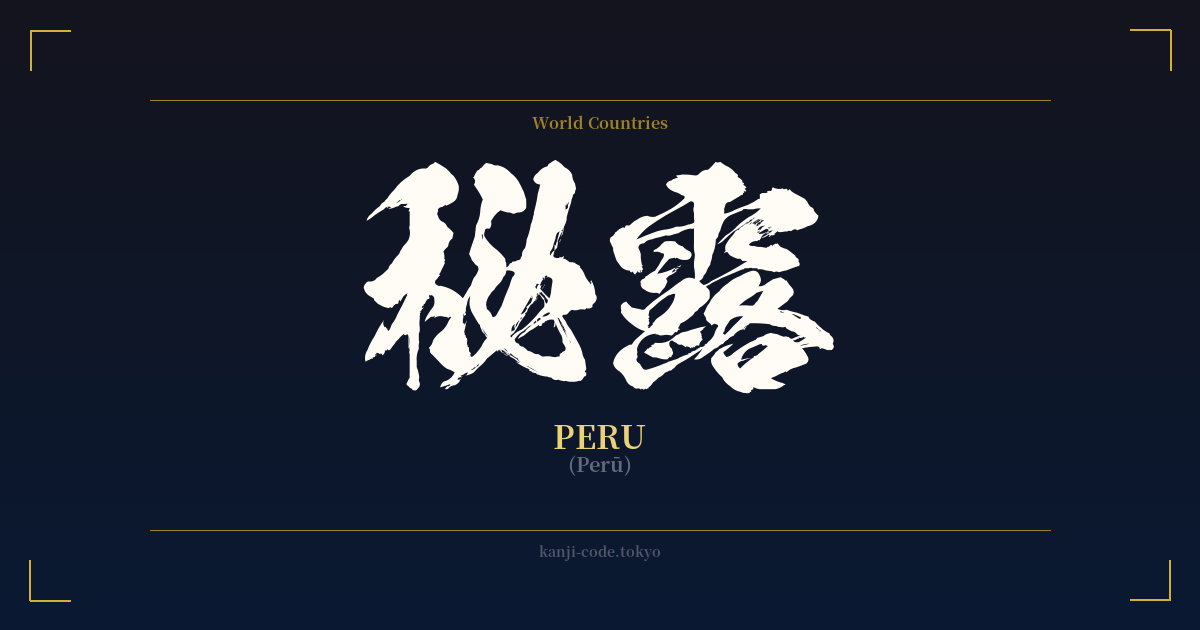
✍️ 秘露 (Perú) — Contexto cultural
La palabra 秘露 (Perū) es un ejemplo fascinante de un sistema llamado 'Ateji' (当て字), donde los caracteres kanji se utilizan por su valor fonético más que por su significado. Esta práctica era común durante la Restauración Meiji (1868-1912), cuando Japón se modernizó rápidamente y asimiló una gran cantidad de palabras y conceptos extranjeros. Antes de que la escritura katakana se convirtiera en el estándar para los préstamos lingüísticos, los eruditos y funcionarios seleccionaban kanji que se aproximaran a los sonidos de un nombre extranjero.
En este caso, se eligieron 秘 (hi, bi) y 露 (ro, ru) para representar fonéticamente 'Pe-ru'. La correspondencia fonética no es perfecta, algo común en Ateji. Los significados individuales de los caracteres —秘 para 'secreto' y 露 para 'rocío' o 'exponer'— son completamente irrelevantes para Perú. La combinación no significa 'rocío secreto'; es simplemente una representación fonética.
Este método creó nombres de países visualmente atractivos y, a veces, con sonoridad poética, como 亜米利加 para Estados Unidos y 濠太剌利 para Australia. Sin embargo, también resultaba engorroso y a menudo generaba confusión, ya que la gente podía interpretar erróneamente el significado literal de los caracteres. Con el tiempo, la escritura katakana (ペルー), más sencilla y directa, se convirtió en el estándar para escribir nombres extranjeros, lo que hizo que las versiones en kanji, como 秘露, quedaran prácticamente obsoletas.
Hoy en día, 秘露 se considera arcaico y rara vez se encuentra fuera de documentos históricos o contextos especializados. Su uso evoca una época pasada, un tiempo de colisión cultural y adaptación creativa. Curiosamente, el período Meiji, cuando se acuñó este Ateji, también marca el inicio de una importante inmigración japonesa a Perú, a partir de 1899. Esto añade una capa de resonancia histórica, conectando el kanji con las personas que construyeron un puente entre ambas naciones. Si bien tiene su propio encanto, existe más como un artefacto lingüístico que como un término práctico.
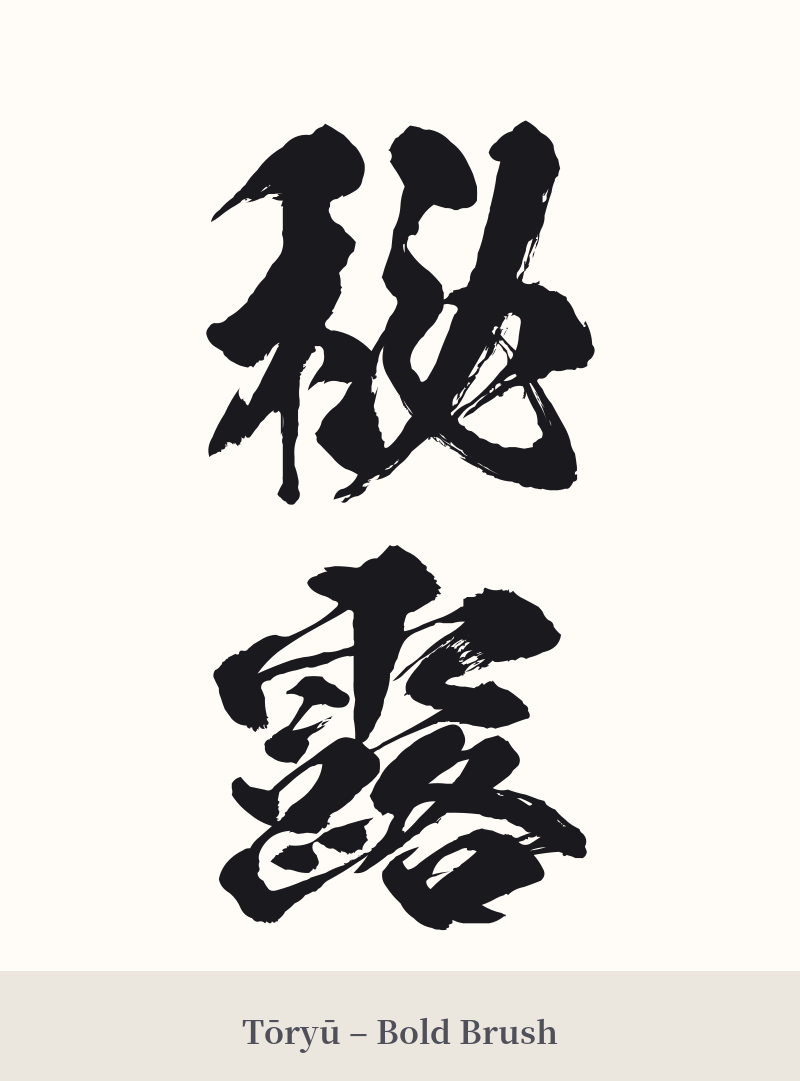
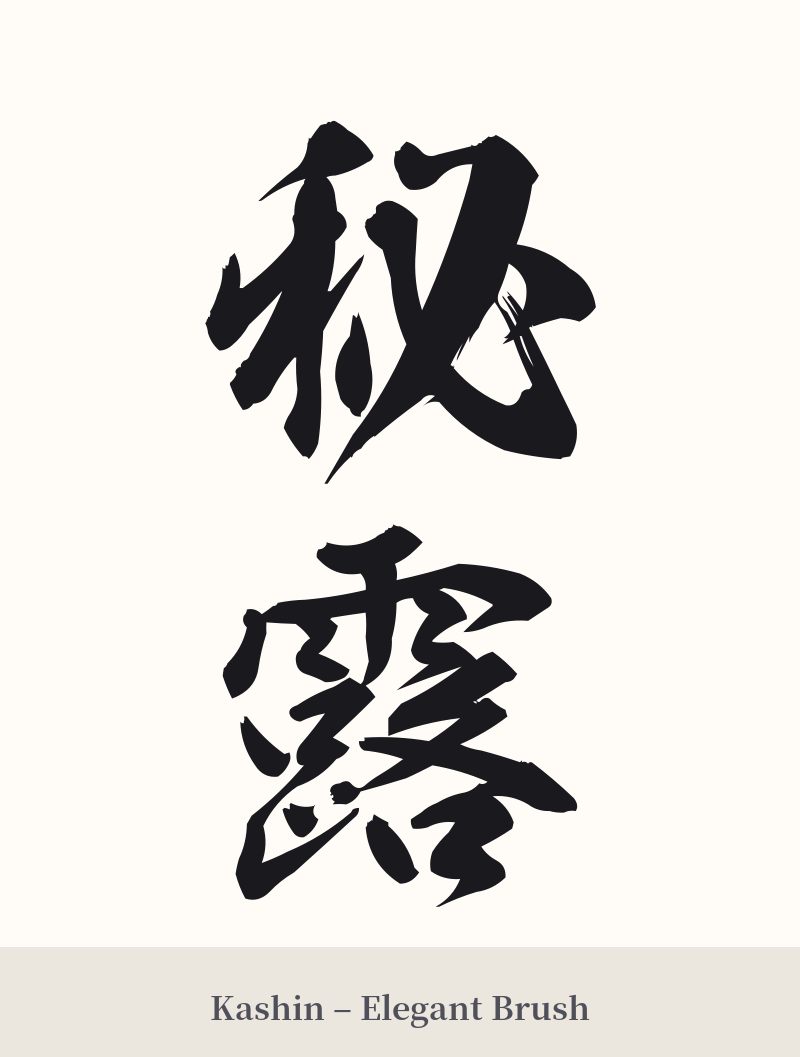
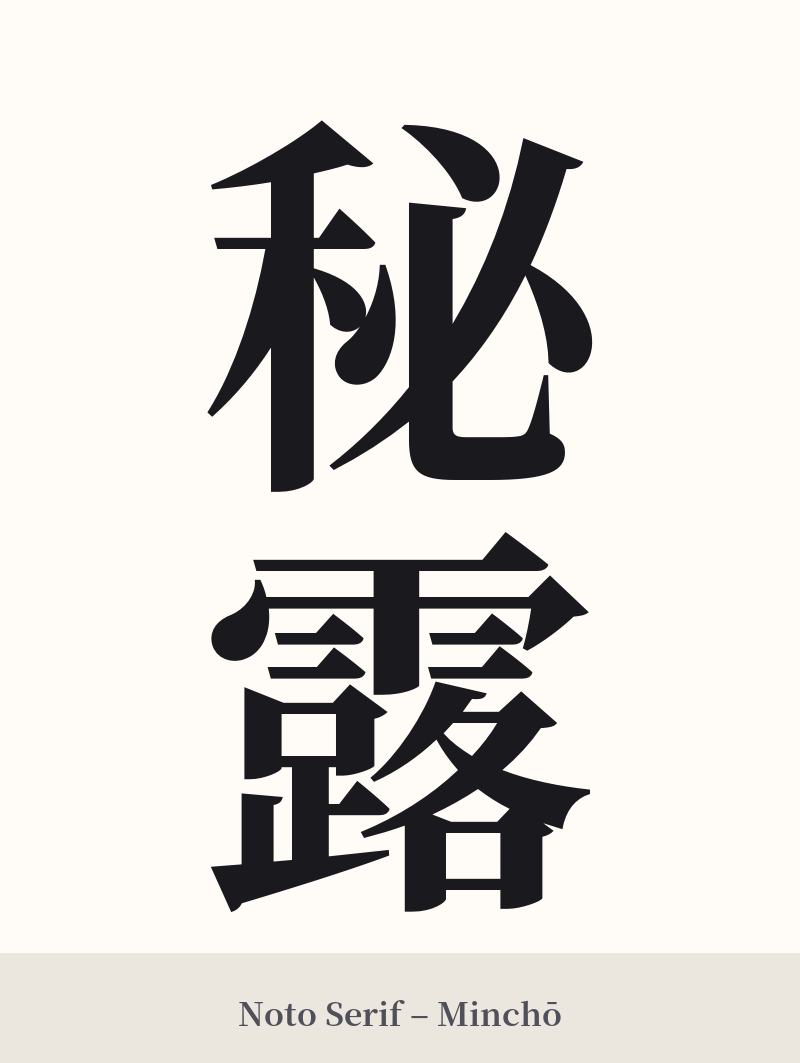
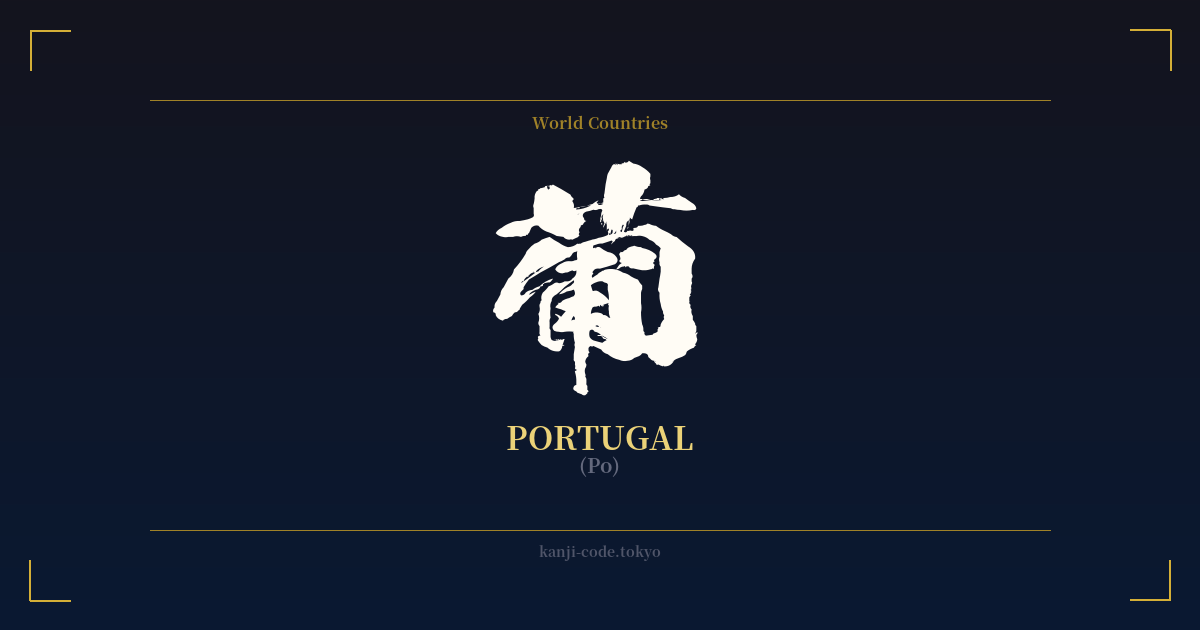
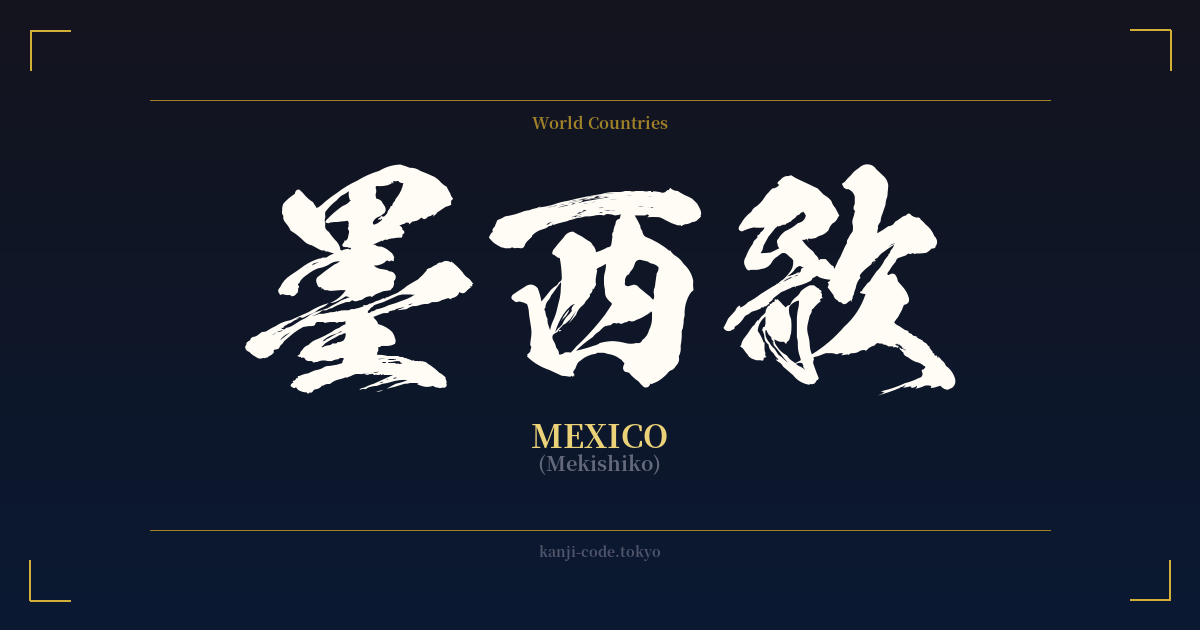
🖌️ Estilos de fuente para 秘露
Los mismos caracteres kanji pueden verse muy diferentes según el estilo de caligrafía. Elige una fuente que se ajuste al ambiente que deseas para tu tatuaje o diseño.
🎨 Idoneidad para tatuajes
📐 Guía de diseño de tatuajes
Debido a la complejidad de este par de caracteres kanji, especialmente del segundo, es fundamental prestar mucha atención al diseño y a su ubicación.
– Ubicación: Elija una zona amplia y plana del cuerpo para que el diseño sea legible. La espalda, el pecho o el muslo son excelentes opciones. Evite zonas más pequeñas como la muñeca, el tobillo o los dedos, ya que los trazos densos de 露 (21 trazos) se difuminarán con el tiempo.
– Estilo de fuente: Es fundamental utilizar una fuente limpia y precisa. Un estilo Kaisho tradicional (de bloque) o un estilo Mincho nítido (con serifa) contribuirá a mantener la integridad de cada trazo. Evite las fuentes muy cursivas o estilizadas como Gyosho o Sosho, ya que harán que los caracteres sean ilegibles.
– Orientación: La orientación vertical es clásica para los kanji y funciona bien con este compuesto de dos caracteres. Permite que cada carácter se defina con claridad.
– Tamaño: No elija un tamaño demasiado pequeño. Los intrincados detalles de 露 requieren una escala determinada para que un tatuador los ejecute correctamente y para que envejezcan bien en la piel.
Comentarios