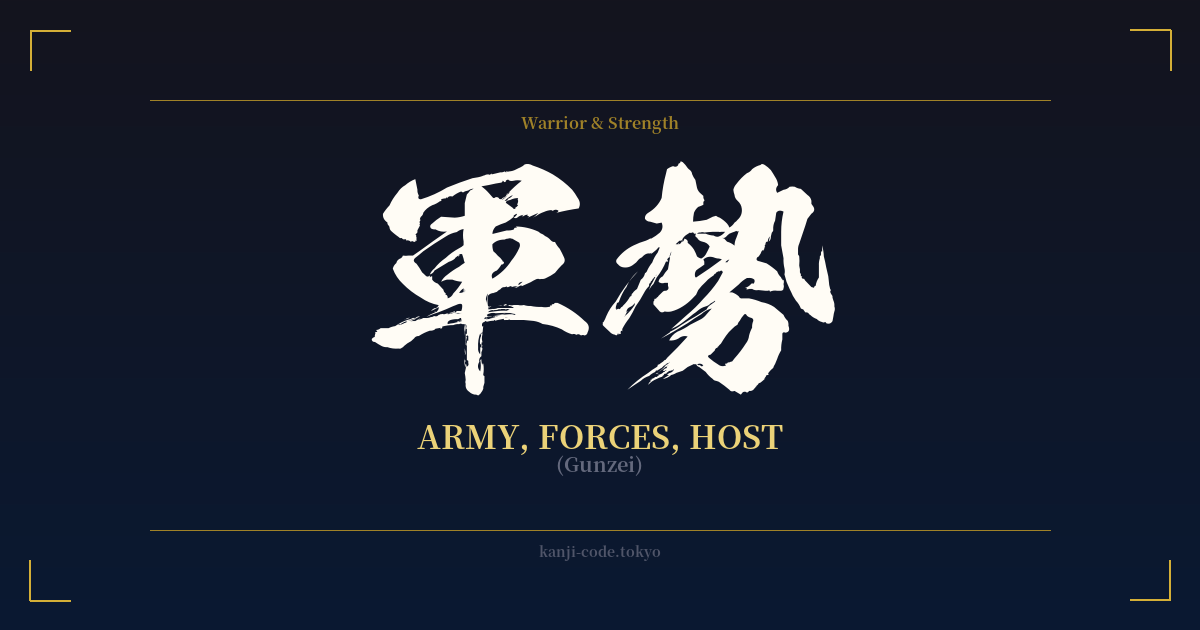
✍️ 軍勢 (Gunzei) — Contexto cultural
Gunzei se traduce como "ejército", "fuerzas" o "un ejército de tropas". Si bien su significado directo es sencillo, la palabra está profundamente arraigada en el entramado histórico y cultural de Japón, en particular en la época de los samuráis.
Este término no es solo un recuento clínico de soldados; conlleva el peso y el ímpetu de una fuerza masiva y organizada en movimiento. El segundo carácter, 勢 (sei), es clave aquí. Significa 'poder', 'energía' e 'impulso'. Por lo tanto, Gunzei no solo significa 'ejército', sino que implica un ejército con ímpetu, una poderosa corriente de guerreros que arrasa el campo de batalla. Evoca imágenes vívidas de la historia japonesa, especialmente del período Sengoku (período de los Estados Combatientes, c. 1467-1615), un siglo de guerra civil casi constante.
Imagina los grandes ejércitos de daimyō (señores feudales) como Oda Nobunaga, Toyotomi Hideyoshi o Tokugawa Ieyasu enfrentándose en batallas legendarias como la de Sekigahara. La visión de miles de soldados —caballería samurái e infantería ashigaru— marchando bajo coloridos estandartes (sashimono y nobori) es la esencia misma del Gunzei. Representa no solo los cuerpos físicos, sino también la voluntad colectiva, la disciplina y la estrategia de un poder militar unificado.
En el japonés moderno, el gunzei es menos común en la conversación cotidiana y se reserva principalmente para contextos históricos, literatura o usos metafóricos. Lo encontrarás con frecuencia en dramas históricos (taiga), películas de Akira Kurosawa como 'Kagemusha' y 'Ran', y videojuegos como la serie 'Samurai Warriors' o 'Total War: Shogun'. En estos contextos, captura a la perfección la escala épica de la guerra feudal.
Metafóricamente, puede describir a cualquier grupo grande y poderoso que se mueve con un propósito común. Se podría hablar de una 'gunzei' de aficionados que invaden un estadio o de una 'gunzei' de compradores en el Black Friday, aunque este uso es más poético. La idea central permanece: una fuerza colectiva formidable e imparable. Esta conexión con la estrategia, la historia y el poder abrumador la convierte en un término convincente que resuena mucho más allá de su simple definición.
🖌️ Estilos de fuente para 軍勢
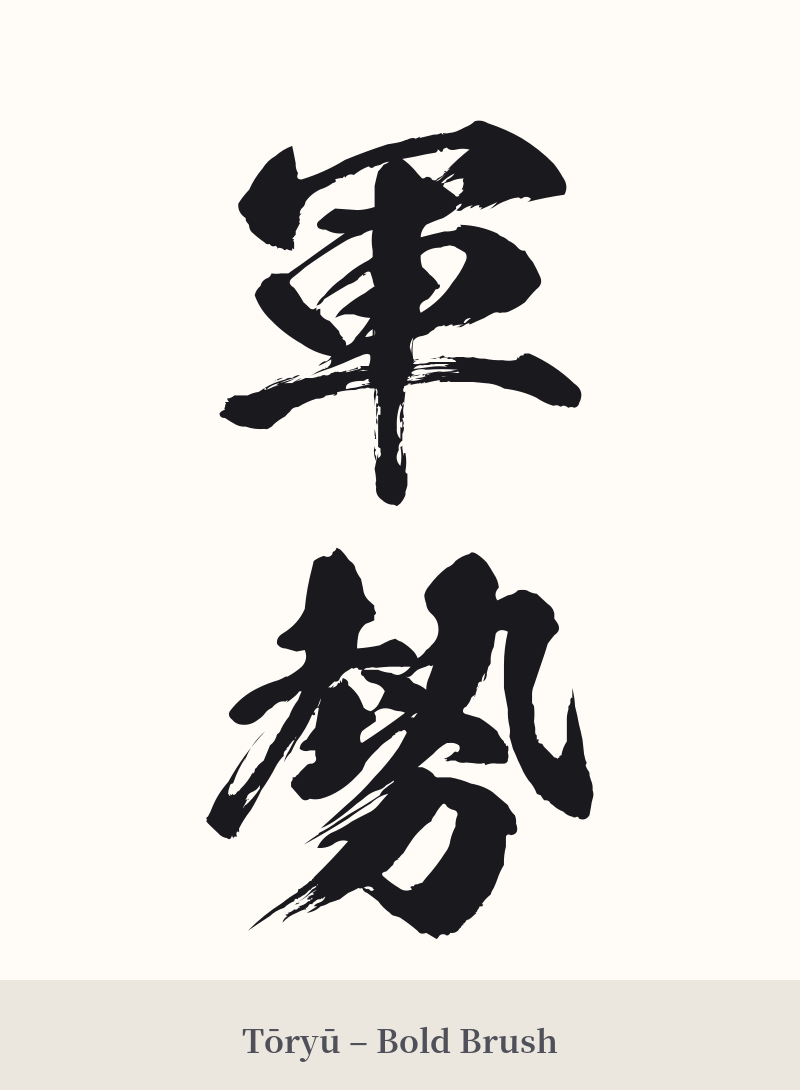
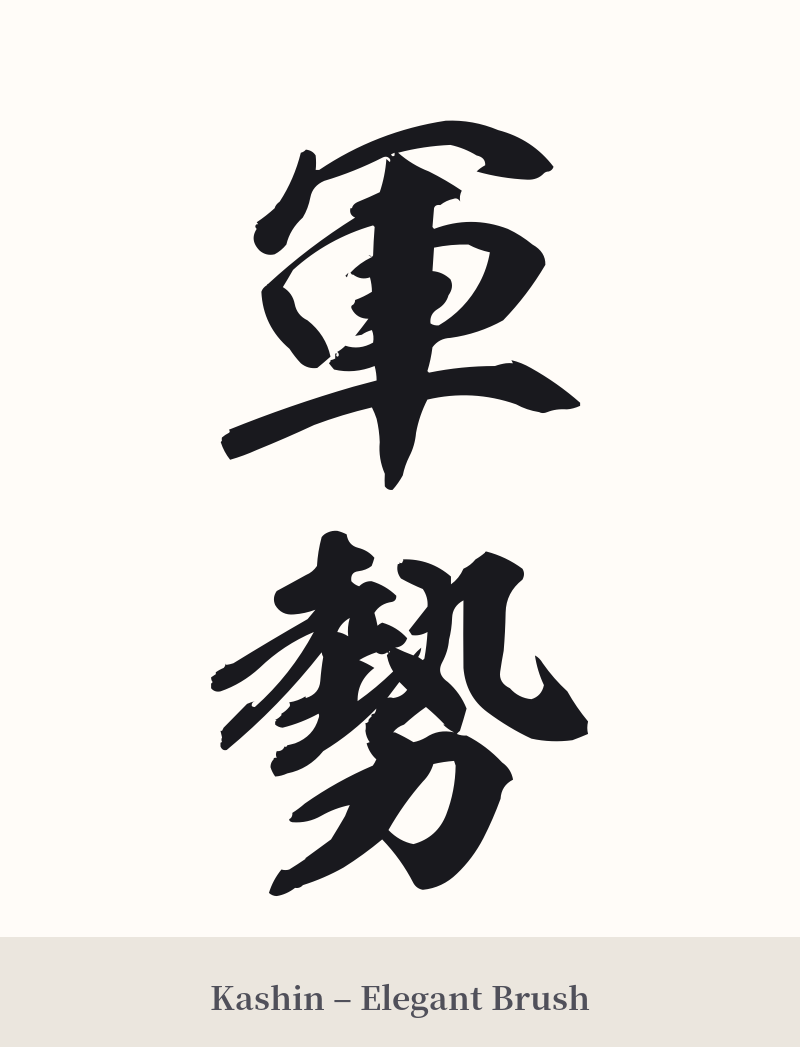
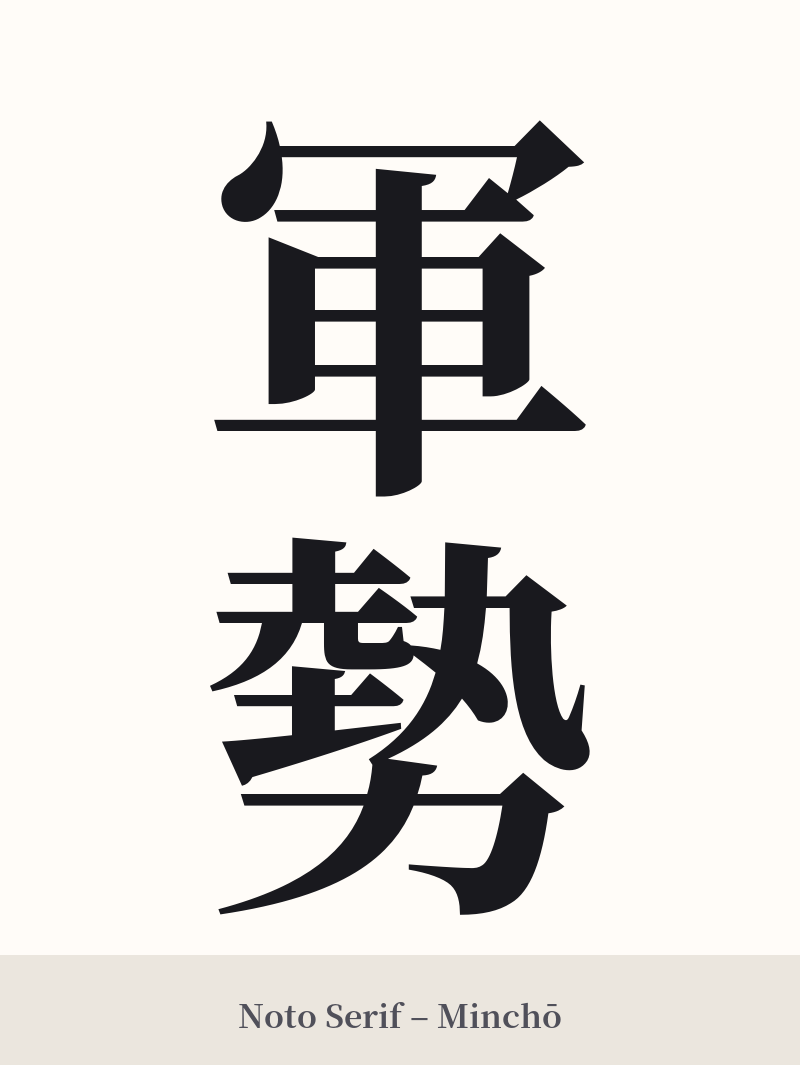
Los mismos caracteres kanji pueden verse muy diferentes según el estilo de caligrafía. Elige una fuente que se ajuste al ambiente que deseas para tu tatuaje o diseño.
🎨 Idoneidad para tatuajes
📐 Guía de diseño de tatuajes
Al diseñar un tatuaje con el símbolo 軍勢, el objetivo es transmitir fuerza e impulso. Ambos caracteres combinan bien tanto en vertical como en horizontal.
– Ubicación: Para una disposición vertical, la columna vertebral, el antebrazo o la pantorrilla son excelentes opciones. Para una disposición horizontal, el pecho, la parte superior de la espalda o la parte posterior de los hombros funcionan bien. Asegúrese de que la ubicación permita un tamaño suficiente para mantener el detalle del carácter 勢.
– Estilo de fuente: Una tipografía audaz y angular como Kaisho (escritura en bloque) enfatiza el orden, la disciplina y el poder de un ejército. Por otro lado, un estilo más fluido y semicursivo como Gyosho puede capturar el 'impulso' y la 'energía' (勢) de una fuerza en movimiento, como si estuviera escrita con una pincelada rápida.
Consejos visuales: Considere incorporar un elemento visual relacionado. Un fondo sutil de barras de viento o nubes de polvo puede realzar la sensación de movimiento. Colocar los kanji cerca o dentro de un Kamon (escudo familiar) de un famoso clan samurái también podría añadir un significado histórico.
Comentarios