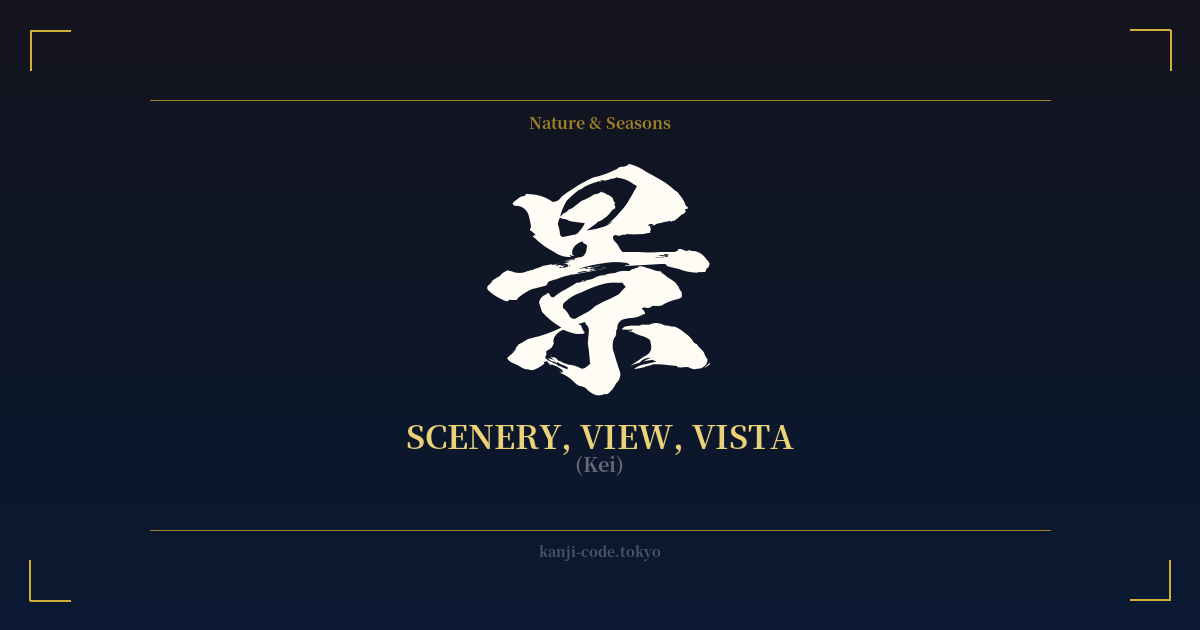
✍️ 景 (Kei) — Contexto cultural
El kanji 景 (kei) es un carácter bello y evocador que captura un elemento esencial de la estética japonesa: la profunda apreciación por una vista o un momento en el tiempo. Su estructura misma cuenta una historia. El carácter es una combinación de 日 (hi), que significa "sol" o "día", y 京 (kyō), que originalmente representaba un edificio alto o una capital. Juntos, pintan una imagen del sol brillando sobre un paisaje grandioso, una escena digna de admiración.
Si bien 景 significa 'paisaje' o 'vista', se encuentra con mayor frecuencia en la palabra 景色 (keshiki). Aquí, 景 proporciona el concepto central de 'vista', y 色 (shiki/iro), que significa 'color', añade una capa de detalle sensorial. Keshiki es la palabra común para paisaje o vista, lo que se ve al mirar por una ventana o al estar en la cima de una montaña. Sin embargo, el carácter 景 por sí solo resulta más poético y conciso, representando la esencia misma de la escena.
Esta apreciación por el paisaje está profundamente arraigada en la cultura japonesa. Se vincula con conceptos como 'mono no aware', la suave melancolía y la conciencia de la transitoriedad de todas las cosas. Una vista hermosa (景) no es solo una imagen bonita; es un instante fugaz. Los cerezos en flor en primavera, los vibrantes colores de las hojas otoñales (koyo) o la austera belleza de un templo cubierto de nieve son ejemplos de keshiki que se celebran precisamente porque no perduran. El kanji 景 encarna el acto de detenerse para observar e interiorizar esta belleza transitoria.
Este carácter aparece en muchas otras palabras importantes que resaltan su versatilidad. 風景 (fūkei) combina 'viento' y 'paisaje' para significar paisaje, a menudo con un matiz más artístico o atmosférico. 光景 (kōkei) significa 'espectáculo' o 'escena', una vista caracterizada por la luz. Y 夜景 (yakei) se refiere específicamente a una 'vista nocturna', un concepto muy apreciado en Japón, con ciudades como Hakodate y Kobe famosas por sus espectaculares paisajes urbanos nocturnos.
En el arte y la literatura, especialmente en la poesía como el haiku, capturar una imagen específica (景) es fundamental. La labor del poeta consiste en condensar una escena compleja en unas pocas palabras evocadoras, permitiendo al lector experimentar la visión por sí mismo. De este modo, 景 no se limita a lo que se ve, sino que abarca el sentimiento y la atmósfera que evoca la escena.
🖌️ Estilos de fuente para 景
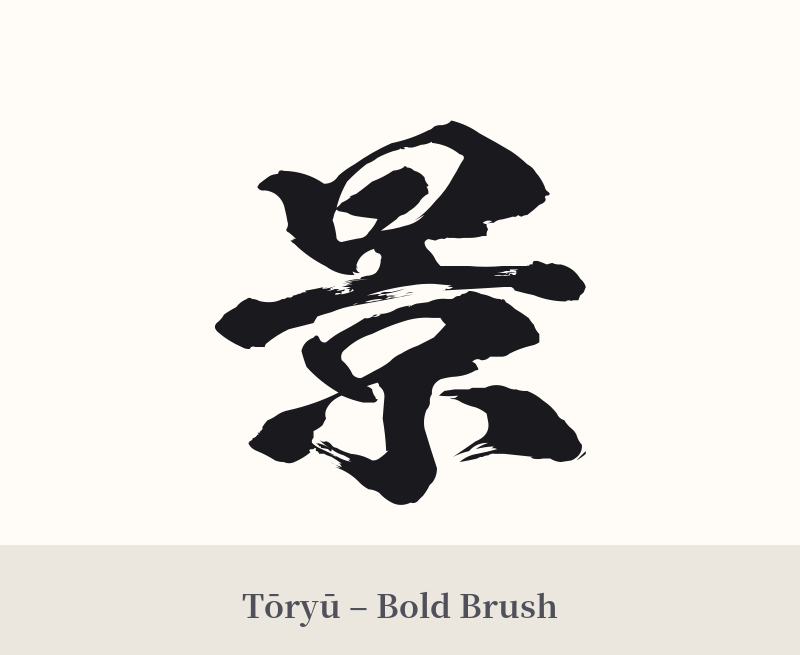
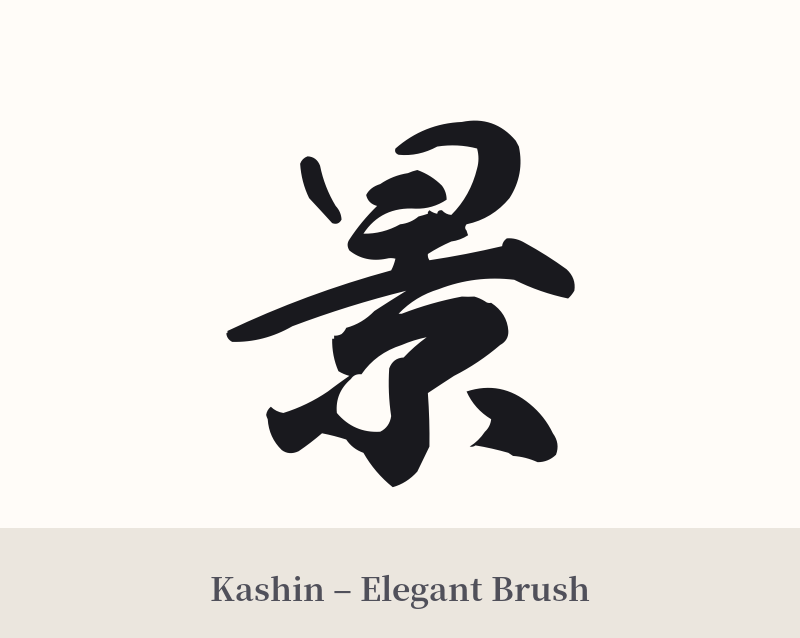
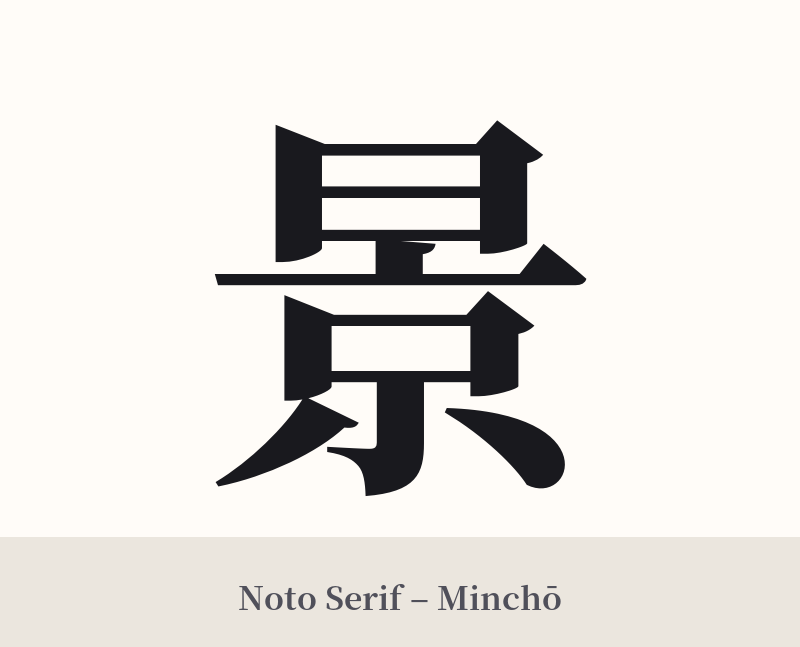
Los mismos caracteres kanji pueden verse muy diferentes según el estilo de caligrafía. Elige una fuente que se ajuste al ambiente que deseas para tu tatuaje o diseño.
🎨 Idoneidad para tatuajes
📐 Guía de diseño de tatuajes
El kanji 景 ofrece maravillosas posibilidades de diseño gracias a su estructura equilibrada y su elegante significado.
– Ubicación: Considere zonas del cuerpo que sugieran un lienzo o una ventana a una escena. El omóplato, la parte superior de la espalda o el antebrazo son excelentes opciones. Para un diseño más sutil, la parte interna de la muñeca o el tobillo también podrían funcionar bien.
– Estilo de fuente: El estilo puede cambiar drásticamente la impresión que causa. Una tipografía Kaisho (de imprenta) nítida y clara enfatizará los orígenes arquitectónicos del carácter 京. Una tipografía Gyosho (semicursiva) o Sousho (cursiva) más fluida puede evocar la belleza natural y fluida de un paisaje, como el viento o el agua.
– Consejos visuales: Si bien 景 es hermoso por sí solo, puede combinarse con elementos minimalistas. Un círculo enso detrás puede simbolizar la plenitud del momento. Como alternativa, una sutil pincelada de color estilo acuarela podría representar el 'color' (色) de la palabra 景色, sugiriendo su significado completo sin necesidad de escribir el segundo carácter.
Comentarios