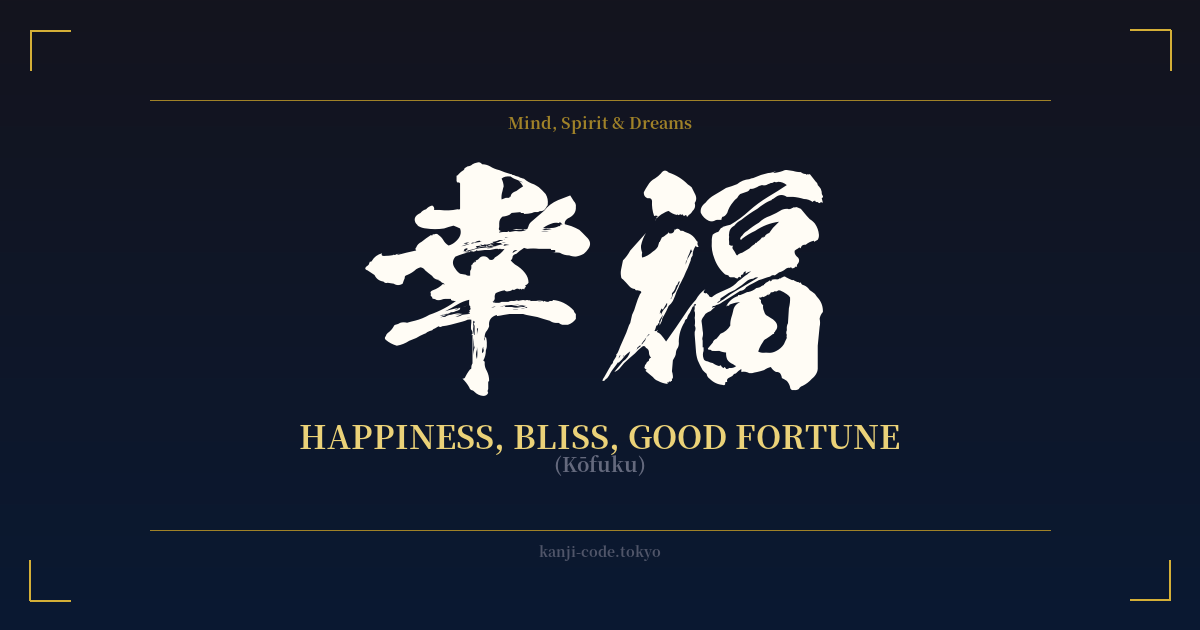
✍️ 幸福 (Kōfuku) — Contexto cultural
Kōfuku (幸福) es una de las palabras japonesas más elegantes y profundas para referirse a la felicidad. No describe simplemente una emoción pasajera, sino que transmite un estado de ser más profundo, caracterizado por bendiciones, buena fortuna y una profunda satisfacción con la propia vida. Es un estado de bienestar objetivo, donde las circunstancias de la vida se alinean para crear una existencia estable y afortunada.
Para comprender verdaderamente el concepto de Kōfuku, conviene compararlo con otra palabra común para felicidad: 幸せ (shiawase). Si bien ambas son positivas, 'shiawase' suele referirse a una sensación de felicidad más personal y subjetiva, que se experimenta en el momento presente. Por ejemplo, al disfrutar de una comida deliciosa o al pasar tiempo con los seres queridos. Kōfuku, en cambio, tiene un alcance mayor. Habla de la plenitud de la vida: buena salud, una familia amorosa y paz. Es el tipo de felicidad que se experimenta con gratitud.
La palabra es una combinación de dos caracteres poderosos. El primero, 幸 (kō), significa 'fortuna' o 'bendición'. El segundo, 福 (fuku), también significa 'fortuna' o 'bendición', pero con un matiz adicional de riqueza y suerte, a menudo con una conexión espiritual o divina. Este es el mismo 'fuku' que se encuentra en el nombre de los Siete Dioses de la Fortuna, los 七福神 (Shichifukujin), a quienes se les atribuye la concesión de buena fortuna.
En conjunto, 幸福 evoca una imagen de bendiciones acumuladas: una vida rebosante de buena fortuna por doquier. Esto la convierte en una palabra muy auspiciosa y apreciada en la cultura japonesa. Se puede escuchar en discursos formales de bodas, en textos filosóficos que abordan la naturaleza de una buena vida (幸福論, kōfuku-ron) o en sinceros deseos de bienestar a largo plazo. Representa un estado ideal, una vida no solo llena de momentos felices, sino una vida que, en su totalidad, es una bendición.
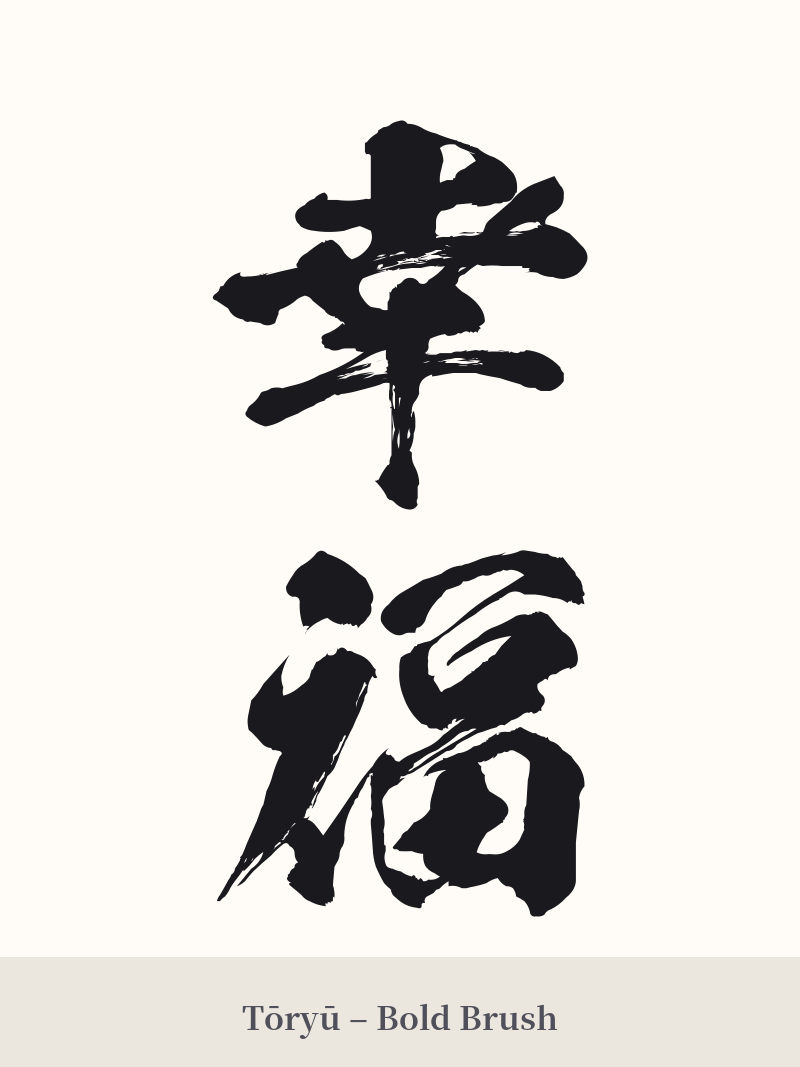
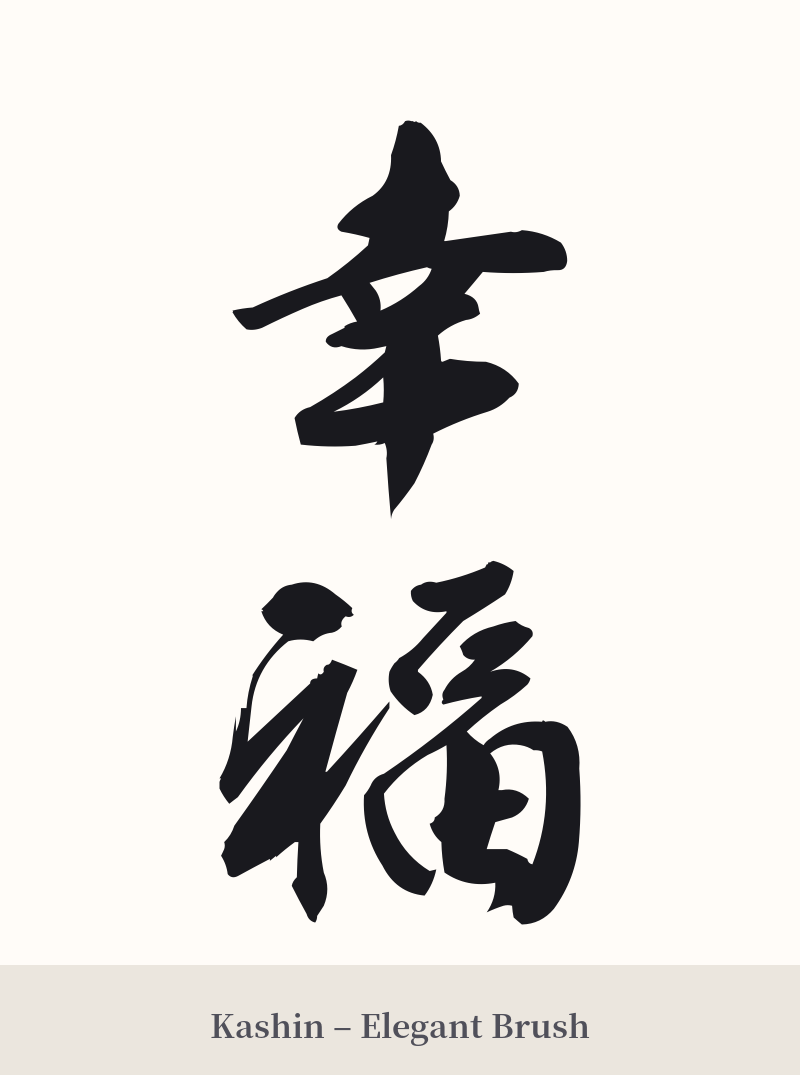
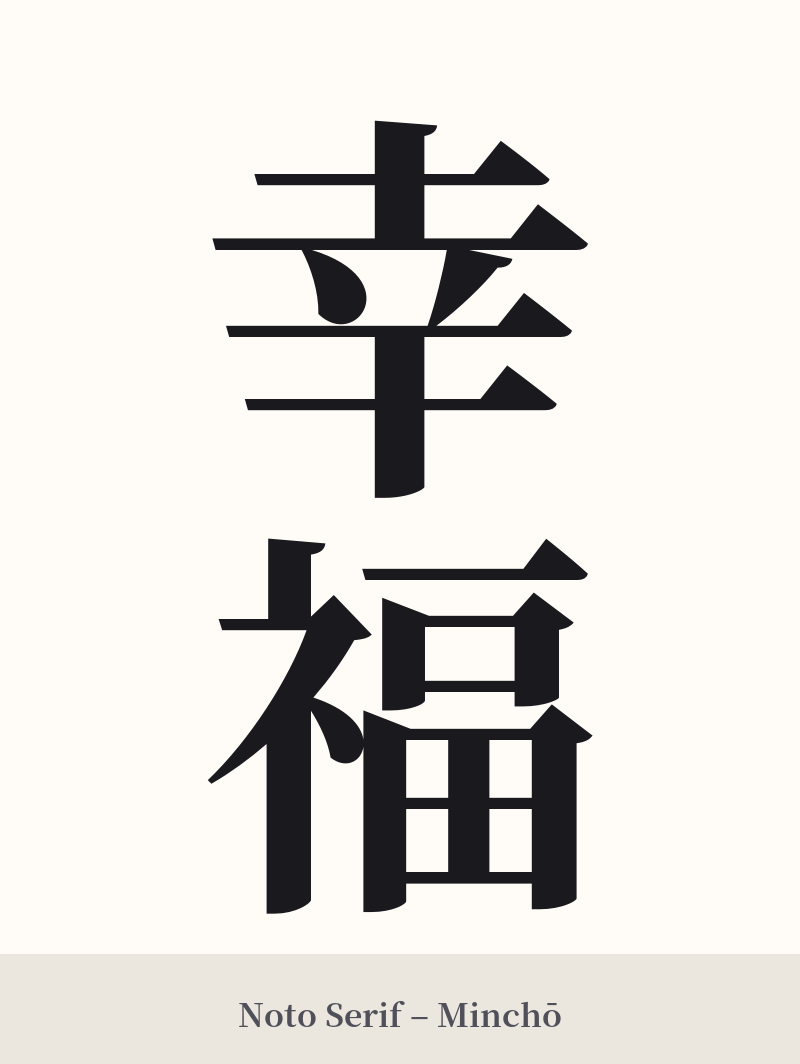
🖌️ Estilos de fuente para 幸福
Los mismos caracteres kanji pueden verse muy diferentes según el estilo de caligrafía. Elige una fuente que se ajuste al ambiente que deseas para tu tatuaje o diseño.
🎨 Idoneidad para tatuajes
📐 Guía de diseño de tatuajes
La naturaleza equilibrada y positiva de 幸福 lo convierte en una opción versátil para un tatuaje. El contraste entre el primer carácter, más sencillo, y el segundo, más detallado, crea un ritmo visual natural.
– Colocación: La orientación vertical es clásica y queda muy bien a lo largo de la columna vertebral, el antebrazo o la pantorrilla. Horizontalmente, se ajusta bien al pecho, la parte superior de la espalda o debajo de la clavícula.
Estilos de fuente: Para un aspecto tradicional y nítido, la tipografía Kaisho (de imprenta) es una excelente opción, ya que resalta la estructura de cada trazo. Para un estilo más fluido y artístico, la tipografía Gyosho (semicursiva) permite conectar los caracteres con una sensación de movimiento elegante. El estilo Mincho ofrece una elegancia más refinada, similar a la de la imprenta.
Consejos visuales: Considere cuidadosamente la escala. El segundo carácter, 福, tiene más trazos y requiere suficiente espacio para mantenerse nítido y no desenfocarse con el tiempo. Este diseño se sostiene por sí solo, pero puede complementarse con elementos sutiles como un pétalo de cerezo o un delicado círculo enso detrás para realzar la sensación de paz y plenitud.
Comentarios