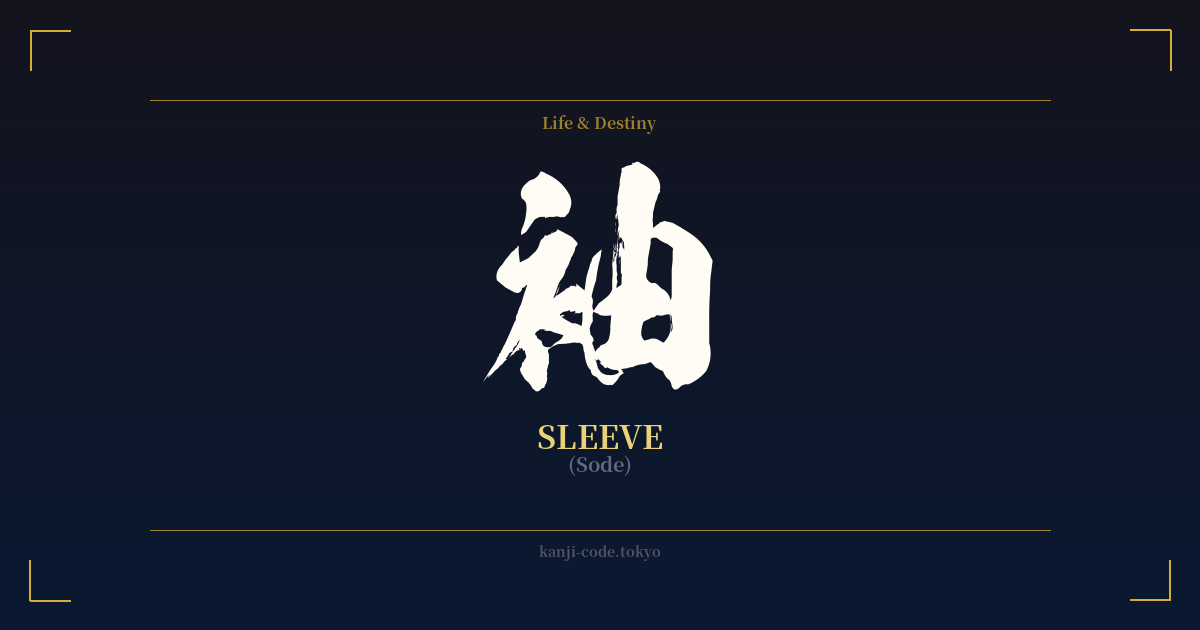
✍️ 袖 (Sode) — Contexto cultural
El kanji 袖 (sode) se traduce literalmente como "manga", la parte de la prenda que cubre el brazo. Aunque parezca algo trivial, en la cultura japonesa, la manga es un vehículo de profundo significado, un silencioso transmisor de emociones y un elemento clave en la tradición y el arte.
Históricamente, las mangas de la vestimenta tradicional japonesa, como el kimono, eran mucho más que una simple tela. La parte larga, similar a un bolsillo, de la manga de un kimono formal, conocida como tamoto (袂), tenía una función práctica. En una época anterior a la popularización de los bolsillos, la gente guardaba pequeños objetos personales —papel, amuletos o una cartera— en su interior. Esta función práctica evolucionó hasta convertirse en una función simbólica de gran valor.
La manga se convirtió en un escenario para sentimientos tácitos. Un gesto que involucraba la manga podía transmitir más que las palabras. Esto está profundamente arraigado en el idioma japonés a través de una gran cantidad de modismos. Por ejemplo, sode o hiku (袖を引く) significa "tirar de la manga de alguien", un gesto para llamar su atención discretamente o retenerlo. Sode ni sugaru (袖にすがる) significa "aferrarse a la manga de alguien", una expresión conmovedora para implorar ayuda o clemencia.
Emociones más complejas también están ligadas a la manga. Sodeshigure (袖時雨), o 'ducha de manga', es un término bellamente poético para referirse al llanto, cuando las lágrimas caen silenciosamente sobre la manga. La frase sode o wakatsu (袖を分かつ), 'dividir las mangas', significa separarse de un amigo o cónyuge. Por el contrario, la expresión sode fureau mo tashō no en (袖振り合うも多生の縁) sugiere que incluso el encuentro más breve, como las mangas que se rozan entre sí en una multitud, es una conexión provocada por el destino de una vida pasada.
Quizás el uso cultural más famoso de la manga se aprecia en el furisode (振袖), o kimono de mangas ondulantes. Usado por mujeres jóvenes solteras, este kimono se caracteriza por sus mangas excepcionalmente largas. Históricamente, una mujer podía usar gestos con estas mangas para indicar interés o rechazo a un posible pretendiente, convirtiéndolas en una herramienta de comunicación coqueta y sutil.
En la literatura clásica japonesa, como en 'La historia de Genji', los personajes suelen usar las mangas para ocultar sus rostros en momentos de dolor, vergüenza o profunda reflexión. La manga es un escudo, un velo y un receptáculo para lágrimas secretas y acciones ocultas, lo que convierte a 袖 (sode) en un kanji que representa la apreciación cultural japonesa por la sutileza, la profundidad oculta y la expresión no verbal.
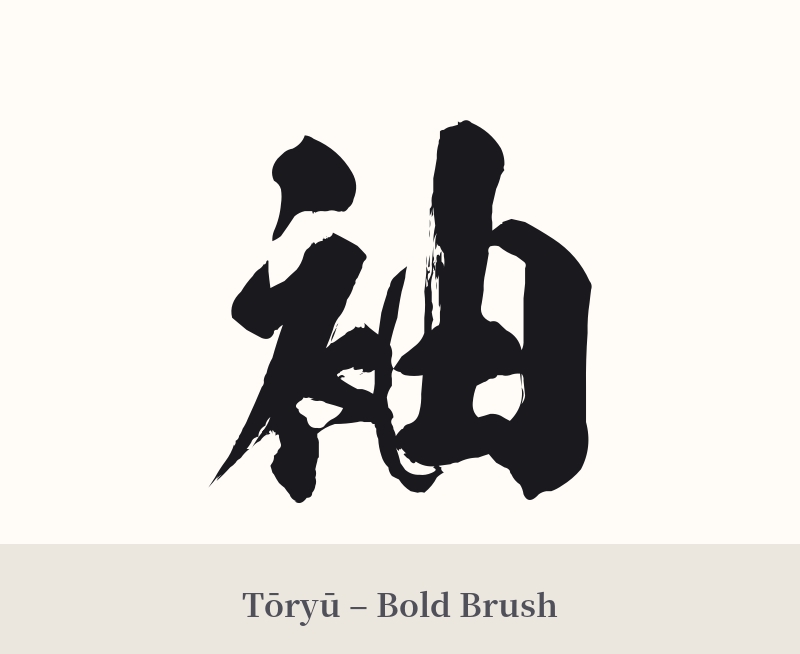
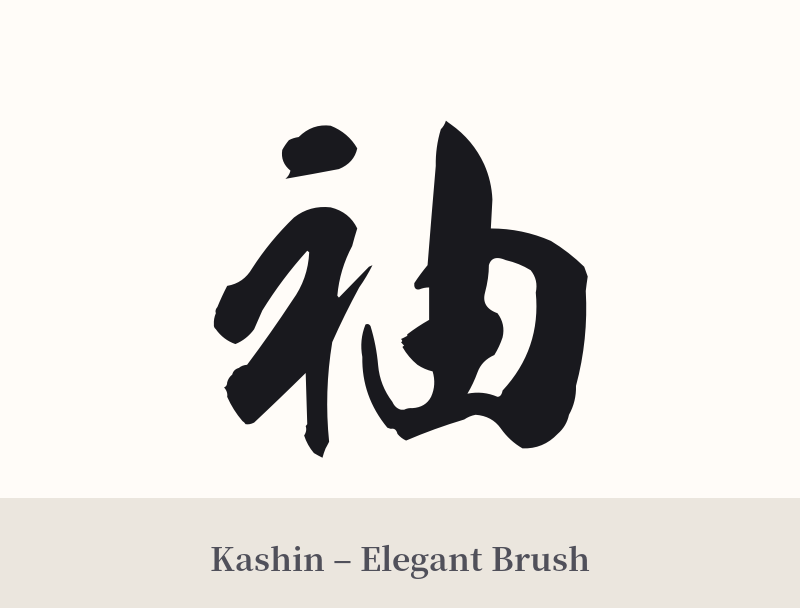
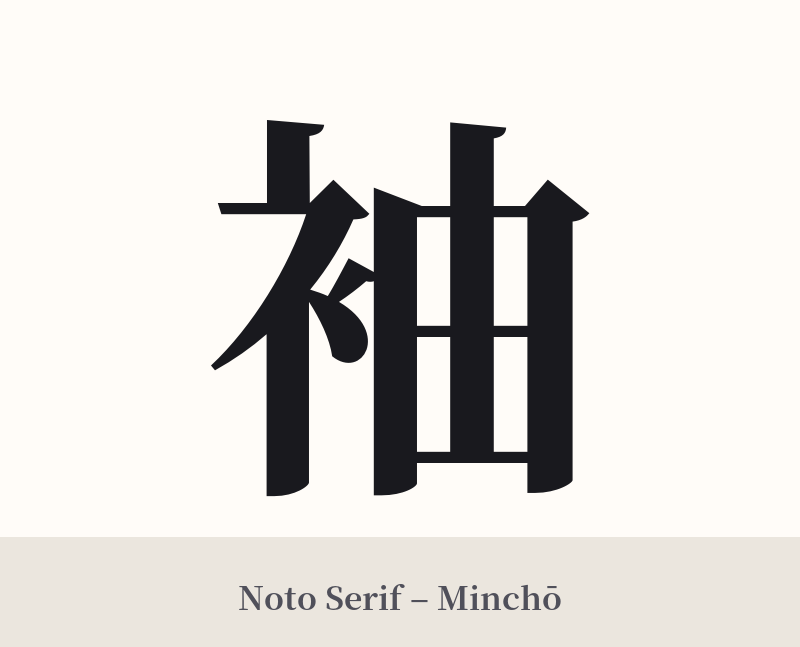
🖌️ Estilos de fuente para 袖
Los mismos caracteres kanji pueden verse muy diferentes según el estilo de caligrafía. Elige una fuente que se ajuste al ambiente que deseas para tu tatuaje o diseño.
🎨 Idoneidad para tatuajes
📐 Guía de diseño de tatuajes
El kanji 袖 (sode) es una elección poco convencional que brilla con luz propia cuando forma parte de una narrativa más amplia, en lugar de ser una pieza aislada. Su significado está tan ligado al contexto que el diseño debe proporcionar dicho contexto.
– Ubicación: Considere colocarlo cerca de un elemento visual más grande. Por ejemplo, en el antebrazo junto a un retrato de una geisha o un samurái, o integrado en un diseño con estampado de kimono. Para un enfoque más sutil, una versión pequeña en la parte interior de la muñeca o detrás de la oreja podría funcionar, como un símbolo personal de discreción.
– Estilo: Una caligrafía fluida y semicursiva como la Gyōsho (行書) reflejaría a la perfección la idea de las mangas fluidas del kimono y la naturaleza cambiante de las emociones. Una caligrafía más clásica y de trazo grueso, como la Kaisho (楷書), le daría un aire formal y tradicional.
– Consejos visuales: Considera seriamente combinar este kanji con otras imágenes. Un diseño de hojas de arce cayendo sobre una manga podría evocar melancolía. Las flores de cerezo podrían sugerir la naturaleza efímera de un encuentro. También podría formar parte de un tatuaje de manga más grande al estilo japonés, creando un significado ingenioso y con múltiples capas.
Comentarios